Happy New Year!

Anonymous. Untitled (Clenched Fist), circa 1965; wood; 3 x 5.5 inches. Collection of the Oakland Museum of California, Museum Purchase.

Anonymous. Untitled (Clenched Fist), circa 1965; wood; 3 x 5.5 inches. Collection of the Oakland Museum of California, Museum Purchase.

2016 was an exceptional year for Daily Serving! We celebrated our tenth anniversary and Michele Carlson became our new executive director. We inaugurated “Odd Jobs,” a new interviews column regarding art and labor, and covered major art-world stories like Pedro Reyes’ Doomocracy and Revolution in the Making: Abstract Sculpture by Women, 1947–2016, at Hauser Wirth & Schimmel. Of course, we also turned an assessing eye to exhibitions in cities such as Birmingham, Dhaka, Nashville, Mexico City, St. Louis, Taipei, and Warsaw. Your support made it happen!

We’re looking forward to another year of the best in arts criticism from around the world, and we hope that your 2017 will be filled with tenacity, courage, and love! 

Share

Tenth Anniversary

Best of 2016 – Kapwani Kiwanga: Ujamaa

As we look back over a decade of the best in arts writing, our final selection comes from our communication manager, Jackie Clay: “This year I would estimate that I’ve read nearly 90% of Daily Serving‘s articles from beginning to end. This one stuck with me. As deftly described by Marisol Rodriguez, artist Kapwani Kiwanga’s solo exhibition, Ujamaa was an open-ended, but not opaque love letter to imagining different presents, futures, and the arguable productivity of failed resistance. As many of us gird ourselves for war–real, imagined or metaphorical–Kiwanga’s work and by extension Rodriguez’s review remind us that the path to now wasn’t linear, direct or uncomplicated.” This article was originally published on September 22, 2016.

Kapwani Kiwanga. White Gold: Morogoro, 2016; installation; 236 x 196 x 157 in. Courtesy of La Ferme du Buisson. Photo: Emile Ouroumov.

Kapwani Kiwanga. White Gold: Morogoro, 2016; installation; 236 x 196 x 157 in. Courtesy of La Ferme du Buisson. Photo: Emile Ouroumov.

In a major solo exhibition, Ujamaa, at La Ferme du Buisson in the Parisian suburb of Noisiel, Kapwani Kiwanga addresses Tanzania’s uprisings. Known for using methodologies from the social sciences without being didactic, the artist draws on two significant moments in the history of the eastern African country to remember and question the ideals of pan-Africanism. The first is the 1905 revolt of Kinjeketile Ngwale, who—believing in the magic powers of a herbal potion of his creation called maji-maji, meaning “water of life and immortality”—led the first revolt against colonial rule, known as the Maji Maji Rebellion. The second is Julius Nyerere’s post-independence introduction of a socialist program of collective farming, called ujamaa (a Swahili term for familyhood, extended family, brotherhood).

A monumental installation, White Gold: Morogoro (2016), welcomes the viewer and acts as the show’s contextual and museological heart. The evocative work is composed of a generous amount of sisal suspended from steel strings. Originating from southeast Mexico, the resistant fiber has been successfully cultivated since the late 19th century in the region of present-day Tanzania, once part of the colony of German East Africa.[1] Its production has played a major role in the country’s economy, from the colonial era through independence.

Read More »

Share

Tenth Anniversary

Best of 2015 – Jennifer Moon, Jemima Wyman, and Robby Herbst at Commonwealth & Council

As part of our ten-year anniversary celebrations, were considering the best of a decade of arts criticism. Todays selection comes from the editor in chief of our sister publication, Art Practical: Kara Q. Smith opines, “It’s not easy to write about three shows in 1,000 words, but what I love about this review by Matt Stromberg is his ability to nod to the [California] art history that informs these artists while synthesizing the contemporary acuteness of the projects at hand. Spend some time revisiting each one, theyll feel as prescient as ever.” This article was originally published on December 1, 2015.

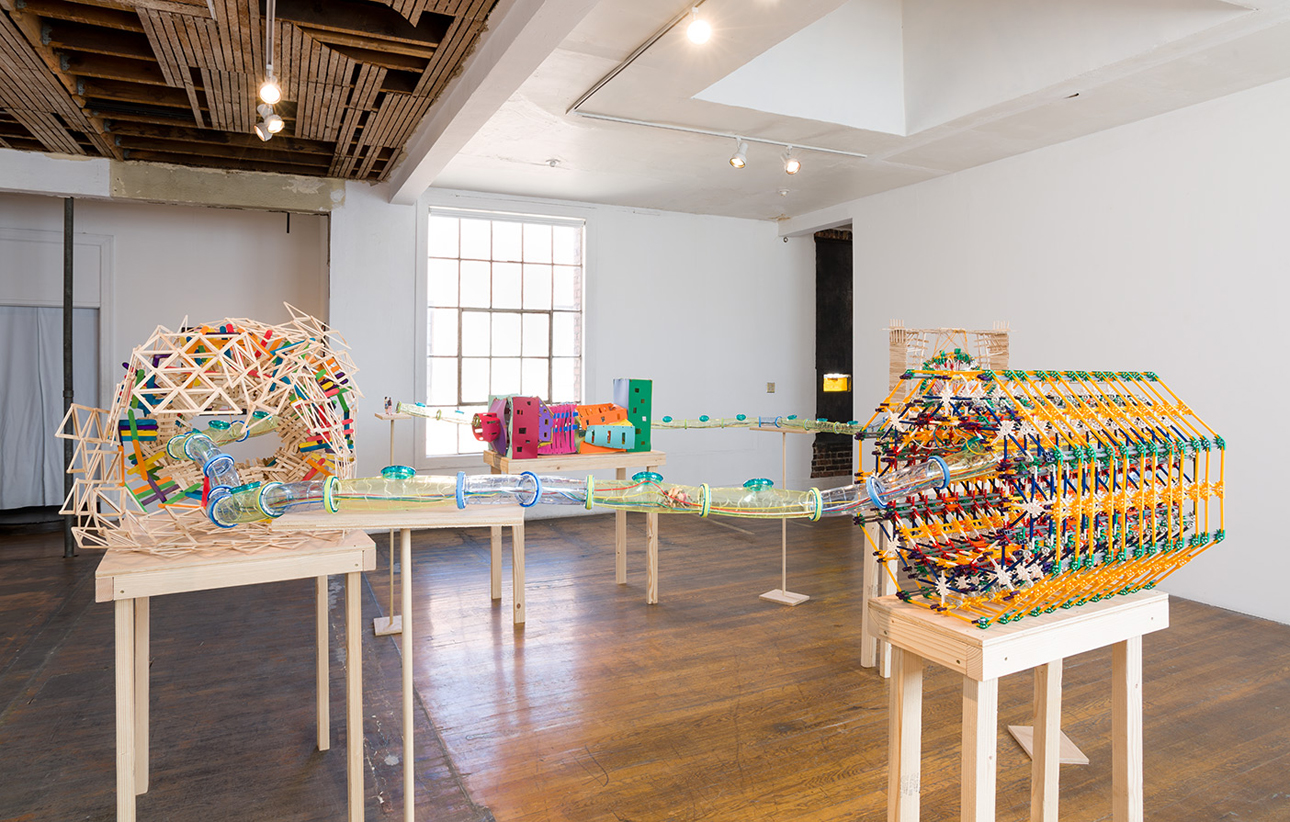
Jennifer Moon. JLS (Jennifer laub Smasher), 2015; K’NEX, Habitrail tubes, popsicle sticks, foam sheets, ceramic 3D print figurines, electrical wire, electrical tape, dental floss, hemp, duck tape, wood, inkjet prints, cardboard, construction paper, foamcore, fabric, folding table; 2 parts: Approx. 68 ½ x 156 x 152 in.; 77 x 48 x 24 in. Courtesy the artist and Commonwealth & Council, Los Angeles.

Jennifer Moon. JLS (Jennifer Laub Smasher), 2015; K’NEX, Habitrail tubes, Popsicle sticks, foam sheets, ceramic 3D print figurines, electrical wire, electrical tape, dental floss, hemp, duct tape, wood, inkjet prints, cardboard, construction paper, foamcore, fabric, folding table; 2 parts: approx. 68 ½ x 156 x 152 in.; 77 x 48 x 24 in. Courtesy of the Artist and Commonwealth & Council, Los Angeles.

As contemporary art seems to be increasingly the province of the 1%, with continual record-breaking auctions, it may be difficult to appreciate the revolutionary origins of modernism. Early 20th-century art movements like Constructivism, Futurism, and Dada sought an aesthetic, social, and political break with the past, often with utopian goals for the future. A trio of solo shows at Commonwealth & Council aim to reinvigorate contemporary art with this revolutionary zeal.

With her Phoenix Rising series, Jennifer Moon explores the revolutionary potential of love, with ample doses of candor and humor. One particularly memorable image from Phoenix Rising, Part 2 features Moon seated in a “Black Panther”-style wicker chair, with her Pomeranian at her feet, both of them wearing matching red berets. For Moon, the personal is indeed political. A far cry from Kazimir Malevich’s severe, stark black square, Moon’s work is idiosyncratic and playful, though her aims are no less radical. Phoenix Rising, Part 3: Laub, Me, and The Revolution (The Theory of Everything) resembles a junior-high-school science fair exhibit that provides a blueprint for revolution on both a macro and micro scale. The centerpiece is JLS (Jennifer Laub Smasher) (2015), a model made of Popsicle sticks and construction toys that snakes through the gallery. It resembles a DIY version of the Large Hadron Collider, only instead of smashing protons together, it will send Moon and her partner Laub hurtling toward one another at the speed of light. Instead of the Higgs boson particle, they are searching for a new form of love free from “hierarchies, binaries, and capital,” as an explanatory panel states. 3D-printed figures of the pair stand at the entry point, ready to embark on their experiment. It is a charming and whimsical riff on quantum theory.

Read More »

Share

Tenth Anniversary

Best of 2014 – #Hashtags: Culture, Class, and the New Economy

As part of our ten-year anniversary celebrations, were considering the best of a decade of arts criticism. Todays selection comes from our executive director Michele Carlson, who writes, “I reread this essay the same day that San Francisco’s first fleet of self-driving Uber cars rolled out and one sailed straight through a red light in front of SFMOMA. This comes on the heels of the tragic Ghost Ship fire in Oakland that cannot be disconnected from the unmanageable housing and gentrification crisis facing the Bay Area. Anuradha Vikram’s essay is still poignant, reminding us of how quickly a city changes, how fiercely that impacts its citizens, and how immovable the proverbial peg remains.” This article was originally published on January 27, 2014.

Stephanie Syjuco. Bedazzle a Tech Bus (I Mock Up Your Ideas): John Gourley "Gringo" Bus, 2014. Digital image. Submission to Mission Local's "Bedazzle a Tech Bus" Call for Entries.

Stephanie Syjuco. Bedazzle a Tech Bus (I Mock Up Your Ideas): John Gourley “Gringo” Bus, 2014. Digital image. Submission to Mission Local’s “Bedazzle a Tech Bus” Call for Entries.

#access #technology #gentrification #class #labor #place

The recent election of Mayor Bill de Blasio in New York was hailed by many as a sign that the trend of economic displacement in major American urban centers was coming to an end. De Blasio ran on a progressive platform of government that serves the neediest, rather than campaign donors, and won handily on that message despite the city’s twelve prior years of wealth consolidation under billionaire mayor Michael Bloomberg. Even de Blasio’s art credentials are more populist than those of his philanthropist predecessor, whose namesake corporation appears on the donor boards of several major institutions in the city. While many have greeted his inauguration with a level of optimism not seen since President Obama’s first term, far fewer have raised the necessary question of what exactly defines the problems and the solutions we hope he will seek. Using current discussions of gentrification, shifting labor conditions, and the role of the arts in creativity and culture, I will attempt to do this here.

Artist Martha Rosler’s recent book, Culture Class (2013), is a herculean attempt to frame the scope and the terms of the gentrification debate as it concerns artists and other laborers in the new “creative economy.” Her critique centers on the influential theories of Richard Florida, whose Rise of the Creative Class (2002) is credited with establishing that term. Rosler gained prominence in the 1970s as a conceptual photographer and video artist deconstructing the implicit social conditioning conveyed by popular images in works such as The Bowery in Two Descriptive Systems (1974-75) and House Beautiful: Bringing the War Back Home (1967-72). Her extensively researched book identifies other theorists of urban renewal, addressing their perspectives from race, gender, and class angles. Her discussion of Florida’s legacy outlines how his acolytes in business, education, and urban planning have promoted an idea of contemporary white-collar labor as a creative pursuit while promoting investment in the arts as a benefit to property values. As such, wage laborers are encouraged to consider themselves engaged in fulfilling acts of creativity rather than trading their labor for compensation. Artists are supported and valued for their ability to revitalize buildings and neighborhoods rather than for their contributions to the breadth of human experience.

Read More »

Share

Tenth Anniversary

Best of 2013 – #Hashtags: The Ethnicity Exhibition

Happy holidays! We’re wrapping up the year—and celebrating our tenth anniversary—by taking a look back at the best writing from the last decade. Todays selection comes from operations manager Addy Rabinovich: “Anuradha Vikram carefully considers the potential problems of curating according to identity politics. Citing Adrian Pipers controversial withdrawal from Radical Presence, Vikram questions whether the format of the ‘ethnicity exhibition’ truly serves those whose work is being shown, whether it limits the artist to their biographies, or if ‘racially marked shows are marked as such for the benefit of white audiences and institutional power players.’ #importantquestions.” This article was originally published on December 2, 2013.

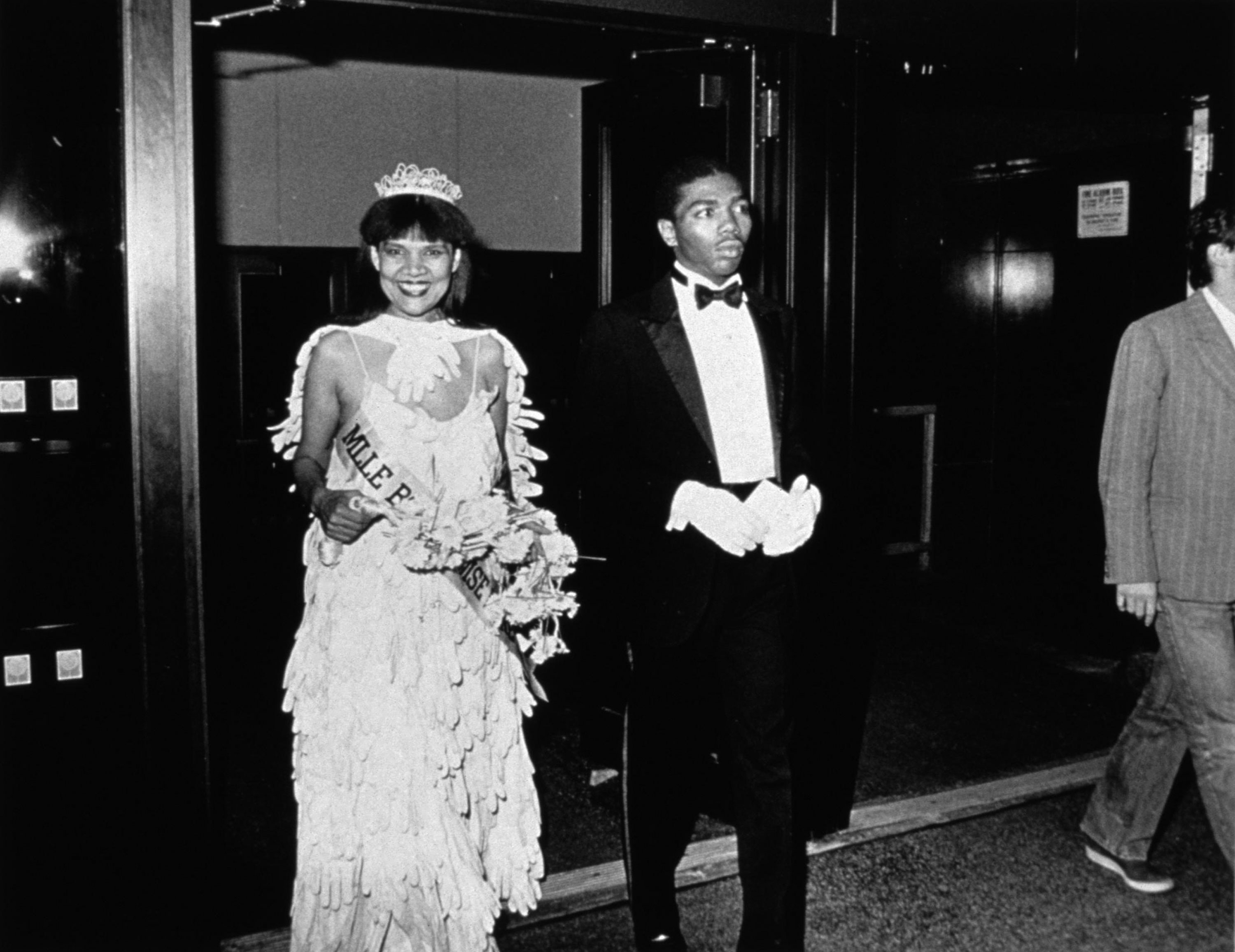
Lorraine O’Grady. Untitled (Mlle. Bourgeoise Noire and her Master of Ceremonies enter the New Museum), 1980–83, printed 2009. Gelatin silver print. 7 1/4 x 9 1/4 in. Courtesy the artist and Alexander Gray Associates, New York.

Lorraine O’Grady. Untitled (Mlle. Bourgeoise Noire and her Master of Ceremonies enter the New Museum), 1980–83, printed 2009. Gelatin silver print. 7 1/4 x 9 1/4 in. Courtesy the artist and Alexander Gray Associates, New York. Included in Radical Presence at Grey Art Gallery.

#race #ethnicity #gender #institutions #access #identity

Since the Civil Rights Era, it has become commonplace for marginalized ethnic communities to instate their own institutions of sociological and cultural study such as university Ethic Studies departments and museums like Brooklyn’s Museum of Contemporary African Diaspora Arts. In the face of extreme prejudice and exclusion from the discourses of history and art, many have felt the necessity and urgency of race-focused research. Nonetheless, in a global art market such as we have today, the existence of numerous star artists of color has prompted some to ask whether the race-based exhibition has run its course as a format for relevant artistic exchange. Recently, Adrian Piper’s request to withdraw her work from the exhibition Radical Presence: Black Performance in Contemporary Art at NYU’s Grey Art Gallery stirred up debate around ethnocentric exhibitions once more.

Piper’s request that documentation of her work The Mythic Being (1973) be pulled from the exhibition was executed with high drama, coming after the show had opened and the work was already on view. The timing of her withdrawal is inexplicable considering the work had been included in the full run of Radical Presence at its originating institution, Contemporary Arts Museum Houston. Her request read, in part: “Perhaps a more effective way to ‘celebrate [me], [my] work and [my] contributions to not only the art world at large, but also a generation of black artists working in performance,’ might be to curate multi-ethnic exhibitions that give American audiences the rare opportunity to measure directly the groundbreaking achievements of African American artists against those of their peers in ‘the art world at large.’”[1] For her part, curator Valerie Cassel Oliver has said that Radical Presence intends to “resist reductive conclusions about blackness”[2] and to present a version of performance in black history that transcends traditional categories of music, dance, and storytelling. Seeking to define African American art practice as more than theater or folk art, Cassel Oliver has opted to locate recent art by black artists within a conceptual framework.

Read More »

Share

Tenth Anniversary

Best of 2012 – The Big Picture: An Interview with Edward Burtynsky

As part of our ten-year anniversary celebrations, we’re considering the best of a decade of arts writing. Today’s selection comes from editor Deanna Lee, who notes, “Although Burtynsky’s consistently stunning photographs of industrial landscapes can wordlessly convey with awesome grandeur the eroding environmental conditions worldwide, this interview complements and broadens the impact of the work with a discussion of the artist’s deep exploration of a complex and perilous situation.” This article was originally published on June 23, 2012.

Alberta Oil Sands #6 Fort McMurray, Alberta, Canada, 2007 / Courtesy of the Artist

It’s often impossible to fully understand the big picture of industrialized development from the limited perspective of the consumer. Each day most of us go about our business, driving to and from work, using plastics made from petroleum, enjoying foods shipped from thousands of miles away, without a thought of the very resource that makes this all possible—oil. The impact of oil has consistently appeared in the work of Canadian photographer Edward Burtynsky for well over a decade. Burtynsky’s photographs often soar into the air, freeing us from our limited perspective, offering us the ability to better understand the scale and impact that this material has on contemporary life. It is only through this expansive perspective that we begin to understand the magnitude and consequence of our actions. Daily Serving founder Seth Curcio was able to speak to Burtynsky by phone about his current exhibition at the Nevada Museum of Art in Reno, titled Oil. The conversation roamed from Burtynsky’s research and his own relationship to oil, how he uses scale and perspective to shape our understanding of the industrialized world, and what lies ahead with the future of oil.

Seth Curcio: In the introduction to your book Oil, you said, “In 1997 I had what I refer to as my oil epiphany. It occurred to me that all the vast man-altered landscapes I had pursued for over 20 years had been made possible by oil…” Since that time you have spent a decade and a half documenting the impact of oil consumption globally. How has this ongoing project shaped the way that you interact with the world, especially in regard to oil consumption?

Edward Burtynsky: At that point, I had spent 16 or 17 years trying to find the largest events possible around mining and quarrying. I was interested in places that we had collectively engaged, and that illustrate scale. I realized that the scale that I’d been photographing could only have been achieved through the combustive engine and a readily available fuel, such as oil.

These ideas led me to consider the things that are around me, from the fuel in my car to the road that I am driving on, to the plastic container that was in my hand. They are all produced with oil. As I started to look around, I asked myself what’s not oil? and that became the more interesting question. It was at that point that I began to close the chapter on mining and open the chapter on the oil landscape. That started my research representing the extraction and refinement of oil, the urban worlds and events produced as a result of oil, and the end of the line — the final entropy and physical result of oil consumption.

Read More »

Share

Tenth Anniversary

Best of 2011 – #Hashtags: We Are the 99%

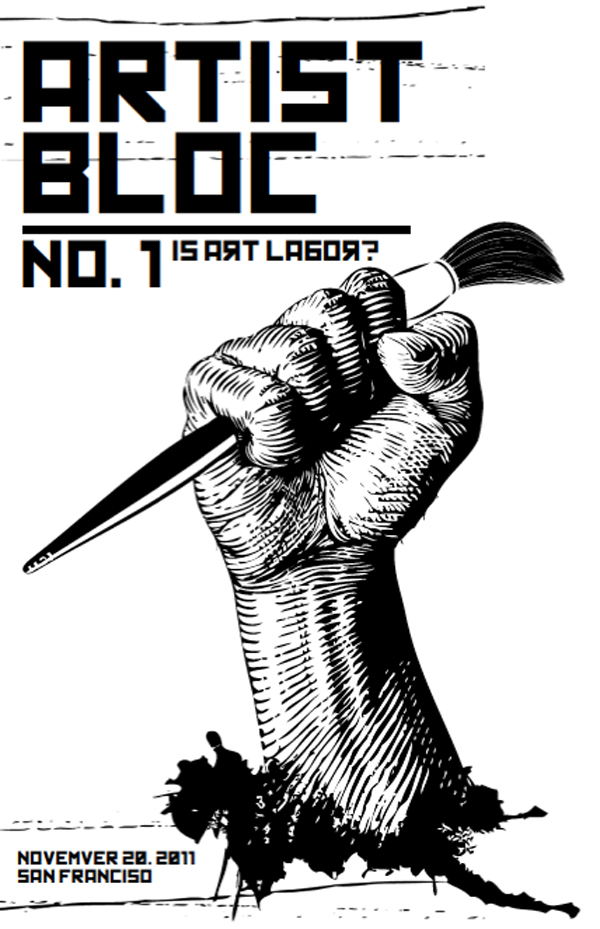
Happy birthday, Daily Serving! As part of our tenth-year celebrations, we’re looking back at important moments in our history. Today’s selection comes from editor Vanessa Kauffman Zimmerly, who says, “‘We are the workers of the 99% because we are scattered, divided by the competitive nature of capitalism—a system we did not consent to.’ Half a decade since the initial groundswell of the Occupy movement, and on the eve of a new federal administration, our consent—as artists, laborers, civilians, humans—has perhaps never been more overlooked; the Artist Bloc No. 1 zine remains a helpful primer on how artists might best organize and resist.” This article was originally published on December 14, 2011.page-one

For the last few months, #Hashtags has had one thing on its mind: #Occupy.  We, too, are part of the 99%. Today, we’re happy to feature Artist Bloc No. 1, a zine devoted to discussing the role of art workers and the Occupy movement.  Organized by a group of Bay Area artists, scholars and writers, including Christian L. Frock, Julia Bryan Wilson, and Adrienne Skye Roberts, Artist Bloc No. 1 asks, “What are the stakes [of artists and art workers] in the discourse around economics, labor, and access to cultural resources?”  We’ve got the first ten pages posted, download the rest at occupationzine, or at Visible Alternative.com.

Read More »

Share