Interview with Feodor Voronov

In grad school, my studio was kiddie-corner from Feodor (or Theo) Voronov’s. I was always there and he was there more often than I was. I respect smart people who do the work, or people who are smart because they do the work, and seeing them get better and better and get recognized for it is sort of a thrill — it means the world can make sense sometimes. Theo’s first solo show at Mark Moore Gallery in Culver City opens in January, and all the paintings shown here will be included in that. But we didn’t specifically talk about the show. We talked instead about method.

Feodor Voronov, "Insurgent", 2011, 48 X 48", Acrylic, marker and ball-point pen on canvas. Courtesy the artist and Mark Moore gallery.

Catherine Wagley: This morning, a friend and I were talking about abstraction that’s transcendent, but transcendentally funny, like kick-ass stand-up. I thought of you, and pulled up your “Pellucid” painting on Google as an example. It’s seriously crafted, seriously systematic, but doesn’t take itself that seriously. How’d you start working with words?

Feodor Voronov: I started working with words about one year after graduate school. I most of all wanted to step away from grad school work, which started to feel dated, short sighted and just way too safe. I initially was attracted to just the raw physical power of text, and I attempted a few pieces where I would build these circular patterns by first translating words into ancient runes and then using the result to begin the process of building a composition. Pretty soon, I realized this was all too cautious and gimmicky. So I decided to see what would happen if I just put an English word in the middle of the canvas and forced myself to deal with it being there. It seemed too simple and really goofy, but, for me, this move began a project that is now going on its third year.

CW: You told me about finding and printing out that huge list of 1000+ words–what was it called again? Something along the lines of “words that will make you sound smart but not pretentious.” That’s still your source, right?

FV: Yes, this list is my source for the current word paintings. It is a list that is supposed to enable you to write with greater accuracy and not sound too wordy. I don’t think it is really important what the list is. It’s just there and I choose from it. I scan the list and grab words that look good at the moment. I do not consider the meaning or sound when doing this, in fact, I don’t even know many of the words but I do look them up in the dictionary for my own self betterment. My interest lies primarily in their shape, look and compositional capabilities. (The meaning is something I can’t truly control and my relationship to it is pretty much on the same level as the viewers’).

Read More »

Share

From the DS Archives: Antony Gormley

Opening in 2009, the prolific exhibition DLA Piper Series: This is Sculpture at the Tate Liverpool continues to examine the history of modern and contemporary sculpture. And the best part…the exhibit is open until April 1, 2012! This means you have no excuse to miss it. Do you need further convincing? Take a look back at DS coverage of Antony Gormley who is currently included in DLA Piper Series: This is Sculpture along with a few other artists you may have heard of, like Sir Jacob Epstein, Henry Moore, Henri Matisse, Pablo Picasso, Arman, Yayoi Kusama and Cornelia Parker.

This article was originally published on July 21, 2010 by Seth Curcio:

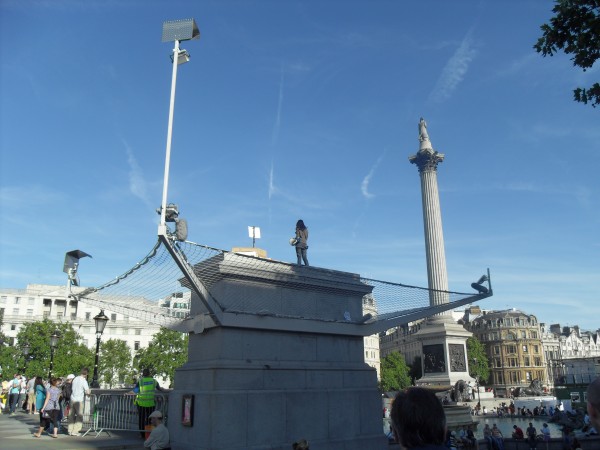
On the north-west corner of Trafalger Square in London lies a structure simply coined the Fourth Plinth. Originally designed in 1841 by Sir Charles Barry, the massive pedestal was intended to display an equestrian statue, but the sculpture was never finished due to a lack of funds. Since the late nineties, the Royal Society for the encouragement of Arts has commissioned several sculptural works for the Fourth Plinth including works from Marc Quinn to Rachel Whiteread. Read More »

Share

Fort at Lime Point: John Chiara at Von Lintel Gallery

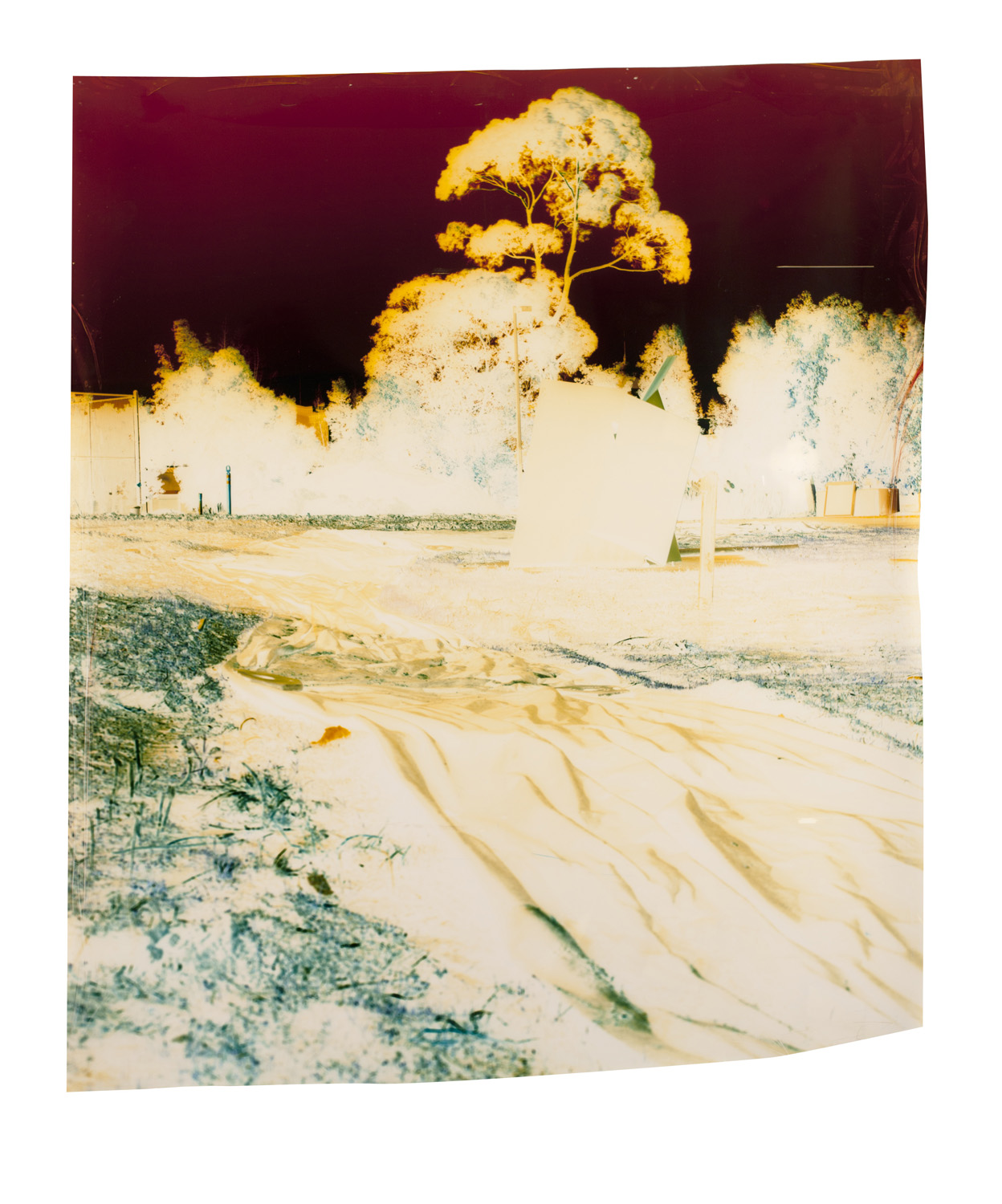
Laney at 5th, Federal Building, 2011. Image on Endura transparency, unique photograph 33 1/2 x 28 1/4 inches. Courtesy of Von Lintel Gallery.

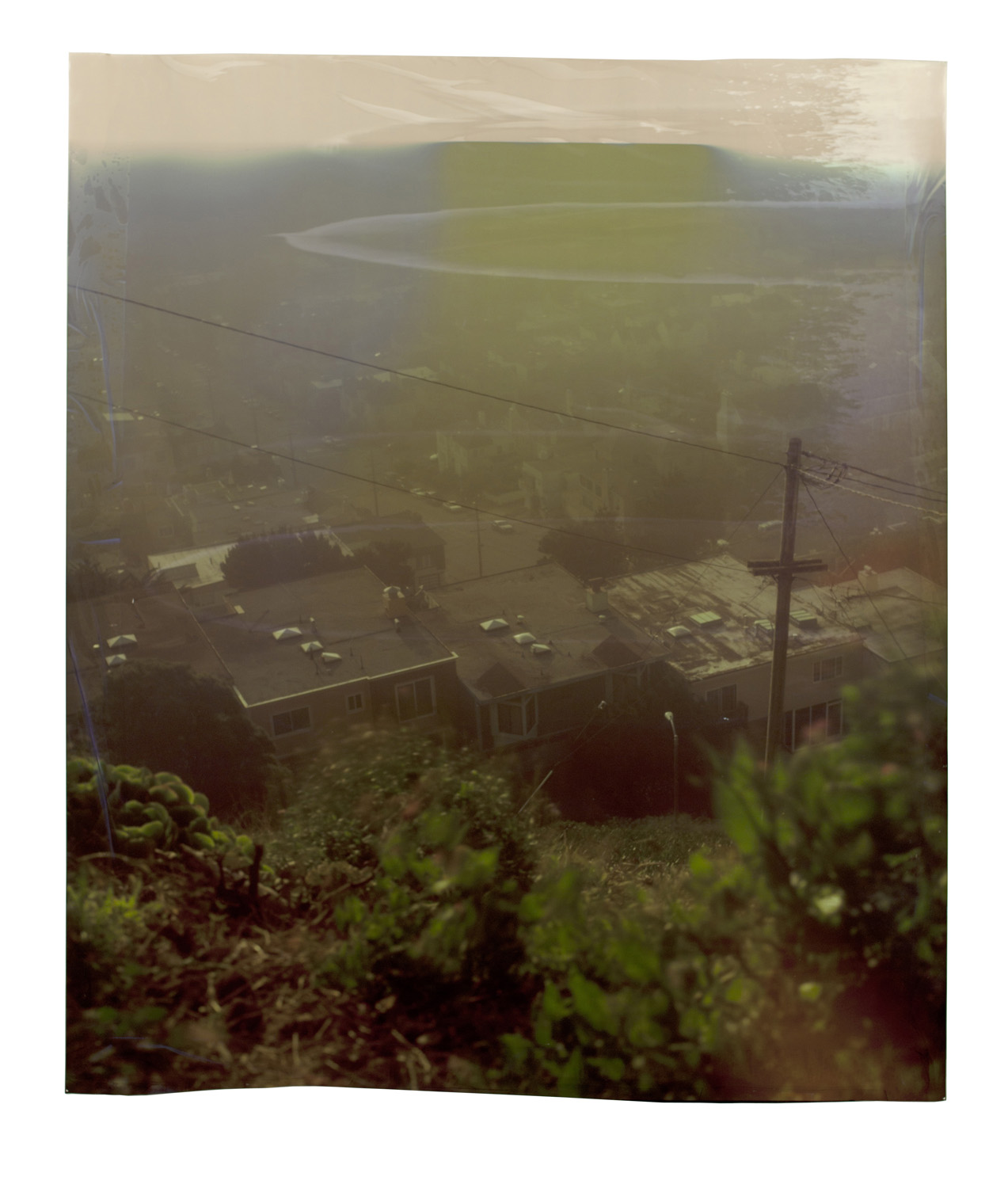
Every photographer has wished, at some point, that they could substitute the lens for their own eye. John Chiara does the next best thing: he crawls inside his homemade camera, the size of a small Uhual trailer, in order to make unique photographs. He may not be able to be the camera’s retina, but he can certainly inhabit its brain. The results are monumentally large (Chiara develops the prints in a large sewage pipe), and the intuitive process unpredictable and time-consuming. Chiara’s anachronistic imaging system maps the landscape in front of him, laying bare photography’s own inner workings in doing so.

For Fort at Lime Point,  John Chiara’s second solo exhibition in New York City at Von Lintel Gallery,  the San Francisco based photographer has crafted some of his most subtle and uneasy work to date. Chiara has long chartered the sublimity of nature and its sometimes uneasy cohabitation with the structures upon its surface; this body of work, however, is anchored to a site of specific historical gravity.

Funston at Cascade, 2011. Image on Ilfochrome paper, unique photograph 33 1/4 x 28 1/4 inches. Courtesy of Von Lintel Gallery.

Fort Lime Point is a little known military base, established on the San Francisco Bay during the Civil War. However, due to a lengthy litigation, the military was unable to begin excavating the site until a year after the war was over, in 1866. They did so by leveling the found with 24,000 pounds of gunpowder, attempting the level a base at the foot of the Golden Gate Bridge. Rubble still exists there, left over from the blast over a century ago. The site is a reminder not only of extreme intervention with natural resources, but a failed attempt at creating a military defense base. It is a telling choice of location, and one that reflects back nicely on Chiara’s medium and process; this site, like the haunting photographs that depict it (and neighboring areas) in this show, is a waking memory of its own flawed history. And like the images, the place decays and morphs in front of our eyes. Read More »

Share

2011 Paris Photo

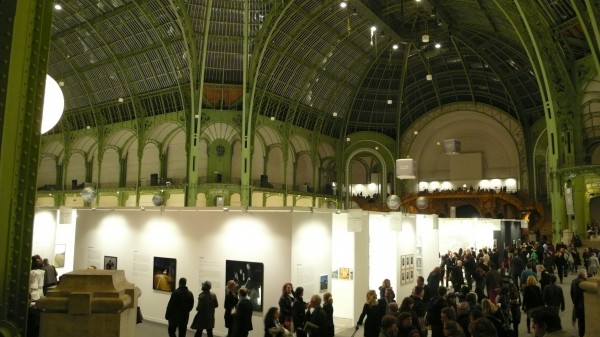
At a talk at the Frieze Art Fair in London in October artists Broomberg and Chanarin and Taryn Simon talked about the relationship between photojournalism and art photography. In the Q&A that followed, someone in the audience asked why there were no strictly-photography galleries at the fair. The question seemed both unanswerable and, to a large extent, irrelevant. Though the talk itself circled an issue about photographic practices, the ‘is photography art’ debate is emphatically over, and in the glittering hubbub of Frieze, medium specificity of any sort was a rare find in the bounds of the white walled-booths.

photo: Sara Knelman

The uniformity of medium at Paris Photo a few weeks later made for, by comparison, a serene environment, light and airy without the weight and clutter of sculpture, quiet in comparison to all the sparkly attention-demanding work that dominated Frieze, and cloaked by the elegantly soaring ceilings of the Grand Palais, where over a hundred photography galleries from around the world set up shop for a few days in November. Even still, the volume of work was overwhelming, and presented the same challenge of how to extract and engage with individual works amidst the disorienting repetition of aisles of white cubes.

Read More »

Share

He disappeared into complete silence: Rereading a Single Artwork by Louise Bourgeois

Machine Torture, 1975. After the narration of 'In the Penal Colony' (1914) by Franz Kafka, realized for the exhibition 'Machines Celibataires' (1975-1977). Photo: Gert Jan van Rooij.

‘Oh’, she said. I looked down and saw the lady. She looked confused. ‘I thought those legs were part of the artwork, but they’re yours’. The legs in question were mine. They were stood on a ladder while the upper half of my body had disappeared into the attic. It had been watching a fairly horrendous film in which two men were making something unidentifiable out of what looked most like milk and porridge oats, all whilst producing numerous unnecessary movements and noises. It wasn’t my favourite artwork in the show, and before more visitors would start to confuse my legs for an artwork, I decided to climb down.

The show, titled He disappeared into complete silence, is constructed around a single work by one of the most prolific artists of the 20th century, Louise Bourgeois. The centrepiece is a small portfolio, consisting of nine plates, each with an engraving and an accompanying parable. Every plate tells a story about an emotion or experience – the work covers loneliness, abandonment, distress, loss and even murder. Not the most frivolous of subjects, but then again, it is Louise Bourgeois, she who spent most of her career exploring the affair her father had with her nanny and the long-lasting effect this had on her psyche. Not someone to cling on to the more positive and superficial things in life, and rightly so. The important processes take place below the surface.

Read More »

Share

Geraldine Javier: Museum of Many Things

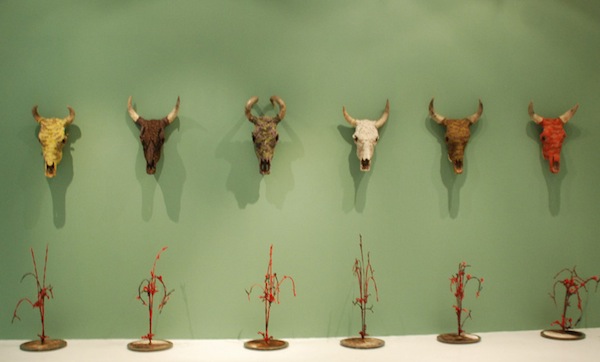
Geraldine Javier, Blood Homage Series, 2011, Mixed Media, Dimensions variable.

Geraldine Javier’s show Museum of Many Things at the Valentine Willie Fine Art Gallery presents an amalgamation of vintage mementos, framed animal skeletons, stuffed birds and elaborate needlework in a contemporary take of a Victorian-styled cabinet of curiosities.

While Javier’s assembly of curios appears to be a whimsical indulgence of the macabre, it is as much a nostalgic take on death’s inevitability as it is a layered reference to the early discursive practices of natural history and collecting. Embedded within her materials are pieces appropriated from the remains of an unnamed Creole woman’s now-defunct early twentieth century museum in the Philippines Archipelago; Javier’s theatrical installations utilise the visual language of harsh mortality mitigated by the soft beauty of carefully placed scraps, while paying tribute to the early narratives of human intervention committed to classify and expand systems of knowledge.

Read More »

Share

Interview with Rafał Bujnowski

Sometimes an interview comes easily, and sometimes not: Rafał Bujnowski needed convincing.  We smoked a cigarette together in Tarnow, Poland, where he was exhibiting work in Tarnow: 1000 years of modernity. I enthused about his work.  He agreed to do it if I would email him the questions, and I gently refused.  He claimed a poor grasp of English.  I denied it.  We smoked another cigarette.  Just when I was about to give up, he relented.  Below is an excerpt from our conversation.

Bujnowski’s work has been called flat, but I don’t think that’s quite right.  Like the artist himself, the work is unassuming but hides a conceptual—and sometimes emotional—depth.  He is concerned with thinking his way through many projects, from painting as a psychological protection from ubiquitous icons to the reuse of rejected works as a way to talk about failure.  Bujnowski’s work has been exhibited internationally at venues such as the Neuer Kunstverein Wien (Vienna), the Rubell Family Collection (Miami), and Sprüeth Magers (Berlin).

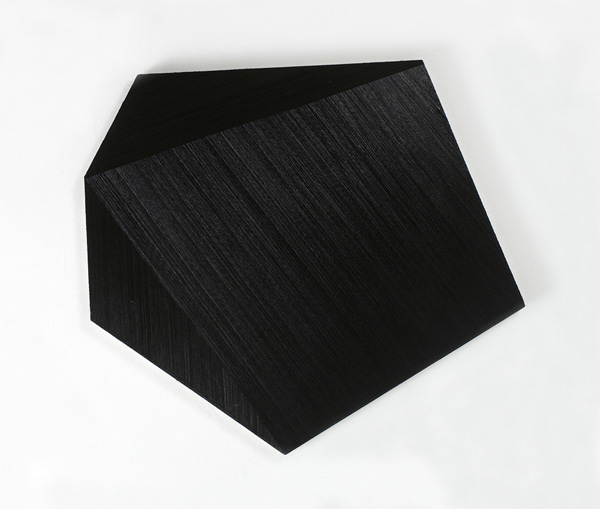
Rafał Bujnowski, Lamp Black Hexagon (1), 2008. oil on canvas 112 x 116.5 cm

Bean Gilsdorf: Tell me about the work you created for this exhibition.

Rafał Bujnowski: This piece is a memorial dedicated to Jan Gluszak Dagarama.

BG: The futurist architect…

RB: Yes. I learned about this guy from Dawid Radziewski [one of the curators].  He showed me Dagarama’s sketches and drawings, and he asked me to do something to commemorate him.  So I decided to do a very normal memorial plaque that hangs on the wall in the town center.

BG: In public space…

RB: Yes, looking very normal like many others, like you’d find for generals, philosophers, writers, etc.  But it has a hidden part, a thermometer and a temperature control so that it stays at 37.5 degrees Celsius, which is the temperature of a sick body.  It’s a metaphor for the work Dagarama did, because his projects came from a fevered imagination.  It’s a very simple metaphor.  But it’s the only monument for him in the world, and otherwise a monument to him might never exist.

BG: Do you feel like this work connects to the other work that you’ve done, the modernist canvases and the delicate fog paintings and so on?

RB: The connection is tradition and a historical way of thinking. But I’m not really a fan of any period in history, or even any music band!  It’s not in my nature to be a fan of anything specific. There’s always both good and bad.  It’s easier to be an expert…it’s easier to be a fan. Read More »

Share