Hashtags
#Hashtags: Learn Where the Meat Comes From
#museums #access #collections #markets #historicity #gentrification
With the arrival of the new Whitney Museum on Gansevoort Street, New York’s once notorious Meatpacking District completes lower Manhattan’s transition from a no-man’s-land populated by artists and outcasts to a stomping ground for fashionable elites. Befitting of an institution that represents the American art world—which has long positioned itself within both these groups, often simultaneously—the Whitney would seem to want to have it both ways. With the museum’s inaugural exhibition, America Is Hard to See, audiences are presented with a chronological reworking of the history of American art as collected by the Whitney. The works installed on five floors of the gleaming Renzo Piano building tell a story that is complex, and at times contradictory, while demonstrating the limitations of official art-historical narratives in articulating the various trajectories of art and culture in the United States and in the 20th century.
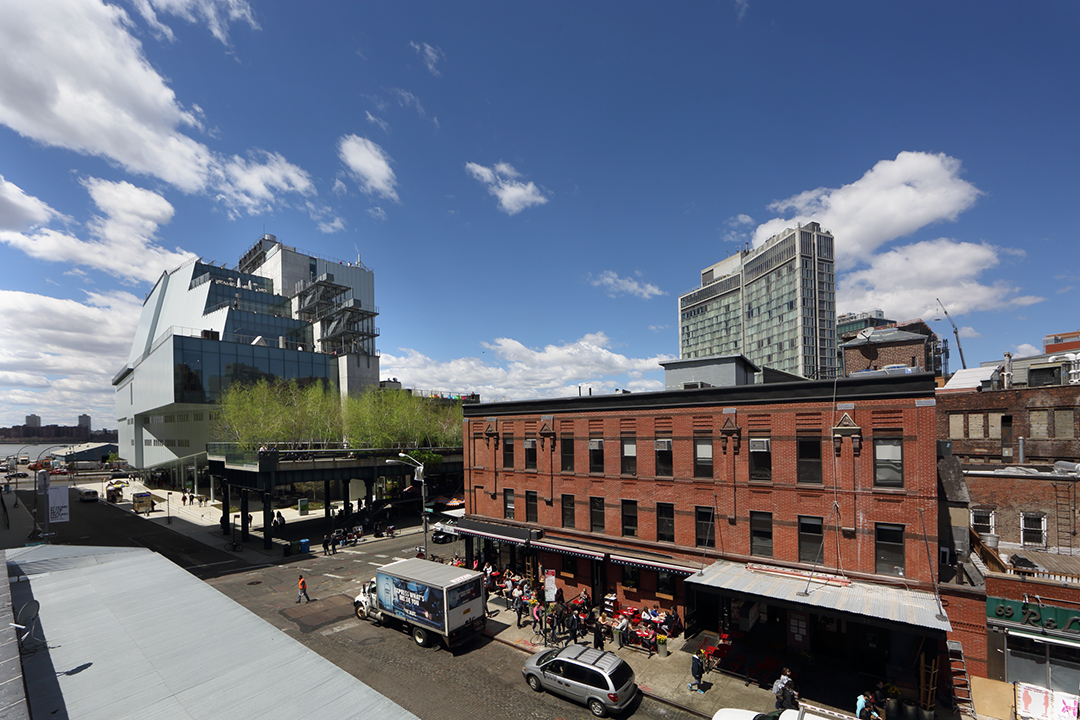
Whitney Museum of American Art, view from Gansevoort Street, 2015. Photo: Ed Lederman.
The good news is that Whitney curators, led by Chief Curator and Deputy Director for Programs Donna De Salvo, have systematically sought out gaps in the museum’s permanent collection and attempted to fill in missing contributors to American art history since the late 19th century, with particular attention paid to works by women and people of color. Less encouraging is the limited impact that these new introductions have had on the curatorial framing of American art’s influences and objectives. On the eighth floor, covering the years 1910 to 1940, unfamiliar names like Nancy Elizabeth Prophet and Richmond Barthé join a familiar roster that includes Marsden Hartley, Joseph Stella, Lyonel Feininger, Georgia O’Keeffe, and Isamu Noguchi. The historical narrative is expanded a bit to include African and Asian influences as well as European modernism. Yet, non-Western influences are cited only in discussions of the works by artists of color, while the overarching themes of industrialization and geometric abstraction as American art’s primary interests in that period are preserved from earlier presentations of the collection. An opportunity to connect American modernism writ large to the United States’ emergence as a global power is thereby wholly missed.