New York

From Minimalism into Algorithm at the Kitchen

In a 1966 review, Rosalind Krauss described how one of Donald Judd’s “progression” wall reliefs pulled the rug from under her. Its intervallic sequence of supporting members suggested a Renaissance colonnade, but its variable spacing negated the compositional and spatial logic that this model prepared her to expect. “The work itself exploits and at the same time confounds previous knowledge to project its own meaning,” she wrote.[1]
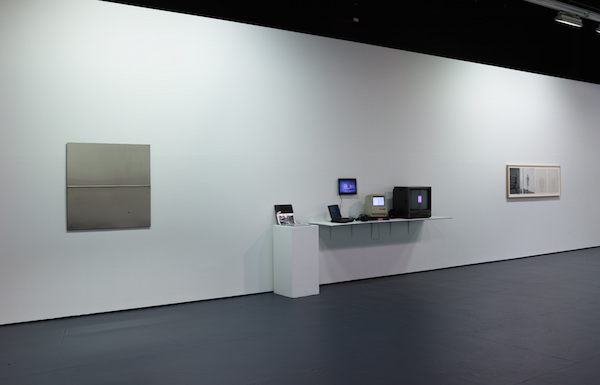
From Minimalism into Algorithm, Phase 1, 2016; installation view, The Kitchen. Featuring works by Donald Judd, Laurie Spiegel, and Charles Gaines. Courtesy of The Kitchen. Photo: Jason Mandella.

From Minimalism into Algorithm, Phase 1, 2016; installation view, the Kitchen. Featuring works by Donald Judd, Laurie Spiegel, and Charles Gaines. Courtesy of the Kitchen. Photo: Jason Mandella.

The Kitchen’s current exhibition, From Minimalism into Algorithm, pulls a similar maneuver. Its title suggests a cogent historical arc, but in fact it presents nothing of the kind. While the show has been divided into three parts, shown over the course of a few months (phase three is currently on view), these have not corresponded to distinct phases of a historical narrative—such as minimalism, transition, and algorithm—or indeed any other obvious organizational scheme apart from the exigencies of spatial limitations and loan requirements. Each installation has featured a medley of works ranging from the 1960s to the present, with a good deal of overlap among the three parts. Moreover, the older works consistently skirt conventional understandings of Minimalism, while the newer ones reflect upon or utilize algorithms—sets of rules described by formulas, nowadays typically followed by computer software for problem-solving purposes—in such different ways as to render the term disposable. The result is that the show looks like something of a mess, which is its greatest virtue. Rather than presenting one line of thought, it allows for the proliferation of many, giving the included works ample room to project their own meanings.

Read More »

Share

Seattle

Kehinde Wiley: A New Republic at Seattle Art Museum

A New Republic at Seattle Art Museum is Kehinde Wiley’s second solo exhibition organized by the Brooklyn Museum. In his brief fifteen-year career, Wiley has quickly become an established cultural trope. His works have adorned the set of Empire and served as icons of the FIFA World Cup. His portraits of Black men and women are at once celebrated as a vision of Black empowerment and criticized as glossy and gratuitous stereotypes of Blackness and of Black masculinity in particular. Even so, Wiley has a masterful hand, reinforced by a passion for research and a strategic understanding of the culture machine. He is a painter and a performer, an entrepreneur and an orator, with the ability to leverage visual and verbal codes to build an enormously successful creative enterprise.

Kehinde Wiley. King and the High Priest, 2014; 22k gold leaf and oil on wood panel; 40 x 24 x 2 inches. © Kehinde Wiley; Photo: Max Yawney.

Kehinde Wiley. King and the High Priest, 2014; 22k gold leaf and oil on wood panel; 40 x 24 x 2 in. © Kehinde Wiley. Photo: Max Yawney.

The exhibition opens with a series of Wiley’s equestrian portraits—paintings that embody the lurid drama of his entire oeuvre. Napoleon Leading the Army Over the Alps (2005) is an icon of Wiley’s particular brand of pastiche in service of parody and critique. In Napoleon, a model—“street-cast” from Harlem or Bed-Stuy—is portrayed in his everyday attire and inserted into an 1801 historic tableau by Jacques-Louis David. Wiley’s figure becomes Napoleon, thereby collapsing centuries of old art-world hierarchies between high and low, insider and outsider, White and Black. In place of the rocky landscape background in David’s piece (a site of conquest, no doubt), Wiley introduces a flattened French brocade pattern, which is punctuated by golden blooms of swimming sperm. Undeniably a fantastic work of propaganda, Napoleon is a vision of epic idealism much like the evoked original.

Read More »

Share

Help Desk

Help Desk: Establishing Installations

Help Desk is where I answer your queries about making, exhibiting, finding, marketing, buying, selling–or any other activity related to contemporary art. Submit your questions anonymously here. All submissions become the property of Daily Serving.

How do I get started as an installation artist? Large, site-specific pieces don’t lend themselves well to collectors, or even to me developing a body of work without knowing what space it will fill; nor do they photograph well for portfolios. Do I pitch the concept to galleries, and then build it when they say yes? Ought I construct them in a studio space, and then invite viewings? Should I practice concept illustrations and devise explanatory sketchbooks, and build dioramas, and build a reputation on that first? I am at the very start of my career, and hoping to go straight into work rather than the expense of a school, so I’m starting with no contacts, and no road map to what a studio practice geared towards installations might look like.

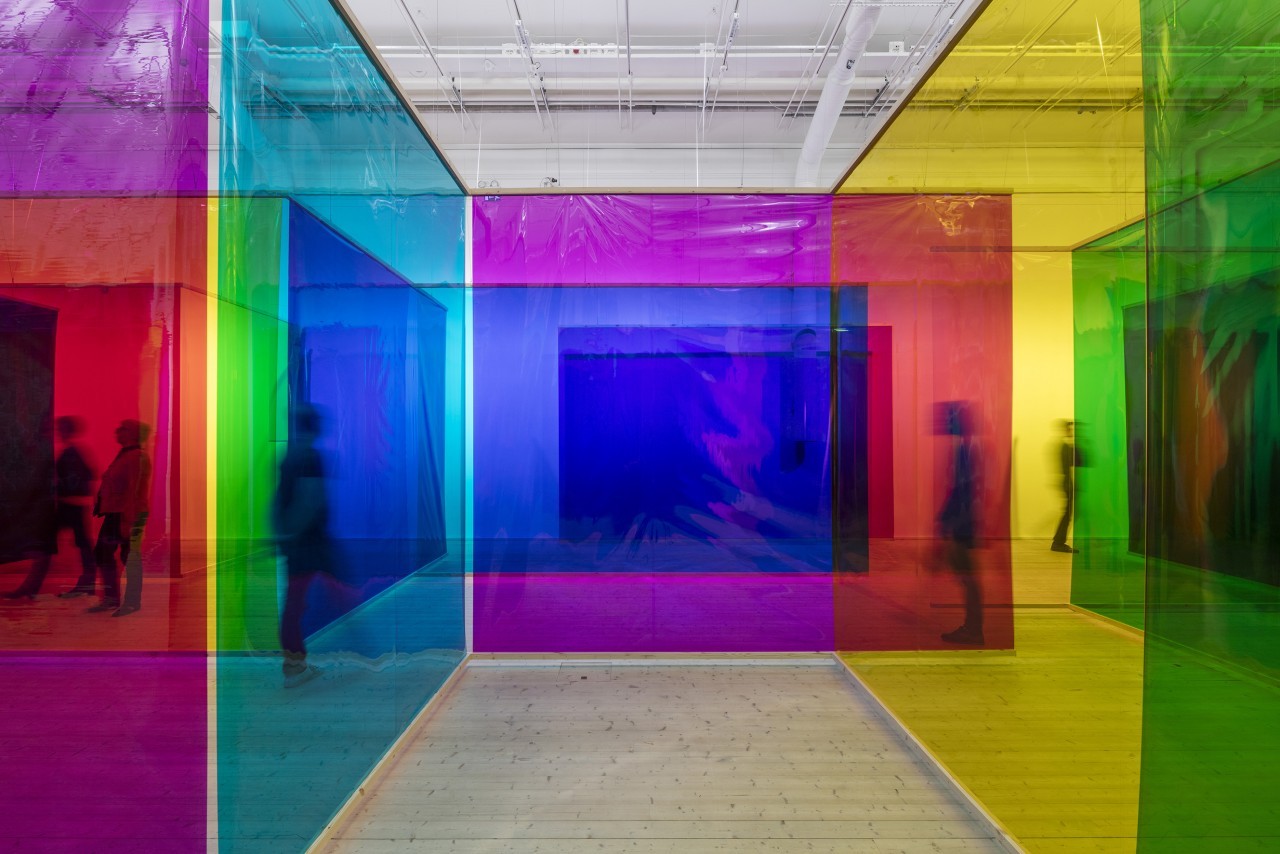
Olafur Eliasson. Seu corpo da obra (Your body of work), 2011. Installed at Moderna Museet, Stockholm. Photo: Anders Sune Berg.

Olafur Eliasson. Seu Corpo da Obra (Your Body of Work), 2011; installation view, Moderna Museet, Stockholm. Photo: Anders Sune Berg.

The thing about getting started as an artist—in any medium—is that you just have to begin. If you think of installation art as a scaled-up, spatially aware sculptural practice, then you might find it advantageous, both for mastering techniques and for building a professional career, to begin by making sculptures and getting them into good venues. You’ll hone your technical skills and become an expert in sourcing materials, and sculptures have the advantage of being more easily shipped and exhibited in group shows, so you can build your résumé.

Likewise, preparatory illustrations and maquettes are critical components of an installation artist’s practice, so make them, too. They will be invaluable tools for clarifying your ideas and focusing your artistic goals. Additionally, you will use them to create convincing proposals for installations; learn to use SketchUp or another program that allows you to build installations in accurately scaled virtual spaces, and don’t forget that your sketches and maquettes are part of your body of work, and can be exhibited as drawings and sculptures in their own right.

Let’s be realistic about commercial galleries. Most, or at least the ones at an attainable level for the beginner, will not be interested in installations because there is generally nothing to sell, and selling is how they keep the lights on. Larger galleries will occasionally host an installation made by an artist from their permanent stable, with the hope that it will boost the value of the artist’s smaller, more salable works. Nevertheless, if making white-cube installations is your heart’s desire, then professionally finish a corner of your studio so that you can stage and photograph them there. Think of this as an extension of the adage “dress for the job you want”—you’re more likely to convince a gallery to take you on if you can show them that you’ve already created works in white-walled space.

Read More »

Share

Shotgun Reviews

Prima Materia at Weinstein Gallery

Shotgun Reviews are an open forum where we invite the international art community to contribute timely, short-format responses to an exhibition or event. If you are interested in submitting a Shotgun Review, please click this link for more information. In this Shotgun Review, Garrett Caples reviews Prima Materia at Weinstein Gallery in San Francisco.

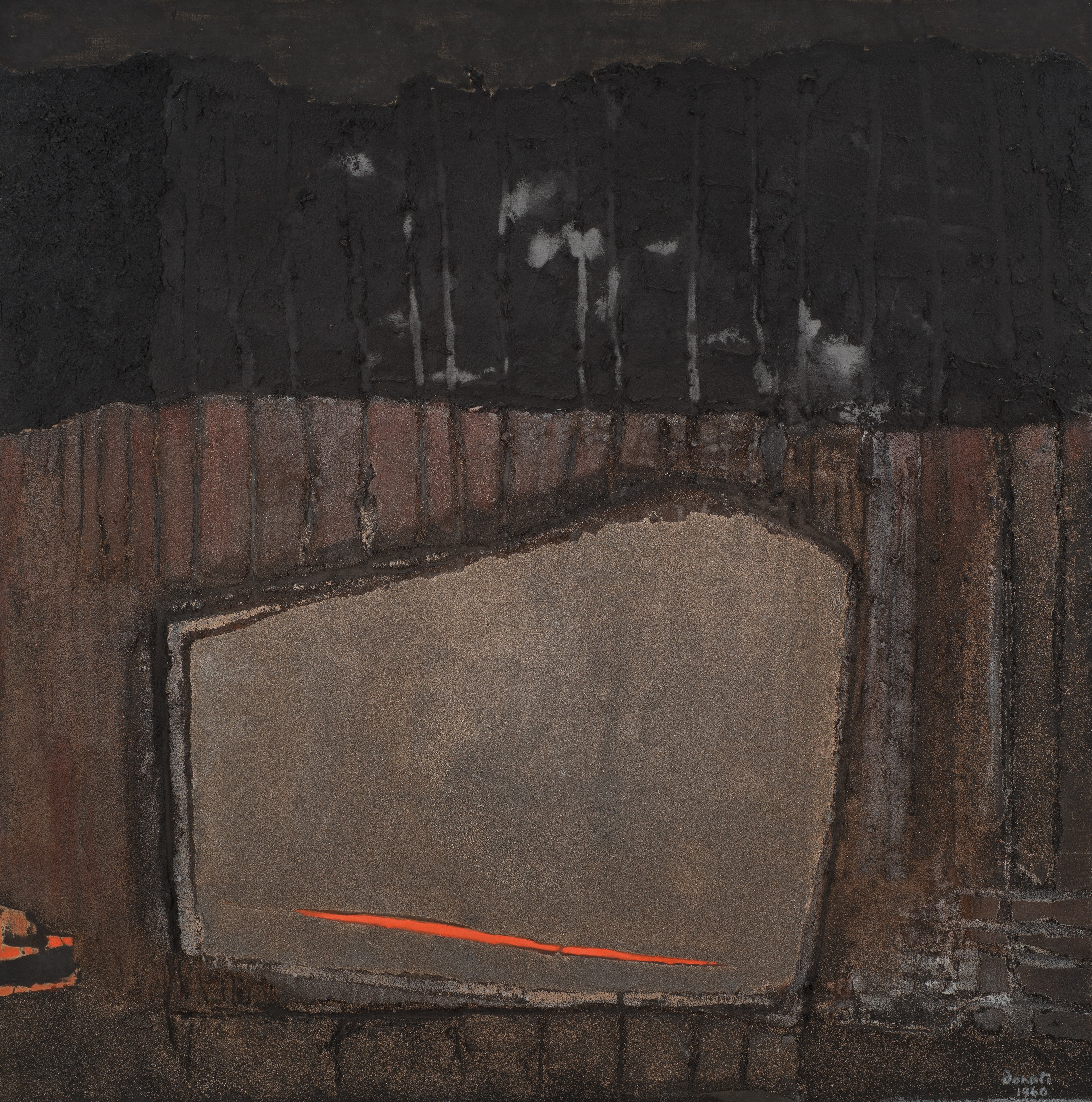
Enrico Donati. Aleppo Walls, 1960; mixed media on canvas; 60 x 60 in. Courtesy of the Estate of Enrico Donati and the Weinstein Gallery, San Francisco. Photo: Nicholas Pishvanov.

Enrico Donati. Aleppo Walls, 1960; mixed media on canvas; 60 x 60 in. Courtesy of the Estate of Enrico Donati and the Weinstein Gallery, San Francisco. Photo: Nicholas Pishvanov.

To celebrate a recent monograph written by Dawn Ades, the Weinstein Gallery has mounted an ambitious show—in terms of both its size and its number of significant works—of Italian-born, New York-based abstract painter Erico Donati. Although Donati died in 2008 at age 99, Prima Materia is no retrospective since it’s confined to 1940–1965. But these are his most significant years, and Prima Materia does tell a story, one less involved with the alchemical interests the show’s title suggests, or the ethnographic influences implied by the accompanying selection of objects (Hopi kachina dolls, Yup’ik masks), and more concerning the effect on an established practitioner of the turn from abstract Surrealism to Abstract Expressionism in postwar American art.

The ’40s work is palpably surrealist; the background atmosphere of Anometer (1948) is analogous to the work of Roberto Matta, say, while Caracalla (1946) shares the biomorphic forms of Joan Miró. Yet Donati has already struck out on his own path through his extraordinary use of color. In Surrealism and Painting,[1] André Breton refers not to Donati’s color but rather his “light,” which conveys the impression left by the deep electric blues permeating canvases like Composition (1945). Several paintings—notably Emotion con Moto (1943)—employ a rainbow of colors, though a dominant blue or black preserves them from outright gaudiness. Apart from color, the most striking aspect of Donati’s earliest manner is the variety of textures present within a single work. The deep electric-blue background of Composition, for example, is so thick it looks lacquered, yet the rainbow-colored mass in the foreground is so lightly painted you can see flecks of raw canvas, as though the figure were hollowed out of the ground rather than imposed on top of it.

Read More »

Share

Boston

A Pan-American Alchemy: Maria Magdalena Campos-Pons at the PEM

From our friends at Big Red & Shiny, today we bring you a review of Alchemy of the Soul: Maria Magdalena Campos-Pons. Author Leah Triplett Harrington offers a thoughtful, revelatory perspective on Campos-Pons’s work, exploring its relationship to themes of memory, exile, and labor. Triplett Harrington states, “Sugar is produced from backbreaking labor, and its ubiquitous popularity cultivated a taste for brutal control and economic dominance among the merchants who traded the substance. […] Alchemy of the Soul, Elixir for the Spirits offers an especially compelling way in which to search the complex history of labor, trade, currency, politics, and power that connect through the global history of the sugar industry.” This article was originally published on March 3, 2016.

Maria Magdalena Campos-Pons. Alchemy of the Soul, Elixir for the Spirits, 2015. Peabody Essex Museum. © 2016 Peabody Essex Museum. Photo by Peter Vanderwarker.

Maria Magdalena Campos-Pons. Alchemy of the Soul, Elixir for the Spirits, 2015. Courtesy of the Peabody Essex Museum. © 2016 Peabody Essex Museum. Photo: Peter Vanderwarker.

Comprising an intensely tactile installation, composed of sound, video, photographs, drawings, and glass-blown sculptures, Alchemy of the Soul: Maria Magdalena Campos-Pons, currently on view at the Peabody Essex Museum, is an almost monographic look at Campos-Pons’s work. Produced via collaboration between Campos-Pons and her husband Neil Leonard, Alchemy of the Soul fuses Campos-Pons’s preoccupation with memory with Leonard’s work with sound and musical composition. Curated by PEM deputy director Joshua Basseches, the exhibition, which even explores smell as a trope, is an immersive experience of the particular history of Cuba and the United States.

Cuba’s international sugar and rum industry are central thematic concentrations of Alchemy of the Soul. The exhibition, which begins within the museum’s freight elevator, a choice that clearly introduces the idea of labor, is anchored by the installation Alchemy of the Soul, Elixir of the Spirit in the museum’s special exhibition gallery. Though the elevator and corridor outside the gallery are festooned with almost cheesy burlap sugar-sack props, the show is gracefully installed to a haunting and transcendent effect. The gallery is dimly lit, with a thick, humid atmosphere, and a soft trickling sound surrounds the five mammoth glass sculptures that comprise the work. A sweet, unfamiliar smell also pervades the space; this is the scent of sugar being distilled into rum substitute, the liquor that buttressed the Cuban economy until the revolution, and before that, supported the slave trade in the Caribbean and Americas.

Read the full article here.

Share

Taipei

Made in Taiwan: A Retrospective of Yang Mao-Lin at the Taipei Fine Arts Museum

A robust Asian democracy, Taiwan elected its first female president earlier this year. Yet thirty years ago, when the island was tentatively emerging from four decades of military rule, this future was far from certain. Made in Taiwan: A Retrospective of Yang Mao-Lin, now on view at Taipei Fine Arts Museum, spans three decades of the artist’s work. His vivid early paintings captured the growing pains of a young democracy, while his more recent narrative installations offer heroes more whimsical than fierce. Together these works present a history of Taiwan and reveal an artist who plumbed the depths of his regional identity before transcending it.

1.Exhibition view of Yang Mao-lin. Ceremonies Before Rewarding-Inviting the Immortals III (2003) and Story of Affection; mixed media. Courtesy of Taipei Fine Arts Museum.

Exhibition view of Yang Mao-Lin. Ceremonies Before Rewarding – Inviting the Immortals III (2003) and Story of Affection; mixed media. Courtesy of Taipei Fine Arts Museum.

The exhibition begins with Yang’s paintings from the 1980s—large, layered works that combine heroic, muscular figures reminiscent of Italian futurism, symbols from American popular culture and indigenous Taiwanese cultures, crude line drawings of prostrate figures, and ominous references to Taiwan’s military state. After Hou-yi Shooting the Sun (1985) shows a mythical Chinese archer juxtaposed with figures wielding lightsabers; in Kun (1986) an enormous blue foot descends from the sky. The images suggest a young artist brimming with social criticism. They reveal an obsession with heroes and ancestors and project the muddled unconscious of an island striving to find its identity.

Read More »

Share

San Francisco

Who Among Us… The Art of Kenyatta A.C. Hinkle at the Museum of the African Diaspora

Today from our partners at Art Practical, we bring you Matthew Harrison Tedford’s review of Who Among Us… The Art of Kenyatta A.C. Hinkle at the Museum of the African Diaspora in San Francisco. The author notes, “[…] I came to see the entire exhibition as Kentifrica—not just an imaginary place, but a dream, a revision, or a projection of a continent that could have been or that still may become.” This article was originally published on March 1, 2016.

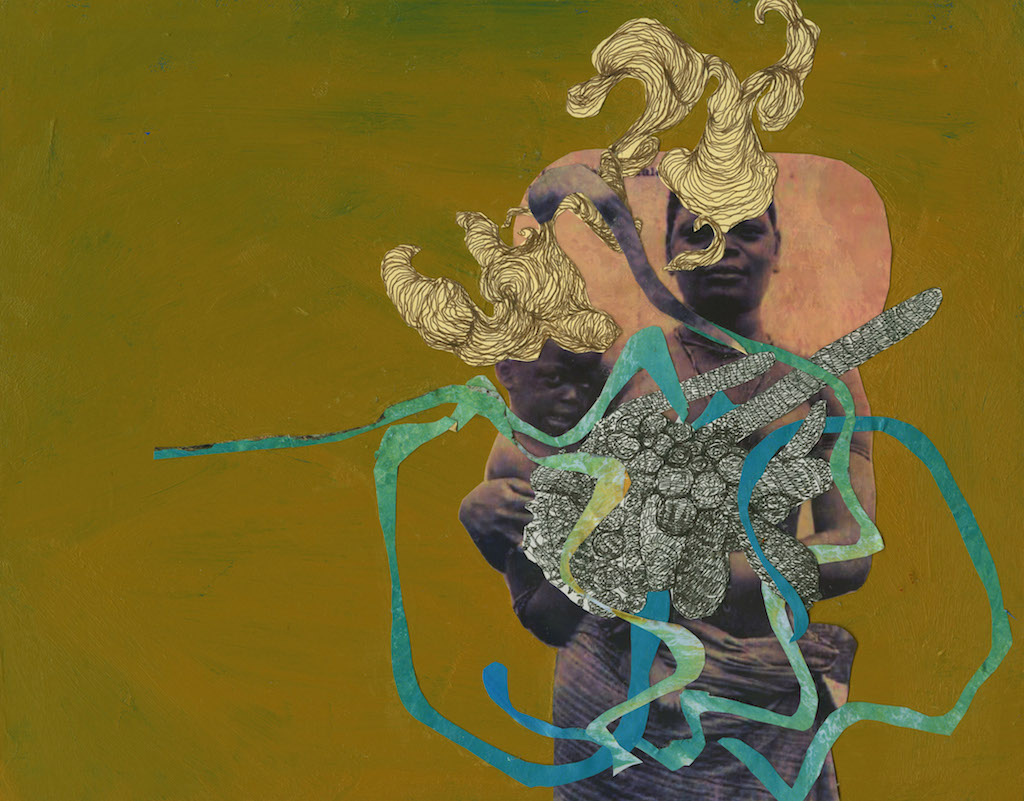
Kenyatta A.C. Hinkle. The Sower, 2015; India ink, acrylic paint, and polyfilm on wood panel; 11 x 14 in. Courtesy of Jenkins Johnson Gallery and the Artist.

Kenyatta A.C. Hinkle. The Sower, 2015; india ink, acrylic paint, and polyfilm on wood panel; 11 x 14 in. Courtesy of Jenkins Johnson Gallery and the Artist.

In the early decades of photography, many Europeans and European Americans employed the nascent technology in conquered lands across the planet to document colonial subjects. These images became historical records, though they were often inscribed with colonial fantasies—subjects were presented as dwelling in prehistory or dressed in attire from cultures that were not their own. This approach to both ethnography and tourism has been widely critiqued, but the resulting documents persist, as do the worldviews built upon them.

Interdisciplinary artist Kenyatta A.C. Hinkle uses reproductions of these antique photographs as sources for one of three bodies of work in Who Among Us… The Art of Kenyatta A.C. Hinkle at the Museum of the African Diaspora (MoAD) in San Francisco. The Uninvited Series displays over a dozen black-and-white and sepia-tone photographs of African women on a single wall, each of which Hinkle has reclaimed with ink, paint, glitter, gouache, and collage.

Some of the pieces are kaleidoscopic interventions that adorn the figures with ornate headdresses, body armor, or auras. In The Transfiguration (2015), for example, the portrait of a woman is mostly obscured by a sea of pink protozoan blobs and a web of intricate ink drawings that wrap around her chin and protrude from her forehead. Hinkle gives the woman a regal and fantastical headdress and the power it connotes—if only retroactively, imaginatively. In The Huntress (2014), a woman wearing a barely perceptible smile faces the viewer. Spirals of ink radiate from one of her eyes, creating a mask that covers half of her face, stretching upward and outward. The mouth of a roaring tiger cut from a photograph rests between the woman’s bare breasts. The tiger’s defiant roar seems to represent emotions concealed by the subject’s sardonic smile—emotions she may not have been at liberty to display to the photographer.

Read the full article here.

Share