Summer Session

Summer Session – Exposed: Voyeurism, Surveillance, and the Camera Since 1870

For today’s Summer Session topic of celebrity, we bring you Genevieve Quicks review from our sister publication Art Practical of the 2010 SFMOMA exhibition Exposed, a show on the history of photography and the camera. Our contemporary fascination with celebrities is heavily shaped by the photographic medium, and Exposed explored some of the earliest iterations of the iconic paparazzi shot that is a quintessential celebrity experience. This review was originally published on December 10, 2010. 

Alison Jackson. The Queen plays with her Corgies, from the series Confidential, 2007; chromogenic print; 16 x 12 in. Courtesy the Artist and M+B Gallery, Los Angeles. © Alison Jackson.

Alison Jackson. The Queen plays with her Corgies, from the series Confidential, 2007; chromogenic print; 16 x 12 in. Courtesy the Artist and M+B Gallery, Los Angeles. © Alison Jackson.

Exposed: Voyeurism, Surveillance, and the Camera Since 1870, at SFMOMA, is an ambitious exhibition that examines 140 years of photography through five categories: “The Unseen Photographer,” “Voyeurism and Desire,” “Celebrity and the Public Gaze,” “Witnessing Violence,” and “Surveillance.” The exhibition cites 1871, the year the gelatin dry plate was invented, as the onset of the modern photographic era. This development was shortly followed by the emergence of micro cameras small enough to be concealed in unassuming objects of everyday life, such as a shoe or cane. In addition to exploring the power dynamics and privacy issues of voyeurism and surveillance, the exhibition raises questions about a visitor’s relationships to the photograph, viewing, and the socio-historic context in which the images were made and the ways they are viewed today.

Read the full review here.

Share

Summer Session

Summer Session – Art & Vexation: Interview with William Powhida

For this Summer Session were thinking about celebrity, and that also means thinking about what it means to both loathe and desire its effects for oneself. There is no denying that the art world is often driven by the forces of celebrity, and William Powhida makes the core of his practice a thorough critique of this system. His work responds to the ambivalent desire for status within an art market where status itself simultaneously legitimizes and undermines critical art. This interview by Bean Gilsdorf was originally published November 7, 2012.

William Powhida, Cynical Advice, 2012. Graphite, colored pencil, and watercolor on paper, Cynical Advice, 15” x 20”, Graphite, colored pencil, and watercolor on paper, 15 x 20 inches

William Powhida, Cynical Advice, 2012; graphite, colored pencil, and watercolor on paper; 15 x 20 in.

Bean Gilsdorf: How does your work start? Where do you begin?

William Powhida: All the drawings are very specific to a theme, often something that is irking me. The hysterical voice that provides the narrative is a way to amplify things that I’m responding to. A lot of the drawings tie into a bigger narrative, and the smaller “list” drawings are more episodic, they start with some aspect of my own practice or my own engagement with the art world. They are a way to think through all of this, it’s like having a character that speaks through the work.

BG: And how much do you script before you draw the final version? Do you have it totally written out or do you play with it as you go?

WP: I do start with a draft, and I also play as I go. I find there’s an arc to the drawings: the drafts are a basic outline, but then as I’m drawing and spending time with each sentence, it morphs and changes from the original draft.

BG: I’m interested in the play that you have with the voices that come out in the lists, where there’s a lot of sarcasm, on the one hand, and then there’s also optimism. The piece called Less is so negative—not that it’s untrue—but then Hope talks about collaboration and engagement…

WP: It’s been changing over the years. The drawings have started to split, like What’s Right with the Art Worldand What’s Wrong with the Art World. Despite all the ranting and raving, there’s always been this vulnerable part of the voice. I meet people who are terribly optimistic about how the art world works—they’re realistic as well, they don’t deny that a lot of it is crazy—but they still see it as an amazing place to work.

The narrative voice in the list drawings is not objective, because I want the drawings to be the experience of being in somebody’s head and listening to them think about the art world. That also gets articulated in works like the faux magazine covers, as a vehicle to insert myself into this upper echelon of the art world and to critique it. But as the lists have developed, they’ve become a little more rooted in reality. I don’t have to invent as much because it’s actually happening to me. Now it’s a question of trying to find some balance between what I’m actually experiencing in the art world and the things I think are still worth discussing. Whether it’s an effective critique or not I don’t know, but I’m speaking these things out loud so we can talk about them.

Read the full interview here.

Share

Summer Session

Summer Session – Judy Chicago Prepares for a Dinner Party with Female Heroes

The theme of this months Summer Session is celebrity, and today were thinking about how celebrity narratives can offer different possibilities for contextualizing our current moment. In a video from our friends at SFMOMA, artist Judy Chicago talks about her installation The Dinner Party (1974–79), in which she creates a banquet both to honor female heroes throughout Western history and to provide an alternative historical record that acknowledges the impact these women have had in shaping the contemporary world.

Share

Summer Session

Summer Session – U.S. Department of Illegal Superheroes (ICE DISH) at Galería de la Raza

This Summer Session we’re thinking about celebrity, and today there are perhaps no celebrities more popular than fictional superheroes. Their popularity can serve as a valuable social tool, as Callie Humphreys review of artist Neil Rivas installation at Galería de la Raza shows, where the familiarity of superhero personae is used as a humanizing entry point into difficult conversations about illegal immigration. This review was originally published January 05, 2014. 

Neil Rivas (Clavo). Interior view (with Supergirl), ICE DISH SF Field Office & Detention Facility, 2013-2014. Courtesy of ICE DISH. Photo by Alanna Haight.

Neil Rivas (Clavo). Interior view (with Supergirl), ICE DISH SF Field Office & Detention Facility, 2013-2014. Courtesy of ICE DISH. Photo by Alanna Haight.

Galería de la Raza is currently hosting its very first resident artist, Neil Rivas. The San Francisco-based artist has converted the back half of La Raza into the headquarters of the U.S. Department of Illegal Superheroes, or ICE DISH. The agency deals with the capture and deportation of undocumented superheroes. Superman, Wonder Woman, Spider-Man, and the whole iconic lineup are at high risk for deportation, their immigration status unregistered with the U.S. Department of Homeland Security. The ICE DISH headquarters is replete with a physical training station, lockup cells, surveillance monitors, a most-wanted bulletin board, cabinets filled with presumably top-secret files, authoritative black desks, swivel chairs, and other austere institutional furniture. Populating the ICE DISH facilities are its six local agents, who carry out all departmental proceedings both on- and off-site.

High-stakes immigration debates are occurring across the country, but what actually constitutes the conversation appears to be little more than empty political banter. Through ICE DISH, Rivas has created an artistic platform for social intervention, though I hesitate to call it outright activism. The agency conveniently positions familiar, culturally beloved characters at the face of a critical discourse that the project hopes to engage, and as such functions equally well as both an educational outreach tool and as art. The reality of the immigration discussion is one increasingly devoid of empathy; it is a faceless battle driven by rhetoric rather than humanization. By aestheticizing the conversation through established iconography, Rivas makes the entry point more accessible for those who may otherwise not actively seek to participate in such a dialogue. The discussion ICE DISH generates does not forefront race, specifically, but rather highlights general ideas of difference, belonging, and the quintessential role of the other.

Read the full article here.

Share

Summer Session

Summer Session – Team Jolie

For this Summer Session were thinking about celebrity, and today we bring you a video by Berlin-based artist Hannah Black that delves into the ideological battles found within the publics interest in celebrity lives. In Team Jolie, Black plays off the infamous presumed romantic rivalry between actresses Angelina Jolie and Jennifer Aniston, reading poetic verses over sections of each actresss face that speak to the aesthetic, political, and personal relations that hypothetically underpin the social positions of either “Team Jolie” or “Team Aniston.” This video was originally uploaded to Vimeo in 2013.

Team Jolie from Hannah Black on Vimeo.

Share

Summer Session

Summer Session – Kid Fridge Prince

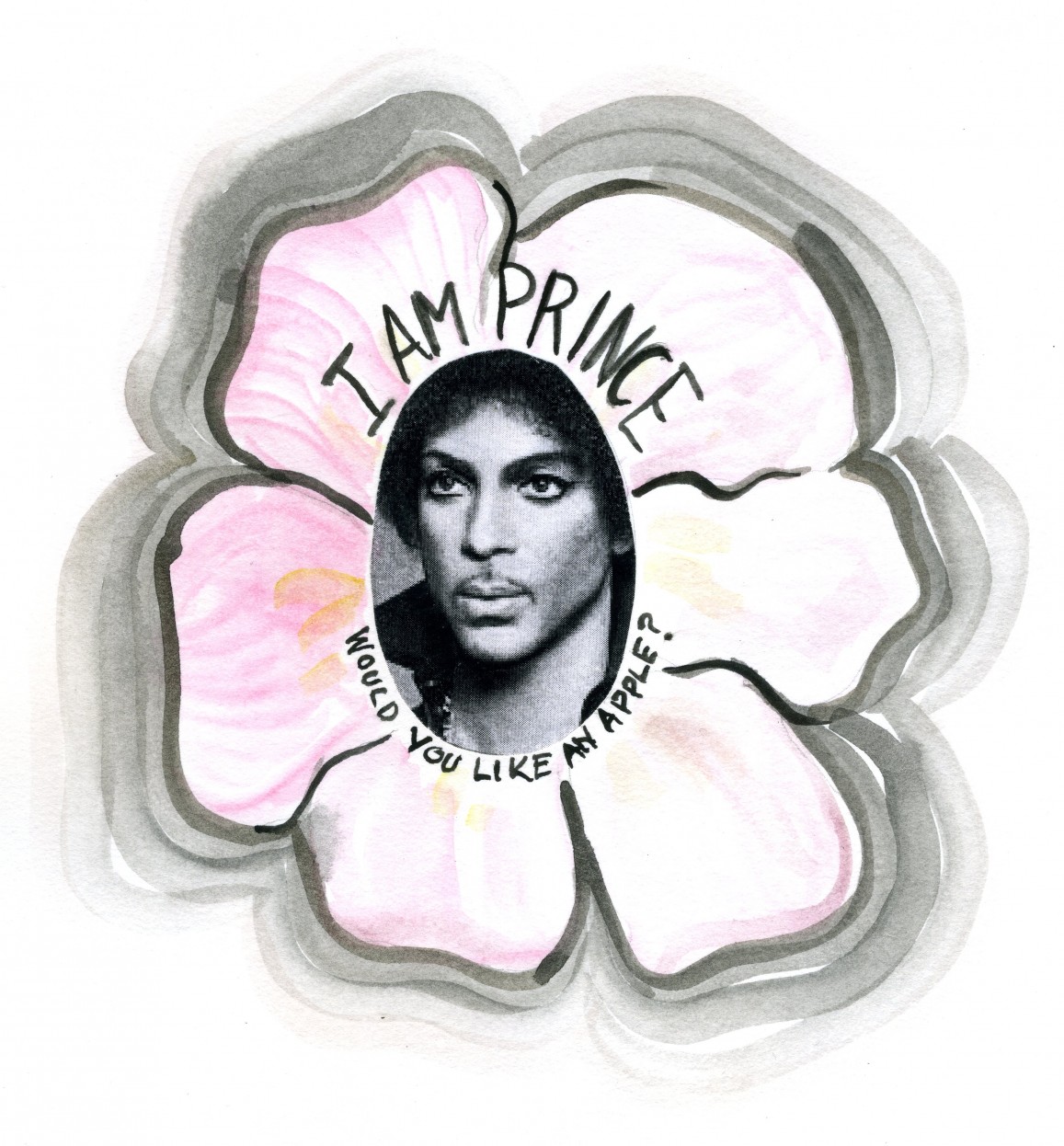
For this months Summer Session were thinking about celebrity, and the ways in which the ideas and connotations of celebrity impact our lives and our art. Today, we bring you three interwoven stories from our friends at Art Practical by Lindsey Boldt, Anne McGuire, and Steve Orth, who take the late, great Prince as the inspiration and guide for their surreal, collaborative project. This article was originally published April 14, 2016. 

Illustration by Anne McGuire. Courtesy of the Artist.

Illustration by Anne McGuire. Courtesy of the Artist.

Cori woke up depressed. However, Cori didn’t think to call it that. The feeling was familiar, but as far as they were concerned, it had no name. What Cori knew was that their dreams often provided shelter from that feeling and that this morning they had not. They had been sparse and ordinary, just shadows of waking life and no kind of shelter.

It was raining, but this was not a unique event that would set this day apart from others. The rain was not a reflection of Cori’s inner life. It was Washington. Later, when Cori was older and lived somewhere else, they would miss the rain and everyone would think that was funny, but Cori would not.

Lately, the adults had been acting foolish, so the best thing to do was avoid them. After pulling on some barn boots and a raincoat, Cori left the house and headed for the woods. It wasn’t that the woods understood Cori or that they seemed to care; it was their indifference that provided comfort. Maybe a better word for it was unconcern. The woods were unconcerned with the problems of the house. What Cori knew was that after passing a certain fence line, their attention shifted and all that foolishness didn’t matter. It was still there, but quieter.

The cat, Raisins, followed Cori across the field, through the fence into the woods. They often played a game of follow the leader, taking turns picking a path through the trees and underbrush. Today, the cat led Cori further along the fence line than they had been before. No sign announced it, but Cori knew they had crossed into a neighbor’s property. The adults had pointed out the boundaries where one fence met another and warned Cori not to cross there.

Read the full story here.

Share

Summer Session

Summer Session – My Grandfather Met Liberace and I’ve Never Been to Burning Man

For this months Summer Session were thinking about celebrity, and today from our sister publication Art Practical we bring you Sean Uyeharas exploration of celebritys affective underpinnings. Uyehara locates the tension between earnestness and irony as perhaps the core dynamic of celebrity experience, with the audience constantly vacillating between these two poles as they consider stories and lives outside of their own. This article was originally published July 9, 2014.

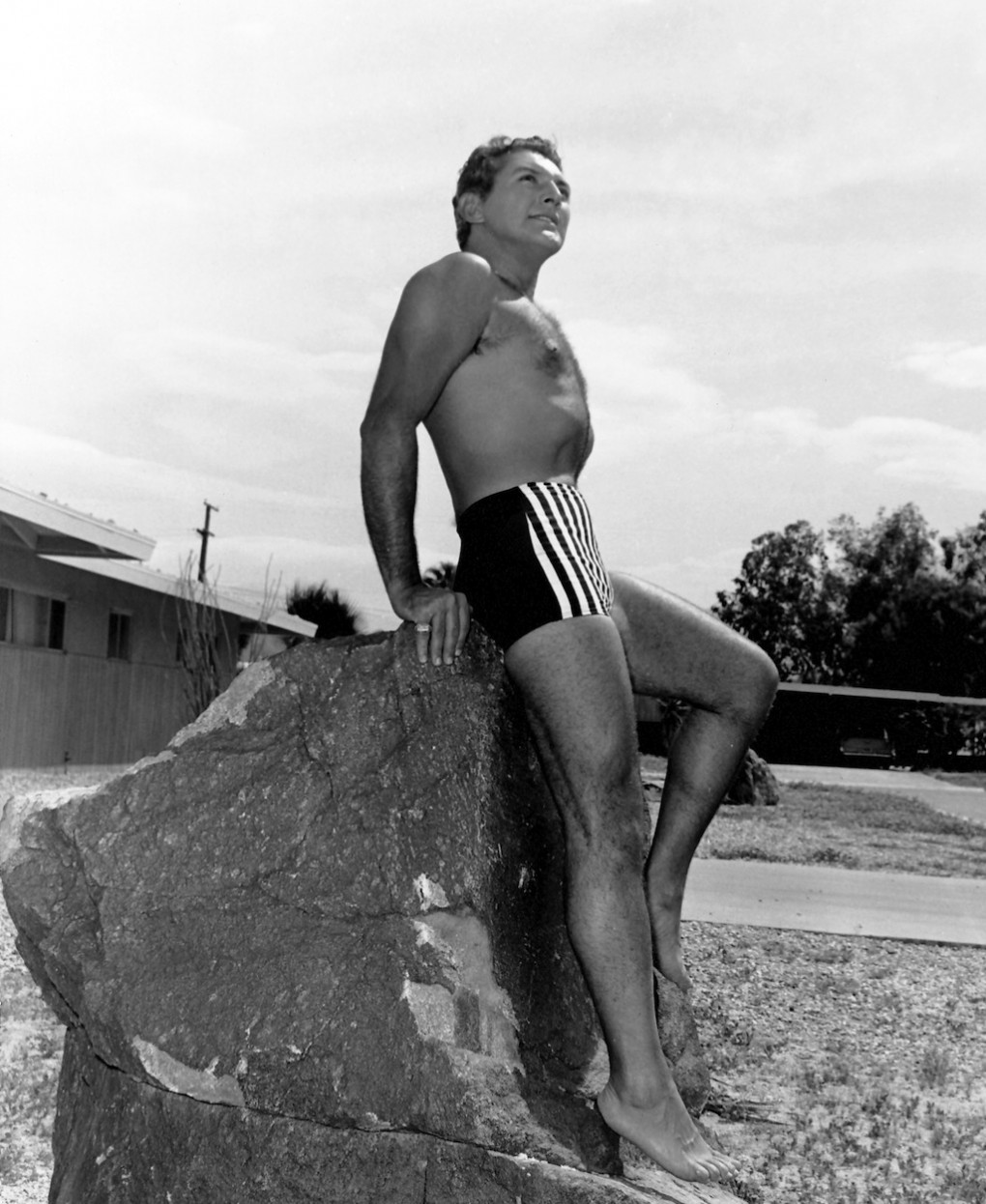
Liberace, hanging out in his front yard.

Liberace, hanging out in his front yard.

As I began to write this, I was informed by my social-media news feed that Miley Cyrus told a drunken Jennifer Lawrence to “get it together” after this year’s Oscar ceremony. I note it because, to my mind, one of the many tropes paraded and wrestled over in the field bordered by art and entertainment is earnestness—or, on the flipside of earnestness, camp and irony. Most readers are keenly aware of the role that irony plays in contemporary artistic practice. If not, one can catch up by reading Salon, which seems to publish an article on sincerity in culture once a week. For example, they grapple with David Foster Wallace and what he really meant when he said that irony is killing culture. So, I won’t go through the historical underpinnings of ironic development (except when convenient to my points later). But the gist at this moment is: How are we supposed to take this? Is there any way to react to Miley Cyrus telling Jennifer Lawrence to get it together at the Oscars other than ironically? And by that I mean we might say, “This headline is no headline. This news is not news,” and so on. Of course one could take it earnestly: “I care about Jennifer Lawrence. I want to know about Miley Cyrus. This is news!” And, while I haven’t done the field research, I am sure that some people do respond earnestly—one-thousand-percent sure, I guess. I have been trained by our culture to suspect that there’s something disturbed in worrying about a potential Jennifer Lawrence drinking problem, but at its core there’s nothing wrong with earnestness itself. I’m totally serious. I guess the real deep thinkers out there can take a stance of earnest irony. I understand that. Everybody wants to be an individual, and I’m just like everyone else in that regard.

Read the rest of the article here.

Share