Submit artwork to DailyServing!

Here at DailyServing, we are always interested in learning more about the art that excites you and/or the art that you make. Anyone can submit an artist or exhibition to DailyServing for consideration at any time. Accepted submissions will be featured on DailyServing.com for one full day, and then archived indefinitely for public access.

To submit yourself or another artist for consideration, simply email us at info(at)dailyserving(dot)com with a website URL containing images of current work and resume.

Artists and exhibitions are submitted for consideration only; there are no guarantees of posting… but we promise to look at every single one.

(Due to the high volume of submissions we are not be able to respond to all senders.)

Share

From Whence the Rainbow Came

From Whence the Rainbow Came-2

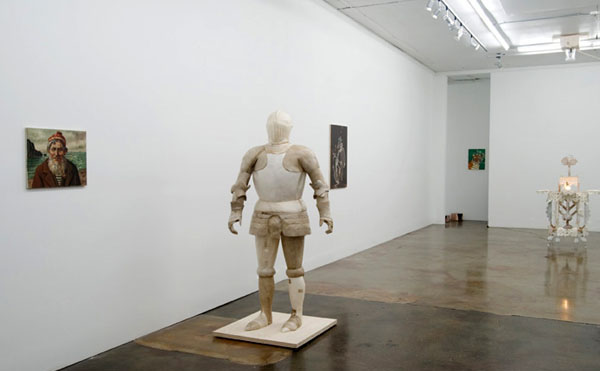
Currently on view at Ambach and Rice Gallery in Seattle is the exhibition, From Whence the Rainbow Came. The exhibition features new works by acclaimed Seattle-based artists Jeffry MitchellJoe ParkDan Webb and Claude Zervas. The collection of works defy the standard structure of a curated exhibition or the trend to have several small solo groupings presented under one roof. Instead the artists, who are all friends and colleagues, have moved away from the normal strains of producing works for a commercial venue and decided to “celebrate the freedom they feel inside their friendship and endeavor to operate on their own terms, finding consequence outside of the preset norms and expectations of group exhibitions.”

From Whence the Rainbow Came-4

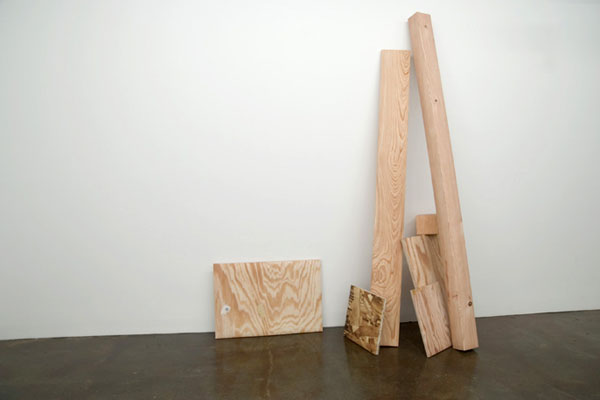
Artist Claude Zeras has created deceptively reductive sculptures that appear to be ordinary pieces of cut wood leaning against the gallery walls. Upon closer inspection, the materials are understood to be pigment prints bonded to the simple geometric forms. Zeras has completed recent exhibitions with James Harris Gallery in Seattle and Susan Hobbs Gallery in Toronto.

From Whence the Rainbow Came-5

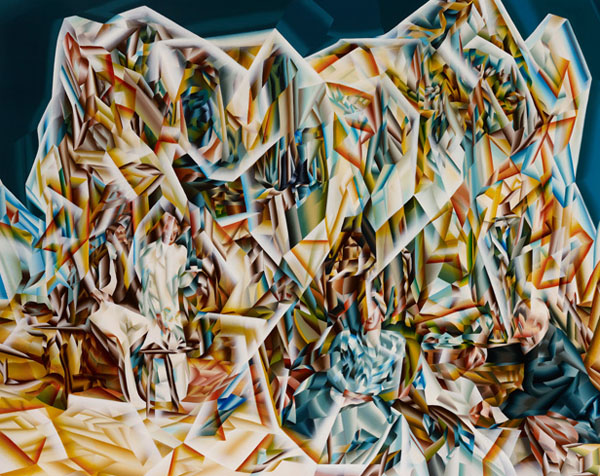
Joseph Park is exhibiting several recent figurative and landscape paintings. The small to mid-sized works synthesize art historical painting elements from both Cubist and Futurist movements, while also creating a dialogue with contemporary painting construction. The resulting forms are activated by flat and geometric shapes which are laid over otherwise static and traditionally painted surfaces. Park is represented by Rena Bransten Gallery in San Francisco and has recently exhibited at Cornish College of the Arts and the Portland Art Museum.

From Whence the Rainbow Came

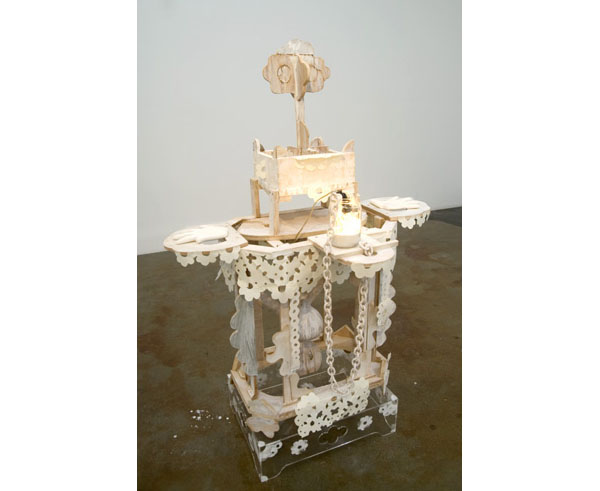
Jeffry Mitchell presents White Weeds, a sculpture that is made of wood, plaster, paper, porcelain, light bulbs, plexiglass, gouache, pencil and epoxy enamel. White Weeds marks a slight departure from Mitchell’s most classic material, ceramic, but continues to embody his use of art historical references, fusing elements from multiple art historical periods together to create a wider dialogue within a singular piece. Mitchell’s recent exhibitions were hosted at James Harris Gallery, Pulliam Gallery and the Walker Art Center.

From Whence the Rainbow Came-3

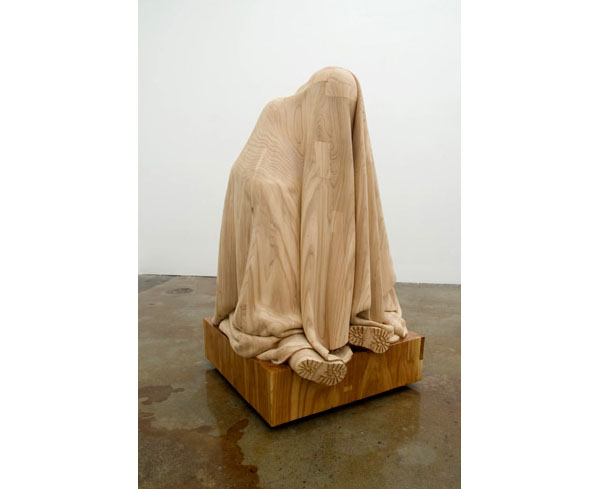
Dan Webb presents two new figurative sculptures made from carved ceder or raw hide. Each of the strikingly realistic pieces attempt to hide or cloak the figure in some way, either through fabric draping or though mock armor. Webb has recently exhibited with Acuna-Hansen GalleryBellevue Art Museum and Western Bridge.

From Whence The Rainbow Came will be on view at Ambach and Rice until October, 18th.

Share

Free Press in Free Fall

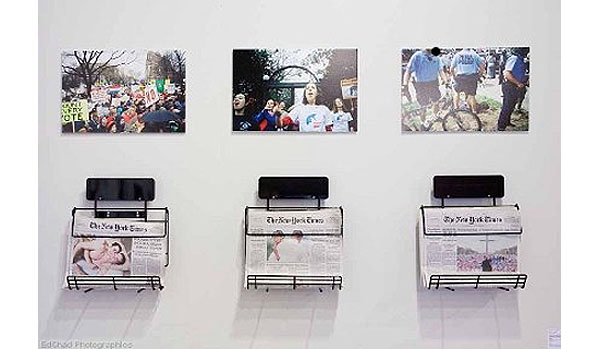
The Athens (GA) Institute of Contemporary Art is currently presenting the exhibition Free Press in Free Fall. Curated by Allie Goolrick, a graduate student in the University of Georgia’s Grady School of Journalism, the exhibition aims to address the current state of the media in the United States. It features a number of US-based artists including, Kathryn Refi, Wayne Bellamy, Gary Duehr, Melinda Eckley, John English, M. Ho, Franklynn Peterson, Marie Porterfield, Phil Ralston, Hannah Lamar Simmons, Ed Tant, Jordan Tate and Michael Thomas Vassallo. These artists have each been selected for their topical focus upon our country’s news media. These artists (whose work unfortunately cannot all be discussed) address timely issues such as the status of printed news in the digital age, the over abundance of information, and the reality of omissions and biases in the media. Rather than declaring ‘the fall of the free press’ – which would be a dubious claim – these artists seek to understand and critique news media today. In this way, the title of this exhibition would be better phrased with a question mark.
FreePressinFreeFall2
Jordan Tate Breaking News (2006)


According to the online catalogue (by both Goolrick and Artistic Director Lizzie Zucker Saltz) this exhibition asks whether digital media threatens the very idea of the free press in today’s society. As new media is unavoidably brought by globalization, many understandably lament the current proliferation of layoffs and financial difficulties of many local newspapers. Hannah Lamar Simmons’ work Newspaper Blanket is a decidedly nostalgic visualization of the decline of the news press. It can be read as a consummate expression of the familiarity and tangibility of the newspaper – furthermore as a part of our cultural fabric and the tradition of story telling. The installation is conceived entirely of newspaper woven into a ball of newspaper yarn draped over a rocking chair, placed alongside knitting needles.

Exhibit curator, Allie Goolrick, in collaboration with photographer Wayne Bellamy, examines the decline of traditional news media at a local level in a similarly reverent fashion, through the depiction of loss. An Echoing Emptiness presents digital photographs illustrating physical evidence of job loss and financial struggle at the Athens Daily Herald. These photographic images are alternated by quotes from well-known historic figures on the merit and importance of journalism in society. The gallery visitor is not only shown ‘emptied offices’, but ‘disassembled darkrooms’ that nostalgically point to the move from film to digital photography.

Franklynn Peterson’s photojournalism work from the 1960s and 1970s illustrates the darkroom approach to photography and its utility in capturing important historical moments and social issues. Importantly, Peterson’s photographic portrait of Marshall McLuhan from 1974 is projected as a 35 mm slide. The inclusion of this portrait begs brief address of what some art historical scholars determine to be our post-medium condition. Should we pay any mind to Marshall McLuhan’s famous phrase that ‘the medium is the message’? If we do, it is certain to reveal that the multiplicity of outlets in which we receive today’s news reflects the globalization of today’s world. Globalization is both the determining force for the movement away from print and the defining context of today’s news coverage.

Kathryn Refi All Things Considered (2007-2008)

Athens artist Kathryn Refi, who received her MFA from the University of Georgia, critiques news from a traditional source. In doing so, she contributes her own unique take on the prominent theme of mapping, which has gained ascendancy in our contemporary period. The artist examines news radio in efforts to map the geographic location of news coverage and illustrate its incomplete nature. Refi’s All Things Considered marks the geographic location of the news stories included on the revered NPR program to which the artist tuned in for one hour every day for the entirety of 2007. Dots were placed on blank white paper (underneath which the artist temporarily placed a map for guidance) to carefully record the areas from which news was reported. The blank paper, which excludes national boundaries and territories left vast blanks – pin pointing the relativity with which we view the world. The catalogue points out that Refi’s work ‘condenses’ a year of news into ‘visually digestible form, making it apparent how much is excluded’ – unwittingly or not. Regardless of efforts by NPR and other news sources, coverage seems to be unavoidably biased and incomplete.

Despite the pains of transition new media must be seen to have many advantages, which include an arguably lessened environmental impact. Furthermore, its ‘grassroots’ character allows greater access and a more global audience as internet access increases. Anyone can ‘participate’ by commenting on online news paper articles while also blogging and tweeting their opinion. New sources such as podcasts, iReports and news websites emerge online, serving to replace and supplement print, radio and television. The contemporary individual can usurp traditional impediments and become a visible journalistic force. The new grassroots possibility of the internet news medium came powerfully to the fore on the Huffington Post, for example, during coverage of Iran’s recent election uprising. As traditional media outlets were banned from the nation, Iranian citizens submitted their own accounts and videos of events taking place.

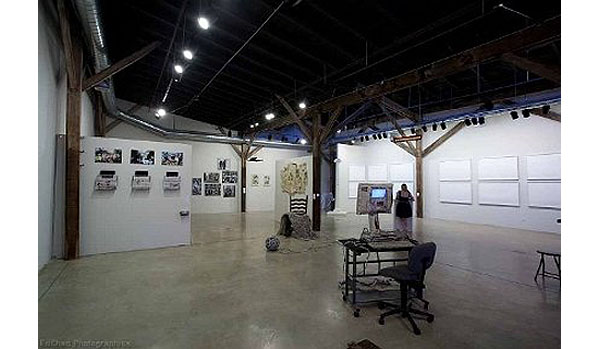
In the context of globalization, information travels faster than ever before through increasingly complex and virtually instantaneous networks. Therefore, it is now more important than ever to question the source and integrity of the news we consume. Internet opens each of us up to a global network of ideas and stories – thus to the possibility of increasing awareness. While the possibility of new media is truly global, it is important that we do not overlook the need for an intellectual filter in order to discern what is reliable from what is not. Artist Jon English’sClassic Babel, investigates the over-abundance of information in today’s world. English places speakers that play all of Athen’s local radio stations inside of a visually classical column. Through speakers on the column’s facade, an indecipherable cacophony of noise is emitted for the gallery visitor.
FreePressinFreeFall3

English and other artists featured in Free Press in Free Fall choose to create work that is stark white. As the catalogue points out, this artistic decision can be viewed as representing or reflecting the concept of white noise, which is defined as the ‘”heterogeneous mixture of sound waves extended over a wide frequency range”‘. The omnipresence and wealth of daily news can combine to become ‘background noise’ that is too overwhelming to process.

Free Press in Free Fall ultimately demands that the gallery visitor approach news media with a critical eye. It remains at the Athens Institute of Contemporary Art through 8 November 2009.


Share

Qi Zhilong

Qi Zhilong

Political pop artist Qi Zhilong‘s work is showing in a group exhibition titled, CHINAMANIA, taking place until January 3rd at ARKEN Museum for Moderne Kunst, in Ishoj, Denmark, not far outside Copenhagen. CHINAMANIA diversely collects 24 works by 11 contemporary artists, and investigates the Chinese national scene, the international vista, and even the intimate effects the (inter)national level has at the local level for individuals.

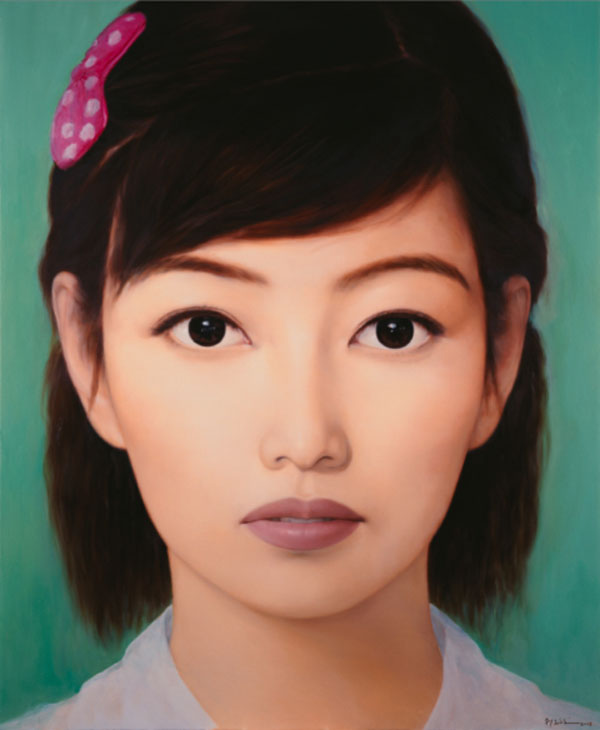
Zhilong paints head shots of women that cross-reference China’s warm memories for its Revolution with today’s advertisement portraiture, the-selling-of-soap-with-sex trend. His work in CHINAMANIA, from his Chinese Girls series (2008), showcases three portraits of female red guards. He conspicuously omits the very tell-tale red star from their caps, and contrary to the brave visages of the famous youth soldiers, Zhilong renders these women uneasy, alarmed, and apparently shell-shocked. The portraits seem to point out the impinging nature of sociocultural shifts on person-hood, the feeling of having a rug pulled out from beneath you in wildly changing times.

Born in Mongolia in 1962, Qi Zhilong graduated from the Central Academy of Fine Arts, Beijing, China in 1987. He resides in Beijing still. His last solo show, The OLYMP – Works on Paper occurred at the Galerie Burkhard Eikelmann, Dusseldorf in 2008.

Share

New Contributors on DailyServing!

We are excited to announce that we have added five new contributors to our international writing team, expanding our global coverage of contemporary art! Look out for original articles, interviews, reviews and more from our new writers in the cities listed below. If you feel that your city has amazing art events that are not getting any love from the art press, please let us know. We are always looking to expand our coverage to new areas.

Newly added cities and contributors:

Singapor: Magdalen Chua

Perth, Australia: Thea Costantino

Copenhagen: Chantel Tattoli

Dallas / Austin: Noah Simblist

San Francisco: Amiee Reed

DailyServing.com already has ongoing reports from New York, Los Angeles, Chicago, Edinburgh, Milan, Berlin and London.

Share

Olafur Eliasson: Mekanism Skateboards

zoom-home

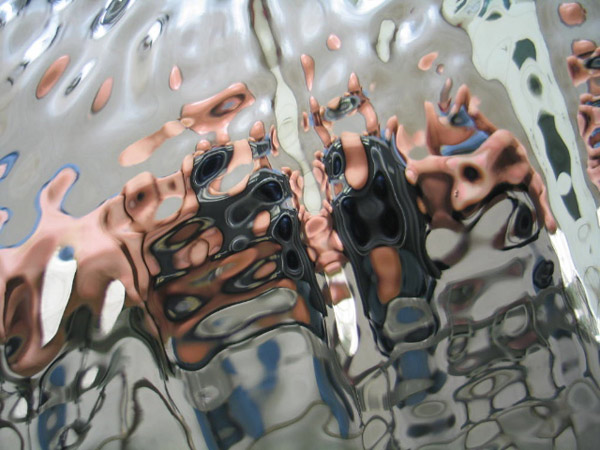
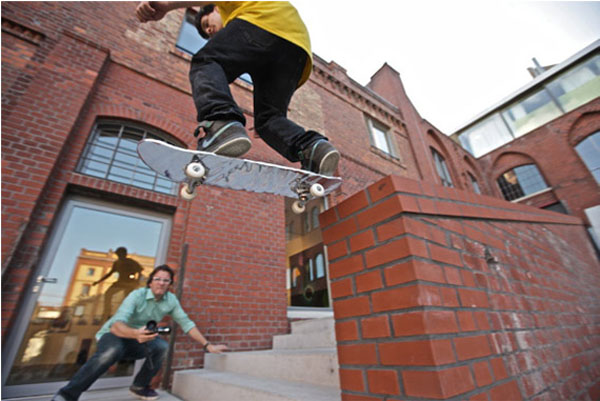
Mekanism Skateboard Company recently partnered with Danish-Icelandic artist Olafur Eliasson to custom create a new series of skateboard decks. The new work, titled Your Mercury Ocean, features a highly reflective, rippled surface that accurately mimics a liquid. The final work remains functional for skating.

Olafur Eliasson’s work utilizes sensory experience to examine the relationship that individuals have with their surroundings, in an attempt to alter the perception of the world around us. Eliasson has been featured on DailyServing numerous times for his exhibition at Chicago’s Museum of Contemporary Art, his numerous New York City Waterfalls and for his participation in the exhibition To Illustrate and Multiply: An Open Book at the Museum of Contemporary Art’s Pacific Design Center.

Eliasson

Last year, DailyServing covered German artist Dirk Skreber’s skateboard project with Mekanism.

Share

Nicole Gordon

Nicole Gordon

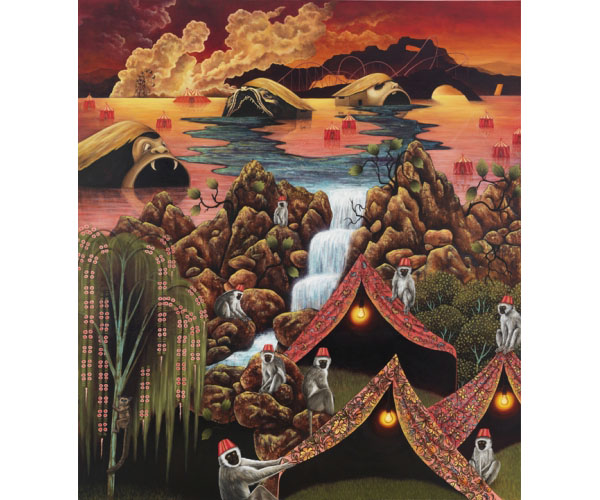
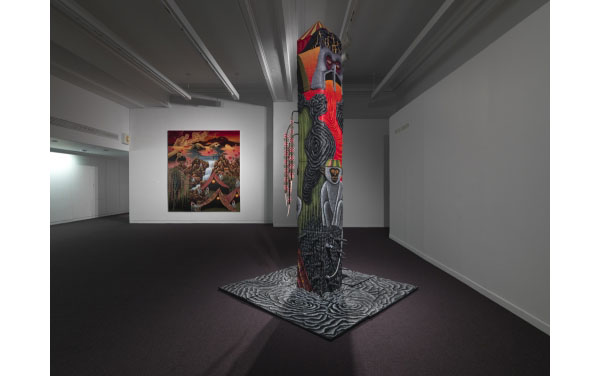
Now on view at the Chicago Cultural Center is Stateless, New Work by Nicole Gordon. The paintings by the Chicago-based Gordon employ a lush commingling of diverse stylistic references from Flemish artists to Persian miniature paintings to create her own whacky vision of the clash between urban civilization and the natural world. In her two major paintings on view here, onlooking monkeys gaze dreamily or stare directly at us, perhaps assessing our complicity in this. A centrally placed sculptural element completes this “unnatural” tableau.

Nicole Gordon

Gordon’s work can be seen as a fusion of dialectical tensions, between disparate cultures, between three dimensional “real” space and the two dimensional picture plane, as well as between civilization itself and the natural world. Her painting clearly employs imagery from Pieter Bruegal as well as his dark allegorical sensibility and moral tone. But it also has specific references to the patterning of Persian miniatures and to be flattened, layered Asian perspective. Thus East, Mid-East and West are conjoined in these paintings. Ultimately the exhibition can be seen as commentary on our relationship to the natural world and on the representation of our place in it.

Nicole Gordon’s work has been presented in numerous exhibitions in the Chicago area including ones at Linda Warren Gallery, Peter Miller Gallery, Artemesia Gallery, and theContemporary Art Workshop. Her works have also been exhibited in the John Michael Kohler Art Center.

Share