Tell Him He’s Perfect

L.A. Expanded: Notes from the West Coast
A weekly column by Catherine Wagley

Rise of Rebellion: DailyServing’s latest week-long series

We continue our week long series, Rise of Rebellion, by taking a look at how resistance and rebellion overlap.
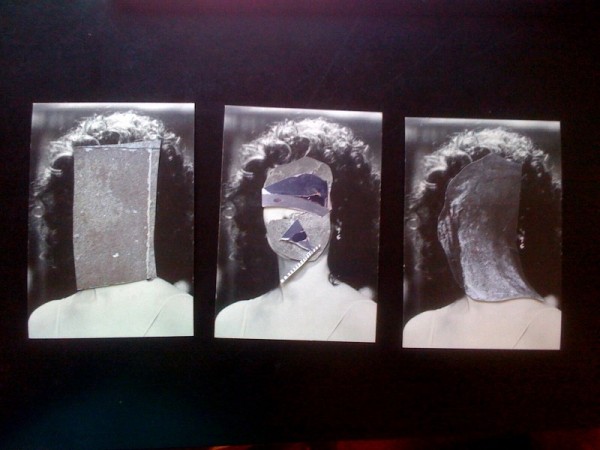
Brian Bress, Masked images. Courtesy LACE.

On the back left wall of Pepin Moore‘s gallery space–the same endearingly domestic space that, just a few months ago, belonged to China Art Objects–there’s a noirish print by Brian Bress. It’s hanging in Second Story, a low-key exhibition that features a sampling of the artist’s multiples that will be shown in the upstairs loft once the  gallery’s official season begins. It depicts a bust that,  I think, once belonged to Natalie Wood. But the face has been obscured by torn strips of  paper and it’s the obscuring that matters most. The print recalls Irving Penn’s Saul Steinberg in Nose Mask (1966) or Marcello Nizzoli’s Portrait of a Woman (1936), a photograph in which a smiling female face is half covered by white paper and colored with green and red crayon. It resists beauty, but it’s still elegant.

This particular print feels like a distilled version of Bress’s more unruly installation and video work, and the crinkles in the brownish and purple paper that cover the face particularly resonate with the surfaces of Disaster Family, a limbless fantasia of felt figures that Bress included in LACE’s 2008 exhibition, Against the Grain. There’s something violent about Bress’s refusal to give figures flesh or features–it obscures individuality while internalizing intimacy and resisting the outside world.
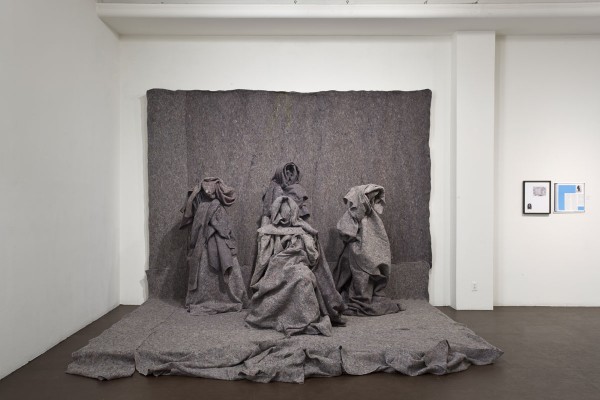
Brian Bress, "Disaster Family," from Against the Grain, 2008. Courtesy LACE.

Resistance was more or less the point of Against the Grain; it aimed to subvert a stiff political aesthetic in favor of something more sensuously contentious. It responded to Against Nature, a 1988 exhibition  curated by Dennis Cooper and Richard Hawkins, and both shows took their titles from different translations of A Rebours, a melancholic French novel by J.K. Huysmans about a sickly nobleman who withdraws from society to live alone with his own exquisite sense of decorum. But only a few pieces in Against the Grain–Bress’s was one, along with Julian Hoeber‘s series of glitzy bronze heads–came close to the seductive recalcitrance of Against Nature, which confronted the problem AIDS posed for artists who wanted to be provocative without being polemical.

By 1988, the clean-edged, unambiguous Silence=Death icon, designed by AIDS activists in New York, was already circulating. The back cover of Against Nature‘s catalog echoed the slogan but did so by superimposing a seraph script over an  image of an apothecary dressed in a black-beaked, plague-resistant gown (he could have easily figured into Bress’s Disaster Family). Against Nature didn’t reject the political dimensions of sickness in general or AIDS in particular, but it did favor ornamental musings on beauty, bodies and illness and its fidelity to taste seemed strangely aggressive.
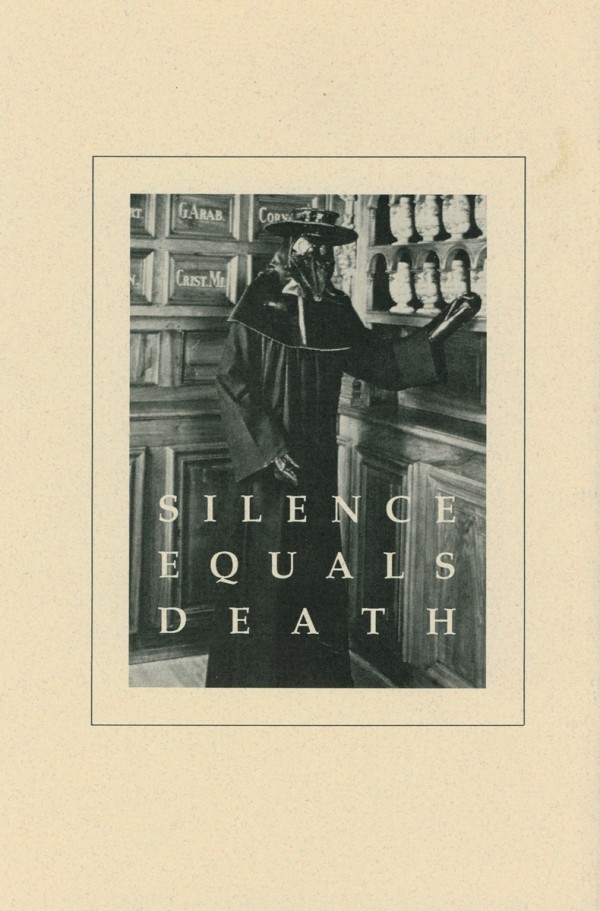
Against Nature Catalogue, back cover, 1988. Courtesy LACE.

"Against Nature" catalog, back cover, 1988. Courtesy LACE.

In his catalog essay for Against Nature, which reads like fiction, Dennis Cooper navigates his desire for a man named Pierre, who is purportedly trying to help Cooper out by writing about the exhibition. The two men move back and forth in cagey,  often tangential dialogue. In the end, Pierre makes it clear that he’d rather not get too close to Cooper; it’s not because he’s afraid of AIDS but more because he just doesn’t know what to be afraid of or what to want in general. When Cooper reads what Pierre has written, he realizes it’s unusable:

(It’s a description of Pierre in very hackneyed, glowing terms . . . it doesn’t have anything to do with this show, [and there’s no way I’m going to print it] as beautiful as Pierre looks today, even upset. But he’s my friend so I’ll tell him he’s perfect.)

The essay, like Pierre, is evasive and uncertain. It resists pontification, though written in a moment that seemed (and was) politically dire, and it resists indulgently.

Indulging in ambiguity can be dangerous–you risk being misunderstood–but it’s indulgence that made Against Nature so timely and rebellious.

Share

Rebellion, Four Ways

Rise of Rebellion: DailyServing’s latest week-long series

Today, Bean Gilsdorf looks at some of the artists that have broken the art world’s mold in her latest article Rebellion, Four Ways, as a continuation of our week-long series Rise of Rebellion.

Not long ago I had a conversation with a fellow artist.  “I’m thirty years old,” she said, “and I’ve never really rebelled.”  We talked about what rebellion means; it turns out that while I was imagining the traditional route of sex/drugs/rock-n-roll, she had something tamer in mind: “I was thinking about not bathing for a while.”  I admit that I laughed out loud.

She and I were both thinking about social nonconformity in general, yet there are forms of revolt more specific to art and its milieu.  True rebellion is a personal action, a stance to take against the machination of a system whether overt or hidden.  When people talk about “the art world” they refer specifically to the capitalist market-driven system of exchange that takes place in the slim area of overlap between makers, dealers, and buyers.  It’s a system of production and consumption like many others that relies on indoctrination, social pressure, and buy-in to a set of assumptions.  In order to succeed in this world artists must play the game and follow the rules—all very insidious in a field that is purported to be about freedom and expression.  Winners learn to play well and are rewarded for running within the confines of the maze and pressing the lever at the end. But the “art world” is not art, and never should the two be confused.  Below are some of the tacit rules of the art world and the iconoclasts who break them.  Consider this food for thought.

Paul Chan, The laws are my whores (2009). Suite of nine drawings, charcoal on paper, 39.5 x 27.5 inches each.

Paul Chan, Oh why so serious? (2008). Plastic and electronics, computer keyboard, 3.25 x 18.5 x 8 inches.

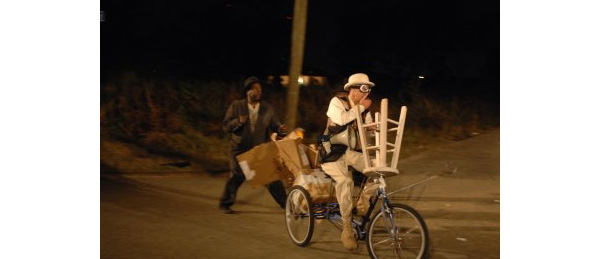
Paul Chan, Waiting for Godot (2007). Performance view, South Ward, New Orleans.

1.) Make all your work recognizable.  A body of work is consistent and easily identified.

You’re a brand, and if you want to sell you need to make your brand instantly recognizable—just like a Louis Vuitton handbag or an Apple computer.  Tell that to Paul Chan, the 37 year-old auteur of videos, sculpture, drawings, paintings, light projections, computer fonts, and the co-stager of five site-specific performances of “Waiting for Godot” in post-Katrina New Orleans.  There is no “recognizable” here, no direct sense of continuity from show to show or even piece to piece; if you didn’t read the wall label you might not know who made the work.  There is only a joy of making; freedom of expression, indeed.

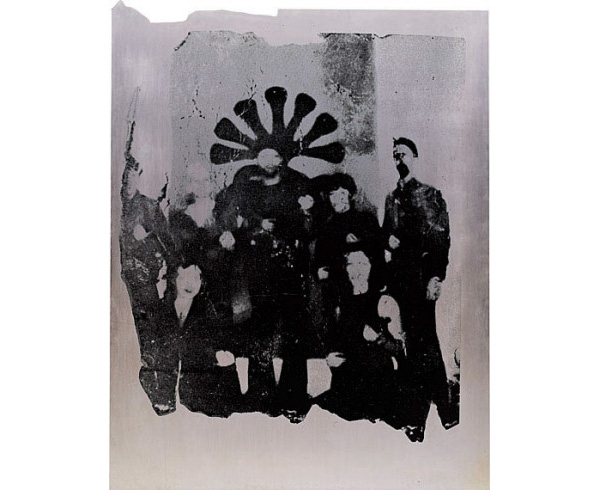
Cady Noland, SLA #4 (1990). Silkscreen on aluminum, edition 4/4, 78 3/8 x 60 5/8 x 3/8 inches.

2.) Promote your brand incessantly: lectures, residencies, studio visits, and visiting-professor gigs will help you advance.

It’s true that for most artists there is a social context to the work: after all, if no one knows what you make, how will they know if they like it or not?  But is it true that one must exploit every connection, every opportunity, every possible avenue for social growth to create a career in the arts?  Ask Cady Noland…oh, but you can’t.  The reclusive artist won’t answer your email and won’t work with you if you she doesn’t trust you. Despite her many successes, Noland dropped out of the art world; self-promotion is not a game that she plays.  In a 1994 review of Noland’s work, critic David Bussel wrote with keen prescience, “Anyone can be made into a hero or villain because minor celebrity is just another disposable object of mass consumption.”  Despite Noland’s reticence to engage with the public, her work continues to be in demand.

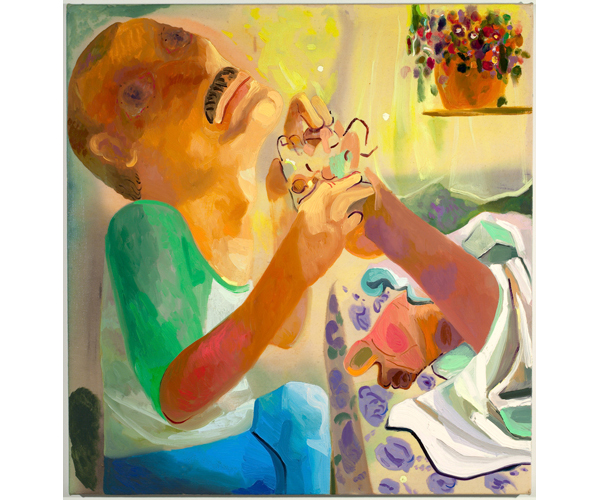
Dana Schutz, Blind Foot Massage (2009). Oil and acrylic on canvas, 36.25 x 34 inches.

3.) Hit the big time: get rich, develop a waiting list, and hire a cadre of laborers to keep up with the demand.

(Bonus points if your laborers live in “developing” countries and you make this part of your schtick.)  This is the model proposed by Andy Warhol and adopted by Jeff Koons.  Some, like Kehinde Wiley and Takeshi Murakami, even make it an overt part of their practice to manage a hive of workers.  In the overheated atmosphere of the art world, it’s easy to think that the artist who doesn’t meet the production quota dictated by collectors is a species of failure.  It is said that Dana Schutz makes all her own paintings (unconfirmed by her gallery at the time of this publication), waiting list be damned.  For an artist of her stature to do so is a very passionate and hopeful gesture, proof that rebellion isn’t always some kind of adolescent sneer: sometimes it’s just sticking to one’s principles.

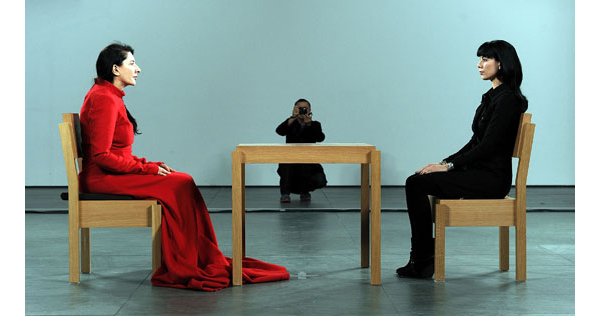
Marina Abramović, The Artist is Present, (2010). Performance at MOMA, New York.

4.) Be famous, get old, drop out.

You’ve got enough money, and maybe university tenure.  This is the time to take it easy: make work that just repeats your best years ad nauseum, or even stop working altogether.  Disproving this are John Baldessari and Marina Abramović, who continue to work hard and push beyond previous limits.  Baldessari is 79 years old; in the last five years he designed the exhibition Magritte and Contemporary Art, had strong new work at his show at Sprüth Magers (Berlin) earlier this year, and currently has a long-overdue retrospective, Pure Beauty, at LACMA.  Abramović, now 64, describes herself as “the grandmother of performance art.”  Performing The Artist is Present this past spring at MOMA, she asserted the right and privilege of the artist to continue to explore her own work, to mine it and delve ever-deeper into unknown territory.  This is the benefit of utilizing a lifetime of knowledge, growth, and experience to make innovative art.  May we all be so blessed.

Share

Yes, but: Rebellion after Guston and Clemenza

Rise of Rebellion: DailyServing’s latest week-long series

As we continue our week long series Rise of Rebellion, we take a look at the cyclical nature of conflict and growth through the work of Philip Guston and the wisdom of Peter Clemenza in our latest article by Andrew Tosiello.

Philip Guston. "Oasis", 1957. Oil on Canvas. 61.5 x 68 in.

To be perfectly honest, I’m probably the last person who should be writing about rebellion. Not only am I beginning to comfortably occupy a full-time job and its attendant material security, but it has been a long time (if ever) since I’ve really stuck it to the man. More importantly and the main reason that this essay begins as quasi-apology (to the reader and the editors) is that, truth be told, I’m not fully convinced by rebellion as an effective strategy for wholesale change. (Sorry Daily Serving. I hope this won’t negatively impact future writing opportunities!)

It’s not that I don’t want to believe in rebellion, believe me. I do. In my heart I long for uprising and the final, decisive casting off of oppression after intense struggle —I’m a romantic. Unfortunately, that desire just doesn’t seem to be sustainable when I really consider it.

Rebellion, to me, suggests a fight against an existing system with the goal of toppling it and replacing it for good. It’s a dialectical process with teleological implications. Revolutions aren’t aiming for half-measures, they’re not seeking compromises and they certainly don’t anticipate their own downfall at the hands of future insurgents. Rebellion’s appeal lies in its all-in quality. It provides a sense of security about one’s (hell, the world’s) destiny being within one’s power and that it will be that way forever.

I want to make it clear that I don’t think that standing up for what’s right isn’t necessary or justified. It is. I do want to draw a distinction, though between protest and rebellion. In many ways, they’re similar, but they’re not the same. Where protest seeks to modify a system, rebellion seeks to overthrow one; consign it to the dustbin of history. Protest stands a chance of working (and has worked) and of producing lasting change. Rebellion, well, you know where I stand.

Philip Guston. "Daydreams", 1970. Oil on Linen. 180.0 x 203.5 cm

In 1970, Philip Guston debuted his now famous figurative paintings at the Marlborough Gallery. It was a shocking turn from pure abstraction by one of its most respected practitioners. It was enough of a rebellion for Hilton Kramer to title his review of the show “A Mandarin Pretending To Be A Stumblebum,” and for Marlborough to drop him from its roster. Yet, Guston described the change in his work as resulting from a sense of moral duty to directly engage with the world and its politics.

It would be foolish to try and cast Guston in the role of a revolutionary leader striking a blow for figuration and then to discredit him by pointing to the failure of Neo-Expressionism as a lasting movement. Guston’s rebellion was purely a personal one, it would seem and he can’t be blamed for those he inspired. Of course, this myth of the rebel Guston can be deflated when the fact that those late paintings were a return to his earliest themes and had developed out of his experience making his lyrical abstractions. Additionally, his late paintings did not render hollow his previous work, but rather strengthened it by suggesting the existence of those same themes, only submerged or sublimated in paint. Guston was not a rebel, but someone committed to growth, no matter what the cost. This growth, of course, was achieved only through struggle, but not one which was aimed at toppling or overthrowing, but building and enriching.

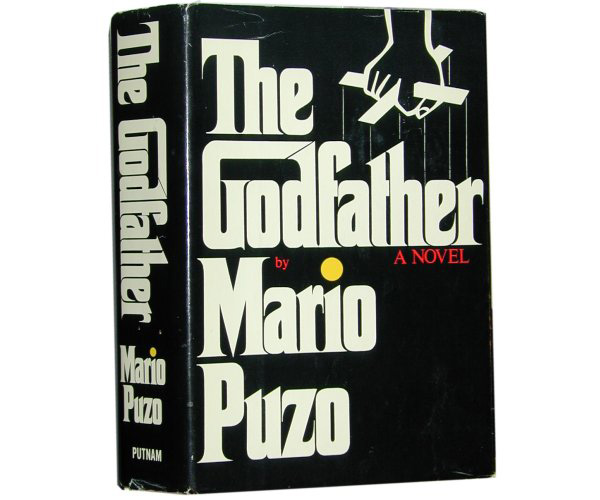
This is one view of a productive, if not rebellious, engagement with struggle against established modes. As the two sons of Vito Corleone plan the first salvo in an inevitable mob war in Mario Puzo’s The Godfather, the fat caporegime Peter Clemenza tells them, “These things have to happen once every ten years or so. It gets rid of the bad blood.” This sentiment not only proves Clemenza’s veteran status, having endured previous conflagrations, but presents an anti-romantic view of such struggles, assigning them no more purpose than to relieve building tensions. It is an odd sentiment in a book that valorizes violence and decisive action as means to achieving one’s destiny.

Clemenza’s comment demonstrates an understanding of this war not as a part of a teleological process, leading to a final, lasting resolution, but an unending, though productive, cycle of strife and peace. In contrast to the sons who see war as fated and fraught with unalterable consequence, Clemenza views it as an almost neutral occurrence with little lasting effect.

Rather than seeing art through the eyes of Clement Greenberg who saw a history of rebellions leading to a final purity, one can imagine a series of struggles which purge bad blood, produce new alliances, allow for new ideas and subtle change. It seems to be both realistic and hopeful, but it isn’t rebellion.

Share

Use and Abuse

Rise of Rebellion: DailyServing’s latest week-long series

Today on DS, we look at the desire and longing for rebellion embedded in the work of Nan Goldin, Larry Clark, Dash Snow and Ryan McGinley. Check out how the acts captured in these artists’ work become an icon for a generation desperate for a more rebellious lifestyle.

Nan Goldin. Joana with Valerie and Reine in the Mirror, L'Hotel des Beaux Arts, Paris, 1999.

Thinking back to the days of being a rebellious teenager make me want to run the other direction. There is nothing worse than revisiting the angst and discomfort of adolescence – my mild rebellious behavior and general dislike of the world around me. Rebellious acts always seem mediocre and immature to me these days, despite living a very 20-something lifestyle. But there have always been those artists that so tactfully ride the line between a perfectly composed yet rebellious life that I inherently envy. I find it fascinating to watch the career of artists who successfully make work that is both personal and universal, unruly and conforming, attractive and disgusting – who document their own outsider world and show our distance to it.

Dash Snow. "TBT", 2008. Photograph - Digital C Print 40 x 60 inches (101.6 x 151.8 cm) + frame Edition of 3 + 2AP. Courtesy of Peres Projects.

This rebel has long been the muse of the artist. And when I consider the muse, Nan Goldin and Larry Clark‘s use and abuse of the rebellious lifestyle become both personal document and cultural reality, while assuming the roll of Art Historical mainstay in the category of the documentary photograph. But Dash Snow, a true example of both insider and outsider, straddled this relationship and found a way to make the chaos of his life appear both seductive and desirable. A hero of punk culture, Snow’s rebellious history and lifestyle was the subject and an embodiment of his work – both personal anthem and documentation. Snow sold his own context, using his life as a guarantee of credibility and reality to the outside world, by choosing to participate in the contemporary art system, yet his product was a life through the photographic document.

Both “genius” and tortured soul, Snow’s lifestyle was muse and product- and ultimately it was his rebellious lifestyle that brought him to an early death. Ryan McGinley equally rides this ambiguous line, to the point that I can’t decide if his work is rebellious or utopian. There is something about the idealized reality in his work that harks back to the personal documentation of Clark and Goldin, but successfully sells his own contemporary youthful lifestyle.

Ryan McGinley, Coley (Injured), 2007

The act of rebellion doesn’t always lead you in the opposing path of the system or lifestyles that it moves against. And, often the very thought or association of rebellion becomes so desirable to the masses because it appears to be simply out of their grasp. All of these artists have successfully depicted their own rebellious lifestyle and have offered this spirit back to a complacent public that longs for the moment to  give up the boredom that fills their normal lives and grab onto the freedom that is falsely associated with rebellion.

Share

Jobs Suck and Art Rules: Today I Made Nothing at Elizabeth Dee

Rise of Rebellion: DailyServing’s latest week-long series

On the heels of our week-long themed series 7 Days of Myth and Summer of Utopia, DailyServing is proud to bring you a collection of writings that explore the use of rebellion in contemporary art in this week’s series Rise of Rebellion. In this latest week-long series, our writers will explore the ways in which contemporary artists are using rebellion as a central concept in their artwork through exclusive interviews, articles, essays and daily features. Check in each day to examine the rebel that lives in all of us.

Today we begin our investigation into rebellion with Jobs Suck and Art Rules: Today I Made Nothing at Elizabeth Dee by Michael Tomeo.

Today I Made Nothing, Organized by Tim Saltarelli, Elizabeth Dee, New York, NY, July 27 – September 18, 2010, Installation view Courtesy Elizabeth Dee, New York

I’m so over jobs right now. Sure, we need them, we’re thankful for the paycheck and it’s fun to hang out with coworkers (sometimes), but let’s face it, jobs blow.  While the total freedom associated with making art seems antithetical to the 9 to 5 slog, there are definite correlations between art and work and they are given form in the impeccably timed Today I Made Nothing at Elizabeth Dee Gallery.

Virginia Overton, Untitled (chairs with lights), 2009, chairs, light fixture, ratchet strap, Dimensions variable, Courtesy the artist and Elizabeth Dee, New York

There are two types of workplace rebellion on view here. In one, the artist is an outsider, fighting for equal rights and clashing against the system. Works like Alejandro Cesarco’s Why Work?, Duncan Campbell’s Factories Act 1961, and Jonathan Monk’s The Sound of Music (A Record With the Sound Of Its Own Making), each use techniques and ideas from the 1960s and ‘70s such as appropriation and institutional critique. Vaguely recalling the efforts of the late-60s collectives such as the Art Workers Coalition, these works feel a bit dated, but they lend the show a historic scope.

Joseph Strau, title forthcoming, 2010, mixed media installation with floor lamp and two paintings, dimensions variable, Courtesy the artist and Elizabeth Dee, New York

Another group of artists is more successfully subversive. Mika Tajima, Renée Green, Joseph Strau and Virginia Overton each use the visual vocabulary of today’s corporate world as if they are involved in a diabolical inside job. Overton’s Untitled (chairs with lights) reconfigures mordant institutional design to create what is ostensibly a badass floor lamp/sculpture.  Joseph Strau’s title forthcoming, presents two dainty abstractions with a lamp in front of them, as if Franz West were the display manager at IKEA. Mika Tajima’s A Facility Based on Change, an impenetrable work cubicle, updates the underlying claustrophobia in minimal sculpture for the middle management set. Renée Green’s banners take on the look of corporate brainstorming lists in what she calls Space Poems. They’re funny, off-putting and deceptively smart. In a room full of works attempting to challenge the boundaries of what art is, these might take the cake.

Renée Green, United Space of Conditioned Becoming: Space Poem #1, From My Institution Corporation Factory Blackberry Cellphone Mouth To Yours, 2007, double-sided color banner 42 x 32 inches (106.7 x 81.3 cm), Courtesy the artist and Elizabeth Dee, New York

It’s a sign of progress that, in a show about working, women have the strongest presence.  However, other forms of advancement prove more difficult to measure. In the ‘60s, artists protested museums at a level unheard of today. As rebellious as this show portends to be, many of the artists on view are up and coming museum stars in their own right. Museums have begun to absorb rebellion as part of their aesthetic and they increasingly embrace and reward all forms of institutional critique and artist manipulation.  By welcoming more acts of critique into their halls, they glean the benefit of appearing like nurturing patrons, but they also anesthetize any sense of real rebellion. We still have a long way to go, but Today I Made Nothing is an excellent place to start the conversation.

Share

From the DS Archives: Interview with Drew Heitzler

This week, From the DS Archives has chosen to reintroduce Catherine Wagley’s interview with artist Drew Heitzler.  Heitzler’s film installations are worth revisiting for the way they explore history and narrative through manipulated found footage as well as his own new work in film.  Notably inspired by the precedent of history paintings like The Oath of the Horatii, Heitzler presents us with filmic narratives of the past that provide new meaning in the present.

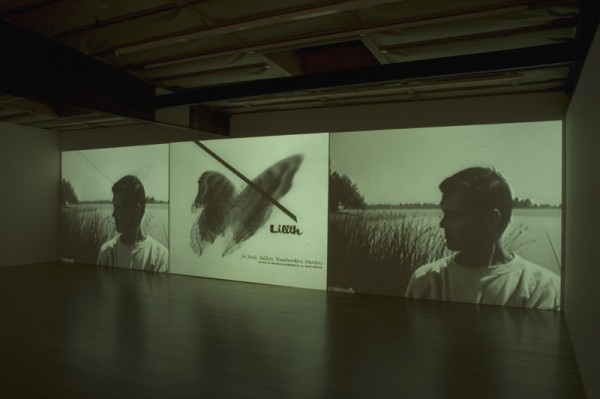
Drew Heiztler, "for Sailors, Mermaids, Mystics. for Kustomizers, Grinders, Fender-men. for Fools, Addicts, Woodworkers and Hustlers." Installation View. Courtesy Blum & Poe.

Drew Heitzler rephrases history in ways that seem both furtive and strangely revealing. In his most recent work, he culls characters, settings, and plots from the visual history of the still-young Los Angeles. Rearranging and re-imagining three films from the early 1960s, all of them productions in which the rebel spirit of Easy Rider seems to be slowly eating into the stylized melodrama of noir, and also gathering an expansive archive of still images from Hollywood of yesteryear, he’s created a narrative that confuses the past in order, paradoxically, to clarify the hidden truths about desire and culture that lurk beneath it.

Heitzler, who participated in the 2008 Whitney Biennial, recently exhibited at LAX Art and Angstrom Gallery among, other venues. for Sailors, Mermaids, Mystics. for Kustomizers, Grinders, Fender-men. for Fools, Addicts, Woodworkers and Hustlers, his current exhibition at Blum & Poe Gallery, closes January 30th.

CW: Your current exhibition makes me think of remixes and mash-ups—art forms that are about rearranging someone else’s cultural product and telling a different story. What prompted you to re-edit historical film and images?

DH: Subway Sessions and TSOYW are two previous films I made and actually shot. The first on super-8, the second on 16mm (TSOYW was a collaboration with Amy Granat and was included in the 2008 Whitney Biennial). In both cases I relied heavily on the tropes of specific film genres. Subway Sessions used the aesthetics of 70’s surf films to tell the story of a certain time and place, specifically, Rockaway Beach New York just prior to September 11, 2001. TSOYW looked like a 70’s biker film and relied heavily on the tropes of that genre. So it wasn’t a big step to go from using the look of earlier film genres to actually using earlier films themselves. Also, I had read a book on documentary film making by Erik Barnouw that my wife Flora found for me in a thrift store. In the book, the Soviet cine-clubs were discussed. It seems that after the revolution it was impossible for Russian film makers to get film stock due to western boycotts. What they had in abundance were western news reel and even films that were being smuggled into Russia in effort to undermine the Revolution. The cine-clubs would re-edit these films and news reels in order to create new narratives that supported their cause. I liked this idea of re-ordering an existing cultural image to better fit your own perception of the world. It’s collage.

CW: How important is story-telling to you?

DH: Story telling is what I am interested in. I love those French paintings like The Oath of the Horatii or The Raft of the Medusa. They operate like movies. They tell stories which can exist at different allegorical levels.

CW: Each of the three films that make up for Sailors, Mermaids, Mystics. for Kustomizers, Grinders, Fender-men. for Fools, Addicts, Woodworkers and Hustlers. (Doubled ) were originally presented on their own, right? Why combine them?

DH: The combining of the films came out of a problem of exhibition. This show was originally scheduled to open at MOCA in May, 2009. Then it was postponed to September of that year and then postponed again to January of 2010 before it was eventually canceled all together. The result was that I had a long time to think about how these three films would be presented. I had always intended for them to come together as a trilogy, but as I kept messing around with ideas of how they would actually be presented in the gallery, they morphed into a triptych, becoming a whole new piece. What I discovered and enjoyed was that once the three individual narratives were doubled and superimposed over one another, they operated in a much more complex way. The individual narratives were still visible, but complicated by their interaction with one another. In other words, the lines of thought were confused, which seems to me much closer to the way we go through life. At least that seems to hold for me.

Drew Heitzler. Installation View. Courtesy Blum & Poe.

CW: The other day, you used the words “sticky stuff,” referring to the way the oil industry lurks underneath L.A. culture. I love those words and they’re definitely relevant to your work. How do you relate the historical, anthropological side of your project to its sticky, psychological underbelly?

DH: I think it has something to do with the problem of truth, or more accurately its impossibility. I came to Los Angeles with an idea of what I would find when I got here. It was the idea that had been presented to me, sold to me in a way. What I found was something completely different. History and anthropology work the same way. They present themselves as framing a truth while they are only presenting a perception (I was assistant to Fred Wilson for several years and I learned from him how important this idea is). However, the idea of truth is absolutely vital to our ability to exist as a society, this is common sense. Likewise, sublimation is absolutely necessary for the ego to exist within a society. There are rules to follow. Once again, the only way this sublimation works is to accept certain ideas, certain perceptions as true. But just like the oil that bubbles up into the sunny Los Angeles landscape, the sticky stuff that we sublimate, keep subterranean, or relegate to the subconscious can’t be kept at bay. It always bubbles up.

Read More »

Share

Liberated Women

L.A. Expanded: Notes from the West Coast
A weekly column by Catherine Wagley

Helio Oiticica & Neville D'Almeida, "Cosmococa 5: Hendrix - War CC5-11," 1973 / 2003 C-print mounted on aluminum. Courtesy Michael Benevento, Galerie Lelong, NY and Joshua White Photography.

A friend of mine, a sculptor with immense brown eyes and a long figure that that always looks both cautious and comfortable with itself, was standing next to her brother’s Ford Explorer outside an Illinois gas station. They’d just been to see their grandfather in a rest home and it was the morning of Louise Bourgeois’s death, so my friend felt reasonably subdued. A man in a black sedan with windows down drove by and slowed to a crawl. “Do you have any idea how sexy you are?” he said to her, sort of jauntily. She dropped her eyes, turned and rammed her head up against the Explorer’s doorframe, keeping it there until the sedan drove off. She has no idea why she did this, and I’ve made her describe it to me, blow-by-blow, three times at least. Her behavior feels vulnerable, resistant, violent and yet weirdly liberated. It’s a reaction against sexy—or at least the breed of sexy the man in the sedan felt he could access. But it’s also sexy itself, the spontaneous assertion of an inexplicable instinct.

Spartacus Chetwynd, "Hermito’s Children," Video (color, sound), 2008. Courtesy Michael Benevento and Joshua White Photography.

Everlasting Gobstopper at Michael Benevento, an exhibition that’s more reflective than its title suggests, is sexy expressly because of the sexinesses it rejects. The show has a grittily commemorative mood, like the setting for a party that’s bound to be oddly romantic, Disco-indebted, yet still somber. The entry way walls are painted black—it takes a moment for your eyes to adjust—and a dark purple poster of a howling wolf, painstakingly drawn by Eva Rothschild before she moved on to Cold Corners and other wonky minimalist projects, hangs opposite the door. Next comes a posse of paintings from Spartacus Chetwynd’s Bat Opera series; Rothschild’s triangular black Perspex tower; counterculture queen Lil Picard’s terrifyingly delicate burnt polka-dot bow-tie; Michael E. Smith’s dry black paintings and crusty floor pieces; and Cindy Sherman’s piquantly pink autumnal death scene. But all these mostly serve as the supporting cast for Chetwynd’s Hermito’s Children, a three part video installation that plays out on 14 stacked monitors at the back of the main gallery space.

Like a filmic novella spawned by a Truman CapoteJack Smith marriage, Hermito’s Children presents characters who are obsessive, articulate, eccentricity prone, and vested in one another’s sexuality, though only vaguely interested in sex. Watery graphics dance across the screen to the sound of portentous woodwinds as act one, The Case of the Poisonous Dildo, commences. Less mystery than cameo, The Case features a matronly protagonist who wears a zig-zagged muumuu and sounds like Edgar Oliver with a lisp. She tells viewers not to be frightened as she introduces her unconventional, androgynous family: an ex-husband who runs a raucously happy Jewish restaurant, an absent daughter, and a deep-voiced assistant with a hog’s nose. In act two, an innocent girl in a body suit listens to a worldly “puppet master” who tells her “a dancer who relies on the doubtful prospect of human love will never be great.”

Halfway through act three,called Helmut Newton Ladies Night, the muumuu-wearing matron reappears and refers to a tomboyishly debonair troupe of women. “You are seduced by these women,” she says. “[But] what they’re doing is not that dangerous. Your imagination exaggerates it.” Then “these women” ritualistically dance to experimental metal, spoofing on Helmut Newton’s iconic 1981 image, “They’re Coming,” in which four svelte figures advanced toward the camera.

"Everlasting Gobstopper," Installation View, 2010. Courtesy Michael Benevento and Joshua White Photography.

Newton once said he couldn’t work pornographically because he didn’t do rough: “Rough stuff is real; it’s not posed. The trouble with my pornography, it’s too chic.” The bodies in Hermito’s Children aren’t posed or chic, but they’re not rough either. They’re somewhere in between. One of my favorite moments comes near the end. A group of nude women form a  sculptural rectangle. It’s stoic, formal and literally objectifying. But then a face breaks from the group and erupts in an inaudible, punkish yell. I like the idea that incongruous, fiercely independent bursts of emotion could be a way to claim sexiness as your own.

Share