Help Desk

Help Desk: Solo No No

Help Desk is where I answer your queries about making, exhibiting, finding, marketing, buying, selling–or any other activity related to contemporary art. Submit your questions anonymously here. All submissions become the property of Daily Serving.

I’m updating my CV and visited a friend’s website to clarify the details of a collaborative piece we worked on a few years ago. While looking for that project, I came across a different listing that we also shared, a two-person exhibition that he has billed as a solo exhibition. A gallery approached us wanting to do a two-person show. He and I both showed independent and collaborative pieces (I think we each had two pieces that were not collaborative, but which provided context for the collaborative pieces); but the project that the show was named for was completely collaborative (we devised the concept together, titled it, checked in with one another as the pieces developed, etc.). I have this billed on my CV as a two-person exhibition, he has it listed as a solo exhibition. He is someone I call a friend, someone whose work I respect very much. How do I deal with this?

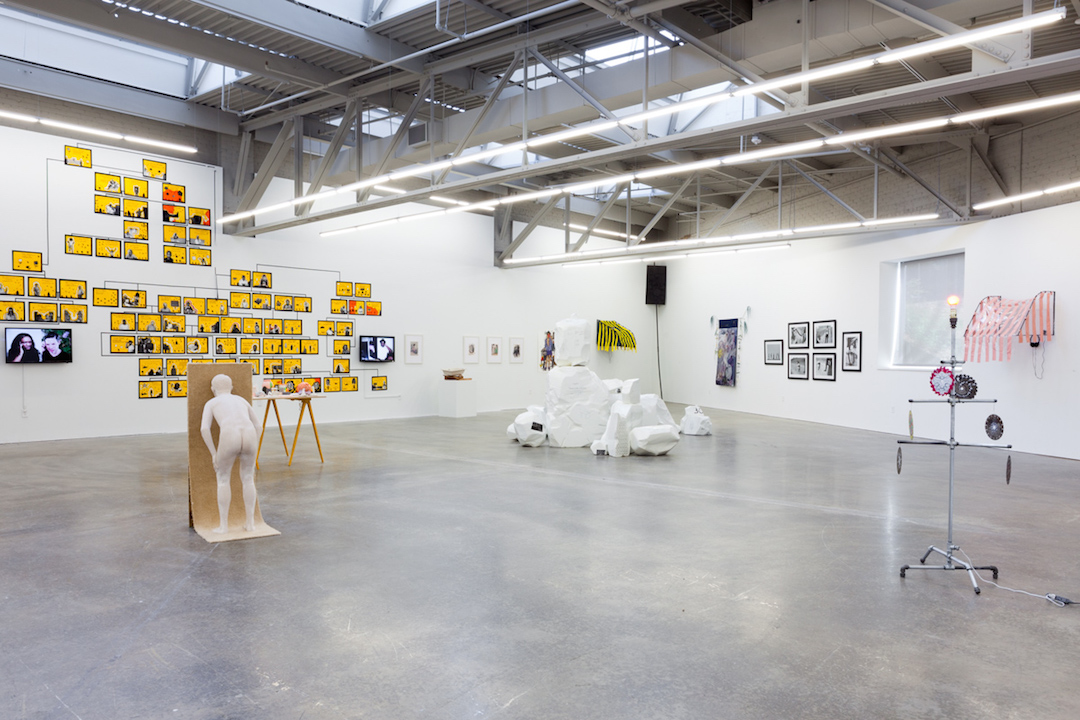
Louise Lawler. Who Says, Who Shows, Who Counts, 1990; set of three Chablis glasses with glass shelf and brackets; 8.50 x 14.00 x 4.25 in.

Louise Lawler. Who Says, Who Shows, Who Counts, 1990; set of three Chablis glasses with glass shelf and brackets; 8.50 x 14.00 x 4.25 in.

I once read that “the world takes you at your own estimation,” and I think this is invariably true—otherwise, how else to account for all the charlatans and double-dealers in high office? This phenomenon is especially evident within the confines of the contemporary art world, where egos are fragile, artistic value is often reduced to perceptions of visibility, and there’s a free-floating notion that you’re only as interesting as the last show you did. By fudging the facts on his CV, your friend has committed a minor fraud in an attempt to raise his own value in the eyes of the art world. I imagine that there are two parts to your distress: The first is the sense of hurt involved in having your name and work erased by a friend; the second is the frustration we all feel when we see someone else breaking the rules in order to get ahead. Let’s address these in turn.

On the whole, artists are ambitious people; it’s a long slog in the studio, and all of us like to feel as though we are being recognized for our efforts. It’s fundamentally human to want to be seen as an important, accomplished member of a community, one whose work is appreciated. What’s more, in the art world, recognition tends to translate into more and better opportunities—residencies, awards, and exhibitions. Of course, there’s a very clear hierarchy to this system—a two-person show is perceived as a rung further down the ladder than a solo, and therefore less valuable in proving that your work is respected. So in order to shore up his own insecurities about his value in this system, your former collaborator told a little lie. To address the situation, you might simply email him and say, “I’m updating my CV and noticed that you have our two-person show at Gallery X listed as a solo. Is there a particular rationale for that?” The mere act of calling him on it might be enough to make him correct the record; but if not, you might follow up by saying that you find his decision troublesome, because it wipes out both your own efforts and the collaborative goodwill between you. Whatever way you decide to approach the situation, it’s important (for your own sake) to find a smidge of compassion for this person. He is so anxious about his standing that he was willing to jeopardize his integrity and your friendship just to add another solo show to his CV. To be clear: Your friend has behaved poorly, and the situation is a bit tragic, but no matter how he responds or what he does with his CV, his behavior doesn’t reflect on you.

Read More »

Share

Tenth Anniversary

10 Questions for Patricia Maloney

Happy birthday, Daily Serving! This month marks our tenth year of bringing you some of the smartest art writing around. To celebrate this momentous anniversary, we’re looking at our history—and our future. Today we bring you an excerpt from an interview with Daily Serving’s second publisher, Patricia Maloney (now the Executive Director of Southern Exposure). After starting the Bay Area-based journal Art Practical in 2009, Patricia bought Daily Serving in 2013, creating a synergism between the two publications and their audiences.

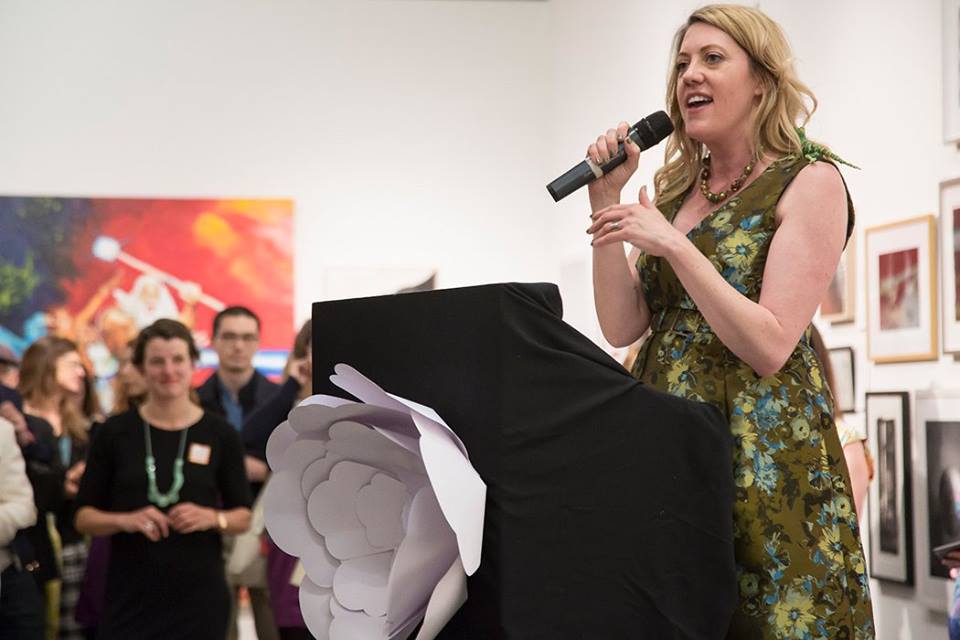
Patricia Maloney at Southern Exposure in San Francisco.

Patricia Maloney at Southern Exposure in San Francisco.

Biggest challenge of owning one regional and one international arts site:

We tried to model the relationship between Daily Serving and Art Practical—which gave birth to DSAP­—by concentrating Art Practical’s coverage in the San Francisco Bay Area and feeding that to Daily Serving. But I overestimated how clearly or easily that relationship could be articulated by looking at the site. People knew that there was a partnership between the two publications, but its rationale wasn’t clearly legible. I was also inheriting a well-established publishing cycle, so it was harder to overlay a new concept over that—the hub I describe above—than I anticipated. I think the relationship is clearer now, with Daily Serving emphasizing the daily content and Art Practical focused on thematic content.

Best reward of owning two arts websites:

The subjectivity of art viewing, and what I always describe as the feeble ability of language to capture a visual encounter, opens up this beautiful space where a writer and reader can cohabitate. Criticism’s power is, to paraphrase James Elkin, its capacity to offer one idea within a multiplicity of ideas in a particular moment. We as readers must see the idea, we must see the moment, we must see the potential for other channels to exist and be explored. Criticism is not meant to be didactic or polarizing; it is meant to be generous and generative. That generosity makes for good reading; I was never starved for intellectual stimulation.

Read the full interview here.

Share

From the Archives

From the Archives – Alien She at Yerba Buena Center for the Arts

As we continue to grapple with the results of last week’s Presidential election, the art of Riot Grrrl culture as captured by the 2015 exhibition Alien She at Yerba Buena Center for the Arts continues to offer timely insight. Writing for our sister publication Art Practical, author Melissa Miller notes, “The [exhibition] presents Riot Grrrls with one voice, with a ‘we’re all in this together’ attitude. In reality, the movement was troubled by the same internal debates that other generations of feminists have experienced, including substantive discussions about class privilege, racism, and homophobia within the movement itself.” Debate over the relative weights of gender identity, class, and race remains fraught in the wake of the election results. As we search for paths forward in the fight, Riot Grrl culture reminds us of the value of collective organizing across differences. This article was originally published on January 13, 2015.

L.J. Roberts. We Couldn’t Get In. We Couldn’t Get Out., 2006–07; installation view, Alien She, 2014. Courtesy of Phocasso and Yerba Buena Center for the Arts, San Francisco.

L.J. Roberts. We Couldn’t Get In. We Couldn’t Get Out., 2006–07; installation view, Alien She, 2014. Courtesy of Phocasso and Yerba Buena Center for the Arts, San Francisco.

Currently on view at Yerba Buena Center for the Arts (YBCA), Alien She is a touring exhibition that examines the lasting impact of the Riot Grrrl punk-feminist movement on contemporary artists. The show’s title refers to that of a Bikini Kill song, with lyrics sung by Kathleen Hannah that begin, “She is me; I am her.”

This declaration of solidarity despite division could also be taken as a statement of intent as Alien She divides its focus across two temporally overlapping sections: an archival display of the cultural output of Riot Grrrls from around the world and a survey of seven artists—some contemporaneous with the movement—whose work is influenced by its politics, aesthetics, and representational and organizational strategies.

Read the full article here.

Share

Atlanta

Atlanta Biennial at Atlanta Contemporary Art Center

For the first time in nine years, the South has its biennial back. With the selection of thirty-two artists in the Atlanta Biennial (ATLBNL), the Atlanta Contemporary Art Center in Georgia continues a recurring exhibition, begun in 1984 by Alan Sondheim as a response to a lack of Southern artists in that year’s Whitney Biennial. Though Sondheim’s series ended in 2007, Atlanta Contemporary has revived it with a densely packed show of emerging and mid-career artists, all of whom share a connection to the American South.[1]

Atlanta Biennial, 2016; installation view, Atlanta Contemporary Art Center, Georgia. Courtesy of the Atlanta Contemporary Art Center. Photo: Erin Jane Nelson.

Atlanta Biennial, 2016; installation view, Atlanta Contemporary Art Center, Georgia. Courtesy of the Atlanta Contemporary Art Center. Photo: Erin Jane Nelson.

The purpose of many biennials is to offer a cross-sectional view of a segment of artistic practice. Since artists often act as vanguards in analyzing contemporary culture, biennials are often a useful tool to discover and explore pressing issues within a society and how artists respond to them. While some themes in the Atlanta Biennial are obvious, like the prevalence of racial disparities in the region, the curators seem less focused on selecting artists for their investigations of these specific issues. Instead, the show presents a loose collection of a wide range of media (including book producers, collectives, and self-taught artists) and thus reads more as a salon-style overview rather than a focused inquiry into the prominent issues facing the South—ones not dissimilar to those facing the country as a whole.

Read More »

Share

Taipei

Slaying Monsters: The 2016 Kuandu Biennale, Taipei

It sounds like the start of a fairy tale. Ten curators from nine different countries are given a task to perform: Each must choose one artist with whom to create a major show. The resulting Kuandu Biennale in Taipei, Slaying Monsters, is made up of separate “solo exhibitions” from Australia, China, Indonesia, Japan, Korea, Malaysia, Singapore, Vietnam, and Taiwan, an interesting spin on the usual biennale format and a challenge to its conventional predictability. The Kuandu Biennale puts curatorial practice front and center, a potentially risky strategy, but in so doing, close collaborations between the curators and their chosen artists result in a theatrically engaging, conceptually rigorous, and provocative exhibition, with moments of real excitement. Taking its title from the world of video games, the biennale challenges the “gamification” of the artworld—the contemporary emphasis on spectacle, gossip, art stars, and international uber-curators—with its interesting and unexpected inclusions.

Tsubaki Noburu. Daisy Bell, 2014; polyester cloth, 700 x 600 x 800 cm. Courtesy of the Kuandu Museum of Fine Arts.

Tsubaki Noburu. Daisy Bell, 2014; polyester cloth; 700 x 600 x 800 cm. Courtesy of the Kuandu Museum of Fine Arts.

Tsubaki Noboru’s 2014 Daisy Bell (curator Kenichiro Mogi) dominates the entrance to the gallery. An artist who has continually reinvented himself since his involvement in the Japanese “mono-ha” painting movement, Noboru’s work references popular culture, myth, and Japanese tradition. Daisy Bell is a giant inflatable creature that looms over the spectator, at once cute and monstrous. This ambiguous, almost entirely featureless hybrid love-child of Jeff Koons’ Puppy and a creature from the imaginary world of a medieval bestiary insists, as soon as the visitor enters the exhibition, that monsters are already among us.

Read More »

Share

Oakland

Black Panther Party: 50th Anniversary Exhibitions

Seven exhibitions in Oakland and Berkeley commemorate the Black Panther Party’s (BPP) founding in October 1966. The celebration of one of the most successful and provocative social and political movements in American history reflects upon the Party’s profound influence. As Party member and long-time activist and educator Ericka Huggins notes, the breadth of engagement helped spread the Party’s resistance message: “The Black Panther Party always had art, music, dance, even fashion, as a way of thinking about how we shift cultural awareness.”

Fashion show, 50 Years Later: The Art Show, October 7, 2016; SoleSpace, Oakland. Photo: Senay Alkebu-Lan

Fashion show, 50 Years Later: The Art Show, October 7, 2016, SoleSpace, Oakland. Photo: Senay Alkebu-Lan

Over the previous five decades, institutional recognition of BPP accomplishments has proceeded, with slowly increasing attention to the iconic work of artist and former BPP Minister of Culture Emory Douglas in book and exhibition form. Rather than waiting for the Panthers to be celebrated in spaces where Whiteness and the benefactors of its privilege hold sway, Party members and allies have, for years, staged exhibitions and performances in both traditional and unconventional spaces. The Party’s fiftieth anniversary carries forward the legacy that protest, or celebration, can take place anywhere, while demonstrating art’s potential to galvanize and venerating those who have fallen.

One of the two largest exhibitions, All Power to the People: Black Panthers at 50 at the Oakland Museum of California (OMCA), comprehensively elucidates the Party’s origin, activities, accomplishments, and the direct influence they have in today’s fight against institutional racism and its agents. While the other regional exhibitions (The Point Is…2.0: Black Panther Party 50th Exhibit at Joyce Gordon Gallery, 50 Years Later: The Art Show at SoleSpace, and ICONIC: Black Panther at American Steel Studios) pay homage to the Party’s rich visual legacy through specific aspects of the Party’s history—including women’s participation and influence throughout the Party or the Ten-Point Plan—All Power to the People provides both a thorough historical overview and contemporary meditations by artists Carrie Mae Weems, David Huffman, Hank Willis Thomas, Sadie Barnette, Trevor Paglen, and William Cordova.

Read More »

Share

Odd Jobs

Odd Jobs: Kalup Linzy

Welcome to the second issue of “Odd Jobs,” in which we explore the many jobs artists hold in order to support their art practice. I spoke with Kalup Linzy, a New York–based performance and video artist famous for his soap opera–style video works, such as a piece produced for the Studio Museum in Harlem titled All My Churen. Linzy uses low-tech productions methods and often plays multiple characters in each of his videos. He has received numerous awards, including the John Simon Guggenheim Memorial Foundation Fellowship, the Creative Capital Foundation Grant, an Art Matters Grant, the Jerome Foundation Grant, the Harpo Foundation Grant, and the Headlands Alumni Award Residency.

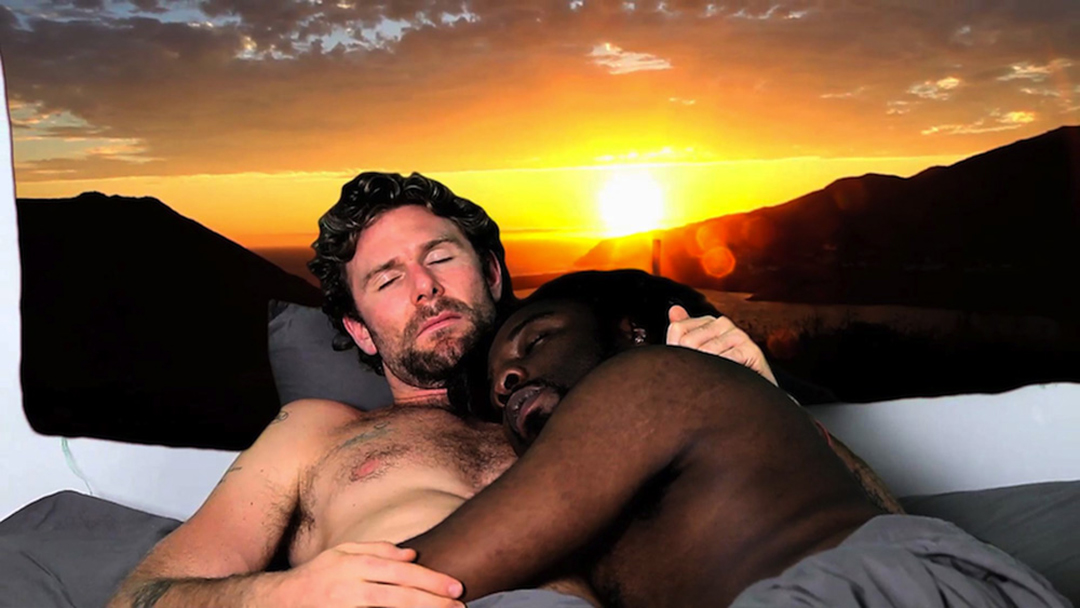
Kalup Linzy. Romantic Loner. 2013 (still); video; 73:00. Courtesy of the artist.

Kalup Linzy. Romantic Loner, 2013 (still); video; 73:00. Courtesy of the Artist.

Calder Yates: You went to college at University of South Florida, and then you got your graduate degree there. Did you take any time between undergrad and grad school?

Kalup Linzy: Nope. From age 5 to 26, I was in the system as a student. In college I worked in the Winn Dixie photo-lab department. When I finished grad school, somebody suggested I go back to the photo lab and I was like “no way.” I didn’t want to be standing in the Winn Dixie photo lab department with a graduate degree. So then, when I got to New York, there was a brief period for like a year where I had to get public assistance and I had to get food stamps and I was so embarrassed because I had a master’s degree. And the social worker was like, “Why are you embarrassed?” It’s not that I was freeloading, it just got to the point where I needed the extra help.

CY: Did you find a job?

KL: I found a temp agency and started working for The Mark [Hotel]. It was 2005. The Mark actually wanted to hire me full time because I guess I was the only one willing to get up at 3:30 or 4 a.m. to oversee the kitchen. I would get off around 2 o’clock. But I didn’t have the energy to go to art stuff because I literally had to be in bed by 7 or 8 p.m. to wake up the next morning to do it all over again. And then I got the Marie Walsh Sharpe residency and I was able to quit the job. Since then, I haven’t done anything completely outside of art.

Read More »

Share