Hashtags
#Hashtags: Heart of Darkness
#imperialism #appropriation #representation #environment #postcolonialism #revolution
Throughout the 56th Venice Biennale, one finds national pavilions that have taken up the postcolonial mantle of Okwui Enwezor’s central exhibition within the contours of their own relationships to imperialist histories. Among the most successful of these are Vincent Meessen’s Belgian pavilion, Personne et les Autres, and Fiona Hall’s Australian pavilion, Wrong Way Time. Both pavilions consider how the definition of nationalism has expanded in the past twenty years to include representations of communities formerly excluded, while using that newfound inclusion to reinforce rather than reexamine the power structures that historically promoted exclusion. In short, they consider—and in some ways demonstrate—how cultural appropriation has developed as a nationalist strategy in an increasingly post-national world.
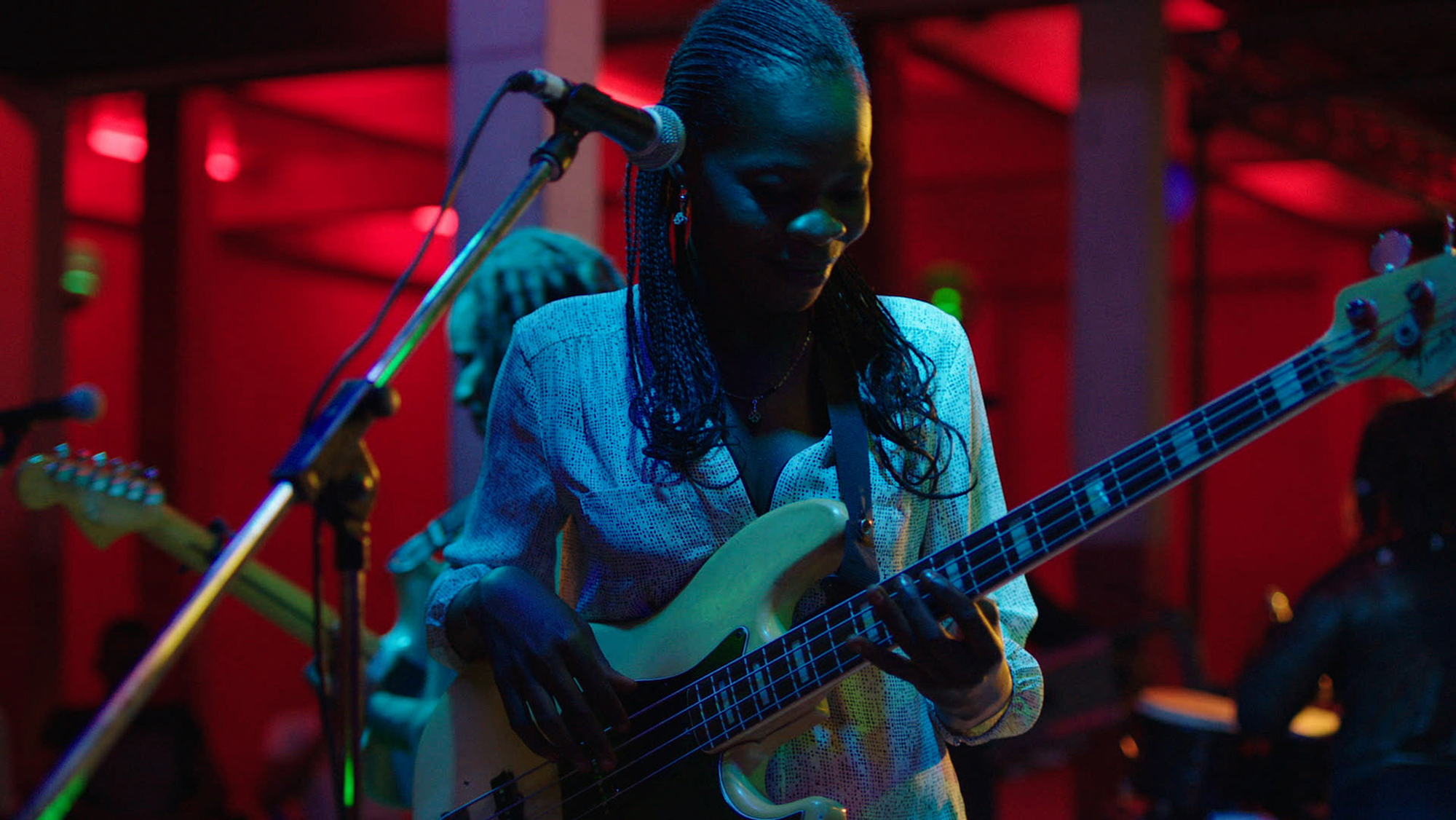
Vincent Meessen. One.Two.Three, 2015; video. Courtesy of the Artist and Normal, Brussels. © Vincent Meessen. Belgian Pavilion, 56th Venice Biennale.
At the Belgian pavilion, Meessen and curator Katerina Gregos have invited nine other international artists to contribute works that question the European origins of Modernism in the context of global trade and conquest. The artists—Mathieu Kleyebe Abonnenc, Sammy Baloji, James Beckett, Elisabetta Benassi, Patrick Bernier & Olive Martin, Tamar Guimarães & Kasper Akhøj, Maryam Jafri, and Adam Pendleton—represent Africa, Latin America, South Asia, the United States, and Western Europe. Historically, Belgium was the first nation to open a pavilion in the Giardini at Venice, financed by the regime of King Leopold II with funds gained through brutal colonial oppression in the Congo. Today, Belgium is the seat of the European Union, and a country that struggles to reconcile its two distinct linguistic and cultural populations (Dutch-speaking Flemish and French-speaking Wallonians) with an influx of economic and political migrants from Europe, the Middle East, and North Africa. Inspired by these contexts, the exhibition reflects the manner in which the International Style of art and architecture, developed in the 20th century, succeeded and failed in its ideal of fostering utopian conditions around the globe during the era of postcolonial liberation.