Happy Labor Day!

 Anna Gray + Ryan Wilson Paulsen. Can These Antiques Ever Prove Dangerous Again?, 2012.

Anna Gray + Ryan Wilson Paulsen. Can These Antiques Ever Prove Dangerous Again?, 2012.

In honor of Labor Day, today we want to thank the publications that made our Summer Reading series a success. We were honored to host articles from Artforum, Art Papers, Art Practical, the Brooklyn Rail, East of Borneo, Frieze d/e, Hyperallergic, MN Artists, MN Original, MOMUS, Rhizome, SFMOMA’s Open Space, Temporary Art Review, and un Magazine. And we credit the labors of the artists and writers, without whom this series would not be possible: Juana BerríoTimothy P.A. CooperSteven CottinghamJarrett EarnestMatthew FluhartyOrit GatClaudia La RoccoPatricia MaloneyPippa MilneCeci MossMohamud MuminMatt StrombergMatt SussmanAna Teixeira PintoCatherine WagleyCaroline WoolardBen Valentine, and RM Vaughan. We are truly proud to share this space with you! 

Share

From the Archives

From the Archives – Material Practices: Stitching, Fabric, and Textiles in the work of Contemporary Chinese Artists

For Labor Day weekend, we bring you this piece from the archives that deals with gendered, often invisible labor—the kind not celebrated on national labor days. Luise Guest explores the work of several contemporary Chinese women artists using embroidery in revolutionary ways. This review was originally published on January 10, 2014.

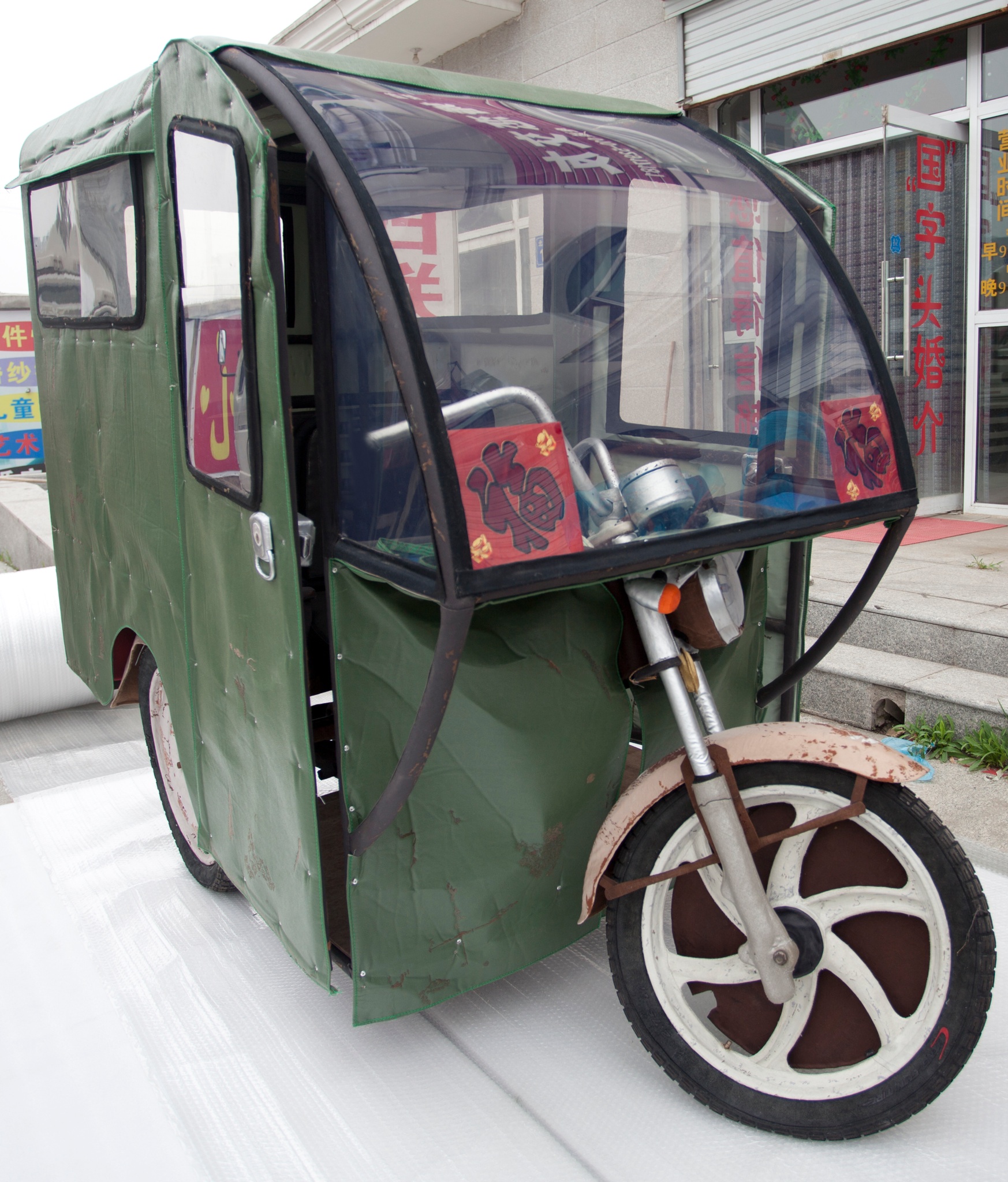
Gao Rong, What Type of Car Can a Motor-Tricycle be Exchanged For?, 2013 Embroidery, cloth, wooden board, iron shelf, leather, and plastic 70 7/8 x 76 3/4 x 37 3/8 inches (180 x 195 x 95 cm) image courtesy the artist

Gao Rong. What Type of Car Can a Motor-Tricycle be Exchanged For?, 2013; embroidery, cloth, wooden board, iron shelf, leather, and plastic; 70 7/8 x 76 3/4 x 37 3/8 in. (180 x 195 x 95 cm). Image courtesy of the Artist.

Mao Zedong once said that revolution is not a dinner party. Less famously, he said it is not embroidery, either. Interestingly, however, some female contemporary Chinese artists have chosen to work with thread and textiles—and embroidery—in experimental, maybe even revolutionary ways. From Lin Tianmiao’s overt exploration of sexuality, fecundity, and the aging and decay of the body, to Yin Xiuzhen’s use of the embodied memories in old clothing; from Lin Jingjing’s stitched paintings of the recorded details of many lives, to Gao Rong’s embroidered, padded simulacra of quotidian elements of daily life in Beijing, they variously apply stitching, embroidery, felting, padding, binding, and fabric. Artist/alchemists, they transform the everyday materials of “women’s work,” reflecting personal memories and cultural identities.

As a young girl, Lin Jingjing yearned to discover a world beyond the confines of her neighborhood. She rode her bicycle as far as she could in each direction, a little further each week, measuring the time so that she would be sure to return before dark. This is an apt metaphor for her art practice, which has pushed the boundaries of painting, performance art, and installation. In Public Memories, photographic images of events both public and private are reproduced in bright monochrome colors, with selected areas neatly stitched. Rows of stitches erase and hide parts of the painted image, suggesting the unreliability of memory. Lin’s performance, video, and photographic works—in which barely opened long-stemmed roses are stitched/sutured closed—play with the binaries of beauty and cruelty, wounds and healing.

Read More »

Share

Summer Reading

Summer Reading – The Post-Human Animal

For the final entry in our Summer Reading series, we bring you Ana Teixeira Pinto’s essay on the recent trend in artworks featuring animals. She notes: “Replacing an obsolete notion of the ‘human,’ perhaps the animal has become the new face of humanity.” This article was originally published in issue 19 of Frieze d/e in May 2015.

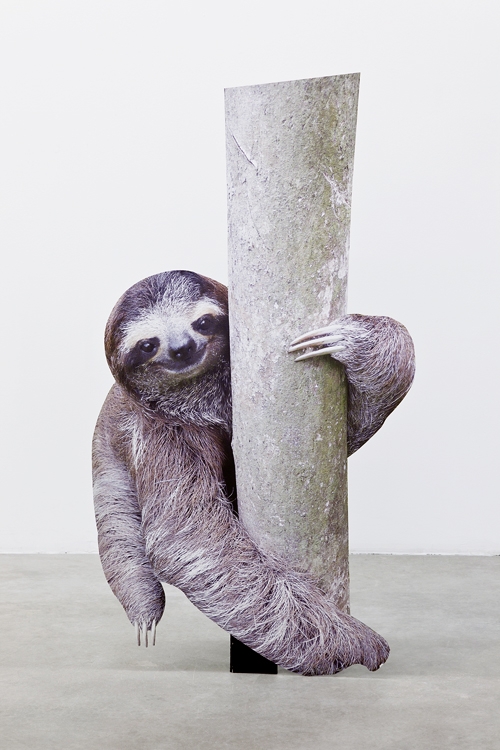
Katja Novitskova, Branching I, 2013, Digital print on aluminium and cut-out display (courtesy: the artist, Fluxia gallery, Milan & Kraupa-Tuskany Zeidler, Berlin)

Katja Novitskova. Branching I, 2013; digital print on aluminum and cut-out display. Courtesy of the Artist, Fluxia gallery, and Milan & Kraupa-Tuskany Zeidler, Berlin.

In the late 1940s, the Russian-born French philosopher Alexandre Kojève visited the USA. For Kojève—arguably the most influ­ential interpreter of Hegel in the 20th century, and one of the architects of the European Economic Community, a precursor to the EU—“history” was predicated on political struggle. Like Hegel and Marx before him, Kojève believed that humanity would ultimately reach a consensus about its means of governance. This consensus (likely a mixed economy, or social democracy) would spell out the end point of social evolution, what Hegel had called the “end of history.”

This trip to the U.S., however, led Kojève to feel that any prospective future had already transpired. Upon observing the “eternal present” of American society, Kojève claimed that “man” had already disappeared, giving way to a creature that, though looking exactly like him, shared nothing of the human. The human, he argued, is predicated on a historical process, whereas this new being was one devoid of historicity and, therefore, humanity. For Kojève, this “post-historical Man” had returned to an animal state, albeit retaining his civilized mores. Post-historical Man builds his edifices and works of art as “birds build their nests and spiders spin their webs” and performs “musical concerts after the fashion of frogs and cicadas.”

Read the full article here.

Share

Summer Reading

Summer Reading – Notes to Self

As we near the end of our Summer Reading series, we bring you Claudia La Rocco’s meditations on the American Realness Festival. The author asks, “Playing to the intelligentsia for cheap laughs while the world burns: Does anybody still need to own this in 2015?” This article was originally published in Artforum on January 29, 2015.

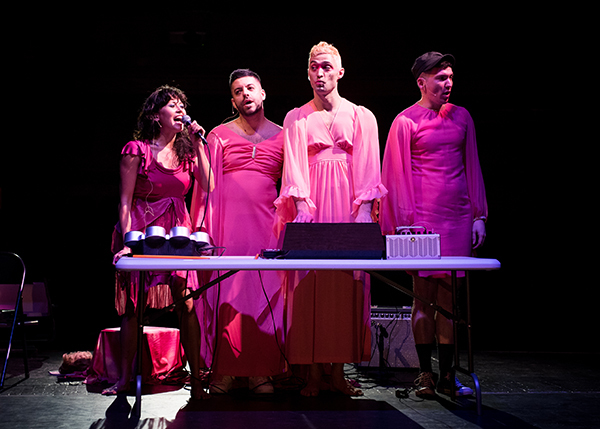
Miguel Gutierrez. Age & Beauty Part 2, 2015; Performance view, January 14, 2015, Abrons Arts Center, New York. Photo: Ian Douglas.

Miguel Gutierrez. Age & Beauty Part 2, 2015; performance view, January 14, 2015, Abrons Arts Center, New York. Photo: Ian Douglas.

I’ve just deleted the three hundred words I’d written to start this month’s column, which covers a fraction of the myriad festivals, showings, showcases, etc., mushrooming up around the annual Association of Performing Arts Presenters conference in New York.

There wasn’t anything particularly wrong with these words, which talked about the “show-must-go-on New York performance crisis” and how exhausted and overwhelmed everyone is by the whole magnificently underfunded circus. The system is distressingly fucked, has been for years.

It’s just that, well, I wrote about these same exact things in 2012, and then again last year. And while the “system” in which individual artists and tiny, overburdened arts organizations subsidize much of the glittery, crummy situation remains just as gross (indeed, artist fatigue/budget malaise was a theme this year, courtesy of artists like Cynthia Hopkins, Miguel Gutierrez, and Jack Ferver), for 2015 I want to talk about something else.

I want to talk about how generally lucky I felt—despite suffering through a few outright stinkers and while disagreeing with some of the politics on display—to be able to take all of this in during my personal audience odyssey. Twenty-two shows in twelve days, and almost all of them strong in parts or whole: Against all odds, or maybe in some unsavory yet exciting ways related to those odds, there is a wealth of vital, progressive, deeply valuable performance being made in America.

Read the full article here.

Share

Summer Reading

Summer Reading – Has the Internet Changed Art Criticism? On Service Criticism and a Possible Future

Today we continue our Summer Reading series with a provocative essay on “service criticism” by author Orit Gat. She offers, “It may be discouraging to close on an optimistic note that basically means, ‘You’re gonna have to pull out your credit card/sign in with your Paypal/Apple Pay/whatever digital wallet we’ll all be using use at some point in order to get the kind of criticism you deserve.’ But it’s true. The more the internet veers toward paid models, the better off we’ll be.” This article was originally published on Rhizome on June 15, 2015.

 (L-R) Christopher Knight, Ryan Schreiber, Isaac Fitzgerald and Orit Gat. (Superscript 2015. Photographer: Gene Pittman. Courtesy the Walker Art Center, Minneapolis)

(L-R) Christopher Knight, Ryan Schreiber, Isaac Fitzgerald, and Orit Gat. (Superscript 2015. Photographer: Gene Pittman. Courtesy the Walker Art Center, Minneapolis)

A version of this essay was initially written for a panel discussion with Pitchfork’s Ryan Schreiber, Isaac Fitzgerald from Buzzfeed Books, and LA Times art critic Christopher Knight at Superscript: Arts Journalism & Criticism in a Digital Age, a conference at the Walker Art Center in Minneapolis. Watch the panel discussion here. 

Look at the title. I’m asking has, not “how.” Contemporary art is still in the early stages of the digital shift that other industries have already experienced. To better understand what might be happening to art criticism, we should look to other fields and assess the structures that have developed as a response to the internet’s effect.

There are two facets to this “internet effect”: The first is in publishing and circulation, the second in the way this dissemination shapes a discipline and the discourse around it. Music and literature experienced the digital shift in a much more extreme way than contemporary art has thus far. This experience began with circulation—the adjustment from object to mp3 and from independent, or even megachain bookstores, to Amazon—but continued with an altered discourse that poses really valid questions about the function of criticism. I’ll call it “service criticism.” In a nutshell, “service criticism” is criticism that’s discovery-oriented. Criticism that assumes the reader who is looking for recommendations.

Take Pitchfork, for example. I remember the first time I heard of Pitchfork. I was a teenager and I had a friend who spent his days reading Pitchfork reviews, then (excuse the illegality of the following) downloaded all the albums he thought he’d find interesting in order to listen to them. (The embrace of streaming technologies helps with the legality question today.) That’s a great use of criticism: as a direction, pointing to the good in the midst of overproduction.

The use of a word like “service” sounds as if  it indicates a value judgment, and one that I’m not making. I’m not making it because, as an art critic, I don’t write in an industry that has generated much service-criticism yet. When I write about an exhibition, I often write for print publications, which means the show has closed a while before the review was printed, and so I’m already writing in past tense. I also assume that whoever (and however small) my audience is, few of them—almost none—are art collectors who are reading the review as a way of assessing a given artist’s worth.

Read the full article here.

Share

Summer Reading

Summer Reading – On Informality and Nomadism

From our friends at Art Papers, today we bring you an essay on conservation, colonialism, and the “black market archive” of Pakistani film. Author Timothy P.A. Cooper explains, “The case filed by Iqbal Geoffrey, DesiTorrents, and the British Empire and Commonwealth Museum are haunted by traces of Pakistan’s visual cultural archive—nomadic ghosts of empire that evade the exoteric movements of decolonization in favor of fluid, informal modes of transportation.” This article was originally published in the March/April 2015 issue.bukhari-6

“That England is populated will always come as a surprise; humans can live on an island only by forgetting what an island represents.”

“Nobody has tried it, but in Pakistan I have. Somebody has to do it. We can’t accept the status quo.” Iqbal Geoffrey, writing here in 2005, refers to his intention to subject a selection of employees of London’s Hayward Gallery to polygraph tests to reveal data evidence of what he suspected to be inherent racism. The Pakistani artist, and prominent lawyer, was in the process of filing a claim of racial discrimination against the Hayward Gallery under the recently introduced Human Rights Act. It was his claim that his works left over from a 1989 show were destroyed or mislaid through the active collusion of curators, staff, and cleaners. For the 160 works lost, and the 140 damaged, the artist was offered £65,000, but he instead launched a £65 million claim. Geoffrey, whose biography is shrouded in self-mythology (the Queen, in a rare show of lexical dexterity, reportedly called him the “Arts Counsel of Great Britain”) and audacious acts of career sabotage (including submitting his PhD thesis to the Harvard Law School in the form of a stack of bound black pages), was once one of the leading lights of the early 1960s London art scene. In protest over what he saw as the “cultural apartheid” of the British milieu, Geoffrey became a partially reclusive figure, and his calligraphic abstractions have given way to an extensive series of mail-art projects and litigious interventions.

The short narrative of Iqbal Geoffrey reflects many of the core issues concerning the modern repatriation of cultural objects sent abroad, their dispossession, and these processes’ resulting archival and museological dissonance—with which it will be possible, for instance, to fashion at least one contextual framework for Tate Britain’s exhibition, Artist and Empire, opening in autumn 2015. In time-honored fashion, this major introspective will catalogue the various responses to empire that can be read by reimagining the trade routes and trajectories of collecting habits from point B (the colony) to point A (the metropole). Geoffrey’s lavish call for reparations is symptomatic of serious unease and imbalance within and with regard to prevalent Western museum politics and curatorial models. These will no doubt be eloquently explored by Okwui Enwezor when he curates the 2015 Venice Biennale, but, leaving the circumambulation of this well-trodden path to the experts, we can turn our attention to informal networks of cultural flow, correlative but not imitative of the exporting of images of empire in the 19th century, and the afterlives of those museums left over, like empty munitions factories in the former colonies.

Read the full article here.

Share

Summer Reading

Summer Reading – Finding Value in a Flattened Field

Today for our Summer Reading series we bring you Patricia Maloney’s recent op-ed from our partners at Art Practical. The author notes, “The commitment to paying contributors must be acknowledged as only the most visible link in a long chain of interlocking, concrete exchanges distributed throughout the ecosystem. Paying a writer or artist is not a unidirectional transaction; it is part of a public health policy.” This article was originally published on August 11, 2015.

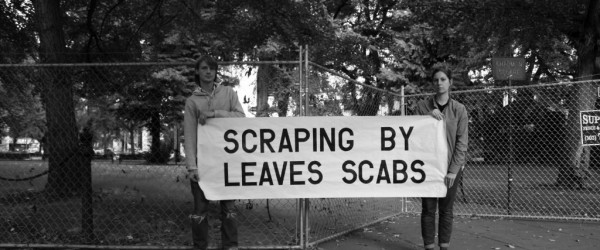
Anna Gray + Ryan Wilson Paulsen. 100 Posterworks, 2009–2013; printed poster; 11 x 17 in. Courtesy of the Artists.

Anna Gray + Ryan Wilson Paulsen. 100 Posterworks, 2009–2013; printed poster; 11 x 17 in. Courtesy of the Artists.

In this late-capitalist era, in which content circulates frictionlessly through digital conduits, the influence of our words is changing. Their value is now less about where they appear (in this publication or that), and more about how far they travel, and how long they persist. Likewise, even though artistic merit has always been quantitatively measurable in some capacity, now those measures are more proximate and immediately visible. Gone is the slow path from obscurity to renown, when an artwork could accumulate a mossy layer of critical appraisal, or the length and location of its provenance could obscure the machinations of market forces. Nowadays, esteem is measured by hits and followers, and the velocity of their accumulation.

In many ways, the question of how quickly an article goes viral is the same as how much an artwork sells for at auction: both are numerical assessments that now supersede other descriptors. (Which movement will characterize early-21st-century art more readily: post-internet art or record-breaking sales?) We’ve acclimated ourselves to our reflections in the glossy sheen the current quantifiers have created and the speed with which they fade. Perversely, the more explicitly we can tally our influence, the less we value exposure, ascribing reach to momentum as much as to merit. And, cognizant that our words or objects or actions can drop quickly from view, we’ve become less invested in the full lifespan of an article or artwork. We don’t need to see something all the way through; we just have to keep churning out more.

Read the full article here.

Share