





Interviews

Interview with Johanna Hedva

Johanna Hedva is a Los Angeles-based artist and writer whose recent piece She Work was performed at d e e p s l e e e p, a private apartment in Los Angeles, from July 11­–26, 2015. She Work is a queer adaptation of Euripides’ play Medea, in which Jason abandons Medea and their children, marrying a Greek princess to advance his political position. Medea decides to cause Jason the most amount of pain by killing his new wife and taking the lives of her own two children. Hedva’s retelling—littered with Tumblr memes, hashtags, and quotes from Girl, Interrupted—considers exile, courage, motherhood, and tragedy in the contemporary neoliberal landscape.

01_JohannaHedva

Johanna Hedva. She Work, 2015 (performance still of Nickels Sunshine); live performance; 1:5. Courtesy of the Artist. Photo: Emily Lacy.

Vivian Sming: Your latest performance is the fourth and final installment in The Greek Cycle series. Could you talk about the three other plays that led up to She Work? At what point did it become clear to you that Medea was to be the included as the final piece of the cycle?

Johanna Hedva: The Greek Cycle was born in 2011 in the wake of a miscarriage I had at age 27, which instigated an involuntary hospitalization, my first year of real madness, a divorce, and therefore Greek tragedies seemed the closest to home. Medea was the first play I wanted to do, to deal with all that shit, but I was so stunned, without power or comprehension of my situation, that I ended up doing Hecuba instead because I needed a bath of silence. Hecuba is the story of an old queen whose fifty children are all killed in the Trojan War. In Euripides’ play, she’s made inhuman by her grief, begging the men around her for an explanation or a little mercy, but nothing comes. At the end, a seer tells her she’ll end her life as a dog. I fully related to that, so I adapted the play into Motherload (2012), a 30-hour, five-day dream play that took place in the hallway of a school. It was somnambulistic, mostly silent, a bunch of sleepwalkers reciting lines from a script that was over 160 pages. Hecuba’s incomprehensible grief—so laboring but utterly non-redemptive—was a better fit at the time.

Read More »

Share

From the Archives

From the Archives – Where Images Fail: Newtown, Connecticut

In the wake of the latest mass shooting, we bring you Randall Miller’s 2012 article from the Daily Serving archives, written after another shooting in Newtown, Connecticut. In the piece, the author explores the inability of images to accurately explain the tragedy and grief afflicted by mass shootings. The editors had decided to remove all images from the initial posting of this article, and we see fit to do the same now.

****

In one picture, a teenage girl holds a phone to her ear. Her free hand clutches her chest. She’s alone in a parking lot on a sunny day. The look on her face is one of immense terror and grief, as though she were screaming into the phone, not speaking. Her eyes are pressed tight and her mouth is open, exposing all her teeth. Her entire face looks wet.

In another image, a fresh-faced but grim firefighter dominates the left half of the picture. Behind him, more firefighters: not the burly action-hero types, but more like the small-town volunteers who also have day jobs. On the right, we see a couple, perhaps in their late 20s. The man has his arm around the woman. He wears a blue t-shirt and a thousand-yard stare. She is lost in a moment of intense emotion, her hand covering one eye as she cries. Everyone seems to be stunned, walking toward the camera with little sense of real purpose.

Read More »

Share

Madrid

I Spy with My Little Eye … A New Generation of Beirut Artists at Casa Árabe

From our friends at REORIENT, today we bring you a review from Madrid. Author María Gómez López notes that this exhibition of works connected to the city of Beirut “presents a complex network of challenges, connotations, and overlaid topics that reveal a unique and genuine vision, as well as a rediscovery of the world from a different perspective.” This article was originally published on September 28, 2015.

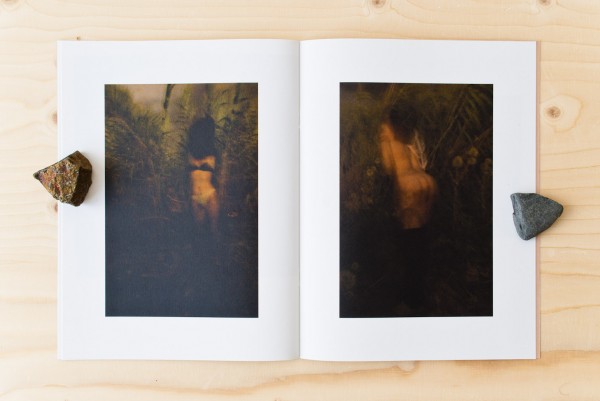
Pages from Lara Tabet’s The Reeds (courtesy Oodee Books and the Village Bookstore)

Lara Tabet. The Reeds, n.d. Courtesy of Oodee Books and the Village Bookstore.

After the Civil War, Lebanon became one of the most prolific places of artistic production in the Middle East, boasting names such as Lamia Joreige, Akram Zaatari, Khalil Joreige, Joanna Hadjithomas, Walid Raad, and Ziad Antar. Today, a new generation of artists is developing an innovative, conceptual language focused on the present rather than a lost past, ambiguously dealing with a wide range of topics and leaving ample space for interpretation and engagement. Currently on view at Casa Árabe in Madrid until November, when it will travel to Cordoba, I Spy with My Little Eye … A New Generation of Beirut Artists, curated by Sam Bardaouil and Till Fellrath, brings together the work of this new generation of artists, each of whose pieces are somehow associated with Beirut, in one way or another.

The participating artists hail from different parts of the world, evidence of the fact that their connection with the Lebanese capital is not necessarily one of citizenship. In some cases, the artists live or have lived there, own a studio there, or simply look to Beirut as a source of inspiration. The fact that these “Beirut artists” are not necessarily Lebanese citizens introduces a new conception of identity detached from geographical origins or bonds, which takes into account other phenomena. As Fellrath explained during a tour of the exhibition, one of the shared objectives of this new wave of artists is transcending the language and conflict-centered proposals of the preceding postwar generation. Instead of a collective process of archiving, preserving memories, and reconstructing the past, this generation is more individualistic, highlighting the significance of the present, the value of the intimate, the expressive possibilities of the material, and the shift in the conception and definition of art.

Read the full article here.

Share

Fan Mail

Fan Mail: Julia Westerbeke

Using strategies of asymmetry and organic mirroring, Julia Westerbeke explores abstraction as a vehicle of human imagination and a catalyst for subconscious thought. The artist cites science fiction and the biology of natural forms as two of her main sources of inspiration, and her paper-based explorations evoke a certain duality inherent within organic life—the ordinary morphing into the extraordinary, the mundane inspiring spurts of wonder.

Julia Westerbeke. Geophony, 2015 (detail); punctured and carved paper; 22 in x 15 in. Courtesy of the Artist.

Julia Westerbeke. Geophony, 2015 (detail); punctured and carved paper; 22 in x 15 in. Courtesy of the Artist.

In Geophony (2015), Westerbeke uses simple mark-making techniques to create intricately textured layers of thick watercolor paper. The title of this work is interesting to consider. As a scientific term, “geophony” refers to the sounds naturally generated by the geophysical activity on Earth, which includes wind, rainfall, thunder, and volcanoes. Here Westerbeke’s fascination with the mysterious attributes of nature manifests itself in a physical interpretation of the aural wonders of that which cannot be seen, only heard.

Read More »

Share

Shanghai

Chen Zhen: Without Going to New York and Paris, Life Could Be Internationalised at Rockbund Art Museum

Chen Zhen, who died (much too young) in Paris in 2000, was a significant artist with a hybrid Chinese and European identity. Although after 1986 he essentially lived and worked in Paris, his personal history and deep cultural roots lay in China, and specifically in Shanghai. From the mid-1990s he returned over and over to a city on fast-forward. Shanghai was undergoing a massive, controversial transformation, in the process of becoming the global megalopolis it is today. The current exhibition at Shanghai’s Rockbund Art Museum presents works from this period, which curator Hou Hanru explains reveal a balance between Chen’s examination of a dramatic external reality and a conceptual criticality. Sometimes witty, sometimes profoundly beautiful and melancholy, Chen Zhen’s works are steeped in his identity as a Chinese artist at a historical “tipping point.” As the artist said in his online project Shanghai Investigations, “without going to New York and Paris, life could be internationalized.”

Chen Zhen, Purification Room, 2000 - 2015. found objects, clay, approx 850 x 1100 x 450cm, image courtesy Rockbund Museum and Galleria Continua, San Gimignano/Beijing/Les Moulins

Chen Zhen. Purification Room, 2000-2015; found objects, clay; approx. 850 x 1100 x 450 cm. Courtesy of Rockbund Art Museum and Galleria Continua, San Gimignano/Beijing/Les Moulins.

Entering the Art Deco spaces of the Rockbund Museum, visitors encounter the rather spectacular Purification Room (2000–2015), a large space filled with everyday objects—sofas, TVs, chairs and tables, bicycles and shopping trolleys—all entirely coated with mud, as are the walls and floor. Traditionally, Chinese medicine used mud to cleanse and detoxify, and Chen Zhen thought of it as representing purity, simplicity, the natural world, and the peace of being laid to rest. The experience is one of stillness and silence, as if we have entered a mysterious unknown civilization revealed by an archaeological excavation. The quotidian artifacts of our modern daily lives seem to have a greater significance, becoming unfamiliar and strange.

The next level presents Le Bureau de Change (1996–2004), which is constructed from a traditional Shanghai communal public toilet, very common in the past when few people had their own bathrooms. Inside the darkened wooden structure, the pit toilet is full of money, gold and silver coins glinting in the dim light. The noise of constant flushing fills the space. This savagely witty work possesses even greater resonance today, when so many Chinese citizens are experiencing the shock of losing their money in an unprecedented economic downturn. The boom times may be over, and some fear their newfound prosperity could be simply flushed away.

Read More »

Share

San Francisco

Makeover at Southern Exposure

From our partners at Art Practical, today we bring you a review of Makeover at Southern Exposure in San Francisco. Author Mary Anne Kluth notes: “At a time of massive change in the demographics and urban shape of the Mission District […] the works in Makeover collectively acknowledge that life can be messy, but encourage or demonstrate ideals of exchange and openness, and emphasize approaching problems with a sense of humor.” This article was originally published on September 24, 2015.

Members of Mutant Salon, 2015. Courtesy of the Artists.

Members of Mutant Salon, 2015. Courtesy of the Artists.

Makeover at Southern Exposure, curated by Jennie Ottinger, abounds with playful invitations. Audience members at the opening reception on September 11 were encouraged to hang out underneath giant furniture, allowed to fish around in a tank filled with a mysterious transparent substance, and treated to optional haircuts and manicures.

Mutant Salon’s installation and performance, much more than just an operational feminine beauty salon, contributed a lot to the event’s overall sense of hospitality and acceptance. Beauticians representing an array of gender expressions, dressed like Jem and the Holograms, not only offered their services, but also encouraged the few children in attendance to participate by applying makeup to the salon’s sculptural furniture. While the chaotic surfaces of its melted mannequin head and bulbous nail-polish station veered straight into grotesque excess, multiple audience members who received haircuts at the opening reported being pleased with the results. In action, Mutant Salon parodied, subverted, and gloried in common gender-based beautification practices.

Read the full article here.

Share

Portland

Ellen Lesperance: We Were Singing at Adams and Ollman

Not many things are more difficult than articulating love. Displaying a lack of temperance can appear obsessive, while showing any sign of hesitance can be mistaken for a number of unintended things. Every so often, an individual demonstrates the ability to toe the line so eloquently and sincerely that the outcome is a lesson in expert labor. Ellen Lesperance’s exhibition We Were Singing at Adams and Ollman is a case study on such an outcome. Her particular devotion is two-fold: at once to her husband and to iconic feminist artist Sylvia Sleigh. Lesperance is a woman artist who is unafraid to embrace tropes of sentiment or craft in the face of an androcentric art world. By engaging both in good measure, she invites us to revisit a multifaceted history of “women’s work” and the feminist practitioners that revised the term.

Ellen Lesperance. We Were Singing, 2015; installation view, Adams and Ollman, Portland. Courtesy of the Artist and Adams and Ollman. Photo: Mario Gallucci.

Ellen Lesperance. We Were Singing, 2015; installation view, Adams and Ollman, Portland. Courtesy of the Artist and Adams and Ollman. Photo: Mario Gallucci.

We Were Singing comprises photographs, textiles, and gridded paintings. The exhibition takes its title from scribbles found in the margins of Sylvia Sleigh’s journals, in which Sleigh practiced conjugating verbs in hopes of writing poetry in French. For the works We Were Singing (2015), We Will Sing (2015), and We Shall Be (2015), Lesperance has made vellum transfers of select pages from Sleigh’s notebooks, marking out much of the detail in graphite. All that remains after such an intervention are broken romantic phrases and hints of uncertainty. The paper itself personifies the optimistic anxiety of writing poetry, alternating between areas of frustrated rippling and hopeful gloss. It is no coincidence that “conjugation” is the act of coupling—of identifying a match or correspondence. Lesperance handpicks this gesture to communicate something deeper—how language is perhaps the most tedious of loving labors.

Read More »

Share




