Krakow

Impossible Objects at the Museum of Contemporary Art in Krakow

Cultural reproduction is at the center of Impossible Objects, an exhibition that returns to Poland after much lauded recognition at the Venice Biennale. On central display is a 1:1 replica of the baldachin designed by Adolf Szyszko-Bohusz at the beginning of the 20th century to honor the revolutionary Polish leader Marshal Józef Piłsudski. The reproduction is accompanied by artist and artistic director Jakub Woynarowski’s large-scale diagrams that point to the dichotomies present in the replica: body/soul, tradition/modernity, monument/modernism, and death/life.

Impossible Objects, 2014; installation view, Impossible Objects, 2015. Courtesy of Instytut Architektury, Krakow. Photo: Jakub Woynarowski

Impossible Objects, 2014; installation view, Impossible Objects, 2015. Courtesy of Instytut Architektury, Krakow. Photo: Jakub Woynarowski.

The decision to exhibit the work in Krakow is motivated by the replica’s proximity to the original, which sits just two miles away. In one long afternoon stroll, it is possible to see both the 1937 original baldachin by Szyszko-Bohusz on Wawel Hill and its contemporary reproduction at the Museum of Contemporary Art in Krakow (MOCAK). For a number of viewers in Poland, the MOCAK show is in itself an apparent duplicate; it is first and foremost a replica of the Venice Biennale exhibition, which creates an additional and welcomed dichotomy within the work.

Szyszko-Bohusz’s baldachin is concerned with representing tradition, an aspect that is stressed in Woynarowski’s diagrams. While working on the baldachin, Szyszko-Bohusz was also involved in the restoration of the Wawel Castle. The restoration project sought care for its national soothsayers by bringing the ashes of Poland’s romantic poets—Adam Mickiewicz, Juliusz Słowacki, and Cyrpian Norwid—and burying them at the Wawel Cathedral. The gesture was taken in an attempt to construct a national cultural reliquary that would unite a fractured Polish identity, which desperately needed an allegorical presence at the helm of its political office. The baldachin was a conscious part of this restoration project. It too serves as a reliquary, laying bare the romantic symbols in the crypt, which are also present in Woynarowski’s diagrams. The only words that appear on the structure are “Corpora dormiunt; vigilant animae” (The body rests; the soul is vigilant), which echoes the Polish-romantic sentiment of combining both power and spirit. Likewise, the Corinthian columns stand like a silent procession, bringing to mind Vitruvius, who in his drawings measured the columns in the proportions of the human body.

Read More »

Share

From the Archives

From the Archives – Evan Gruzis: Shell Game at The Suburban

Today from the archives we bring you Steve Ruiz’s review of Evan Gruzis’s Shell Game at the Suburban, Michelle Grabner and husband Brad Killam’s backyard gallery in Oak Park that pioneered the suburbs role as a hub of Chicago alternative art spaces. Grabners gingham soccer ball, currently Issue 27 of THE THING Quarterly, offers up a playful rejoinder to Ken Johnsons famous criticism of Grabners work as “soccer mom” art. The second Terrain Biennial in Oak Park closed last month, yet another answer to snobbery against art created and shown in the suburbs. This review was originally published on March 29, 2012. 

Evan Gruzis. Shell Game, 2014; Acrylic, wood panel, spray paint, readymade objects; dimensions variable. Courtesy of the artist.

Evan Gruzis. Shell Game, 2014; acrylic, wood panel, spray paint, readymade objects; dimensions variable. Courtesy of the Artist.

Located more than nine miles west of Chicago’s city center, the Suburban is one of a number of alternative spaces that have caught on in the bordering village of Oak Park. It’s quiet, affluent, and easily accessed by public transit, yet Oak Park is an unlikely host to such alternative spaces as Terrain Exhibitions, the Franklin, and the Suburban, all of which locate innovative art within domestic settings. Terrain Exhibitions hosts its installations on artist Sabina Ott’s front porch and yard, while artists Dan Sullivan and Edra Soto present the Franklin in a backyard gallery. Pioneering this microscene since its founding in 1997, the Suburban currently occupies two outbuildings in the backyard of artist, educator, and curator Michelle Grabner, with her husband, the artist Brad Killam.

This month’s trio of exhibitions at the Suburban includes an inaugural exhibition of art guest-curated by Green Gallery directors Richard Galling and John Riepenhoff (of Milwaukee, Wisconsin), along with a performative/restorative work by Seth Hunter (who is repairing structural damage done to the Suburban’s main gallery in an earlier performative car wreck). At the Suburban’s second space, Grabner presents an exhibition of new works by painter Evan Gruzis.

Read More »

Share

Interviews

Interview with Robin Rhode

Today from our friends at BOMB, we bring you an interview with artist Robin Rhode. Author Lee Ann Norman talks with Rhode about his upcoming performance Erwartung: A Street Opera for Performa 15, growing up in South Africa, and “what it means to make art in an increasingly globalized world.” This article was originally published on August 13, 2015.

Robin Rhode. Chalk Bicycle (detail), 2011-2015; chalk and steel bicycle. Courtesy of the Artist and Lehmann Maupin, New York. Photo: Max Yawney.

Robin Rhode. Chalk Bicycle (detail), 2011-2015; chalk and steel bicycle. Courtesy of the Artist and Lehmann Maupin, New York. Photo: Max Yawney.

Cape Town-born and Berlin-based multidisciplinary artist Robin Rhode works across visual media to interrogate notions of the city and urban landscapes, the individual, and the cultural collective. Rhode was recently announced as a commissioned artist for Performa 15, the biennial of performance art, taking place in New York November 1–22, 2015. For his commission, which is still in the works, Rhode will reinterpret Schoenberg’s 1909 opera Erwartung and build the set using doors reclaimed from his native South Africa. He currently has two exhibitions on view. Borne Frieze, his third solo exhibition at Lehmann Maupin, features new work meant to broaden the possibilities of drawing as a medium. Drawing Waves at the Drawing Center, meanwhile, includes stop-motion photographs and a wall drawing done in collaboration with school children. We spoke recently about the new shows and what it means to make art in an increasingly globalized world.

Robin Rhode: It’s been quite a busy time with my show at Lehmann Maupin opening in June, and before that I came and did a talk at Lincoln Center. And then I had the Drawing Center opening just a few weeks ago, so—

Lee Ann Norman: Did you plan all this intentionally, these wonderful things happening at once? [laughter]

RR: It all just kind of came together. I’ve had a really long relationship with the United States. I’m also working on a commission for Performa. I don’t know if you’re familiar with it.

LAN: Yes, they often work with visual artists, and move their work in a more performative direction.

RR: Exactly. I’m producing an opera for them in November. It’s all just happening at once—unbelievable! [laughter] But where should I start with the exhibitions… Lehmann Maupin?

Read the full article here.

Share

Fan Mail

Fan Mail: Ashley Pastore

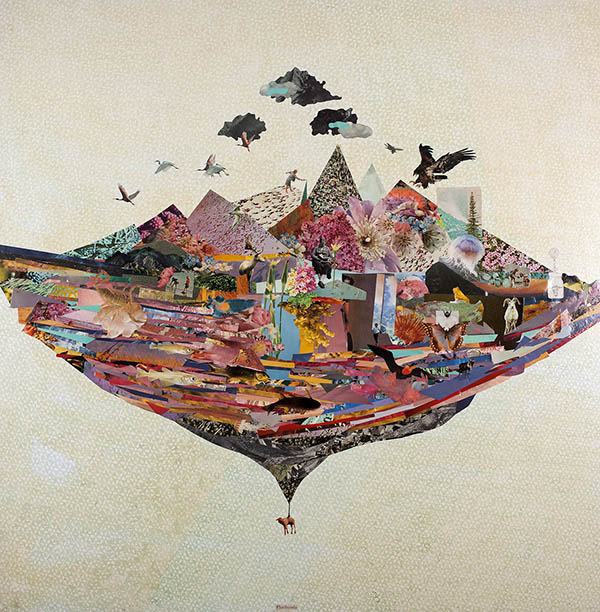
Ashley Pastore has a thing for old science and life magazines. Poring over dated issues of National Geographic, Pastore has come to appreciate the visual aesthetic and color palette of print from the ’50s to ’80s, which she describes as being rich, deep, and full-bodied. After scouring Craigslist and rummaging through random thrift stores, the artist now has a sizable collection of vintage magazines that have effectively become her medium of choice in her ongoing collage print series.

Ashley Pastore. Floribunda; linoblock print, cut magazine on board; 48 x 48 in. Courtesy of the Artist.

Ashley Pastore. Floribunda; lino-block print, cut magazine on board; 48 x 48 in. Courtesy of the Artist.

Hailing from Erie, Pennsylvania, where she currently lives and works, Pastore studied material studies and printmaking at the Cleveland Institute of Arts, indicating an appreciation for tactility that she incorporates into her practice. Floribunda is a piece that demonstrates Pastore’s knack for the material. Using a combination of lino-block print and collage, Pastore has layered magazine cutouts of flora and fauna onto a flat, patterned background to create an intricate, textured canvas of colors and forms.

Read More »

Share

Northampton

Women’s Work at Smith College Museum of Art

The exhibition Women’s Work is constructed within a historical frame. All of the included artists are introduced as individuals prominent in second-wave feminism, defined as a past era from the 1960s through the 1980s, a period with a beginning and an end. It cannot be denied that a great deal has changed in both feminist thought and social mores since then. Third-wave feminism called out the exclusions embedded in the second wave’s goals, and more nuanced and inclusive definitions of gender and sexual identity are now written into law and protected. In a 2015 interview, Gloria Steinem, a figurehead of the second wave, explained why she changed her mind about marriage. “I didn’t change, marriage changed. We spent thirty years in the United States changing the marriage laws. If I had married when I was supposed to get married, I would have lost my name, my legal residence, my credit rating, many of my civil rights. That’s not true anymore. It’s possible now to make an equal marriage.”[1] With this kind of concrete change, one might expect feminist art from forty or fifty years ago to feel somewhat dated, like throwbacks to an earlier moment in a righteous narrative of progress. The work in Women’s Work is anything but that.

Carolee Schneeman. Eye Body #1, 1963–79; gelatin-silver print with hand coloring and scratching; 14 in x 11 1/2 in. Courtesy of Smith College Art Museum, purchased with the Judith Plesser Targan, class of 1953, Fund.

Carolee Schneeman. Eye Body #1, 1963–79; gelatin-silver print with hand coloring and scratching; 14 in x 11 1/2 in. Courtesy of Smith College Art Museum, purchased with the Judith Plesser Targan Class of 1953 Fund.

The exhibition groups the artworks within five themes of second-wave feminism: “Challenging Institutions and Canonical Traditions in Art,” “The Body,” “‘Women’s Work,’” “Gender and Performativity,” and “Race and Ethnicity.” Much of the work doesn’t fit cleanly into just one theme, a testament to the many dimensions of the artists’ motives and an illustration that oppression occurs on multiple, concurrent fronts. Inequity can run rampant at home, at work, and in the art world simultaneously. Such is the nature of patriarchy.

Read More »

Share

Atlanta

Sheila Pree Bright: 1960Now at the Museum of Contemporary Art of Georgia

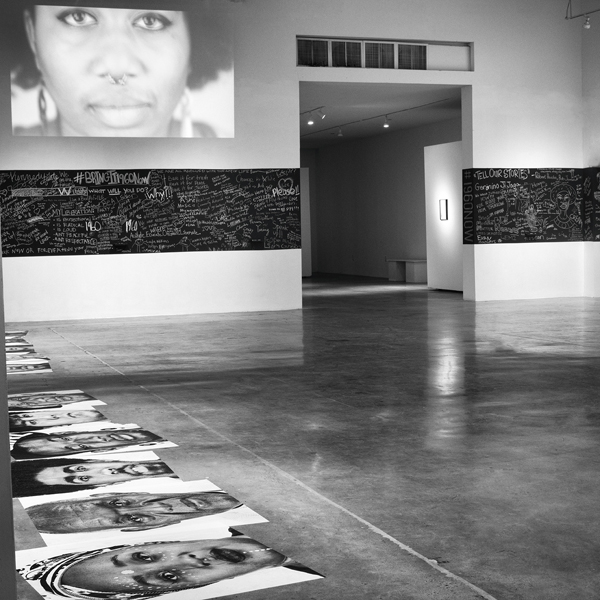
1960Now, on view at the Museum of Contemporary Art of Georgia, is an expansion of photographer Sheila Pree Bright’s continued interest in naming and documenting the unknown leaders of African American social movements: the influential agitators, groundbreakers, and activists whose names might not have been Rosa, Martin, or Malcolm. In her latest photographic project, Bright points to a new generation of faces experiencing frustrations and conflicts that are as new as they are old. Comprising photographs, films, and an interactive project, 1960Now carves out a world of images that connects individuals, struggles, and stories from previous and ongoing civil-rights movements without conflating or collapsing the specificity of those histories. In Bright’s work, the old and new are unshakably connected by the dialectical and ever-changing “now.”

Sheila Pree Bright. 1960Now, 2015; installation view, The Museum of Contemporary Art of Georgia. Courtesy of the Artist.

Sheila Pree Bright. 1960Now, 2015; installation view, the Museum of Contemporary Art of Georgia. Courtesy of the Artist.

Neither scattered nor arranged, spontaneous nor precise, oversized black-and-white photographs lie on the floor, inches away from the gallery’s outer perimeters. The powerful presence of voices, faces, and traces of the bodies captured within these images are immediately striking. Brightly lit faces sit square within the repetitive rectangular form—awake, alive, and uncompromising. The installation refuses the normal conditions of visual engagement in two-dimensional art—an engagement that normally demands an equal confrontation and leveling of space between the viewer and the viewed. Through this gesture, Bright demands that we turn our heads down to look at and regard individuals who command and reclaim our gaze. The experience is as profound and poignant as it is uncomfortable. Illuminated in front of a stark white background, Bright’s work collapses the conditions of the studio portrait and the uniformity found within institutional photography (passport photos, mug shots, photo IDs, driver’s licenses) to create images that carry the weight of the shared history and contingent experiences of these individuals. Size and scale play an important role as well in the filmic element of the exhibition that gives voice to the unique experiences and perspectives of these social agitators, thus animating the photographs that lie powerful in their silence around the room.

Read More »

Share

Los Angeles

UH-OH: Frances Stark 1991-2015 at the Hammer Museum

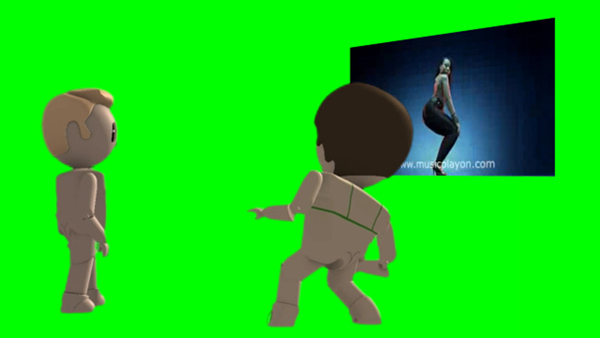
In a mid-career survey as large as UH-OH: Frances Stark 1991–2015, on view at the Hammer Museum, I’m usually tempted to rush over a couple of galleries and maybe even skip a video here or there. From the get-go, Stark’s exhibition, featuring 125 drawings, collages, paintings, and video installations, had me enthralled with My Best Thing (2011), a 100-minute-long episodic animation based on the artist’s video chats with two separate Italian suitors. Using a text-to-speech program, Stark projects her conversations onto semi-clothed toylike avatars floating among a bright green background. With discussions ranging from cybersex (and intermittent exclamations of “mmmmm” and “omg”) to David Foster Wallace’s Infinite Jest, My Best Thing is an endearing video that is sometimes eerie, sometimes erotic, and often hilarious.

Frances Stark. My Best Thing, 2011 (digital video still); digital video, color, sound; 1:00:00. Courtesy of Gavin Brown’s enterprise, New York.

Frances Stark. My Best Thing, 2011 (digital video still); digital video, color, sound; 1:00:00. Courtesy of Gavin Brown’s enterprise, New York.

Stark’s artwork can’t be categorized easily or neatly. Each iteration of her practice looks different from the last. She engages multiple mediums, grappling through the history of literature, art, and philosophy to find new ways of figuring a wide array of subject matter, including such disparate ideas as procrastination, masturbation, poetry, pedagogy, motherhood, and more. In Frances Stark’s artwork, all topics—the banal, the deeply personal, the intellectually rigorous—are fair game. In her process, all of these concerns become conflated, or perhaps they start out that way: mixed and inextricably linked.

Read More »

Share