Best of 2015

Best of 2015 – The Great Debate About Art at Upfor

DSAP director Patricia Maloney selected today’s installment for our Best of 2015 series: “Ashley Stull Meyers doesn’t shy away from calling out an exhibition with as grand a title as The Great Debate About Art for what it leaves unexamined. The effort to determine the limits or properties of what constitutes art is a quixotic task, and Meyers acknowledges the absurdity inherent in the premise right from the outset. Yet she doesn’t give the work itself short shrift, and it is her description of one in particular that keeps this review in mind at the end of the year. In unpacking Max Cleary’s To See You Again (2015) as ‘the exhibition’s most visceral attempt at affirming the trials and tribulations of makership,’ she encapsulates the challenge all artists and writers perpetually face: determining when a work becomes its ‘finished’ self.” This article was originally published on August 13, 2015.

Ben Buswell. ABRACADABRA (Perish Like the Word), 2015; graphite and non-photo blue; 38 x 20 inches. Courtesy of the artist and Upfor. Photo: Mario Gallucci.

Ben Buswell. ABRACADABRA (Perish Like the Word), 2015; graphite and non-photo blue; 38 x 20 in. Courtesy of the Artist and Upfor. Photo: Mario Gallucci.

“Art” is a contentious word. Endless positing over any succinct, defining properties has spawned countless op-eds, theses, and textbooks. The topic is comparable to that of discussing religion in mixed company—differences of opinion have more than once drawn blood. The Great Debate About Art, currently on view at Upfor in Portland, Oregon, is a small group exhibition contextually centered on Roy Harris’ 2010 book of the same name. Co-curated by Upfor and Envoy Enterprises (NY), seven artists—Ben Buswell, Srijon Chowdhury, Max Cleary, Anne Doran, Zack Dougherty, Erika Keck, and Rodrigo Valenzuela—present ten works that (like Harris’ writing) philosophically wax and wane in their proposals.

Harris insists that the purpose of his research is not to further instigate a battle between mediums, schools. or –isms. Instead, his aims are epistemological. Is the trouble with the term “art” a linguistic issue? Should we suppose a standard of technical skill? Or is it content that wins the day? Who decides, and more importantly, what gives them the authority? Upfor and Envoy Enterprises optimistically postulate, “the artist.”

Ben Buswell’s Your Value Is My Law (2015) plays with notions of anti-art in its refusal to reveal an overt image. Beginning with a photograph of a purposefully unknown subject, Buswell alters the surface emulsion with a needle to create an arrestingly texturized white verso. The effect is historically reminiscent of Robert Rauschenberg’s Erased De Kooning Drawing. The photograph, framed backward, leaves only questions for the image that was. “Art,” for one thing, is about its ideas. Buswell embodies this presupposition not only in his layered choice of media, but also through the work’s title. The artist dually contributes ABRACADABRA (Perish Like a Word) (2015) to further consider “value.” Buswell acknowledges the nuances of technical dexterity and its effects on both the perception of skill and an artwork’s place in the commercial market. The drawing is composed of graphite and non-photo blue—a graphic-design material used to create marks visible to the eye, but not to the camera. In the presence of the original, each meticulously drawn striation is visible. The digitalized and printed counterpart, however, becomes something else entirely. It’s clean. It’s a cheat and thus holds considerably different value to a viewer with other (likely commercialized) aims.


Read More »

Share

Best of 2015

Best of 2015 – Ten Years Gone at the New Orleans Museum of Art

Today’s Best of 2015 selection comes from our director, Patricia Maloney, who writes, “In her heartbreaking memoir, The Year of Magical Thinking, Joan Didion accounts for grief’s measure of time as very different from chronological time. It keeps one suspended in a particular moment or progressing from that moment at a glacial pace in comparison to the pace of days and weeks. In her review of Ten Years Gone, Jordan Amirkhani skillfully encapsulates the extension and reverberation of Katrina’s devastation a decade on by describing the exhibition ‘as a way to understand tragedy as something forever in the process of becoming.’ Through her words, we understand how an exhibition can be a marker or memorial, eschewing nostalgia for unflinching truths, and yet also be a place to heal.” This article was originally published on July 22, 2015.

Christopher Saucedo. World Trade Center as a Cloud (No. 5). 2011. Linen pulp on cotton paper. 60 x 40 inches. Image courtesy of the artist.

Christopher Saucedo. World Trade Center as a Cloud (No. 5), 2011; linen pulp on cotton paper; 60 x 40 in. Courtesy of the Artist.

In the aftermath of a catastrophe, memorialization and remembrance are inevitably tied to forms of forgetting. These often take the shape of reactionary modes that proclaim an urgent desire to smooth over the eruptive, unresolved conflicts that shape our collective past and place them into digestible modes of representation.[1] However, for the communities that bear witness to the impact of a disastrous event, forgetting is impossible, as the harsh realities of the event continue to manifest themselves economically, socially, geographically, and spiritually.

The New Orleans Museum of Art’s current exhibition Ten Years Gone—timed to coincide with the tenth anniversary of Hurricane Katrina—draws attention to the phenomenological fabric of disaster by making powerful connections between the messy temporal structures that animate traumatic events, cycles of life, and art itself. Despite strong aesthetic and contextual differences between the six artists chosen for the exhibition, curator Russell Lord has woven together a polyphonic conversation that explores disaster as a way to understand tragedy as something forever in the process of becoming. Here, time oscillates between the roles of organizing principle, conceptual conceit, and metaphor for the untidy “unfinished-ness” that often marks complex events, as the potency and infallibility of art to fully re-present the past is explored with vigor.

Read More »

Share

Best of 2015

Best of 2015 – #Hashtags: The Business End of Art

For today’s installment of our Best of 2015 series, we have a selection from regular contributor Amelia Rina, who writes: “Money is a decidedly taboo topic in conversations about creative production. Artists, writers, musicians, and all creative people are either expected to be disinterested in the monetary value of their work, or be accused of ‘selling out.’ This devaluation impulse must change if we hope to escape an system that recalls Reagan-era economic imbalance. These fundamental flaws in the pedagogical and commercial art institutions are what make essays such as this one so important. Not only does Anuradha Vikram provide a clear summation of the many oppressive factors contributing to our current socioeconomic climate, she also considers the ways in which artists can triumph despite the odds. This combination of critical analysis and optimism is essential in a consideration of how to engender positive change.” This essay was originally published on March 23, 2015. 

The Broad under construction, view from Grand Avenue in downtown Los Angeles. Photo © Iwan Baan. Courtesy The Broad.

The Broad under construction, view from Grand Avenue in downtown Los Angeles. Courtesy of the Broad. Photo © Iwan Baan.

#artmarket #creativeeconomy #collectors #entrepreneur #philanthropy #support

As in nearly every field of commerce, it seems that the tension between old and new models of the business of art is coming to a head. Traditional galleries see that their established methods of selling selectively and covertly to buyers of high social standing are under threat. Museums, which once were beneficiaries of philanthropic largesse from those same well-heeled collectors, now often find that their leading patrons are competitors; rather than donate their holdings, they establish private institutions instead—like LA’s new Broad Museum—that rival the scale and scope of the Moderns and Contemporaries, which are left empty-handed. Even major gifts to museums, such as the unrivaled Fisher Collection now entrusted to SFMOMA, come with strict and costly requirements, such as new buildings and capital campaigns. Meanwhile, the most visible and valuable contemporary artists are no longer those who have been vetted by scholars and curators, but those whose works can be most readily flipped on the secondary and auction markets. Under these circumstances, the art object is purely a marker of exchange value upon which certain complicit thinkers heap vague claims of cultural use value that seem to apply only to the acquisitive culture of the 1%.

The anxiety of the old guard toward the new manifests most clearly in the recent New York Times and New York Observer profiles of art impresario Stefan Simchowitz. Simchowitz has a venture-capital background, a Los Angeles aesthetic, and a start-up approach to artists, dumping money into new and unproven talent so as to play the odds that some of the artists he supports will reach the upper echelons of the market and bear out his investments as a group. Both profiles describe a man who sees himself as an underdog and, as belies his tech-funding background, a “disrupter” of established systems. His critics, who include several prominent dealers, call him a “flipper” who takes advantage of emerging artists while devaluing their output for personal profit. His champions see him as a person willing to take a risk on an unproven artist in an era when few collectors seem to value that kind of patronage.

Read More »

Share

Best of 2015

Best of 2015 – Interview with Nick Cave

As we continue our look back over the year, today’s selection for our Best of 2015 series comes from Shotgun Reviews editor Emily Holmes: “As the year wraps up, I was pleased to see Tori Bush’s recent interview with Nick Cave. I remember not knowing who he was when his work was at San Francisco’s Yerba Buena Center for the Arts, and I regretfully missed the exhibition. Years later, I caught his work at the Seattle Art Museum. His work stays with me as some of the most imaginative (and effective) political work out there today. I, too, ‘wish there were forty Nick Caves and […] all dropping projects on all the same day and then moving to the next destination.’” This interview was originally published on December 4, 2015.

Nick Cave, Soundsuit, 2015; Mixed media. Courtesy of Shreveport Regional Arts Council. Photo: Casey Jones.

Nick Cave. Soundsuit, 2015; mixed media. Courtesy of Shreveport Regional Arts Council. Photo: Casey Jones.

Shreveport is a border town at the crossroads of Arkansas, Louisiana, and Texas. The city is known for its musical history—the term “Elvis has left the building” was coined there. But Shreveport also suffers from crippling issues of injustice. Shreveport prosecutors use peremptory challenges to bar people of color from juries, and juries in Caddo Parish “now sentence more people to death per capita than juries in any other county in America.” Beyond disparities in the justice system, Shreveport has the fourth-highest rate of persons living with HIV in Louisiana. In 2013, 22.8% of the residents lived below the poverty line. Poverty, health, and the justice system are all intertwined here, and this year visual artist Nick Cave is in residence at these crossroads, participating in a residency with the Shreveport Regional Arts Council. How does a visual artist address these problems? From October 2015 to March 2016, Cave is working on a multi-dimensional project that attempts to speak to the disparate realities of the citizenry.

Tori Bush: What led you to create this project in Shreveport? How does the history and context of each place inform your projects?

Nick Cave: The Shreveport Regional Arts Council contacted me when I was working in Detroit on a project titled Hear Here. They were interested in working with visual artists who practice within a social spectrum as well. And I was very interested in the project, to work with social organizations, which for me was a different outreach than I was familiar with. And I was even more interested in the fact that SRAC was using art as a kind of healing device. I was very interested in that, and really that is why I came on board with the project. It allowed me to go even further into the fieldwork.

This project is the way I’m interested in working right now. I come to a city with an idea, and the city builds the project. And the thing that’s so fascinating here is that this is really Shreveport’s project. I’m acting as the director.

I said from the start, this project is not going to be a wow-wow, bang-bang performance, where everyone is going to have a good time. We are working with social-services organizations that aid citizens who are trying to reenter society. We are dealing with serious issues. How can I come to this project with compassion? How can I create a work that is reflective of the voices of the community? How can I leave with an imprint so that it is moving, and not just fluff? It’s allowing me to rethink the role of my work and the purpose of this project, and take myself out of the center of it.

Read More »

Share

Best of 2015

Best of 2015 – Margret: Chronicle of an Affair at White Columns

For today’s installment of our Best of 2015 series, regular contributor Ashley Stull Meyers writes, “To exhibit art by little-known or purposefully anonymous artists holds a cultish allure over the contemporary art world. In the curious case of Gunther K. and his mistress Margaret, a nearly fifty-year-old abandoned suitcase held archival ephemera too arresting for its maker’s obscurity to be institutionally relevant. Reading the review of Chronicle of an Affair, we become privy to secrets so invasive that the particular brand of observation that comes with exhibition is difficult to reconcile. Lia Wilson carefully frames these difficulties within the fringe movements of art history we all love to discover. The inscrutable impulse behind collecting fingernail clippings and discarded items a lover once idly put to their mouth is both vaguely romantic and horrifyingly compulsive. Interestingly, that general sentiment can be said of most momentous artwork. Wilson’s recognition and assessment of ‘Outsider Art’ in this capacity is most certainly worth revisiting.” This review was originally published on April 15, 2015.

3.Margret: Chronicle of an Affair—May 1969 to December 1970, 2015; detail. Courtesy of White Columns / Delmes & Zander.

Margret: Chronicle of an Affair—May 1969 to December 1970, 2015 (detail). Courtesy of White Columns/Delmes & Zander.

Sometimes the most unassuming artworks can question the relevance of art history’s categories. Margret: Chronicle of an Affair—May 1969 to December 1970, currently on view at White Columns, exhibits a personal archive of obsession, one presumably never intended for public view. Over a seven-month period between 1969 and 1970, a Cologne businessman named Gunther K. meticulously recorded his affair with his secretary, Margret S. During that time, he took hundreds of photos of Margret; he collected her fingernails, hair, and empty birth-control-pill packets; he organized receipts logging where they traveled and what they ate; and he wrote detailed notes of their sex life, recording the frequency, duration, and specifics of each act. Nearly three decades later, when this entire cache was unwittingly discovered in a briefcase in an abandoned German apartment, it set off a series of events that led to the collection being represented by the Cologne gallery Delmes & Zander, an institution focused on outsider art and art brut.

Gunther K. could certainly be considered an amateur photographer, and his identity has remained protected, allowing this work to fit easily within outsider art’s mandate for the self-taught and its penchant for the anonymous. However, the precision and depth of Gunther’s project contains intriguing formal and conceptual ties to many practices within mainstream contemporary art, including the memory-laden installations of photographs and ephemera by Sophie Calle and the found-photographic interventions of Hans Peter-Feldman and Erik Kessels. Moreover, found photography is a subgenre that has straddled the insider/outsider divide for some time, albeit with very different interpretations. Found photographs of freak-show participants, medical anomalies, and incarcerated individuals were featured in the 2015 Outsider Art Fair, for example, their inclusion based less on the unique virtues of each work and more on their uneasy documentation of cultural outsiders.

Read More »

Share

Best of 2015

Best of 2015 – Arachnid Orchestra. Jam Sessions at NTU Centre for Contemporary Art Singapore

As we continue our look back over the year, today’s Best of 2015 selection comes from regular contributor Tori Bush: “Marilyn Goh’s review of Tomás Saraceno’s Arachnid Orchestra poetically explores the interspecies beauty found in spiderwebs’ organic forms, but also reveals a deeper truth about the act of creationthe chaos and conformity of art found also in nature: ‘The web begins with a single thread flung into the wind, where by chance, the filament of silk catches on an object that will anchor its structure. Only then does the web’s tridimensional complexity—assembled upon mathematical principles of radial lines and auxiliary spirals—start to take shape, as form and function come together geometrically to create a product of precision engineering.’” This review was originally published on November 5, 2015.

Tomás Saraceno, Omega Centauri 1 Nephila Kenianensis 4 Cyrtophora citricola, 2014; Spidersilk, carbon fibre, light, Tripod. Courtesy of the artist and Esther Schipper Gallery, Berlin.

Tomás Saraceno. Omega Centauri 1 Nephila Kenianensis 4 Cyrtophora Citricola, 2014; spidersilk, carbon fiber, light, tripod. Courtesy of the Artist and Esther Schipper Gallery, Berlin.

The gallery hums with screechy sounds resembling acoustic feedback, punctuated by random bursts of bass and cartoonish sound effects. The soundscape is queasily amorphous and disorienting, built on dissonance and the chaotic rhythms resonating from a handful of arachnids that have woven fine, thick webs around delicate wire frames. Featuring a plethora of spiderweb sound installations, Tomás Saraceno’s latest show Arachnid Orchestra. Jam Sessions is an experimental drive to amplify and record the vibrations created when spiders communicate, and using special sensory devices, like transducers and laser Dopplers, that map their movements. When made perceivable to human ears, these vibrations—spontaneously produced in a freewheeling environment—enable jam sessions to become integral part of the show, where musicians have been invited to respond to the arachnids’ vibrational signals in a bid for interspecies mingling.

In spite of what the name of the exhibition suggests, the curatorial framework of the show is given vague, but stylish parameters that situate Saraceno’s oeuvre on the crossroads of art, architecture, and science. To term Saraceno’s show as “sound art” or “sound installation,” would be an underestimation of the multivalent nature of an artistic practice that prizes interaction, interconnectedness, and a kind of new order that can only form out of an established network of chaos.

Read More »

Share

Best of 2015

Best of 2015 – #Hashtags: The Political Biennale

Continuing our Best of 2015 series, regular contributor Jordan Amirkhani writes,“I am always eager to clear a few minutes out of my day to read a new article or post by Anuradha Vikram. I am continually inspired by the style and substance of her writing, in particular, her commitment to confronting the political (or the lack of it) in each article she writes. Vikram’s breakdown of the ‘political’ Venice Biennale this past summer was a beautiful reminder to us all of the impossible constellation of stalemates, cliches, and powerful interventions that contemporary art can produce, and the efficacy of these projects.” This article was originally published on May 18, 2015.

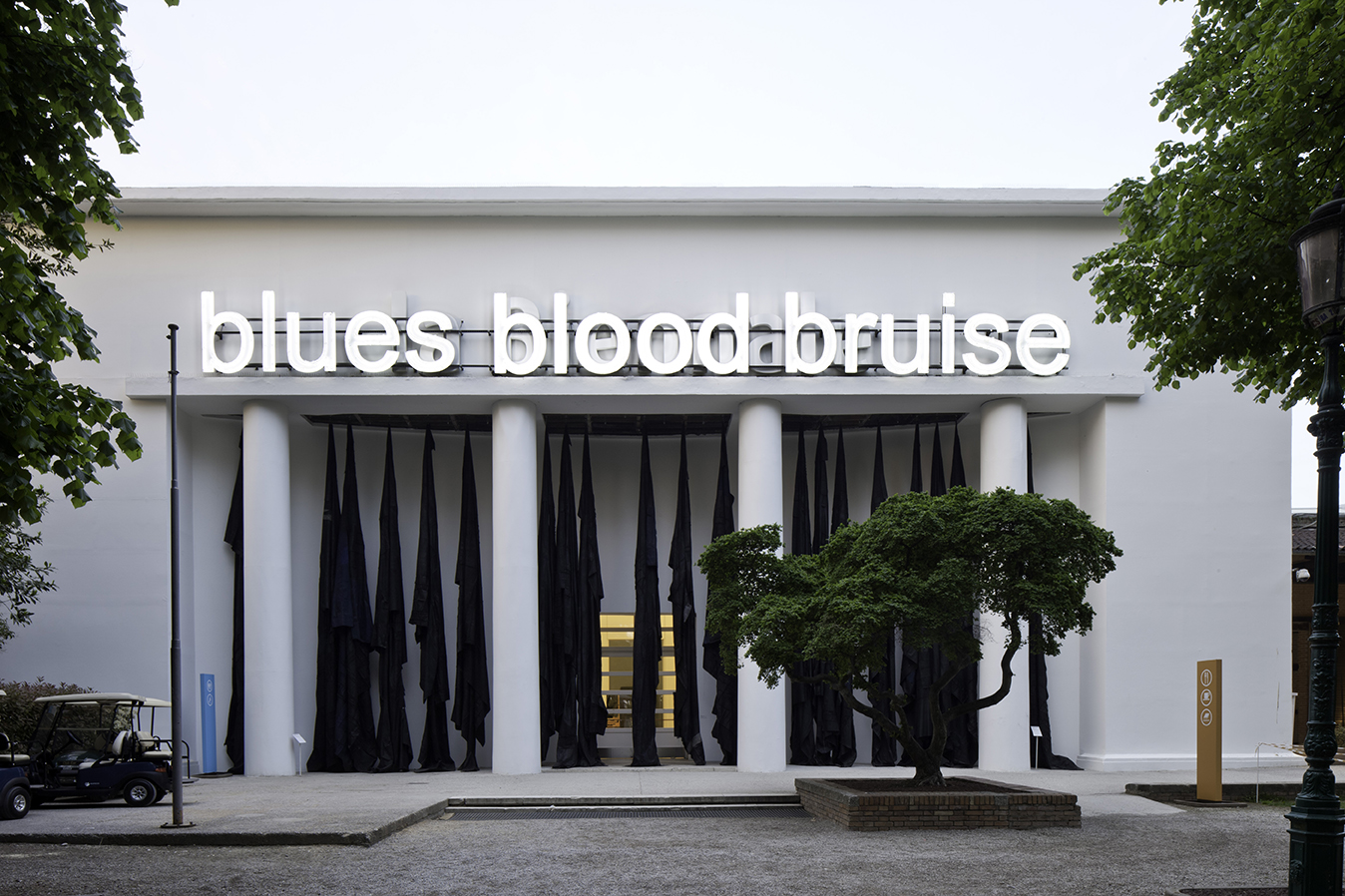
Padiglione Centrale  Giardini, Venezia  2015. 56th International Art Exhibition - la Biennale di Venezia, All the World’s Futures. Photo: Alessandra Chemollo. Courtesy: la Biennale di Venezia.

56th International Art Exhibition – la Biennale di Venezia, All the World’s Futures, Padiglione Centrale, Giardini, Venezia, 2015. Courtesy of la Biennale di Venezia. Photo: Alessandra Chemollo.

#nationalism #institutions #power #access #globalization #protest #labor #capital

The 56th Venice Biennale, “All the World’s Futures,” has been hailed as the “political” Biennale both by its curator Okwui Enwezor and by the international art press. That designation has come in for significant criticism from some who feel that contemporary art either can not or should not address political concerns, given the commodity status of art objects within a capitalist framework. The Biennale is supported by a consortium of state, corporate, and individual interests, none of which can be assumed to represent progressive values or the rights of the disenfranchised. Rather, it functions as a bazaar in which established and emerging national interests jockey for influence, applying “soft” cultural power as well as “hard” economic power. How, then, to reconcile the Biennale’s nature with the “deeply reflective, deeply political”[1] objectives that Enwezor has laid out?

Enwezor declares that his exhibition, the centerpiece of an international festival presenting pavilions from eighty-seven nations,[2] addresses “the ruptures that surround and abound around every corner of the global landscape today.” He draws legitimacy for the geopolitical framework of his project from history, describing how “One hundred years after the first shots of the First World War were fired in 1914, and seventy-five years after the beginning of the Second World War in 1939, the global landscape again lies shattered and in disarray, scarred by violent turmoil, panicked by specters of economic crisis and viral pandemonium, secessionist politics, and a humanitarian catastrophe on the high seas, deserts, and borderlands, as immigrants, refugees, and desperate peoples seek refuge in seemingly calmer and prosperous lands.”[3]

Read More »

Share