Mexico City

G.T. Pellizzi: Yo Transporto at Sala de Arte Público Siqueiros

Art travels. Within the globalized art scene, its journey takes the many forms of traveling exhibitions, international art fairs, biennials, public contests, and loans from personal or institutional collections. Although this wandering condition may enrich the experience of different public spheres by bringing them closer to popular works and major exhibitions, the accelerated speed at which these movements and spectacles take place commands a huge effort at an expense that many public—and even private—institutions can’t sustain.
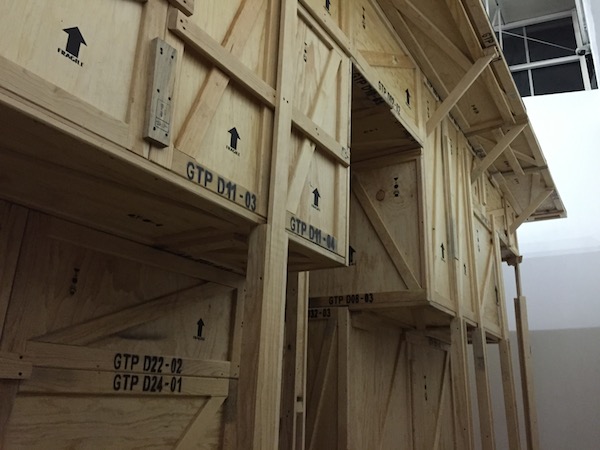
G.T. Pellizzi. Yo Transporto, 2016; wood, plywood, Ethafoam. Courtesy of Sala de Arte Público Siqueiros.

G.T. Pellizzi. Yo Transporto, 2016; wood, plywood, and Ethafoam. Courtesy of Sala de Arte Público Siqueiros.

At Sala de Arte Público Siqueiros (SAPS), G.T. Pellizzi presents Yo Transporto [“I Transport”], an immersive installation composed of one gigantic art shipping crate. The piece is composed of 171 different parts, with each single part possessing a sculptural value of its own. Yo Transporto poses several questions on the institutional politics of touring exhibitions and public funding, while also examining the way that artists contribute to the development of museums from an economic perspective.

Cultural audiences are familiar with traveling exhibitions, art fairs, and other similar events. Art tourism can seem like a viable alternative to increase economic stability for museums and art institutions by attracting more visitors with blockbuster shows. It also serves to capitalize on a specific collection or group of artists, while becoming part of the global sphere in the exchange of culture and knowledge. Nevertheless, in order to operate at a pace to meet these goals, big investments are required, and not every museum can afford it.

Read More »

Share

San Francisco

Question Bridge: Black Males in America

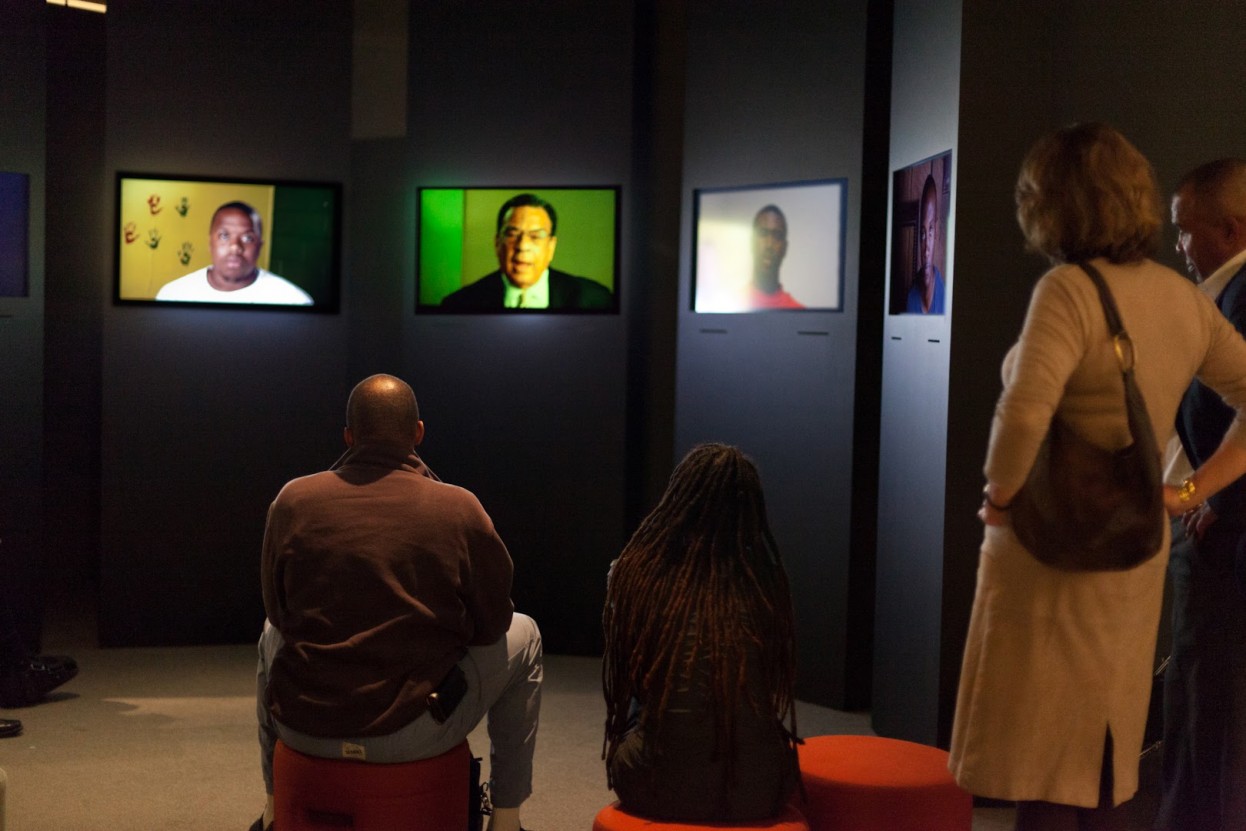
Today we bring you an excerpt from Art Practical’s Printed Matters columnRoula Seikaly reviews Question Bridge: Black Males in America, the published companion to a project, platform, and installation that regards identity and representation. Seikaly notes, “Asking a question […] can be difficult; it can imply lack of knowledge and experience, rendering the asker vulnerable. No one wants to be caught out, least of all when the questions address identity, community, and most urgently, survival.” This article was originally published on February 16, 2016.

Question Bridge: Black Males in America (Aperture/Campaign for Black Male Achievement, 2015)

Question Bridge: Black Males in America (Aperture/Campaign for Black Male Achievement, 2015).

Question Bridge: Black Males in America, a companion publication to the innovative, crowd-funded multimedia installation of the same name, opens with a quote from a speech delivered by Frederick Douglass commemorating the twenty-fourth anniversary of slavery’s abolition. Though drawn from a longer quote, the passage above speaks as urgently to 21st-century audiences as it did to those of the 19th century, and perhaps more so. As long as Black Americans are denied basic human rights and dignities, as long as state-sanctioned violence against Black bodies is condoned, we must not take shelter in relative definitions of “safety.”

It’s against such hard truth that this compact volume unfolds. Question Bridge is a continuation of a mid-’90s project initiated by artist and educator Chris Johnson, who teaches photography at California College of the Arts (CCA). For the project’s original iteration, Johnson asked African Americans from different socioeconomic backgrounds to sit before a camera and to pose questions to other African Americans outside of their cultural milieu. Johnson hoped this frank exchange could address the widening chasm between African Americans in disparate social classes.

Read the full article here.

Share

Los Angeles

Alice Könitz: Commonwealth at Commonwealth & Council

Just as a bar’s allure resides not in its efficient exchange of money for alcohol, but in its ability to be a pleasant setting for individuals to be together, a gallery’s strength resides in its ability to become a social space, where the art becomes a campfire around which people can mingle, chat, and maybe even have fun. Yet, from the ugly sterility of the architecture to their employees’ perpetual air of disapproval, galleries—to little surprise—are rarely comfortable places to mingle and chat. Alice Könitz’s exhibition Commonwealth at Commonwealth & Council has achieved a feat of bare-bones comfort. For the first time, the gallery has given over its entire space to one artist, Könitz, who has installed angular, geometric elements of a civilizational outpost: a food dispensary, information kiosk, and lookout station.

Alice Könitz. Kiosk, 2016; wood, wood stain, PVC pipe; 76½ x 96 x 96 in. Courtesy of the artist and Commonwealth & Council.

Alice Konitz. Kiosk, 2016; wood, wood stain, PVC pipe; 76 ½ x 96 x 96 in. Courtesy of the Artist and Commonwealth & Council.

Periscope (2016), the first work encountered when entering the gallery, is installed in the skylight. The rudimentary structure is made simply from mirrors, wood, and foamcore board, and rotates on top of a purple metal tabletop that symmetrically bisects the space. Viewers are able to look into the handmade periscope and peep anonymously into the windows of nearby apartments. In the next room, three bright nylon hammocks hang from the gallery walls, with a triangular table hanging in between. The table has three holes punched in the middle—presumably cup holders—that are reminiscent of a coconut’s holes, creating an atmosphere of beachy casualness exemplified when participants lounge akimbo adjacent to each other. While visually and materially in tune with Periscope, the hammocks sap the viewing device of any kind of nefariousness normally associated with invisible surveillance.

In the third room, a casually dressed volunteer who announces himself as the “space operator” sits inside Kiosk (2016), a booth made of wood and PVC pipe and designed with an eye toward the tacky American futurist architectural style, endemic to Los Angeles, known as “Googie.” The space operator hands out paper plates and plastic forks, which participants can take over to Pantry, where they can then fill their plates with the world’s saddest buffet items. Pickled vegetables and spiced nuts sit in a couple of cups propped up on a bamboo scaffold held together by copper pipe fittings and buttressed by a dirty orange milk crate. Used forks go in the half-open, empty can of coconut water.

Read More »

Share

Shotgun Reviews

Marcel Broodthaers: A Retrospective at the Museum of Modern Art

Shotgun Reviews are an open forum where we invite the international art community to contribute timely, short-format responses to an exhibition or event. If you are interested in submitting a Shotgun Review, please click this link for more information. In this Shotgun Review, Andreas Petrossiants reviews Marcel Broodthaers: A Retrospective at the Museum of Modern Art in New York.

Marcel Broodthaers. Pense-Bete (Memory Aid), 1964; books, paper, plaster and plastic balls on wooden base, without wooden base; 11 13/16 × 33 1/4 × 16 15/16 in. Courtesy of the Collection Flemish Community, long-term loan S.M.A.K. © 2016 Estate of Marcel Broodthaers, the Artists Rights Society (ARS), New York, SABAM, Brussels, and the Museum of Modern Art, New York.

Marcel Broodthaers. Pense-Bete (Memory Aid), 1964; books, paper, plaster, and plastic balls on wooden base, without wooden base; 11 13/16 × 33 1/4 × 16 15/16 in. Courtesy of the Collection Flemish Community, long-term loan S.M.A.K. © 2016 Estate of Marcel Broodthaers, the Artists Rights Society (ARS), New York, SABAM, Brussels, and the Museum of Modern Art, New York.

In Marcel Broodthaers’ poem “Question de Peinture,” he asks whether paintings by famous artists smell of “the monstrous praise of which/they are victims?”[1] We might ask whether Broodthaers’ work similarly smells in his current major retrospective at the Museum of Modern Art (MoMA). Upon first glance, it might seem this way; however, the retrospective’s attention to Broodthaers’ gesture of institutional critique allows his work’s critical voice to speak over the stink of praise.

Before declaring himself an artist in 1963, Broodthaers, influenced by Stéphane Mallarmé, wrote poetry. His career switch was not an attempt to end his poetry, but rather to continue his work with new means. Pense-Bête (1964) exemplifies this, a work created by taking the remaining unsold copies of his book by the same title, the original wrapping paper still visible, and inserting them into a plaster base, fusing plastic objects into the plaster as well. Making the book unreadable negates its functionality, and thereby questions the relationship between the art object and language.

Read More »

Share

Interviews

#BlackGirlMagic: Interview with the Balti Gurls

From our friends at BmoreArt, today we bring you an interview with Jenné Afiya, the founder of the Baltimore Collective Balti Gurls. Author Angela N. Carroll talks with Afiya about the Balti Gurls’ beginnings, their necessity, and their upcoming projects. This article was originally published March 17, 2016.

balti_gurls_ds

My first encounter with BALTI GURLS was during February’s All Over Street crawl, at the Copy Cat’s Penthouse gallery. BLK LUV presented visual and performative works from BALTI GURLS members as a sprawling collective homage to Black History Month.

No after-school special subjugation recollections here, though I am a strong advocate for inclusive and informed representations of history, dig Michelle Alexander, Cheikh Anta Diop, or Howard Zinn for introductory jewels, BALTI GURLS’ reflections on identity and history were nuanced, youthful, and left me with a generally warm inspired and slightly mushy feeling inside. Something akin to the feeling you get after playing Donny Hathaway’s Extensions of a Man from start to finish, or watching Bruce Leroy finally get his glow in the cult classic The Last Dragon, an affirming ancestral, “we gon’ be alright” tingle that still resonates weeks after the show has closed. I should note that I am not the type of gal to get blurry eyed over Valentine’s Day consumption or many things for that matter, but BLK LUV was pure #blackgirlmagic.

Maybe it was all the love in the air, or my general excitement about EDGE CONTROL the consistently invigorating and high energy art and music showcase BALTI GURLS presents at at EMP Collective—but I had to learn more. I caught up with BALTI GURLS founder, Jenné Afiya, to learn more about the collective.

Read the full article here.

Share

Fan Mail

Fan Mail: Ville Andersson

At the heart of Ville Andersson’s art practice is his early childhood desire to become an art collector. For the Helsinki-based artist, his childhood was the primer for what would become an encyclopedic passion for art. In his hometown on the remote southern coast of Finland, in an art library compiled by his mother, an art teacher, Andersson discovered a realm of imagination far beyond the confines of space and time, which he continues to explore in his current body of work.

Ville Andersson. Reflection (My Little Empire series), 2013; digital print face mounted on acrylic; 39.3 x 54.3 in. Courtesy of the Artist.

Ville Andersson. Reflection (My Little Empire series), 2013; digital print face mounted on acrylic; 39.3 x 54.3 in. Courtesy of the Artist.

Context is essential to Andersson’s work, and the site-specific project My Little Empire is perhaps Andersson’s most direct attempt at exploring his fascination with the psychology of collecting. When he first saw the space in which the project was to be shown, the intimate scale of the rooms and their compact layout evoked a vision of a two-dimensional museum featuring different period rooms. This inspired Andersson to produce a series of two-dimensional works in different styles, as if they were the works of various artists—an imaginary collection of a fictional art collector.

Read More »

Share

San Francisco

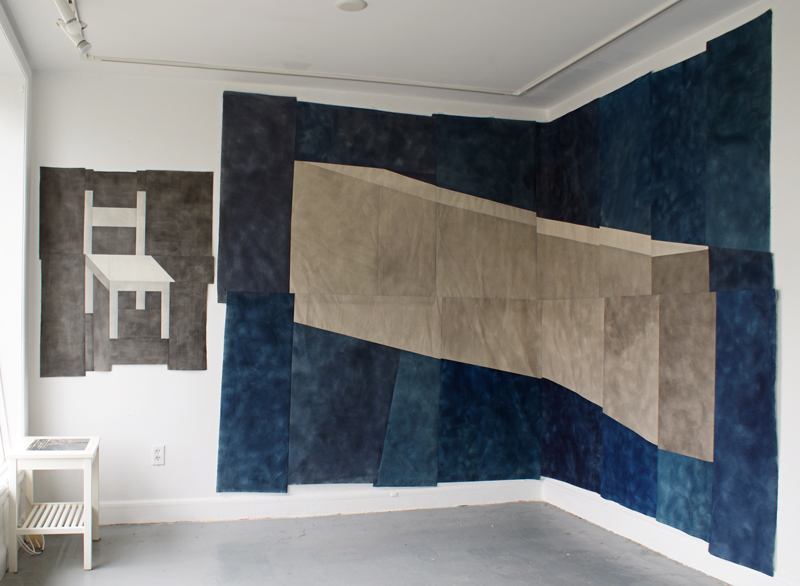
Gabrielle Teschner: In the Offing at Irving Street Projects

Today from our partners at Art Practical, we bring you Vanessa Kauffman’s review of Gabrielle Teschner’s In the Offing at Irving Street Projects in San Francisco. The author notes, “Teschner’s works epitomize a high standard of craft, but by the same turn they destabilize ready-made, rigid perceptions of architectural perfection.” This article was originally published on March 29, 2016.

Gabrielle Teschner. In the Offing, 2016; installation view. Courtesy of the Artist and Irving Street Projects.

Gabrielle Teschner. In the Offing, 2016; installation view. Courtesy of the Artist and Irving Street Projects.

“The offing” is the farthest point the eye can see when looking at the ocean from shore. It is the lateral strip of water that concludes the earthly side of the horizon, and is the recipient of both the first and last kiss of light as the day begins and ends. Elementally the offing has a physical, water-saturated truth, although it is intangible; by definition, the offing is an unreachable place, a place that must keep its distance to keep its name. Metaphorically, the offing is that something far in the future that we anticipate, make assumptions about, and lose sleep over, even as it continues to occupy a very unreal and ill-defined shape. It is this kind of anticipatory thinking that imbues the works of artist Gabrielle Teschner in her current show, In the Offing, a rotating installation of works on fabric and paper made during Teschner’s three-month residency at Irving Street Projects (ISP), a conjoint studio and exhibition space in the Outer Sunset neighborhood of San Francisco.

Marrying method and material, Teschner has made a ritual of walking the six blocks from ISP to the Pacific Ocean daily to collect seawater throughout her residency. Back in the studio, Teschner mixes the seawater with watercolor pigments to create mottled oceanic hues that she washes onto blocks of unbleached muslin. Blocks painted on different days have distinct dispositions. They—along with the handful of typed haikus that are taped to the front window and a sequence of notational paper cups lining the sill—are a book of days, a calendar of Teschner’s processional.

Read the full article here.

Share