Interviews
Interview with Sarah Rara
Sarah Rara is a Los Angeles–based artist who works with video, film, photography, and performance. She is also a contributing member of the band Lucky Dragons. Rara was most recently an artist in residence at Headlands Center for the Arts, where she worked on a new video, Broken Solar, and a libretto for a new opera, Neglected Treaty, that considers the sonic impacts of climate change and the underutilized potential of solar energy. Using the aesthetics of renewable energy, Rara activates the sun’s power through sight and sound to heighten our sensorial perception of climate change.
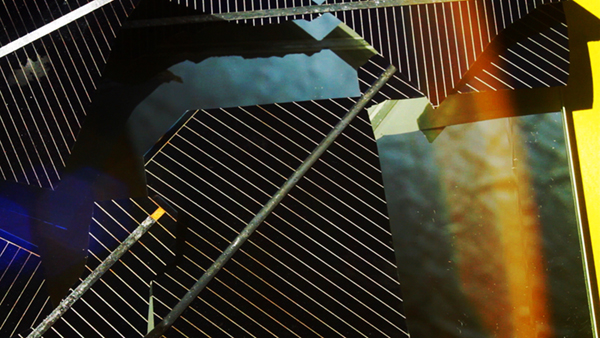
Sarah Rara. Broken Solar, 2016 (video still); video; 29:00. Courtesy of the Artist.
Vivian Sming: What was the first thing you did when you started your residency here at the Headlands Center for the Arts?
Sarah Rara: The first week here I worked on a libretto for five voices on the theme of climate change for an opera called Neglected Treaty. It’s a collaboration between Luke Fischbeck and me as Lucky Dragons. It’s part of my thinking about the state of the oceans, the state of the air, the state of the soil—thinking about oil, coal, and carbon—and the kind of reaction we are seeing unfold already. Folding all of that into a piece of music that was very focused and pointed. I made Tyvek costumes that can unfurl to be a shelter, like a tent, to cover yourself in an extreme weather event, or unfurl to be a protest banner, with part of the libretto painted onto each garment. Folded into [the project] is a reflection of one’s own implication and collaboration in speeding the process of climate change. It definitely points a finger at big industries, like agriculture and fossil fuel, but I also point a finger at myself.
One of the ideas is that you can hear climate change. The loss of biodiversity, with every moment of species loss, is audible. Even in my own lifetime, the atmospheric sound has changed. As species drop out, we go from a really complex environmental sound to approaching a drone—a human-generated drone. The arc of the opera goes from complexity to simplicity and back to complexity. In that sense, it has an optimism built into it, which is that we can do something to restore biodiversity or to protect the biodiversity that already exists. A lot of people feel like they can’t directly perceive the loss of ice and the raising temperature of the ocean, but in fact you can. If you listen to the complexity of sound in your environment, you’ll know how it’s doing.