Summer Session

Summer Session – Material Practices: Stitching, Fabric, and Textiles in the Work of Contemporary Chinese Artists

Continuing our June Summer Session theme of labor, today we bring you this review that deals with gendered, often invisible labor. Author Luise Guest explores the work of several contemporary Chinese artists using embroidery in revolutionary ways. This article was originally published on January 10, 2014.
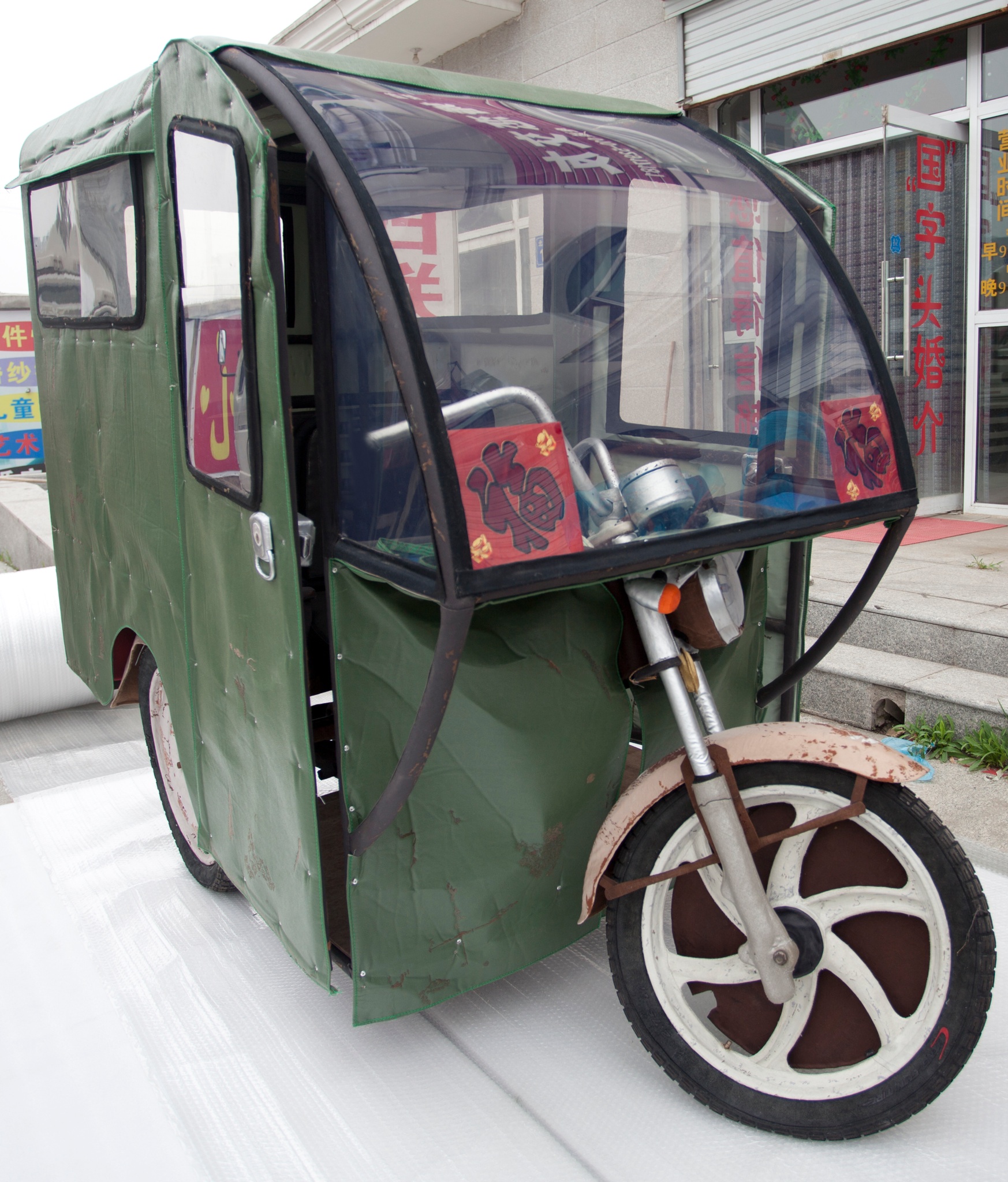
Gao Rong, What Type of Car Can a Motor-Tricycle be Exchanged For?, 2013 Embroidery, cloth, wooden board, iron shelf, leather, and plastic 70 7/8 x 76 3/4 x 37 3/8 inches (180 x 195 x 95 cm) image courtesy the artist

Gao Rong. What Type of Car Can a Motor-Tricycle be Exchanged For?, 2013; embroidery, cloth, wooden board, iron shelf, leather, and plastic; 70 7/8 x 76 3/4 x 37 3/8 in. (180 x 195 x 95 cm). Courtesy of the Artist.

Mao Zedong once said that revolution is not a dinner party. Less famously, he said it is not embroidery, either. Interestingly, however, some female contemporary Chinese artists have chosen to work with thread and textiles—and embroidery—in experimental, maybe even revolutionary ways. From Lin Tianmiao’s overt exploration of sexuality, fecundity, and the aging and decay of the body, to Yin Xiuzhen’s use of the embodied memories in old clothing; from Lin Jingjing’s stitched paintings of the recorded details of many lives, to Gao Rong’s embroidered, padded simulacra of quotidian elements of daily life in Beijing, they variously apply stitching, embroidery, felting, padding, binding, and fabric. Artist/alchemists, they transform the everyday materials of “women’s work,” reflecting personal memories and cultural identities.

As a young girl, Lin Jingjing yearned to discover a world beyond the confines of her neighborhood. She rode her bicycle as far as she could in each direction, a little further each week, measuring the time so that she would be sure to return before dark. This is an apt metaphor for her art practice, which has pushed the boundaries of painting, performance art, and installation. In Public Memories, photographic images of events both public and private are reproduced in bright monochrome colors, with selected areas neatly stitched. Rows of stitches erase and hide parts of the painted image, suggesting the unreliability of memory. Lin’s performance, video, and photographic works—in which barely opened long-stemmed roses are stitched/sutured closed—play with the binaries of beauty and cruelty, wounds and healing.

Read More »

Share

Summer Session

Summer Session – Proximities 3: Import/Export at the Asian Art Museum

From our sister publication Art Practical, today we bring you the next installment of our Summer Session—for June, we’re considering the idea of labor. Author Heidi Rabben assesses the exhibition Proximities 3: Import/Export at the Asian Art Museum in San Francisco and notes that it “provocatively address[es] the larger issue of material and immaterial labor across transactional flows.” This article was originally published on February 17, 2014.

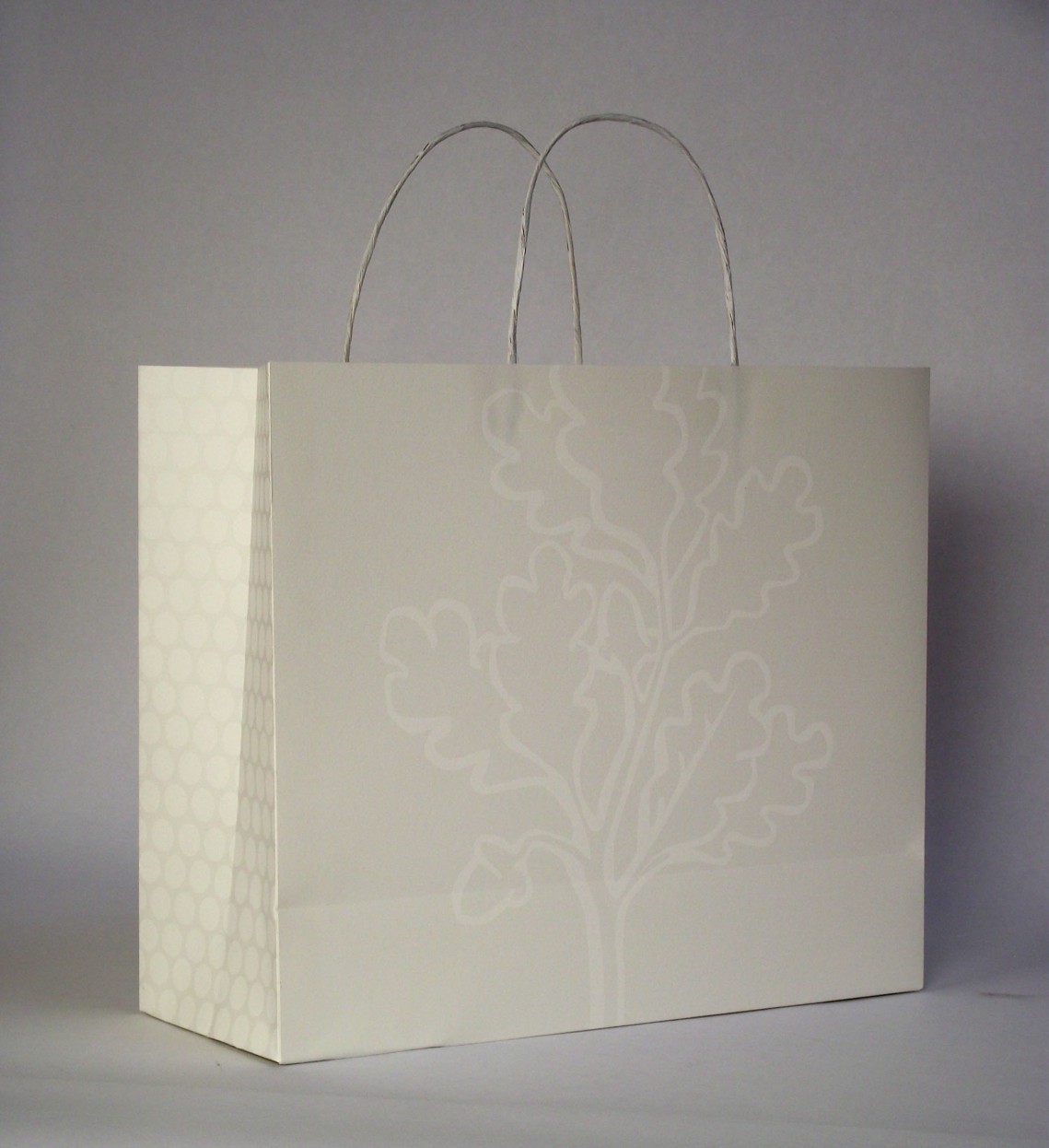
Imin Yeh, Paper Bag Project, 2013; Handmade paper bag; 15 x 12 x 6 in. Courtesy of the Artist.

Imin Yeh. Paper Bag Project, 2013; handmade paper bag; 15 x 12 x 6 in. Courtesy of the Artist.

Proximities 3: Import/Export is the third and final exhibition in a series at the Asian Art Museum exploring the Bay Area’s perception of, and relationship with, an increasingly globalized Asia. In this last installment, curator Glen Helfand [Full disclosure: Helfand has been an Art Practical contributor] has assembled a formidable group of artists whose work responds to issues around manufacturing, labor, trade, and commodification. The exhibition covers plenty of ground: Amanda Curreri’s works reference her time in South Korea, Byron Peters collaborates with a Shenzhen-based company to create his digital work, Imin Yeh borrows her creative process directly from India, and Rebeca Bollinger displays objects inspired by Japanese culture. Meanwhile, Leslie Shows’ and Jeffrey Augustine Songco’s contributions take a more macro approach to the region, thereby allowing the exhibition to simultaneously hone in on more narrow, context-specific scenarios while still addressing the wider implications of our relationship with Asia as a region. Of primary concern remains our growing reliance on outsourcing, industrial manufacturing, and the mobility of both material and immaterial labor.

On the material side, Imin Yeh’s work Paper Bag Project (2013) reveals the painstaking process of creating a consumer object with a very short lifespan: handmade paper shopping bags. Yeh singlehandedly replicates a production process she witnessed while visiting a factory in India, and documents every step on video, from hand pulping the paper, to screen printing designs, to weaving the rope handles.  The finished objects hang in the exhibition space in a grid against a white wall, their subtle pearlescent texture nearly blending into the background. With the addition of the accompanying video, we become acutely aware of how easily we could (and often do) miss the detailed amount of labor that goes into such disposable objects. Yeh’s piece underlines the wide disparity between labor and the attribution of value in trade and globalized societies.

Read the full article here.

Share

Summer Session

Summer Session – Women’s Work at Smith College Museum of Art

Continuing our labor-themed Summer Session, today we bring you Lia Wilson’s thoughtful, thorough review of Women’s Work: Feminist Art From the Collection at Smith College Museum of Art. This article was originally published on October 29, 2015.  

Carolee Schneeman. Eye Body #1, 1963–79; gelatin-silver print with hand coloring and scratching; 14 in x 11 1/2 in. Courtesy of Smith College Art Museum, purchased with the Judith Plesser Targan, class of 1953, Fund.

Carolee Schneeman. Eye Body #1, 1963–79; gelatin-silver print with hand coloring and scratching; 14 in x 11 1/2 in. Courtesy of Smith College Art Museum, purchased with the Judith Plesser Targan Class of 1953 Fund.

The exhibition Women’s Work is constructed within a historical frame. All of the included artists are introduced as individuals prominent in second-wave feminism, defined as a past era from the 1960s through the 1980s, a period with a beginning and an end. It cannot be denied that a great deal has changed in both feminist thought and social mores since then. Third-wave feminism called out the exclusions embedded in the second wave’s goals, and more nuanced and inclusive definitions of gender and sexual identity are now written into law and protected. In a 2015 interview, Gloria Steinem, a figurehead of the second wave, explained why she changed her mind about marriage. “I didn’t change, marriage changed. We spent thirty years in the United States changing the marriage laws. If I had married when I was supposed to get married, I would have lost my name, my legal residence, my credit rating, many of my civil rights. That’s not true anymore. It’s possible now to make an equal marriage.”[1] With this kind of concrete change, one might expect feminist art from forty or fifty years ago to feel somewhat dated, like throwbacks to an earlier moment in a righteous narrative of progress. The work in Women’s Work is anything but that.

The exhibition groups the artworks within five themes of second-wave feminism: “Challenging Institutions and Canonical Traditions in Art,” “The Body,” “‘Women’s Work,’” “Gender and Performativity,” and “Race and Ethnicity.” Much of the work doesn’t fit cleanly into just one theme, a testament to the many dimensions of the artists’ motives and an illustration that oppression occurs on multiple, concurrent fronts. Inequity can run rampant at home, at work, and in the art world simultaneously. Such is the nature of patriarchy.

Read More »

Share

Summer Session

Summer Session – Simon Denny: The Innovator’s Dilemma at MoMA PS1

Labor is the first theme in our Summer Session series, and today we’re looking back at Alex Bigman’s review of The Innovator’s Dilemma at MoMA PS1, an exhibition by Simon Denny that addresses innovation, promotion, the tech industry, and “the international echo chamber of startup discourse.” This article was originally published on June 25, 2015.

Simon Denny. All You Need is Data: The DLD 2012 Conference REDUX Rerun, 2013; installation view, Petzel Gallery, New York. Courtesy of the Museum of Modern Art.

Simon Denny. All You Need Is Data: The DLD 2012 Conference REDUX Rerun, 2013; installation view, Petzel Gallery, New York. Courtesy of the Museum of Modern Art.

Startup culture is ripe for satire. The tech industry’s social and economic dominance makes it a necessary target, and its penchant for jargon-heavy, wildly inflated rhetoric makes it an easy one. Mike Judge’s HBO sitcom, Silicon Valley, deftly picks the low-hanging fruit, but it hardly needs to. The elevator pitches of most weak-to-average startups on the venture-capital trail, quixotically ascribing revolutionary potential to the most banal of products, all but ridicule themselves (at least to people outside of the industry). This raises the question: Given an industry that already trades in hyperbole, is satire still an effective strategy for cutting through ideology?

The art world allows for more nuanced and challenging modalities of representation than mainstream media outlets like HBO do. The artist Li Liao, for example, took a job at the notoriously exploitative Foxconn factory in China, which produces parts for Apple products, and then exhibited his uniform, ID card, labor contract, and an iPad—the object of his labor—as a work titled Consumption (2012). While not offering much to look at, Li’s work succeeds in concretizing an experience on the production side of the technology industry, images of which can be hard to believe. Taking another perspective, Simon Denny’s exhibition The Innovator’s Dilemma, now at MoMA PS1, trains its gaze on the rhetoric of startup culture, which the artist shows to be itself one of the industry’s most important products, albeit an ethereal one. Denny’s work could easily register as satire, but it is not. It holds up a mirror, the effect and purpose of which are not easy to ascertain.

Read More »

Share

Summer Session

Summer Session: Mika Rottenberg by Judith Hudson

Today from our friends at BOMB Magazine, we bring you an excerpt from Judith Hudson’s interview with Mika Rottenberg. In keeping with our Summer Session theme of labor, the artist discusses multitasking, migrant workers, energy, and the value of sweat. This interview was originally published in the Autumn 2010 issue of BOMB.

Mika Rottenberg. Still from Squeeze, 2010; digital C-print, single-channel video installation. Total running time: 20 minutes.

Mika Rottenberg. Squeeze, 2010 (still); digital C-print, single-channel video installation. Total running time: 20 minutes.

Video-installation artist Mika Rottenberg creates mini-factories, farms, and tableaux, which produce products variously made by tremendously fat, tall, muscled, long-haired, or long-fingernailed women. Women, who in their own lives commodify their eccentricities, are, in Rottenberg’s films, featured as “bearers of production.” To make their merchandise, the protagonists have to pedal, squeeze, cry, sweat, massage, dig, push, burrow, morph, cross continents, and use more than a bit of alchemy. Every detail and orthodoxy is taken to its extremes, turned upside down. You smell the flowers and sweat; you hear the sounds of breathing, nails tapping, sweat sizzling, milk hitting tin; you feel the breezes, and the squeezing of flesh, its bursting out of constraints. Yet Rottenberg treats the superabundance with such normalcy it makes me laugh.

Judith Hudson: To me, imagination is the most private and revealing aspect of a person. It’s what attracts me to your work. You submerge people in your imagination. I feel as if you seduce the viewer with unconscious sympathies, like fetishism or caged energies.

Mika Rottenberg: Right, things that tap into everyone’s subconscious memory. We’re pretty similar in our cores, more or less. I have to tap deeper into this psychological vein, so then I can drag people with me. It’s not just visual; it’s energetic. It’s about trying to locate feeling that has no shape. The whole thing is meant to fail on some level because you can’t give shape to abstract emotions, sensations, memories, and smells.

JH: How do your ideas germinate? They seem to spin out exponentially, reminding me of James Joyce transforming the unconscious into art. You must feel things very deeply—but I sense that when you’re working, you have to be in complete control of your feelings, so you can organize all this chaos.

MR: “Spinning” is a really good metaphor. I start the process by finding the core—it can be a sound or a smell or a texture…

JH: You actually start with something that simple?

MR: Yeah, for me, even the smallest part of the work has these little tensions. So if I put a core detail in, say, the itch you feel in your nose when you are allergic to something, I then create a structure where you can throw in more details and spin those around. It starts from that feeling that doesn’t quite manifest. Then it becomes a search for what manifests this thing that can never quite be manifested. I want to create this structure to fence these abstract sensations in, to give them shape and materiality. For example, in doing yoga, you put yourself into this rigid structure to liberate yourself. Otherwise you’d just get lost.

Read the full interview here.

Share

Summer Session

Summer Session – #Hashtags: The Business End of Art

June’s theme is labor, and today we bring you an installment of Anuradha Vikram’s #Hashtagsa series that explores the intersection of art, social issues, and global politics. In todays so-called creative economy, Vikram notes, “The most successful artist will be the one who knows how to make capital work for her, rather than working for capital.” This article was originally published on March 23, 2015.  

The Broad under construction, view from Grand Avenue in downtown Los Angeles. Photo © Iwan Baan. Courtesy The Broad.

The Broad under construction, view from Grand Avenue in downtown Los Angeles. Courtesy of the Broad. Photo © Iwan Baan.

#artmarket #creativeeconomy #collectors #entrepreneur #philanthropy #support

As in nearly every field of commerce, it seems that the tension between old and new models of the business of art is coming to a head. Traditional galleries see that their established methods of selling selectively and covertly to buyers of high social standing are under threat. Museums, which once were beneficiaries of philanthropic largesse from those same well-heeled collectors, now often find that their leading patrons are competitors; rather than donate their holdings, they establish private institutions instead—like LA’s new Broad Museum—that rival the scale and scope of the Moderns and Contemporaries, which are left empty-handed. Even major gifts to museums, such as the unrivaled Fisher Collection now entrusted to SFMOMA, come with strict and costly requirements, such as new buildings and capital campaigns. Meanwhile, the most visible and valuable contemporary artists are no longer those who have been vetted by scholars and curators, but those whose works can be most readily flipped on the secondary and auction markets. Under these circumstances, the art object is purely a marker of exchange value upon which certain complicit thinkers heap vague claims of cultural use value that seem to apply only to the acquisitive culture of the 1%.

The anxiety of the old guard toward the new manifests most clearly in the recent New York Times and New York Observer profiles of art impresario Stefan Simchowitz. Simchowitz has a venture-capital background, a Los Angeles aesthetic, and a start-up approach to artists, dumping money into new and unproven talent so as to play the odds that some of the artists he supports will reach the upper echelons of the market and bear out his investments as a group. Both profiles describe a man who sees himself as an underdog and, as belies his tech-funding background, a “disrupter” of established systems. His critics, who include several prominent dealers, call him a “flipper” who takes advantage of emerging artists while devaluing their output for personal profit. His champions see him as a person willing to take a risk on an unproven artist in an era when few collectors seem to value that kind of patronage.

Read More »

Share

Summer Session

Summer Session: On Laboring for Love

Today from our partners at Art Practical, we bring you the next installment of our Summer Session—for June we’re considering the idea of labor. In this essay, author Elyse Mallouk (also an artist) notes, “While artists struggle publicly to make the value of art work visible, they are bound as a corporate body by the uncertainties and sacrifices they share in common… Artists can gain power by making their deliberations transparent to each other, especially their mixed feelings about their own artistic labor and its value.” This article was originally published on April 3, 2014.

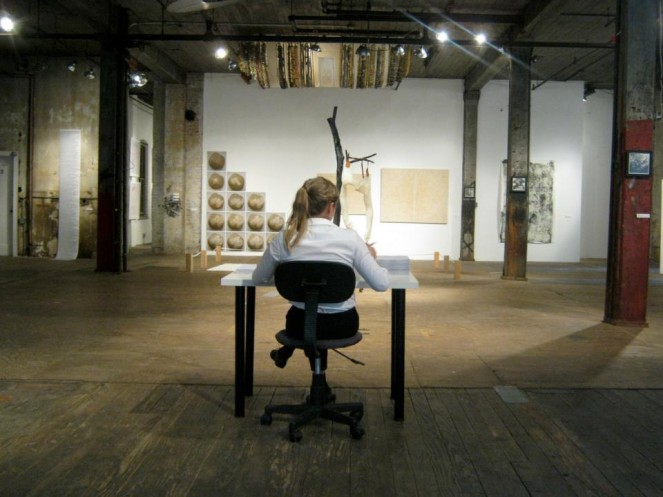
Shannon Finnegan. 8 Hours of Work, 2012 (performance still); Saturday, June 9, 2012, 11 a.m.–7 p.m. Presented by Recession Art in conjunction with Everything Is Index, Nothing Is History at the Invisible Dog, Brooklyn. Courtesy of the Artist.

Shannon Finnegan. 8 Hours of Work, 2012 (performance still); Saturday, June 9, 2012, 11 a.m.–7 p.m. Presented by Recession Art in conjunction with Everything Is Index, Nothing Is History at the Invisible Dog, Brooklyn. Courtesy of the Artist.

Published in Slate in January 2014 and widely circulated on social media, the article “In the Name of Love” argued that an often repeated phrase, “Do what you love; love what you do,” communicates an “anti-worker ideology.” The problem with the adage, the author contended, is that it devalues the vast majority of work (the tedious kind) while elevating the type of work—that of a designer or executive, for example—that feeds on the unfulfilling labor of others. In effect, the article reasoned, the phrase divides work and the workforce into “two opposing classes: that which is lovable (creative, intellectual, socially prestigious) and that which is not (boring, unintellectual, undistinguished).” Beyond reinforcing the aphorism’s oversimplifications, the essay neglected a whole group of workers—contemporary artists and cultural producers—who often undertake one type of work to enable another, and experience conflicted feelings about both.

In a recent discussion with two fellow artists, Piero Passacantando and Shannon Finnegan, I found myself using the word work fluidly, to signify both my job in the arts and my art work, or studio practice. But these two kinds of work mean different things, and I experience a firm opposition between them. The rewards of the work I do for pay are myriad and not confined to the fiscal, but in a sense my primary relationship to my job is a pragmatic one. It pays my expenses and also funds the work I do for free, which helps to sustain me intellectually but not monetarily. The necessary constraints my job applies to the rest of my life can create urgency and impel focus in my art work, but those same constraints can also drain me of the energy to be industrious in what might be considered my spare time. Far from wholly fulfilling or unfulfilling, both types of work elicit a range of sentiments from discouragement to gratification. While distinct, they are embroiled in a complex relationship that involves emotion as much as money.

Read the full article here.

Share