In keeping with this month’s Summer Session theme of labor, today we revisit Tania Puente’s essay on feminist artist Mónica Mayer’s retrocollective at Museo Universitario de Arte Contemporáneo. Among Mayer’s socially reflexive work is an emphasis on revealing women’s hidden labor, especially the emotional labor of motherhood, marriage, and sexual objectification. This article was first published on March 1, 2016.

Polvo de Gallina Negra (Mónica Mayer and Maris Bustamante), ca. 1983; photograph. Courtesy of the Artist and Museo Universitario Arte Contemporáneo.
Si Tiene Dudas… Pregunte [When in Doubt… Ask] at the Museo Universitario de Arte Contemporáneo (MUAC) is a retrocollective of works by feminist art pioneer Mónica Mayer (b. Mexico City, 1954). “Retrocollective” isn’t a very well-known term[1] and certainly not one that many artists would choose to designate their career retrospective, but Mónica Mayer isn’t like other artists. Since the late ’70s, Mayer has been discussing, rethinking, and refuting issues that are fundamental to the Mexican sociocultural environment: gender, equality, violence, age, body, memory, intimacy, labor, social policies, representation, and all of their possible combinations.
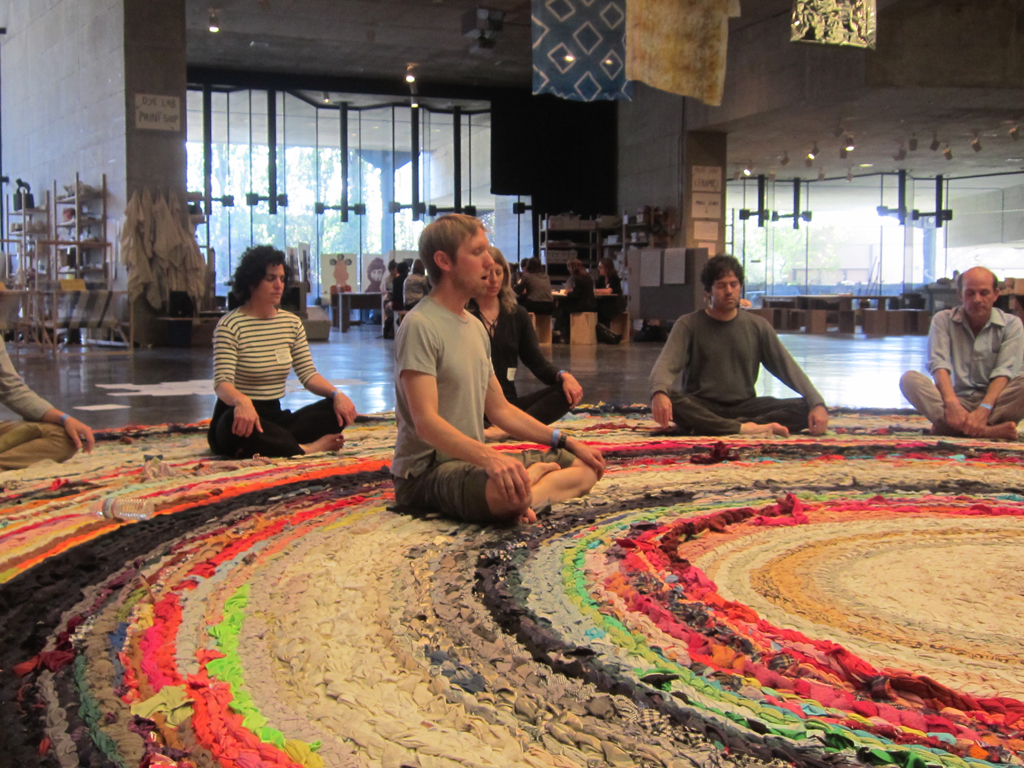
Mayer’s artistic strength lies in the solid community she has formed around her activities, where friendship, empathy, and complicity play a pivotal role. As the exhibition title emphasizes, constant dialogue is her best weapon. It is indeed a Mónica Mayer show, but with a horizontal and collaborative discourse, which curator Karen Cordero Reiman successfully achieves. The exhibition stands as a recognition to the many contributors that have shaped these projects throughout the years. Their joint and fearless efforts have made visible what was previously disregarded from the canonical and patriarchal perspective.
Read More »