Summer Session

Summer Session: How We Read: Close, Hyper, Machine—Part 1

As part of our Back to School Summer Session we are exploring pedagogy and the state of learning in the arts. Today we bring you an article from our sister publication Art Practical by cultural scholar and author of How We Became Posthuman N. Katherine Hayles. Considering national studies observing a decline in general reading abilities across the United States, Hayles differentiates between key reading techniques employed by print versus digital texts. Her explication of these different patterns offers up new pedagogical strategies for reading that suggest that digital and print reading could inform one another rather than work in opposition. This article was excerpted with permission from the ADE Bulletin No. 150 (2010) and republished December 4, 2013. 
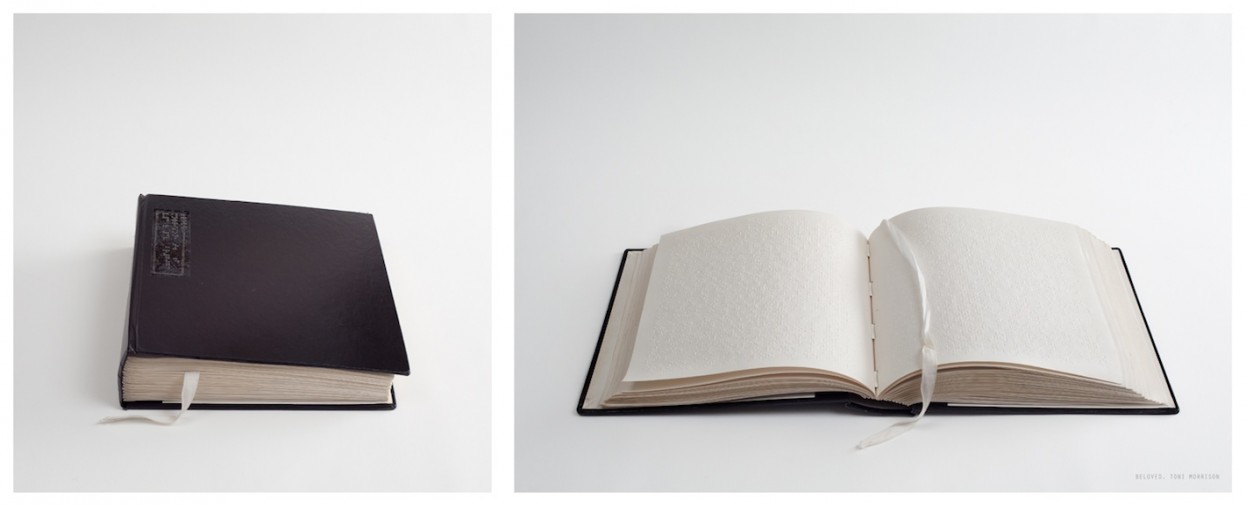
Catherine Wagner. Beloved, Toni Morrison from the series trans/literate, 2011; archival pigment print with braille; edition of five; 21.75 in. x 49.13 in. diptych. Courtesy of the Artist and Stephen Wirtz Gallery, San Francisco.

Catherine Wagner. Beloved, Toni Morrison from the series trans/literate, 2011; archival pigment print with braille; edition of five; 21.75 in. x 49.13 in. diptych. Courtesy of the Artist and Stephen Wirtz Gallery, San Francisco.

The evidence is mounting: people in general, and young people in particular, are doing more screen reading of digital materials than ever before. Meanwhile, the reading of print books and of literary genres (novels, plays, and poems) has been declining over the last twenty years. Worse, reading skills (as measured by the ability to identify themes, draw inferences, etc.) have been declining in junior high, high school, college, and even graduate schools for the same period. Two flagship reports from the National Endowment for the Arts, Reading at Risk, reporting the results of their own surveys, and To Read or Not to Read, drawing together other large-scale surveys, show that over a wide range of data-gathering instruments the results are consistent: people read less print, and they read print less well. This leads the NEA chairman, Dana Gioia, to suggest that the correlation between decreased literary reading and poorer reading ability is indeed a causal connection. The NEA argues (and I of course agree) that literary reading is a good in itself, insofar as it opens the portals of a rich literary heritage (see Griswold, McDonnell, and Wright for the continued high cultural value placed on reading). When decreased print reading, already a cultural concern, is linked with reading problems, it carries a double whammy.

Fortunately, the news is not all bad. A newer NEA report, Reading on the Rise, shows for the first time in more than two decades an uptick in novel reading (but not plays or poems), including among the digitally native young adult cohort (ages 18–24). The uptick may be a result of the Big Read initiative by the NEA and similar programs by other organizations; whatever the reason, it shows that print can still be an alluring medium. At the same time, reading scores among fourth and eighth graders remain flat, despite the No Child Left Behind initiative. Notwithstanding the complexities of the national picture, it seems clear that a critical nexus occurs in the juncture of digital reading (exponentially increasing among all but the oldest cohort) and print reading (downward trending with a slight uptick recently). The crucial questions are these: how to convert the increased digital reading into increased reading ability and how to make effective bridges between digital reading and the literacy traditionally associated with print.

Read the full article here.

Share

Summer Session

Summer Session – Help Desk: Group Crit

This Summer Session we’re going Back to School, and today we bring you a question from our arts-advice column Help Desk about how to get the most out of an MFA program. Group crits can be the most nerve-wracking and rewarding aspects of an MFA, and here Bean Gilsdorf, Whitney Lynn, and Rhonda Holberton weigh in on the best ways to make sure yours are both challenging and enriching. This article was originally published on July 21, 2014.

Beatriz Milhazes. Sinfonia Nordestina, 2008; Acrylic on canvas, 96 7/8 X 144 7/8 inches

Beatriz Milhazes. Sinfonia Nordestina, 2008; acrylic on canvas; 96 7/8 X 144 7/8 inches

I’ve been accepted to an MFA program that begins this September. As the month approaches, I find myself getting increasingly nervous and anxious (as I always do on the first day of school). It’s been a few years since I’ve participated in group critiques, and while I’m excited about this program, I also feel very vulnerable right now. Can you offer any advice to new MFA students? I wonder what former students “wish they’d known” before going into a program.

There are so many things I wish I’d known before I started my graduate program that I could answer your question with a book. Work hard, show up for everything, and say thank you are timeless tips, of course, but you’re looking for other suggestions calibrated to the specifics of the MFA. First, make friends with the Graduate Program Manager (or whatever they call the initial line of defense in your grad office). This individual will be your conduit to advisor selection, the assignment of teaching assistantships, and much more; woe betide the student who cops an attitude and treats the manager rudely. Second (and this is related to the above), the most bureaucratic rules only apply to students who don’t apply themselves. I’m not suggesting that you engage in risky behavior, but all fences have gates. If you are kind and polite and work diligently, someone may show you where they are. Also, if you are moving to attend school, consider staying in that city for a few years after graduation. You will make a lot of friends and contacts in two years, but if you move away immediately, you will lose them. (This last piece of advice was given to me by a colleague who still regrets that he moved away a week after receiving his degree.) Finally, stay away from drama queens, bastards, and bullies, even the ones who are powerful and who seem to hold the potential for your future professional advancement. If I were dying right now and had to give counsel with my last breath, it would be this: Assholes only ever help themselves.

Read the full article here.

Share

Summer Session

Summer Session – I Reviewed Art Grants for 3 Days & Here’s What I Learned

This Summer Session we’re going Back to School, focusing on the intersections of artistic practice, education, and the roles of various institutions. Today we bring you an excerpt from an article by Sarah Brin, who volunteered with the California Arts Council to review art grant proposals. Brin offers some advice and general findings based on her experience to help future artists find success when they submit grant proposals to the state for their projects. This article was originally published on Medium on April 10, 2016.

Nick Cave. Heard, 2015 (performance still); Detroit, MI. Courtesy of the Artist and ArtNews.

Nick Cave. Heard, 2015 (performance still); Detroit, MI. Courtesy of the Artist and ArtNews.

I just spent three days in a conference room in Sacramento reviewing grants for the California Arts Council. I spent this time with four other arts professionals working in different fields. I stayed in a weird hotel and had a modest per diem for eating meals by myself, after which I would take long, aimless walks around the state capitol and think about stuff. I learned a lot during this process, so I’m sharing a few takeaways for artists and would-be grant writers.

• Our group was responsible for reading a little under fifty applications. Each application has an assigned “main reader” who steers the conversation of each proposal. This person has the floor to set the tone for the discussion of a project. I wouldn’t use a term like “make or break” here, but something less dramatic and slightly less tangible happens.

• I noticed three big themes popping up within the applications we read. I’m simplifying here, but they were: (1) collaborative instrument making, (2) art parades, (3) support for transgender creatives.

• Jargon is the worst. Don’t say something like “our collaborative process has innovative impact around groundbreaking community discourse” unless you take time to unpack what that really means. Terminology does not make you seem fancy, at least not to the people willing to take three days off from work because they really care about which projects get funded by the state.

Share

Summer Session – Everybody Needs Wiggle Room

This Summer Session we’re going Back to School, and today we bring you a piece from our friends at Brooklyn Rail by interdisciplinary artist and author David Robbins, who is known especially for his “retirement” from contemporary art and his transition to “independent imagination.“ Framing the idea of “wiggle room” as a literal room, Robbins encourages artists to take the space that they need in order to fully develop and explore their practices outside of the stultifying demands of art institutions, academies, and markets. This image was originally posted February 5th, 2013. 

David Robbins giving everyone permission for Wiggle Room.

David Robbins giving everyone permission for/at Wiggle Room.

Share

Summer Session

Summer Session – Resolutions: Task Force on the Use of Human and Animal Subjects in Art

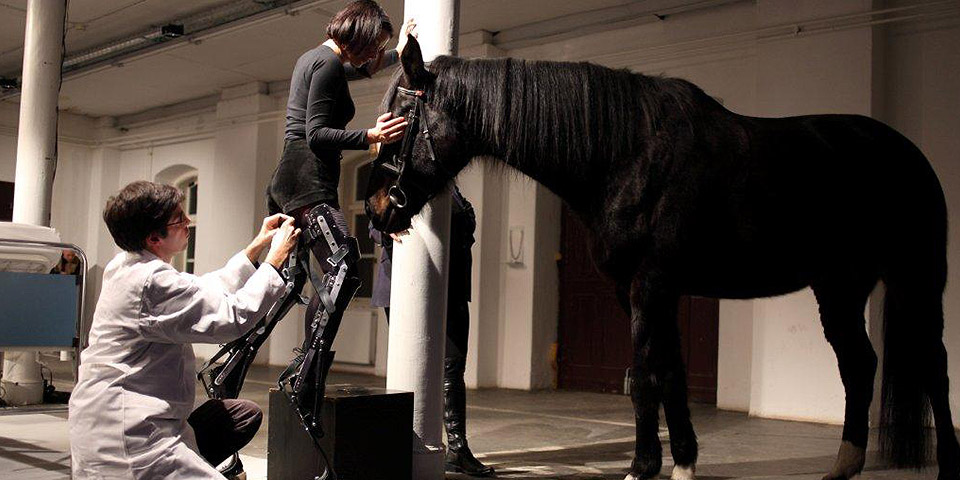
Our final Summer Session is going Back to School, and in addition to exploring pedagogy and education in the arts, we are also providing resources for art practices and education within institutional forms. Today we bring you a resolution passed by the College Art Association on the use of human and animal subjects in art, which outlines the association’s findings on using living subjects within an artistic practice and attempts to offer guidelines for this potentially controversial tactic. The task force addresses the delicate balance needing to be struck between allowing for the full range of artistic expression while also emphasizing the responsibility an artist, curator, or institution has towards both humans and animals used for a piece. This resolution was passed October 23, 2011. 

Art Orienté objet. Que le cheval vive en moi (May the Horse Live in Me), 2011 (performance still); performed at Kapelica Gallery, Ljubljana, Slovenia.

Art Orienté objet. Que le Cheval Vive en Moi (May the Horse Live in Me), 2011 (performance still); performed at Kapelica Gallery, Ljubljana, Slovenia.

The Use of Human Subjects in Art: Statement of Principles and Suggested Considerations

Many areas of the visual arts use human subjects—from the photographs taken of bystanders on the street, to the models in the studio, to the participants in a performance. In the use of human subjects in art, the College Art Association endorses the following principles:

Artists and other professionals in the visual arts must be allowed the full range of expressive possibilities in order for art to maintain a vital role in human society. With that expression, however, comes responsibility when artists and others use human subjects in art. CAA does not endorse any work of art that undermines a person’s agency or fundamental dignity except with the explicit and knowing consent of that individual. Further, CAA supports the use of human subjects who are fully aware and informed of their participation in a work of art. To perpetuate this ethical standard, professionals in the visual arts should consider the following questions before engaging in any practice using human subjects:

• Some artists and curators may consider practices in which the human subject may be put in a difficult or distressing situation. CAA recommends that any user of a human subject in such a work pose these three questions before beginning: Can you make the same point by replacing the human subject? By reducing the number of human subjects? By refining the use of human subjects?

• Have you explored the institutional standards and guidelines at your home institution, if any, that apply to the use of human subjects for research?

• Are you aware of the national standards and guidelines for the use of human subjects in research, such as those produced by the National Science Foundation or by other professional organizations to which you belong?

• Have you discussed any practices that may result in pain or discomfort for the human subject? Have you considered alternatives?

• Have you developed a release form (as appropriate, with information on the work of art) for all human participants?

• If you are using human subjects without their knowledge (e.g., “found footage” in a video), have you considered issues of privacy?

Read the full resolution here.

Share

Summer Session

Summer Session – Listen to the Teacher: A TA and Teacher Resource Manual

This Summer Session we’re going Back to School, and while we are exploring all forms of learning, we are also providing resources for those engaged in formal education. Today we bring you a guide for teaching from Karra Shimabukuro, the same professor who started the crowdsourced project How to Prep for Grad School If You’re Poor featured previously as part of this Summer Session. Shimabukuros TA and Teacher Resource Manual is not specific to teaching in the arts, but provides broad, structural advice for pedagogical strategies that recenter ones teaching approach on the students, encouraging a more successful semester for everyone involved. 

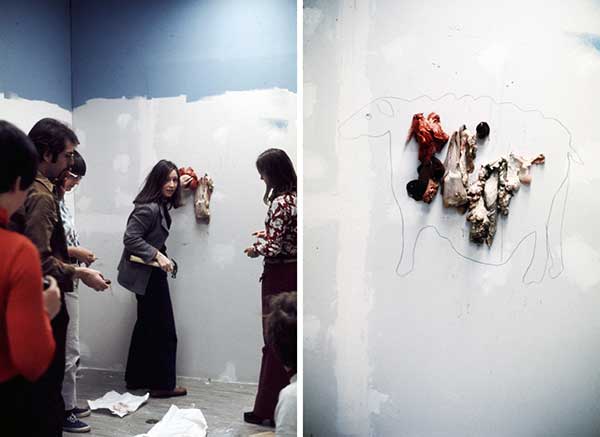
Suzanne Lacy, Maps, 1973. Happening at CalArts, Valencia, CA. Pictured, Left: Bia Lowe, Stanley Fried, Susan Mogul, Vanalyne Green and an unidentified student; Right, Detail of Maps. Photos: Suzanne Lacy. Courtesy of the Artist.

Suzanne Lacy, Maps, 1973. Happening at CalArts, Valencia, CA. Pictured, Left: Bia Lowe, Stanley Fried, Susan Mogul, Vanalyne Green and an unidentified student; right, Detail of Maps. Courtesy of East of Borneo and the Artist. Photos: Suzanne Lacy.

Tell me if this scenario sounds familiar: Your class was assigned a text to read for the day. You open class by asking what they thought. Blank faces and crickets greet your question. You spend the majority of class lecturing rather than eliciting responses. You end class early. You’re upset that these students aren’t “up to par,” didn’t do the reading, and can’t participate in a college-level course. This pattern continues the rest of the semester. You bemoan the multiple reasons why students aren’t what they used to be.

Now, imagine this. Let’s pick up the scenario with the crickets. You break students into small groups, assigning each group a small section of the reading, a close reading if you will, and give them a prompt/question to use a lens for breaking down that work. You ask the students to figure out what the text says, what it means, and why it matters. You give the groups time to work, and then, in order of how the passages appear in the text, you have the groups share out their findings. You encourage students to take notes on the presentations of others. You then finish the class by tying the different strands together.

The second scenario isn’t perfect. You’ll still have students who didn’t do the reading. The major difference is, the second scenario does not assume a failure on the part of the students. It considers the possibility that perhaps, your students don’t know how to approach and discuss a text. It does not get stuck on the idea that by the time a student reaches a 100 or 200 or 300 or 400 level course they should know. Instead, it teaches from where the students are, not where you think they should be.

No one ever sets out to have a bad class. No one WANTS a bad class. It’s a good thing that there are some easy ways to fix these common issues/problems and ensure they don’t happen (or at least happen less frequently) in the future.

Access the full guide here.

Share

Summer Session

Summer Session – Help Desk: MFA vs. Residency

With Fall right around this corner, this Summer Session we’re taking some time to think about what it means to go Back to School, whether that has to do with self-directed learning, formal education, or pedagogical strategies. In that vein, today we bring you an article from our arts-advice column Help Desk addressing the differences between an MFA and a residency, and how that comparison reveals different sets of priorities and demands for one’s practice. This article was originally published November 25, 2013.

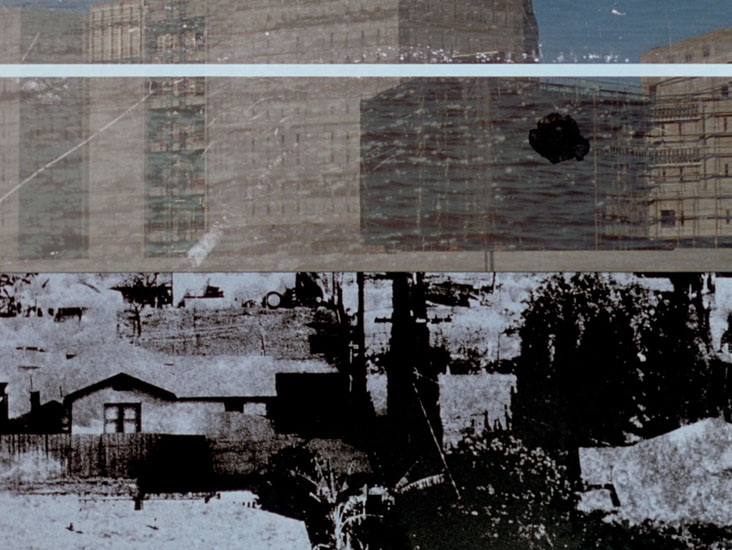
Pat O'Neill. Horizontal Boundaries, 2008; still from color film, sound, 23 mins.

Pat O’Neill. Horizontal Boundaries, 2008 (film still); color film, sound;
23:00.

How valuable is an MFA these days and is it really worth the cost? I’ve spent the last two months researching schools and preparing applications for MFA programs in several different countries. (My partner’s job might require me to study abroad.) I would like the degree not because I am interested in teaching, but because I am interested in the intensity of a two-year program to cultivate solid research and focus on work amidst peers and access to faculty input. In some cases, however, the cost for international students is very high. I just took part in an artist residency that left me wondering: If I’m not that interested in teaching, is it really necessary to have the MFA, or could I have comparable experience with multiple residencies and save the money?

The answer to this question depends a lot on what kind of person you are. Do you like deadlines? Are you disciplined and self-motivated? If aliens were invading Earth in a month, would you voluntarily do hundreds of push-ups a day and build a tank out of junkyard cars in order to defeat them? Or are you like me, who would eat all the cookies I could put my hands on and then find a hole in which to quietly die? If your answer is the former, then perhaps you have the drive to create and execute an intense plan for self-education.

Here’s what the MFA is: two years of studio time interrupted by seminars, readings, papers, presentations, and bitch sessions with classmates over cheap drinks. It’s an artificial structure designed to cram as much as possible into your head in a very short time. Every day is intense, and even though it is (usually) a scaffolded ordeal, it is still much more self-directed than the typical undergraduate experience. In an MFA program, you have to create and think very deeply about creating at the same time, and this (plus all the hangovers you’ll suffer) is what makes it completely exhausting.

If you set out on your own, there are three main components to an MFA program that you’re going to have to try to replicate: studio time, coursework, and conversation.

Read the full article here.

Share