Rachel Beach

rachel beach4.jpg

New York artist Rachel Beach combines elements of painting and sculpture in her crafted wood veneer and oil painted objects. Her forms waver between two and three dimensions, creating spatial and perceptual tension. The painted areas are an illusion of volume rendered on the flat surface of the object. Beach uses the process of marquetry, the craft of covering a structure with pieces of veneer to form patterns or designs, often used in furniture and instrument making.

These painting/sculpture hybrids reference the language of ornamental detailing, modern abstraction, and contemporary design, both in technique and appearance. In her artist statement, Beach states, “the painted image depicts the sculptural object and vice versa; they are images of themselves. By merging three-dimensional form with illusory space, I destabilize visual perception, questioning how we see and what we believe.”

Beach studied at the Nova Scotia College of Art and Design and received her Masters from Yale University. She has exhibited her work throughout the United States and Canada, including Like the Spice Gallery and Bespoke Gallery in New York City and Wight Gallery in Los Angeles.

Share

Laugh It Off at Walter Maciel Gallery

Walter Maciel has a loaded gun and is going to shoot the next motherfucker who says “Let me think about it.” Or so says one of the darkly comical pieces in the summer group show at Walter Maciel Gallery in Los Angeles. The exhibition, entitled Laugh It Off–curated by Jane Scott, Girl Wonder, Inc.–attempts to bring a much needed respite of humor to the stiff and ever high brow art scene, which continues to confound audiences with work that further detaches the public from its understanding, shrinking the possibility of promoting the value of art to a wider set of collectors and appreciators. The show features the work of nine artists: Oscar Cueto, Archie Scott Gobber, James Gobel, Laurie Hogin, William Powhida, Robb Putnam, Kammy Roulner, Lezley Saar and Fletcher Smith. Each work on view in Laugh It Off pokes fun at the art world and at culture at large, and presents a motley take on what makes us smile–whether that smile arises from witty wordplay, from cleverly constructed objects, or from acerbic criticism of a culture that takes itself much too seriously for the summer heat to handle. While much of the work in the show lives up to its calling to be funny, a few pieces attract more thoughtful responses to their deeper themes, and some others seem almost a pinch desperate, a bit like the kid in junior high who gives himself the title of class clown. Continue reading below for a full review of Laugh It Off by DailyServing’s Allison Gibson.

LaughItOff_Powhida Walter-1.jpg

Read More »

Share

Perform! Now!

Lucas_Murdiga.jpg

Saturday, July 25th, PERFORM! NOW! commenced on Chung King Road in Los Angeles’s Chinatown. Pendulous rows of scarlet lanterns lit the streets and walkways for spectators who gathered to watch performances by more than 30 artists. It was the area’s first event featuring new visual and sound art performances; a collaborative effort on the part of 12 different Chinatown galleries. One of the more convoluted conceptual performances of the evening was by Lucas Murdiga, who had his art gallery debut in LA with (w)hole at Charlie James Gallery. Murdiga is a San Francisco artist who is known for pieces relating to behavioral science, deconstruction of the 5 senses, and control/submission as it influences or predicts the future. For (w)hole, the artist constructed 2 wooden cabinets resembling refrigerators, inside which were placed the refreshments that accompanied Saturday’s opening. Attached to the refrigerator doors were a rope and pulley system that connected to an apparatus in Murdiga’s mouth. Every time someone opened or closed the cabinet doors to get food, the ropes pulled the corners of Murdiga’s mouth into a smile. As the artist explained, his interest in animal behavior, particularly herding, motivated him to build the installation. Just as trainers use food as a reward for conditioning animals, Murdiga used drinks and hors d’oeuvres to influence audience participation. Further, Murdiga had a direct connection with viewers as their movement through the gallery also had a physical effect upon him whenever their actions forced his grin. Another aspect of the piece that pertained to control/submission was a wooden table on which participants could recline while Murdiga inserted a gloved finger in his or her mouth. The idea was for Murdiga to apply pressure to a point in the roof of the mouth–a spot known to calm a person who holds stress or tension in the jaw. While Murdiga gave the acupressure treatments to volunteers in the gallery, he gave vivid descriptions of other pertinent projects he has completed. He spoke about Muster Retrodiction at 667Shotwell, a project space in a San Francisco residential home. He also gave accounts of other projects, which are documented by large photographs on display at Charlie James Gallery through the 22nd of August.

Aaron_Sandnes.jpg

Another conceptual performance that touched on the self-reflective was Maura Brewer‘s Face Transplantation and Depression at Chung King Project. In her performance, Brewer played two characters; a public speaker/psychoanalyst who was holding a seminar on Face Transplantation and Depression, and the speaker’s satellite interviewee, artist Maura Brewer. Brewer projected video clips of herself answering questions asked by the psychoanalyst, who could empathize with her subject’s depression due to her previous experience enduring a face transplant. During the interview, Brewer exhibits all the classic symptoms of depression from binge eating to paranoia and self-destructive tendencies. Brewer’s strength is bringing sarcastic humor to the blunt and abrasive topics of disease and mental health.

LetsPaintTV.jpg

Sarcasm was no stranger to PERFORM! NOW! as Aaron Sandnes walked around with his flag that read, IF I RULED THE UNIVERSE I’D KILL TIME SO THIS GENOCIDE WOULD LAST FOREVER and John Kilduff made a statement on multi-tasking with his piece Let’s Paint TV in front of Jancar Gallery. In addition to painting on canvas, Kilduff simultaneously runs on a treadmill, blends drinks, cooks, and answers questions from the public. The show was interrupted by multiple power outages due to overloaded circuits at Jancar, which allowed for impromptu modifications that only a live performance can yield. You can see more live segments of Let’s Paint TV every weekday from 11am-12 noon on Stickam.com and even call in with questions for the artist!


Share

Daniel Richter

Daniel Richter.jpg

Oh la la, Daniel Richter’s new exhibition at Contemporary Fine Arts in Berlin is not what most avid viewers of the artist’s work have come to expect. While it includes over two dozen new paintings by Richter, in a style that is undeniably his own, a number of select new elements leave the exhibition less reconciled – open to the future.

The new paintings have none of the brash immediate impact of Richter’s previous larger works. In actuality, the new lot of small paintings on view, ask that one come closer and have acute attention to detail. Richter’s palette is still tagged and tainted with his orange neon. The subject matter is macabre in a number of the works. In Cazareta (2009), two wolves occupy a snowy field and beyond them the edge of a lake; they notice the viewer and stare back through gleaming blue eyes. In another entitled Winterreise 5 (2009) a ghastly cloaked figure skirts across another snowy field. Behind the spectre looms a thick dark wood. Arguably now traditional in many ways, the new paintings extend the dialog already established in Richter’s paintings between the supernatural entity and the realism of the soldier and other recurring subjects.

In a constellation through the gallery, on both floors, are gigantic crystals, brought in from Hamburg for the exhibition. A huge geode of Amethyst is backed up against the wall to sit between two paintings. In the center the gallery, a slab of petrified wood, on which two other geological marvels are stationed, diagonally divides the space. As found objects, the minerals have a significant relationship to the painting. Being hundreds of millions of years old, the stones suggest a viewpoint near the eternal when interpreting the paintings. In moving between stone and oil, one can’t help but look at the works in terms of epochs and eras, seeing the painter as shaper of time.

Daniel Richter was born in 1962 in Eutin, Germany. Richter has shown his work in galleries and institutions across the world, including recent exhibitions at the Denver Art Museum, the Essl Museum, Regen Projects in Los Angeles, and David Zwirner Gallery in New York. He lives and works in Berlin and Hamburg.

Share

Clayton Brothers

CB.jpg

On July 18th the Clayton Brothers unveiled their latest works at the Patrick Painter Gallery in Santa Monica, CA. The long awaited solo exhibition, entitled Jumbo Fruit, explores the underbelly of American culture, reflecting on an age of consumerism and over-stimulation. Using obsessively bold colors, Rob and Christian Clayton generate a tangled myriad of technicolor imagery that stems from the traditional still-life. The brothers transcend convention to create a kaleidoscopic medley of fruits, figures, and objects. With eight large scale paintings in the main gallery and a collection of smaller works in the west gallery, viewers find themselves in the midst of a mixed-media wonderland that harps on American ethos.

CB_1.jpg

The Clayton Brothers follow an exceptional creation process to produce dynamic and distinctive work. Rob and Christian separately contribute to a mixed media piece while leaving behind physical clues that create a subconscious conduit through which the other can travel. The two work back and forth, transforming and reinterpreting each other’s marks. The result is an unpredictable array of personal gestures, techniques, and metaphors.

Rob and Christian Clayton serve as faculty at Art Center College of Design in Pasadena, California where they each received their Bachelors of Fine Arts degrees. Their work has been exhibited all over the world, including Art Basel in Miami Beach and major shows in China, Denmark, and the UK. In 2010, the Madison Museum of Contemporary Art will showcase their forthcoming solo exhibition.

Share

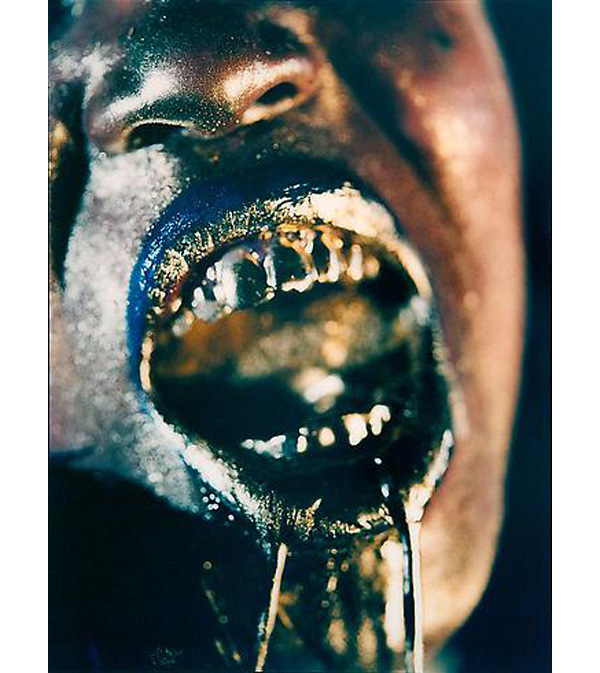
The Female Gaze: Women Looking at Women

marilyn_minter_female_gaze.jpg
Marilyn Minter

In Cheim & Reid‘s current exhibition, women portray the bodies of other women in ways that are both historically grounded and forward thinking. Called The Female Gaze, the exhibition acts as a survey of sorts, presenting a wide range of approaches, some morally ambiguous and others socially incisive. The intergenerational, international span of artists includes Berenice Abbott, Marina Abramovic, Vanessa Beecroft, Louise Bourgeois, Julia Margaret Cameron, Victoria Civera, Rineke Dijkstra, Marlene Dumas, Anh Duong, Ellen Gallagher, Nan Goldin, Katy Grannan, Roni Horn, Deborah Kass, Maria Lassnig, Zoe Leonard, Sally Mann, Marilyn Minter, Joan Mitchell, Alice Neel, Shirin Neshat, Collier Schorr, Joan Semmel, Cindy Sherman, Mickalene Thomas, Hannah van Bart, Hellen van Meene, and Kara Walker, among others.

Cheim & Reid’s press release quotes from Laura Mulvey‘s seminal essay, “Visual Pleasure and Narrative Cinema”: “In their traditional exhibitionist role women are simultaneously looked at and displayed, with their appearance coded for strong visual and erotic impact so that they can be said to connote to-be-looked-at-ness.” When women are both the looker and the looked at, the exhibition suggests, the distance between voyeur and the object is conflated and “to-be-looked-at-ness” may simply become “to-be-ness.” The exhibition continues through September 19, 2009.

Share

Monika Sosnowska

MS_Installation.jpg

For her installation at Berlin’s Capitian Petzel, Polish artist Monika Sosnowska, in her signature style, emphasizes space through an array of constructed structures. Seven pieces fill the main gallery space, arranged in a line, beginning with the smallest–a metal stool whose legs have been bent so the viewer is actually looking at the stool’s underside–and concluding with a large, twisted sculpture resembling a railing or banister that is mysteriously hung upon a wall. Each of the structures represents an element of everyday Polish life. A picnic table with the seats folded over the table top, a open door and frame lacking a room to walk in or out of, and the cross-section of two walls creating four individual half-spaces that mimic a bar in a small Polish town. The sculptures engage in a dialogue about the former Eastern Bloc’s highly recognizable public architectural and structural elements, which is then accentuated by Capitian Petzel’s modernist gallery, situated along a wide communist-style boulevard in what was once East Berlin. The placement of Sosnowska’s objects in an incongruent line, and their manipulation speaks to a part of Europe still in transition, and an inability, or unwillingness, to forget the lived histories of the past.

Sosnowska lives and works in Warsaw and is one of Poland’s most recognized contemporary artists. She has exhibited in numerous solo and group exhibitions throughout Europe, including the 50th Venice Biennale and Manifest 4. Capitian Petzel is one of Berlin’s newest galleries. Housed in a glass pavilion located along Karl-Marx-Allee in eastern Berlin’s East Mitte neighborhood, the gallery is a collaborative project of Gisela Capitian of Gallerie Gisela Capitian in Cologne and Friedrich Petzel of Friedrich Petzel Gallery in New York. Their exhibitions feature a variety of international artists interacting with the unique and historic space.

Share