Andy Ducett

Andy DuCett

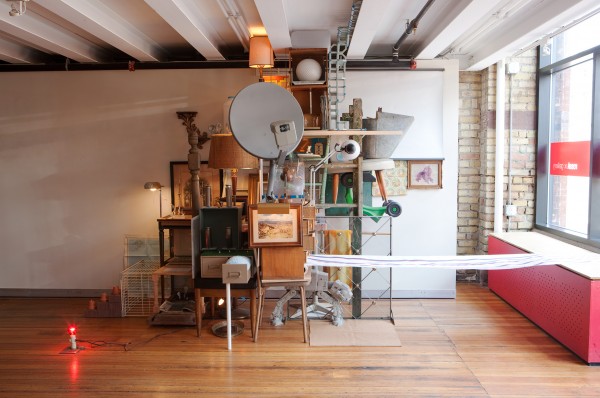
Andy DuCett is a Minneapolis- based artist working with a multitude of media, utilizing sculpture, collage, drawing and installation.  His installations predominantly feature site-specific pilings of mostly found objects.  The sculptures are temporary, and are most typically indicative of the cultural location in which they are built. His first solo show, entitled AOT Has Been Here Forever, Except When It Wasn’t,  recently on view at Art of This gallery in Minneapolis chronicles the history of the buildings, residents and streets around the gallery. The installation uses items from thrift stores and cast objects in order to draw attention to our interactions with the world. This assemblage of objects typical in his sculptural work is mimicked in his drawings, which pull together various occurrences and locations, illustrating for instance, events taking place over the course of a month.  His interest in found objects is apparent in his collage work, as well.  Using only found photographs and illustrations, DuCett constructs impossible scenes that subvert comfort, utilizing imagery of youthfulness to depict hazards and barriers.

DuCett received his Masters in Fine Arts from The University of Illinois at Urbana-Champaign in 2006.  He is also currently presenting work in a group exhibition of artists using collage entitled CUTTERS: An Exhibition of International Collage at Cinder’s Gallery in New York.

Share

Dexter Dalwood: Endless Night

Dexter Dalwood

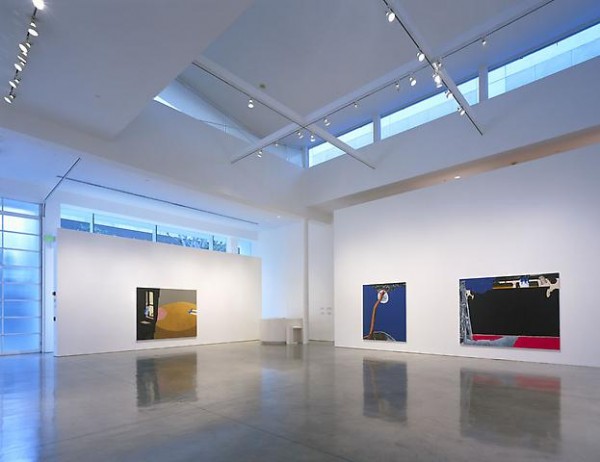
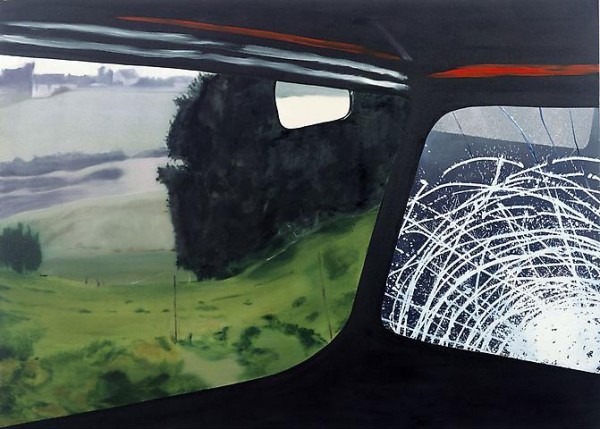
Entering its last week on view, Gagosian Gallery in Beverly Hills is presenting new paintings by London-based artist Dexter Dalwood in the exhibition, Endless Night. The titled was appropriated from the William Blake poem “Auguries of Innocence” and references, as you may expect, death. In his new series of paintings, Dalwood explores several death scenarios from public figures, some real and some fictional. However, the images are not figurative and each embody a sense of abstraction which blocks the viewer from gazing directly onto the horrific scenes, leaving only clues to piece together an otherwise fragmented narrative. In addition to the history of theses deaths, Dalwood infuses each painting with elements from art history, borrowing aesthetic devises from artists such as Clifford Still and Monet. Through these paintings it appears that Dalwood is also able to examine the many cycles of life and death that have occurred through the history of painting.

Dexter Dalwood-2
Born in Bristol in 1960, Dalwood studied at St Martins School of Art and the Royal College of Art in the UK. He has exhibited several times with the Gagosian Gallery and has been the subject of several international museum exhibitions. The artist has a forthcoming mid-career survey opening next year at Tate St Ives. The exhibition will then travel to FRAC Champagne–Ardenne in Reims, France and then CAC Malaga in Spain.

Share

Marc Quinn: Iris

Quinn

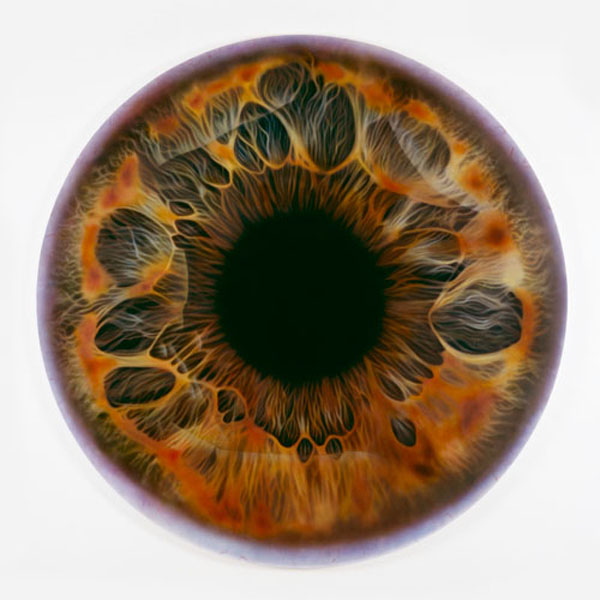
Currently on view at Mary Boone Gallery in New York City is a series of new paintings titled Iris by British sculptor Marc Quinn. Quinn is a member of the YBA (Young British Artists) and is best know for his challenging figurative sculptures such as Self, the artist’s portrait cast in his own blood and Alison Lapper Pregnant, a massive marble sculpture installed on the fourth plinth at Trafalgar Square in London featuring a pregnant woman born with no arms and severely shortened legs. While the new exhibition is a departure from the sculptural works for which the artist is known, Iris continues the artist’s exploration of the body, identity, the physical and the spirit. About the new work Quinn has stated that eyes are “doors of perception… the link between us and the world”,  “they are like a leakage of the vivid interior world of the body to the monochrome world of the skin”.

Iris will be on view through December 19 and is accompanied by a fully illustrated catalog featuring an interview with the artist.

Share

Alejandro Diaz

alejandro diaz1

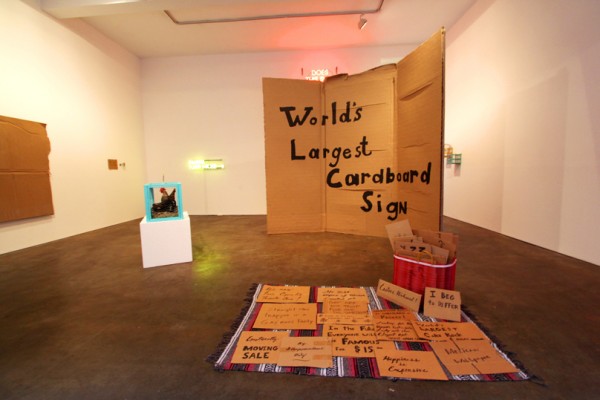
The Happy Lion is currently presenting The World’s Largest Cardboard Sign and Other New Works, a solo show of language-related works, including sculpture, neon and installation, by New York-based artist Alejandro Diaz.  The centerpiece of the exhibition, The World’s Largest Cardboard Sign, 2009, is 10 feet tall, 12 feet wide, and weighs 200 pounds.  Diaz elevates the self-referential sign to art object through the use of postmodern humor, while simultaneously poking fun at American culture, where bigger ALWAYS equals better.  In his text-based pieces, Diaz uses incisive wit to critique cultural stereotypes, socio-political economies, and the world of contemporary art.

Another work included in the exhibition, a neon sign reading Marfa 1,600 miles, mocks the art world insider by referencing the tiny Texan town, a sought-after contemporary art destination in the middle of the desert.  Diaz began the cardboard sign series in 2003 and later started to incorporate neon, vinyl, and fabric.  Other signs read In the Future Everyone will be famous for $15.00 and By Disappointment Only.

alejandro diaz install

The artist received his B.F.A from the University of Texas at Austin and his M.F.A. from the Center for Curatorial Studies at Bard College in New York.  In 2005, New York’s Public Art Fund commissioned Diaz to create four large sculptures for the Grand Concourse in the Bronx, resulting in the installation A Can for All Seasons.  He was included in the Jersey City Museum‘s 2005 group exhibition, The Superfly Effect, which was reviewed by The New York Times.

The World’s Largest Cardboard Sign and Other New Works will remain at The Happy Lion until November 24, 2009.

Share

Paired, Gold: Felix Gonzalez-Torres and Roni Horn

paired Gold

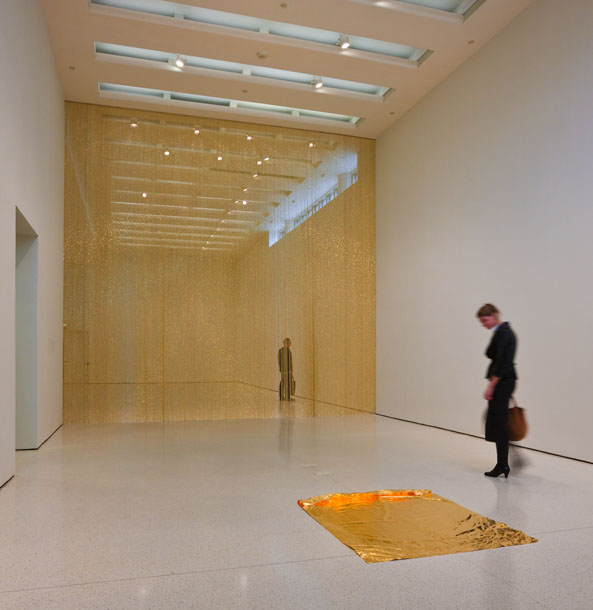
The Solomon R. Guggenheim Museum in New York City has brought together two works from their permanent collection for display together for the first time. Paired, Gold presents works by Felix Gonzalez-Torres and Roni Horn in a poetic dialogue between these two artist. The exhibition features Forms from the Gold Field, a sculpture created by Roni Horn (1980-82) that is composed of two pounds of pure gold compressed into a rectangular mat and exhibited directly on the museum floor, and Untitled (Golden) (1995), a beaded curtain by Gonzalez-Torres which hangs in a doorway that the viewer must pass. According to the Guggenheim, Gonzalez-Torres first became acquainted with Horn’s Forms from the Gold Field during her 1990 solo exhibition at the Museum of Contemporary Art in Los Angeles. Gonzalez-Torres was thoroughly impressed by the simplicity and beautify of the work and shared the impact that the work made on him when the two artists met in 1993. As a gesture to their newfound friendship and shared sensibility, Horn sent him a square of gold foil just a few days after they first met. Being struck by the gesture, he created Untitled (Placebo – Landscape – for Roni) (1993), an endlessly replaceable candy spill of gold cellophane–wrapped sweets.

Together, Untitled (Golden) and Forms from the Gold Field express the beauty of minimal form and color while also representing a sense of fragility embodied by both artists. Paired, Gold: Felix Gonzalez-Torres and Roni Horn will be on view through January 6th 2010.

Share

Hiroshi Sugimoto

Hiroshi Sugimoto Lightning Fields 128, 2009

Hiroshi Sugimoto Lightning Fields 128, 2009

Closing on October 31st at the Fraenkel Gallery in San Francisco is a new exhibition of magnificent photographs by the internationally acclaimed artist Hiroshi Sugimoto. The exhibition marks a new body of work for the artist, which began last year,  entitled Lightning Fields. Included in the exhibition are several large-scale black and white photographs that the artist created by using a 400,000-volt Van De Graaff generator to apply an electrical charge directly to the film. The results are stunning patterns, for which the artist has very little to no control, which mimic massive lightning forms, fur, organic botanical matter, and even at times the patterns will take on the organic forms of an insect under a microscope.

This phenomena of electricity altering film is not new to photographers. Static electricity has been plaguing darkroom users, destroying images with unintentional electrical scars  since the beginning of the medium. Sugimoto embraces and challenges this otherwise problematic occurrence in order to push the boundaries of what photography can achieve, while also offering a nod to previous scientific and photographic discoveries made by his predecessors. When speaking about this new series of work, Sugimoto has stated “The idea of observing the effects of electrical discharges on photographic dry plates reflects my desire to re-create the major discoveries of these scientific pioneers [Benjamin Franklin, Michael Faraday, and William Fox Talbot] in the darkroom and verify them with my own eyes.”

Installation Image, Fraenkel Gallery, 2009

Installation Image, Fraenkel Gallery, 2009

Sugimoto is arguably one of the most innovative photographers of our time. He was born in Japan in 1948 and lives and works in Japan and New York. Since the 1970’s, the artist has created photographs that conceptually challenge the history and current role of the photographic image, as well as investigate ideas related to time, empiricism, and metaphysics. The artist has created many successful bodies of work over the past four decades including his Seascapes, Dioramas, Theaters, historical portraits from Madame Tussaud’s wax figures, Architecture, Colors of Shadows and Conceptual forms. Each of these series were shot in stark black and white.

The artist has exhibited in countless venues across the world and has completed solo exhibition in many major museums in the United States and Japan. Exhibitions this year include Nature of Light at the Izu Photo Museum in Mishima, Lightning Fields at Gallery Koyanagi in Tokyo, Light of Coffin at Benesse Park, Naoshima and History of History at the National Museum of Art in Osaka.

Share

Andrew Tosiello

Picture 1

According to artist Andrew Tosiello, to understand the art world is to understand gambling. The many facets of an artist’s career (producing, exhibiting, representation, selling, etc.) often fall like six-sided dice onto the Craps table of life and indicate the direction of one’s successes from then on–until the next roll at least.

The San Francisco artist’s new body of work, which deals with the theme of gambling, was recently exhibited in DON’T PASS/DON’T COME: NEW WORK BY ANDREW TOSIELLO at Maniac Gallery in Chinatown, marking his first solo show in Los Angeles. DON’T PASS/DON’T COME was also the inaugural show at Maniac’s new space in LA, since director Petra Royale Bibeau relocated the program late this summer from Downtown Oakland.

The small storefront on New High Street (steps from Chung King Road, the epicenter of Chinatown galleries) houses a cohesive presentation of Tosiello’s paintings and ink on paper pieces, which explore and even explicitly explain the game of Casino Craps. As the artist explained to me, “My interest in Craps developed as part of my other work which focuses on the Mafia. Gambling is one of the ‘engines’ of money production in organized crime, so I began researching the various games.” He went on to explain that with Craps in particular, “a player can bet with or against the dice–that is, can win on a winning or losing role. This suggested to me that in Craps, as in my work, the outcome (meaning) is developed extrinsically–that is, determined by the outside.”

M NI C - Andrew Tosiello, Laying Odds, 2009_1256596005702

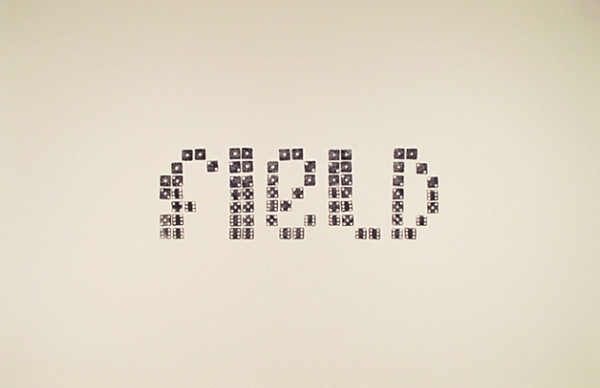
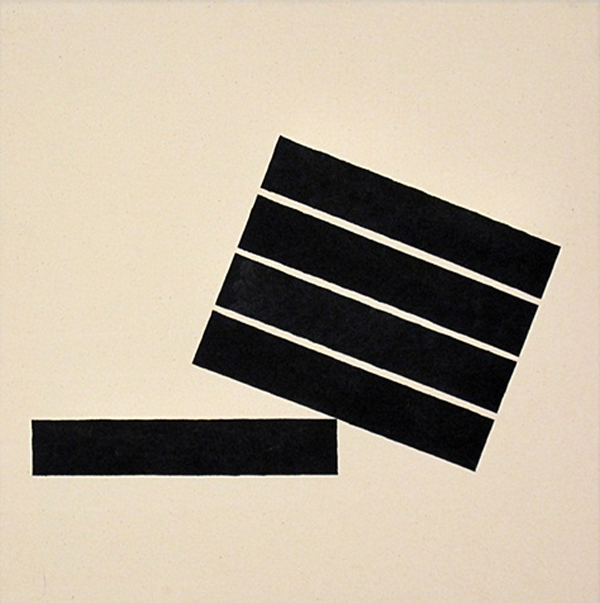
The work on view plays with the idea of this seemingly straightforward game–essentially a random roll of the dice–and the many clandestine codes that encompass its culture. “Laying Odds” is a minimalist painting depicting chips tipped to indicate “A Laying Odds Bet on the Don’t Pass,” according to Tosiello’s “A Guide to Playing Craps” booklet, yet it also somehow seems to aesthetically recall Theo Van Doesburg’s 1930 painting, “Arithmetic Composition,” which similarly depicts stacked, diagonal black shapes, but which was intentionally free of any representation of reality. The ink on paper piece, “Horn,” is made up of impressions left by ink-covered dice, creating a pattern of the numbers in, and spelling out, the bet of the eponymous name–2, 3, 11 and 12.

Andrew Tosiello lives and works in San Francisco. He earned his MFA at California College of the Arts in San Francisco and his BFA at the Boston University School of Fine Arts. Recent exhibitions include: Little Tree Gallery Social Club, little tree gallery, San Francisco, CA; The Dollar Project curated by Liz Walsh, Eleanor Harwood Gallery, San Francisco, CA; and What We Do is Secret HUAM Employee Exhibition, Harvard University’s Fogg Museum, Cambridge, MA.

Share