Oakland

Boom: The Art of Resistance at Random Parts

Impeccably curated by artist–organizer Leslie Dreyer at Random Parts gallery, Boom: The Art of Resistance is an exhibition that does not advertise its impact, and it could be mistaken for “scrappy” if one ignored the precision of the show and the assumptions jammed into that word. Installed in the small storefront/apartment space in Oakland, a few of the show’s works are in the well-used kitchen, where gallery co-director Juan Carlos Quintana cooks his meals and lives his life. A visit to the show might easily segue into a hangout, a drink, or a party. It begs the question: What kinds of conversations can be had in what kinds of kitchens?
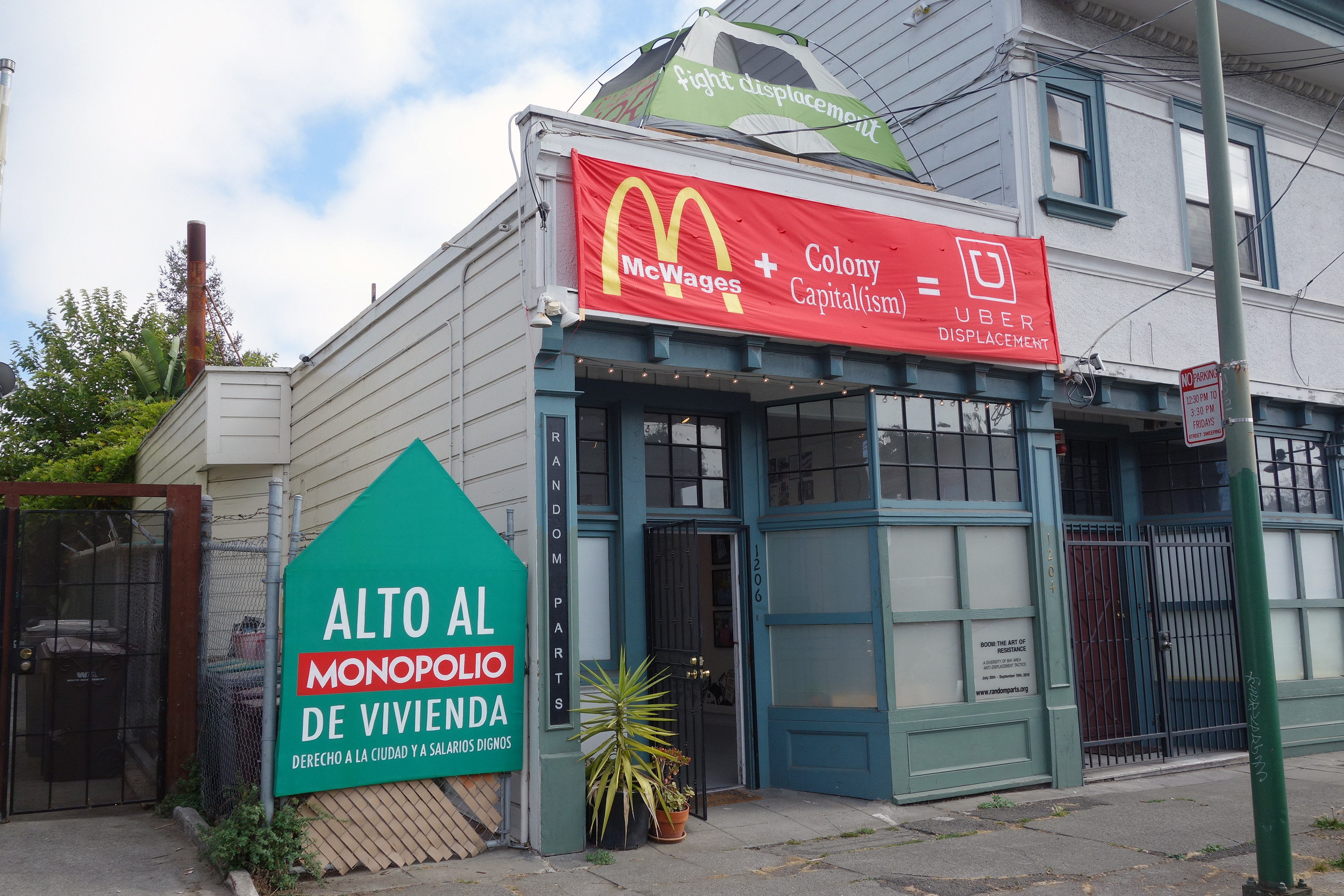
Boom: The Art of Resistance outdoor installation. Painted tent made by Dreyer and Zeph Fishlyn for Coalition on Homelessness' Tackle Homelessness/Superbowl action. 2016; Banners below made by Dreyer for Oakland's Fight for $15 march bridging the issues of low wages, real estate speculation and displacement.

Boom: The Art of Resistance. Outdoor installation: painted tent by Leslie Dreyer and Zeph Fishlyn for Coalition on Homelessness’ Tackle Homelessness/Superbowl action, 2016; banner by Leslie Dreyer for Oakland’s Fight for $15 march to address the issues of low wages, real-estate speculation, and displacement.

Such a gathering would occur in view of a 2001 documentary film—Boom: The Sound of Eviction, from which the show adopts the leading, econ-onomonopoetic part of its name—playing on a loop on a side table. The older Boom is a detailed account of the socioeconomic effects of the first major dot-com explosion of 1998–2001. The footage is grainier than today’s HD video, and the cars are a bit less streamlined, but the story remains uncannily the same. The influx of a global network of tech industry workers has incentivized evictions on a mass scale—around 1,000 a month, recently, by some accounts—under many different guises and justifications.

Random Parts is located in the East Lake neighborhood, east of Interstate 880 and just north of Fruitvale. It’s a neighborhood poised for the sort of “transformation” that tends to divide people into “dread” and “desire” camps according to their respective historically conditioned levels of access to capital. The waterfront is just beginning to witness the construction of Brooklyn Basin, the largest real-estate development project in the history of the East Bay. What sorts of kitchen conversations will this development, with its high-rise condos and boutique retail, make possible, and what others will it make impossible?

Read More »

Share

Montreal

Joan Jonas: From Away at DHC ART

As psycho-historian, I try to diagnose the schizophrenia of Western civilization from its images, in an autobiographical reflex. (Joan Jonas, The Shape, the Scent, the Feel of Things)

Joan Jonas’ retrospective exhibition From Away occupies two buildings at DHC/ART in Montreal. Arriving at the basement’s miniature cinema felt like entering a cauldron of the Jonasian universe, and moving up and down in the tightly vertical first building is like inhabiting a literal corpus of Jonas’ oeuvre. In the second building, a more traditional set of gallery spaces shows a field of dreams: installations, objects, drawings, paintings, and snippets of Jonas’ recent performance at the Venice Biennale.

Installation view, Joan Jonas: From Away, 2016, DHC/ART. Joan Jonas, They Come to us Without a Word (Wind), 2015. Multimedia Installation (site-specific adaptation). Originally commissioned for the U.S. Pavilion of the 56th Venice Biennale by the MIT List Visual Arts Center, Cambridge, Massachusetts. Courtesy of The Kramlich Collection, San Francisco. © DHC/ART Foundation for Contemporary Art. Photo: Richard-Max Tremblay.

Joan Jonas. They Come to Us Without a Word (Wind), 2015; multimedia installation (site-specific adaptation); installation view, Joan Jonas: From Away, 2016, at DHC/ART. Originally commissioned for the U.S. Pavilion of the 56th Venice Biennale by the MIT List Visual Arts Center, Cambridge, Massachusetts. Courtesy of the Kramlich Collection, San Francisco. © DHC/ART Foundation for Contemporary Art. Photo: Richard-Max Tremblay.

The central motif is a diaphanous fan. Think of a poised hand sturdily holding a fan, moving with intention and gravitas, the fan fanning away—and from away, so to speak. One might imagine the fan’s literal and metaphoric textures: brittle, translucent, spectral. In From Away, the diaphanous fan exists as a metaphoric cipher and temporal emblem, appearing in the form of always-moving bodies, translucent billowing fabrics, and passing poetic stories in the video-projection performances. From Away maps Jonas’ continuity in building and perfecting a mis en abyme technique, from the 1970s to the present, using mirrors, video, a video-monitor playback of live action, and drawings. Inherent to Jonas’ technique is her refusal to confront her subjects head on, and recurring elements that add to her “ideas of the diaphanous and the opaque” are “the motifs of wind, wand, water, mirrors and crystals.” [1,2]

Read More »

Share

Letter from the Editor

Last week, Deadline reported that the New York Times discontinued regional coverage of the arts. Significantly, in her August 6 column, NYT Public Editor Liz Spayd asked, “Why should a newsroom that just announced lofty international ambitions spend resources covering news of no interest to readers in Beijing and London?” Below the surface of this question lies the implication that cultural events happening in smaller cities and towns—basically anything below a certain caliber of cache and sophistication—are uninteresting to those who live in the so-called centers of culture. Extending this line of thinking, we arrive at the notion that only big cities (and the people living and working in them) produce ideas that are worth talking about.

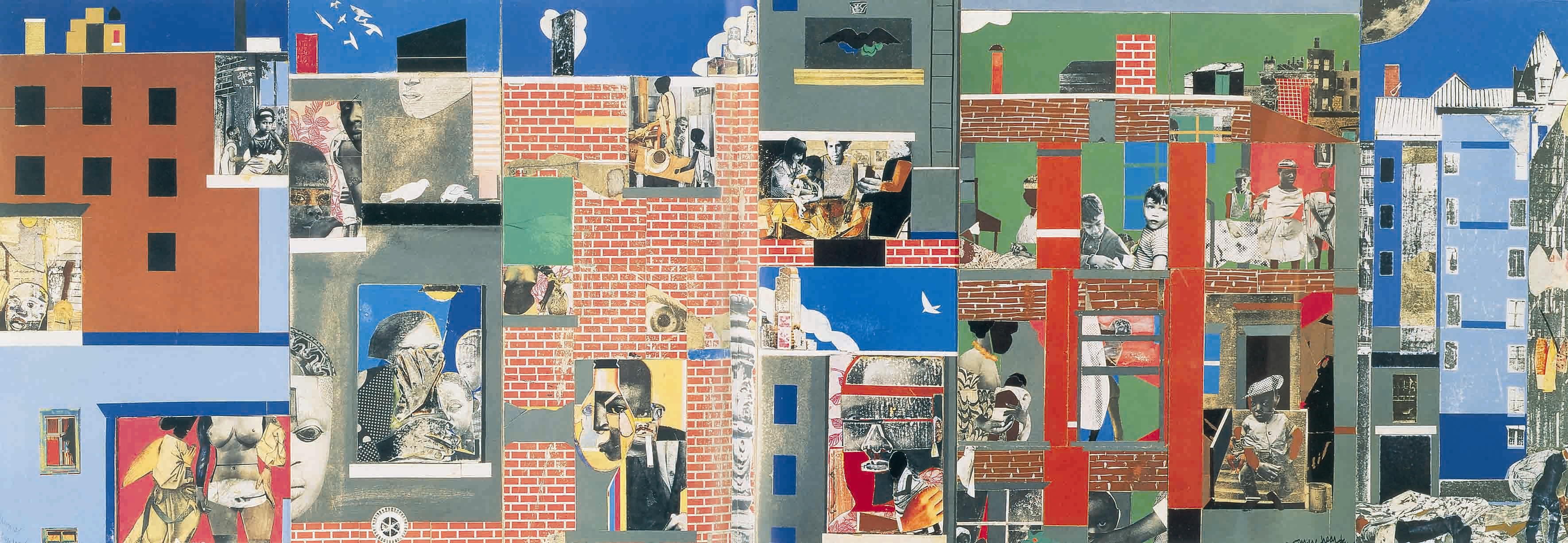
Romare Bearden. The Block II, 1972; collage of various papers with foil, paint, ink, graphite, and surface abrasion on seventeen fiberboard and plywood panels. © Romare Bearden Foundation

Romare Bearden. The Block II, 1972; collage of various papers with foil, paint, ink, graphite, and surface abrasion on seventeen fiberboard and plywood panels. © Romare Bearden Foundation

I’m dead set against that notion. Daily Serving exists because we believe that strong, thoughtful critical writing, regardless of where it is coming from or how small an area it is addressing, has the potential to be relevant to everyone. It’s the reason that my first major decision as editor was to adopt a program of “Shotgun Reviews”—anyone, anywhere in the world can publish an exhibition review with us. Instead of formulating a policy that location is what makes an artwork important, we trust our writers—and our readers—to bring their attention to projects and events that are happening in both large cities and small towns. Certainly our writers cover exhibitions in Shanghai, Los Angeles, London, and Berlin, but we also attend to what’s happening in places that aren’t signaled by large stars on a map: Wichita, Cleveland, Dhaka, Birmingham.

It’s not just a democratic impulse that drives us, but also a spirit of discovery and participation. Art is often reflective of the social and political circumstances that surround it, and an essay on artistic practices in one location brings visibility to an issue that might be of shared concern to citizens halfway around the planet; we may have as much to learn about ways of seeing and confronting the world from an artist in Jaipur as from one living in New York City. And that spirit of understanding is why, in addition to the contributions made by our own writers around the globe, we often circulate articles from other sources. Many excellent, locally focused arts blogs exist, and we amplify their work by excerpting and republishing it here. Approached from these perspectives, the regional is the very opposite of the provincial.

Read More »

Share

Happy Labor Day!

Today is Labor Day in the United States, a day “dedicated to the social and economic achievements of American workers.”

Ramiro Gomez. No Splash (after David Hockney’s A Bigger Splash, 1967), 2013. Acrylic on canvas 96 x 96 inches. Courtesy of the artist and Charlie James Gallery, Los Angeles. Photo: Osceola Refetoff.

Ramiro Gomez. No Splash (after David Hockney’s A Bigger Splash, 1967), 2013. Acrylic on canvas; 96 x 96 in. Courtesy of the artist and Charlie James Gallery, Los Angeles. Photo: Osceola Refetoff.

In honor of the day, we present you with links for further reading:

More than a dozen articles on labor, artistic services, precarity, working for free, and related subjects are included in Art Practical’s Issue 5.4: Valuing Labor in the Arts

Labor Arts ”presents powerful images to further understanding of the past and present lives of working people”

Who are the laborers building your museum, and how are they treated? The artist-activists in the Gulf Labor coalition shine a light on the “coercive recruitment, and deplorable living and working conditions” of the migrant workers constructing the Guggenheim, Louvre, and the Sheikh Zayed National Museum in Abu Dhabi

Bone up on facts about working artists at the Bureau of Labor Statistics

Of course, we’d be remiss if we didn’t mention W.A.G.E. Have you read their wo/manifesto?

Share

Summer Session

Summer Session – How to Make It: 10 Rules for Success From Art Curators

For our Back to School Summer Session, we’ve taken a look at education, pedagogy, and learning in the arts from a broad perspective, including work informed by school or schools of thought, investigations into the current state of academia, and resources for those interested in either self-directed or formal education. Today for our final installment we bring you an excerpt from an article by Cedar Pasori at Complex, who asked ten successful curators to give their best advice to those with an interest in curatorial practice. We hope this Summer Session has empowered our readers to make informed decisions about the relationship between scholarship and art practices, and that you’ve enjoyed the series. This article was originally published on September 22, 2013.

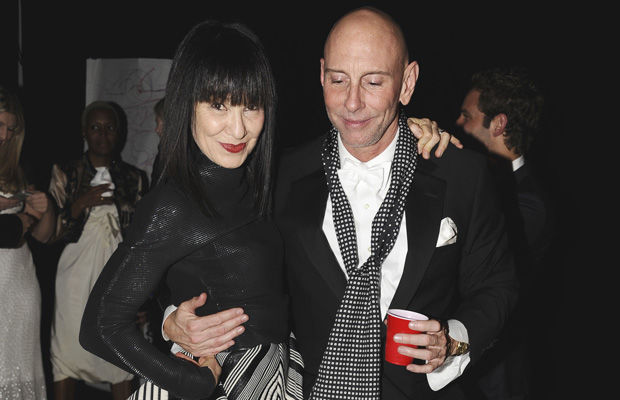
RoseLee Goldberg and Performa board member Todd Bishop at Relâche, 2012. Image via Paula Court and the original posting.

RoseLee Goldberg and Performa board member Todd Bishop at Relâche, 2012. Image via Paula Court and the original posting.

In the past, we’ve done the “How To Make It” series with artists in generalfreelance photographersfreelance writersfreelance illustratorsstreet artists, and art directors. Now, we’re bringing you a list of expert curators who have advice for a younger generation of artists and creatives. Especially during a time when the title “curator” gets thrown around a little too often, learn from those who are doing it best.

RoseLee Goldberg

Performa

Rule: Art history, art history, art history!

“Curating comes from having knowledge across a broad spectrum of contemporary culture, politics, and economics as well as a vast knowledge of art history from the beginning of time. You need to be in a constant pursuit of this information, to bring an extensive understanding of the vast archive of ideas and the huge bank of visual references from the past into the present.”

Read the full article here.

Share

Summer Session

Summer Session – What’s Your Time Management Personality?

This Summer Session our topic is Back to School, and in addition to exploring how art and education intersect, we are also providing resources that might be useful for artists working in the academy or for those interested in self-directed learning. Today we bring you an article by Lauren Zander from the Freelancers Union, whose time-management profiles give readers an opportunity to evaluate their personal relationships to time. Work in both the arts and in education is notoriously time-consuming, and potentially identifying one’s time-management foibles can be a helpful way to improve efficiency, fend off procrastination, and make space for self-care. This article was originally published on June 29, 2015.

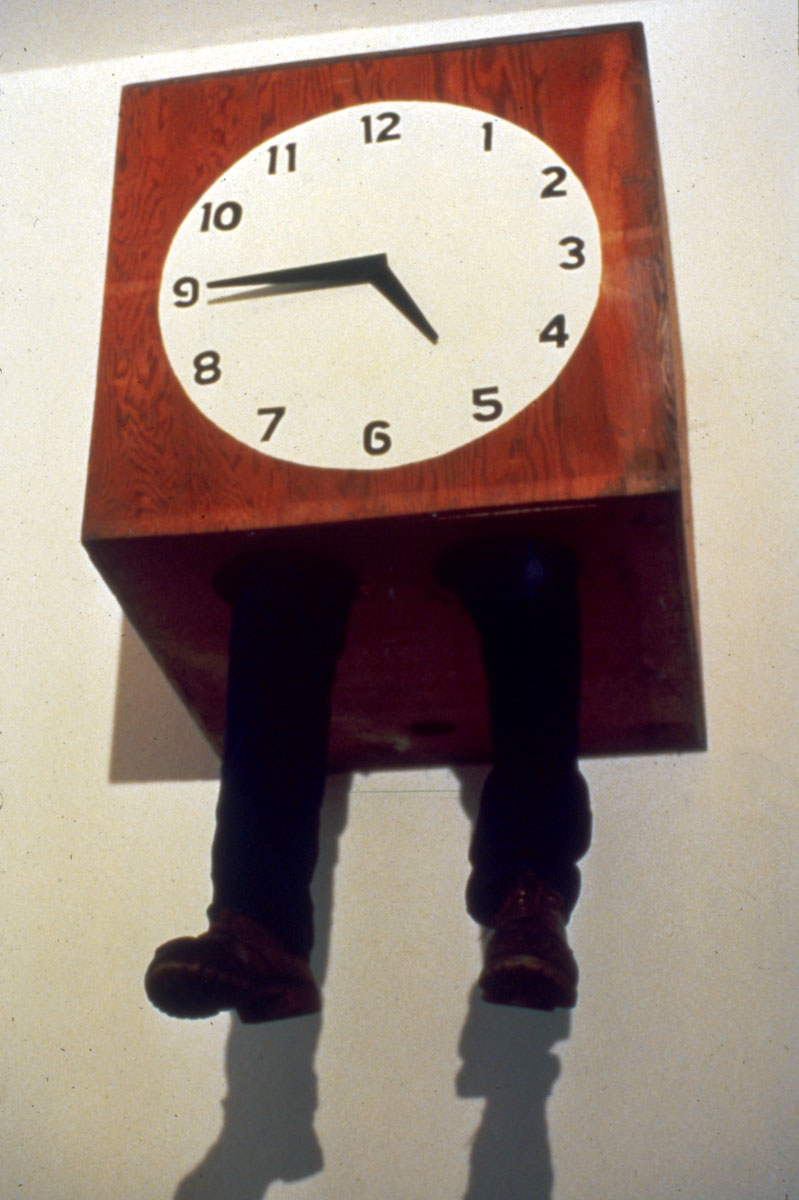
Charles Ray. Clock Man, 1978; wood, paint, human body; 30 x 30 x 54 in. Courtesy of the Artist.

Charles Ray. Clock Man, 1978; wood, paint, human body; 30 x 30 x 54 in. Courtesy of the Artist.

You already know that you procrastinate, or that you’re always late, or that you’re a little flaky, but you might not recognize how that behavior is rooted in your possibly dysfunctional relationship with time.

You also might not realize how much power you have to change this relationship. All it takes is an honest inventory of your own behaviors and beliefs. Telling the truth about how you treat your time gives you perspective, clarity, and the opportunity to adopt a different mindset.

After twenty years of life-coaching, I’ve come to recognize a few time-related personality traits that show up in even the smartest and most successful people I meet. I call these traits “time bandits,” because they are lawless thieves of our most precious natural resource! See if you can spot your own brand of time mismanagement in these characters:

1. The Time Martyrs

Although they constantly lament that there’s “never enough time,” these people-pleasers fill their schedules with commitments to others instead of focusing on what’s truly important to them. They gain respect and validation this way, but they neglect the list of things that would actually build self-respect, because being accountable to those things is scary.

They leap at a chance to say “yes” to any request that pulls their attention away from the task at hand—a neighbor’s yard sale, a child’s last-minute homework assignment, or a friend in need of advice.

The Truth: Everybody in the world has the same amount of time—twenty-four hours, every day. If you feel overcommitted or underserved, you’re not prioritizing it properly.

Take a closer look at the personal tasks you put off to help others. Ask yourself, “Why am I avoiding this?” Yes, you’re avoiding. Why?

Read the full article here.

Share

Summer Session

Summer Session – 50 Ways to Take Care of Yourself in the Arts

For our final Summer Session we’re going Back to School, and in addition to examining how pedagogy, learning, and the arts intersect, we are also providing how-tos and resources for artists practicing within education. Today we bring you an excerpt from an article by Madeleine Dore that focuses on ways to practice self-care as an artist, an oft-overlooked but critically important function. While these tips are primarily geared toward community educators, they are helpful reminders to anyone working in a field as demanding and woefully under-supported as the arts. This article was originally published on November 1, 2015.

Diane Borsato. Sleeping with Cake, 1999; discrete performance and photographs. Montréal, Canada. Courtesy of the Artist.

Diane Borsato. Sleeping with Cake, 1999; discrete performance and photographs. Montréal, Canada. Courtesy of the Artist.

As a sector, the arts is on the verge of burnout if not already teetering far beyond its edge. Lack of support, the precarious nature of freelance and contract work, the emotional and physical toll of creative and community arts work, frequent requests to work for free, and the undervaluing of work in Australia is confounding. Yet there is a silver lining in that these issues are finally being broached. At the Making Time: Arts and Self-Care conference held by Footscray Community Arts Centre (FCAC) last week, the discussion was stripped bare of the appearances we are often greeted with at exhibition openings, or daily dealings with colleagues and friends. Delegates shared candid accounts of dealings with trauma and mental-health difficulties, and illuminated the dark corners of community arts work. […] So how can we incorporate simple steps toward self-care into our days without feeling pangs of guilt?

​At Making Time, arts workers, practitioners, performers, artists, producers and managers brainstormed how as individuals we can strive ​for better self-care before, during, and after a potential period of stress. Here’s a collection of fifty practical ideas to help you avoid burnout ​while enabling you to engage with communities, look after others, advocate for the sector, or focus on the creation of your work.

1. Get out of your head
Our thoughts can often be biased and get stuck in harmful feedback loops ​about not being good enough, not doing enough, not helping enough, not knowing enough. This damages creative relationships and our capacity to do good work. Step out of that loop through mindfulness or physical activity.

2. Be playful
Whether it’s playing a sport, going for a jog, stealing flowers from other people’s gardens, or swinging on the playground, playfulness is often an underrated tool to help manage stress.

3. Share with others
One delegate was asked in a job interview, “What do you need help with?” This is something to continually ask yourself throughout projects or your art practice, and a way to reach out to others.

Read the full article here.

Share