All Editions: A STPI Survey Show


Universe Revolves ON (XVIII), Hema Upadhyay, Edition of 12, Etching, aquatint, open-bite and screenprint on machine made fabriano 100% cotton paper 71 x 92 (28" x 36¼”) © Hema Upadhyay/Singapore Tyler Print Institute

Hema Upadhyay creates works based primarily on photography and painting, and she resumed her foray in printmaking as a means of experimentation, after a decade’s hiatus. Her art practice revolves around issues of identity, dislocation, nostalgia and gender, often drawn from her family history of migration and her personal experience with the socio-economic inequalities present in Asia. The visceral impacts of these socio-political issues on the human condition are frequently represented through miniature and collaged bodies. In Universe Revolves ON (XVIII), cut-outs of flailing and falling bodies disrupt the intricate etchings of botanical tree forms shrouded in delicate silk-screened patterns, drawing attention to the attendant psychological and social upheaval and theme of human displacement arising from the rapid urbanization in Mumbai. Upadhyay completed her BFA (Painting) in 1995 and MFA in 1997 from the Faculty of Fine Arts, M.S. University, Baroda, and is now based in Mumbai.

Break the Ice, Qiu Zhijie, Edition of 12, Etching and relief print, STPI handmade paper 107 x 81 (42¼" x 32”) © Qiu Zhijie/Singapore Tyler Print Institute

Qiu Zhijie is a Chinese contemporary artist and works with a diverse range of media including photography, video, calligraphy, painting, installation and performance, and combines writing and curatorial practice with his artistic explorations. In 2006, Qiu started the Nanjing Yangtze River Bridge Project. Imbued with historical and national significance, as a symbol of modernity and resilience in China, Qiu excavates the meanings associated with the site by investigating the over 2,000 suicides occurring at the bridge since its completion in 1968. Break the Ice is emblematic of Qiu’s combination of traditional Chinese ink painting and Western-based lithography techniques, and the work reflects on the consequences of mammoth, industrial structures on a nation’s history and individuals’ personal lives. Qiu was born in Fujian, China and now lives and works in Beijing. He graduated from Zhejiang Academy of Fine Arts in printmaking.

The works of Upadhyay and Qiu are on view at All Editions: A STPI Survey Show (16 January – 20 February 2010) at Singapore Tyler Print Institute. The exhibition also features works by Ghada Amer/Reza Farkhondeh, Ashley Bickerton and Lin Tianmiao, from their residencies at the institute.

Share

Interview with Drew Heitzler

Drew Heitzler rephrases history in ways that seem both furtive and strangely revealing. In his most recent work, he culls characters, settings, and plots from the visual history of the still-young Los Angeles. Rearranging and re-imagining three films from the early 1960s, all of them productions in which the rebel spirit of Easy Rider seems to be slowly eating into the stylized melodrama of noir, and also gathering an expansive archive of still images from Hollywood of yesteryear, he’s created a narrative that  confuses the past in order, paradoxically, to clarify the hidden truths about  desire  and culture that lurk beneath it.

Heitzler, who participated in the 2008 Whitney Biennial, recently exhibited at LAX Art and Angstrom Gallery among, other venues. for Sailors, Mermaids, Mystics. for Kustomizers, Grinders, Fender-men. for Fools, Addicts, Woodworkers and Hustlers, his current exhibition at Blum & Poe Gallery, closes January 30th.

Drew Heiztler, "for Sailors, Mermaids, Mystics. for Kustomizers, Grinders, Fender-men. for Fools, Addicts, Woodworkers and Hustlers." Installation View. Courtesy Blum & Poe.

CW: Your current exhibition makes me think of remixes and mash-ups—art forms that are about rearranging someone else’s cultural product and telling a different story. What prompted you to re-edit historical film and images?

DH: Subway Sessions and TSOYW are two previous films I made and actually shot. The first on super-8, the second on 16mm (TSOYW was a collaboration with Amy Granat and was included in the 2008 Whitney Biennial). In both cases I relied heavily on the tropes of specific film genres. Subway Sessions used the aesthetics of 70’s surf films to tell the story of a certain time and place, specifically, Rockaway Beach New York just prior to September 11, 2001. TSOYW looked like a 70’s biker film and relied heavily on the tropes of that genre. So it wasn’t a big step to go from using the look of earlier film genres to actually using earlier films themselves. Also, I had read a book on documentary film making by Erik Barnouw that my wife Flora found for me in a thrift store. In the book, the Soviet cine-clubs were discussed. It seems that after the revolution it was impossible for Russian film makers to get film stock due to western boycotts. What they had in abundance were western news reel and even films that were being smuggled into Russia in effort to undermine the Revolution. The cine-clubs would re-edit these films and news reels in order to create new narratives that supported their cause. I liked this idea of re-ordering an existing cultural image to better fit your own perception of the world. It’s collage.

CW: How important is story-telling to you?

DH: Story telling is what I am interested in. I love those French paintings like The Oath of the Horatii or The Raft of the Medusa. They operate like movies. They tell stories which can exist at different allegorical levels.

CW: Each of the three films that make up for Sailors, Mermaids, Mystics. for Kustomizers, Grinders, Fender-men. for Fools, Addicts, Woodworkers and Hustlers. (Doubled ) were originally presented on their own, right? Why combine them?

DH: The combining of the films came out of a problem of exhibition. This show was originally scheduled to open at MOCA in May, 2009. Then it was postponed to September of that year and then postponed again to January of 2010 before it was eventually canceled all together. The result was that I had a long time to think about how these three films would be presented. I had always intended for them to come together as a trilogy, but as I kept messing around with ideas of how they would actually be presented in the gallery, they morphed into a triptych, becoming a whole new piece. What I discovered and enjoyed was that once the three individual narratives were doubled and superimposed over one another, they operated in a much more complex way. The individual narratives were still visible, but complicated by their interaction with one another. In other words, the lines of thought were confused, which seems to me much closer to the way we go through life. At least that seems to hold for me.
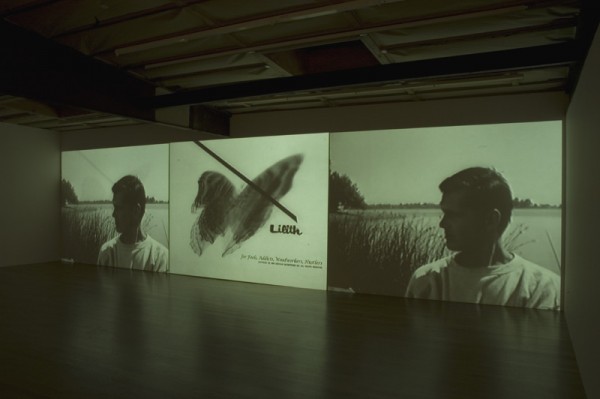
Drew Heitzler. Installation View. Courtesy Blum & Poe.

CW: The other day, you used the words “sticky stuff,” referring to the way the oil industry lurks underneath L.A. culture. I love those words and they’re definitely relevant to your work. How do you relate the historical, anthropological side of your project to its sticky, psychological underbelly?

DH: I think it has something to do with the problem of truth, or more accurately its impossibility. I came to Los Angeles with an idea of what I would find when I got here. It was the idea that had been presented to me, sold to me in a way. What I found was something completely different. History and anthropology work the same way. They present themselves as framing a truth while they are only presenting a perception (I was assistant to Fred Wilson for several years and I learned from him how important this idea is). However, the idea of truth is absolutely vital to our ability to exist as a society, this is common sense. Likewise, sublimation is absolutely necessary for the ego to exist within a society. There are rules to follow. Once again, the only way this sublimation works is to accept certain ideas, certain perceptions as true. But just like the oil that bubbles up into the sunny Los Angeles landscape, the sticky stuff that we sublimate, keep subterranean, or relegate to the subconscious can’t be kept at bay. It always bubbles up.
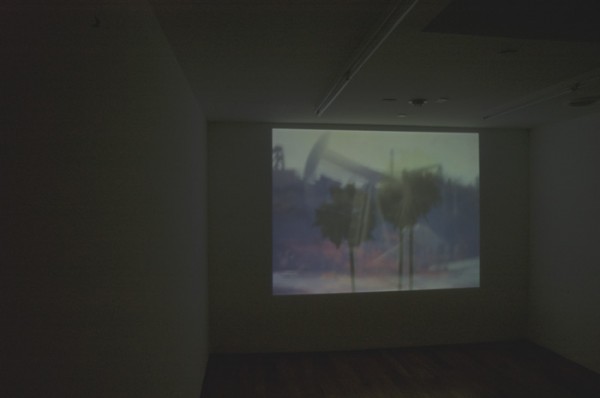
Drew Heitzler, "Untitled (Ladera Heights)," 2007. Installation View. Courtesy Blum & Poe.

CW: While the story you’re telling is ostensibly about the past, it seems really timely. As you developed this work, were you thinking of anything happening on today’s cultural landscape?

DH: Once again, I’m going to bring up The Oath of the Horatii (god, I love that painting). The painting is a depiction of a moment of Roman lore but this is not what the painting is about. It is a call to arms for a new Republic in France. This is the subtext. So while the historical anthropology that I am engaged in is ostensibly about historical power structures in Los Angeles, I believe that when the work is looked at closely, the relationships to our current cultural moment are clear.

CW: On a related note, I was reading Camille De Toledo’s Coming of Age at the End of History the other day. This passage, about a new breed of romanticism, reminded me of you: “We kept alive the idea that man was capable of acting upon History, but we abandoned the . . . heroism of the avante-gardes that imagined they could overturn it.” Thoughts?

DH: This goes back to the idea of truth that I addressed in a previous question. I feel that as we have observed how the successive avant-gardes were absorbed into the monolith of capital it became more difficult to take the idea of revolution seriously. One truth gets replaced by another truth to then be absorbed by the previous truth and none of them are true anyway.  I am quite certain that it is useless to try and overturn the dominant discourse as the result is merely a different dominant discourse. But what remains is agency. I feel that it is important as an artist to act upon the dominant discourse not with the intent of overturning it, but with the intent of revealing its contradictions; confusing it and so bringing it closer to a universal idea, which is as close to an idea of truth that I am willing to entertain.
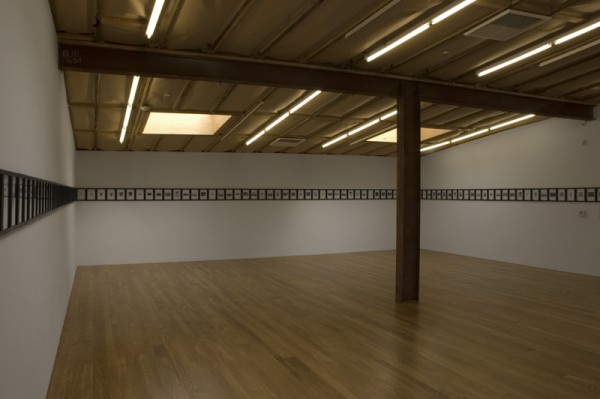
Drew Heitzler. Installation View. Blum & Poe.


Share

From the DS Archives: Os Gemeos

Originally published on: July 2, 2008

Os-Gemeos-7-2-08.jpg

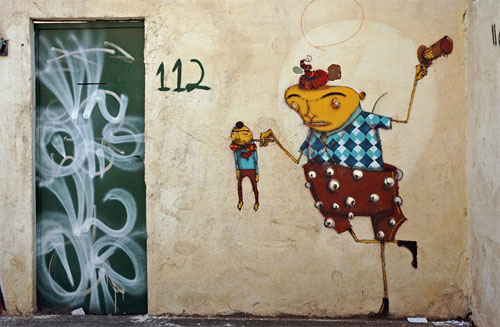
Os Gemeos, which translates to “the twins” in Portuguese, are identical twin brothers from Sao Paulo, Brazil, who began break dancing at an early age and later moved on to the visual arts. Otavio and Gustavo Pandolfo transformed Brazilian street art and have since exhibited at museums all over the world including their first solo exhibition at The Luggage Store in San Francisco in 2003. Their influences include hip hop culture, American street movies, and Sao Paulo protest art. Their subject matter ranges from family portraits to commentary on Sao Paulo’s political and social affairs as well as Brazilian folklore.

On June 28th, the brothers opened Too Far Too Close at Deitch Projects in New York. For the exhibition, they will be transforming the gallery space into a fantastical cityscape, complete with passages, houses, and doors. Their signature imagery includes characters, background, and letters, and can range from graffiti tags to complicated murals. This exhibition will include new paintings, sculpture and installations that build upon a group of work created for the Museum Het Domein in the Netherlands. Os Gemeos have been reviewed by the New York Times in 2006 which referred to their style as “sort of Dr. Seuss on acid.” Their work has an appealing and universal quality that has drawn the attention of fans including cult figure Barry McGee and Nike C.E.O. Mark Parker.

Too Far Too Close will remain at Deitch Projects until August 9, 2008.

Share

Keith Sonnier

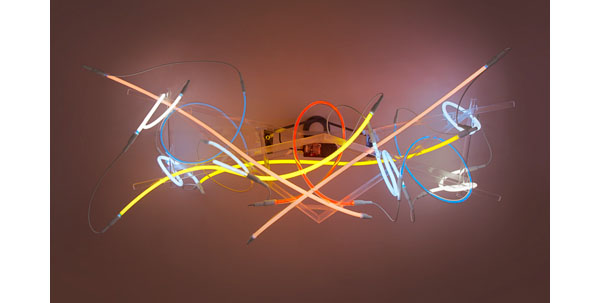
Currently on view at Mary Boone Gallery in New York City is a series of neon sculptures by artist Keith Sonnier. The exhibition includes two distinct bodies of work, the artist’s Oldowan Series, which features sexually charged gestures and materials such as silk, as well as his Chandelier Series, which were originally designed for the artist’s home and were later expanded for use in larger public spaces.

Sonnier has exhibited internationally since the late 1960’s. The artist has recently exhibited Just What Are They Saying at Jonathan Ferrara Gallery in new Orleans and Geometry as Image at Robert Miller Gallery in NYC.

Sonnier’s exhibition at Mary Boone Gallery in NYC will be on view February 6th.

Share

Anticipate Difficulty

L.A. Expanded: Notes from the West Coast
A weekly column by Catherine Wagley

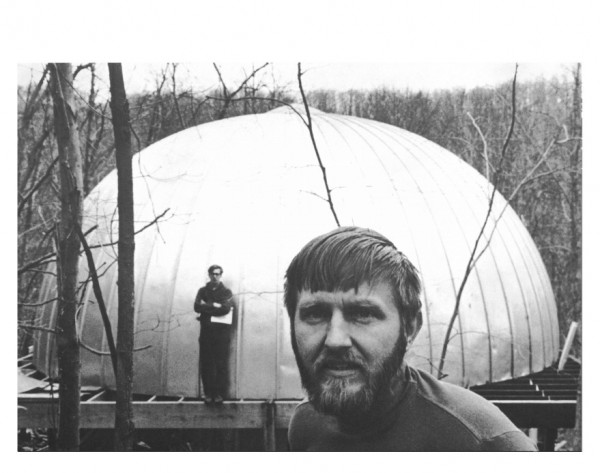
Stan VanDerBeek with his Movie-Drome, Stony Point, NY. Courtesy Yale School of Architecture

Making films is not easy. Most people know this and almost as many find the difficulties of movie-making enthralling, which explains the proliferation of articles, TV interviews, and radio specials on the subject. Just last week, I nearly pulled off the freeway to better concentrate on radio host Elvis Mitchell’s interview with Oren Moverman, the directed of The Messenger (who, apparently, had 3 different directors, including Sydney Pollack, walk away from the picture before he took the helm himself), and I don’t think I’ll ever tire of Quentin Tarantino’s story (told most recently on Tuesday’s Tonight Show with Conan O’Brien) about how his hands, and not the hands of Nazi Colonel Hans Landa, came to strangle Diana Kruger’s character in Inglourious Basterds.

This fascination with filmmaking has something, if not everything, to do with the fact that, while the production process may be a tangled mess of misplaced funding and last-minute game-changes, the watching process often feels effortless. Well-made mainstream features are meant to pull you through a seamlessly self-contained fiction that twists and turns, periodically threatening to derail but never actually doing so. They’re meant to leave you strangely satiated, even if you just witnessed an apocalyptic blood bath. Video art and art films, on the other hand, tend to be neither seamless nor satiating; and sometimes, watching them feels like it must be at least as difficult as making them.

On Tuesday night, in a crowded basement auditorium at the Los Angeles County Museum of Art, I listened as Tate Modern curator Stuart Comer talked about, among other things, organizing experimental film events at a museum that has practically obliterated its film budget. Snaring potential backers can be difficult, since Comer’s programming has a reputation for being “aggressively avant-garde”—which is another way of saying films at the Tate require a bit too much of their viewers.

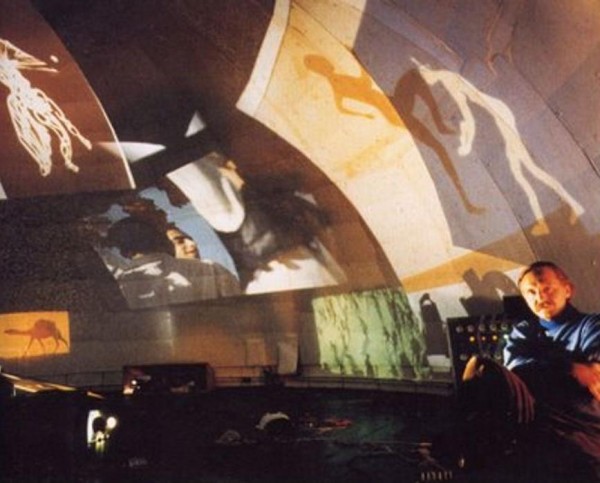
Stan VanDerBeek, March 22, 1969. Inside the Movie-Drome. Courtesy Black Mountain College Museum.

Before Comer took the podium, art historian Gloria Sutton spoke at length about Stan VanDerBeek, a graduate of 1950s Black Mountain College who built the infamous Movie-Drome, a grain silo turned multimedia screening room, in his Stony Point, NY, backyard. He filled his Movie-Drome with an assortment of projectors, so that multiple still and moving images could occupy the curved ceiling at once. VanDerBeek’s films, which resemble fugitively animated Wallace Berman collage, champion what he called the “aesthetics of anticipation.” They ask their audience to stay alert, trace connections between fragments and look for meaning that they will never quite be able to find. They’re demanding and rigorous, but, really, once you’ve decided to submit yourself to them, they’re mostly exhilarating.

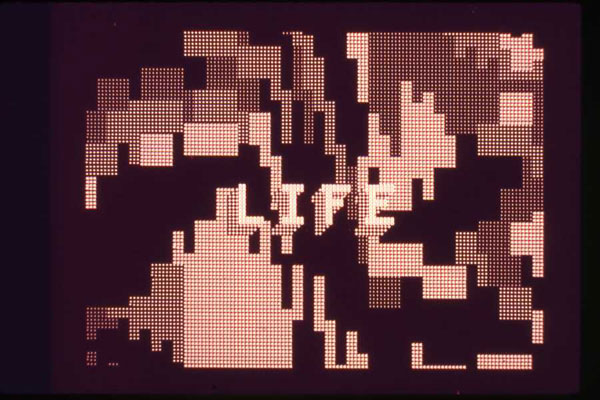
In one of VanDerBeek’s best, Poemfield No. 2, a series of pixelated words punctuate the screen then disintegrate into blurs of light and specks of neon color.  At first, you try to read the words for meaning, then the film starts to resemble a sort of absurdest nightmare in which the text becomes unreadable before it’s even materialized. Yet the constantly foiled desire to decipher still propels you through, and you’re always anticipating the moment at which the flickering screen will become legible again–it’s more suspenseful than anything Hitchcock ever made, because the suspense lasts indefinitely.

Stan VanDerBeek, Poemfield

Note: LACMA will host two more panels on experimental film, one in March and one in May. The dates should be finalized and posted to LACMA’s website in the near future.

Share

George Jenne

Courtesy of the artist and Civilian Art Projects

Civilian Art Projects in Washington, D.C. is currently presenting Don’t Look Now, a multimedia exhibition by Brooklyn-based artist George Jenne. Don’t Look Now consists of manipulated movie posters, sculpture, and graphite drawings, all reflecting the artist’s interest in the horror movie genre. Jenne sees a correlation between the unease and trauma delivered by such films and the unsettling experience of early adolescence. The artist states in the press release, “For me, there is a strong connection between the act of warning or revealing and the portentous atmosphere of pre-pubescence, thus a strong connection between the abject, mutated form of the monster, and a person’s tenuously pristine state of mind during early adolescence.”

Hellion (2007), a mixed media sculpture constructed of plastic, resin, embroidery, Fun Fur, polyethylene, wood, sound and light, both tantalizes and torments the viewer. The sculpture resembles a boy scout, but the formidable stance, monster’s head, and bloody knees indicate something more malevolent. Upon closer examination, the viewer encounters such sinister details as cigarette and swastika “merit” badges carefully adorned to the sash, and a wooden plank with the words “Be Irreverent” emblazoned beneath a crest.

Courtesy of the artist and Civilian Art Projects

George Jenne, who currently lives and works in New York, received his B.F.A. from the Rhode Island School of Design in 1995. He is the founder of Bandolier, Inc., a commercial prop making company. Jenne has recently shown his work in New York at Exit Art, Jack the Pelican Presents, Envoy Enterprises, and PS122.

Share

Isa Genzken: Wind

Wind (Rom), 2009; plastic, poster, wallpaper, spray paint, loops, screws; 209 x 202 cm.

In William Gibson‘s 1986 novel Count Zero, an abandoned but sentient AI robot composes art objects from detritus found in space.  Despite being built by a computer from discards and rubbish, these objects have a deeply human gravity—both a grace and a yearning for grace—and are highly prized.   It is precisely this evocative use of materials and imagery that Isa Genzken gives us in Wind, her response to the death of Michael Jackson.  This recent work, at Neugerriemschneider Gallery in Berlin, expertly conjures the agitation between glory and coarseness in celebrity culture.

Five monumental mixed-media works, all from 2009, are hung from the walls of the gallery.  The outlier of the group in materials and scale, Wind (Rom), is composed of pages torn from a floral wall calendar, plastic, satin ribbon, spray paint, and tape.  The other four works are larger and a more intriguing mix of temporary and durable materials: the weight and chill of large copper and aluminum plates clashes with flimsy photocopies provisionally clamped to their edges, and the glitz and promise of mirrored disco tiles is defeated by the crassness of cheap blue painter’s tape.  To say that the work is abject would be somewhat misleading; the scale and materials often point to permanence and beauty, even though it falls short of being fully realized.  In Wind, Genzken tells us that true beauty is not possible under current historical and cultural conditions.

Wind (Michael/David), 2009; plastic, poster, colour copies, mirrored foil, coloured paper, spray paint, tape; 200.5 x 276 cm.

The particular mix of images gives the work lyric force.  Wind (Michael/David)—made of plastic, poster, photocopies, mirrored foil, colored paper, spray paint, and tape—depicts Jackson in his prime: styled, dancing, iconic.  Gold spray paint adorns the cheap posters, giving Jackson a top hat or circling his exposed chest.  The composition is also inflected by a centrally-placed image of the famous marble statue; a small copy of Lochner’s Altar of the City Patrons; and multi-colored curving marks that look like an enlarged thumbprint.  In this way Genzken points the viewer to the distinction of Jackson’s oeuvre, inviting connections that signal individuality, singularity, and exceptionalism.   But on closer inspection she undercuts her own assertions: the posters of Jackson are printed with © Annie Liebowitz, the original author of the photo; ripped from a book, the tattered reproduction of Lochner’s altar has his name and information about the piece at the bottom.  It’s as if Genzken wants to build a new Oz, and then perversely delights in drawing back the curtain on her own construction: The gold? Cheap paint. The rainbow? A tacky photocopy. Our heroes? Well…

Wind (Michael), 2009; copper plate, aluminium plates, colour copies, tape, spray paint; 260.5 x 315.5 cm.

And yet, there is a scavenged poetry, too.  Wind (Michael) uses repetition to evoke a sense of loss.  Against a background of alternating copper and aluminum panels, the piece depicts Jackson in concert, leaping into the air in a dance routine.  The photos (more cheap photocopies) are attached to the first two of the three copper panels, establishing a visual rhythm that points to the blankness of the last panel.  Despite the heroic scale of the piece, the apparent permanence of the metal, and the brightly colored papers, the piece is cold and despairing.

The various compositions of the pieces are anarchic but not disorganized.  Materials, too, are severely contrasting but not completely unharmonious.   If the work is, as stated in the press release, “concerned with the depiction of this immaterial force of nature,” it seems that Genzken shows us a wind that can simultaneously elevate and sully.  In the end, the work feels less specifically about the adoration and dejection of Michael Jackson than about the society that produced him.

Share