Amy Sillman: Break-up Sex

Amy Sillman’s highly publicized split from abstraction may not be quite as dramatic as she made it sound in her sassy breakup letter on Bomblog in 2009.  To her credit, she was never a card-carrying member of the High Church of Abstraction anyway. I think some of the works in Transformer (or how many lightbulbs does it take to change a painting?), her current show at Sikkema Jenkins & Co., are in some ways more abstract than previous efforts. But it doesn’t really matter; labels are stupid.

I’m so sick of painters claiming Philip Guston as a forebear, but Sillman’s mixture of confessional cartooning and dark humor, which mirrors Guston’s notorious move away from abstraction in 1970, feels authentic. While Guston’s figurative intention seemed to elucidate the shades-drawn reclusiveness that he saw both in his artist-self and in the hooded figures of the KKK, Sillman seems to be growing more direct and open about her revelations than he ever was.

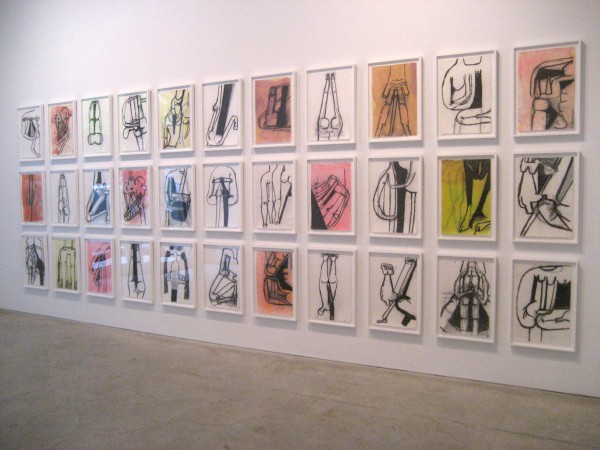
In a powerhouse group of new drawings, which are the first thing one encounters in this fairly extensive show, body parts stretch and mash together to create awkwardly structural forms that somehow explain the humor and futility of life, sex and art making. Hung in a tight grid, these works never get morbid or didactic—things are confidently upbeat and amoral.
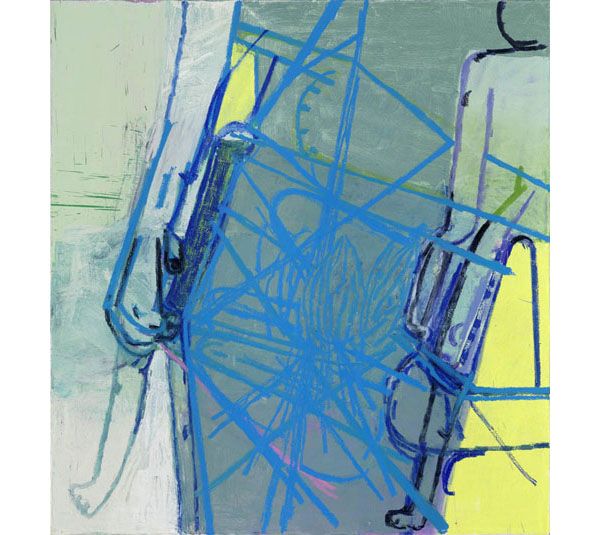
If sex was the elephant in the room for Sillman’s 2007 show at Sikkema, then love may be lurking somewhere here.  Not the mature, late-in-life-walk-on-the-beach-type love, but lurid, new love. The type of love that makes you not care what your friends think if you’re a little too busy enjoying life to return their calls and texts like you did when you were single.

Some of the stuff in this show is intentionally nerdy. A second series of drawings takes a rather lengthy narrative spin around the creative process, ending with a drawing of a curlicue light bulb over what appears to be a cutesy self-portrait. A hand-scrawled note on the wall above a table of ‘zines says something like ‘zines $1 (honor system).”  The ‘zine itself is cool, but the writing on the wall seems desperately DIY. But so what?  We forgive these things of our friends who are in love. If they’re happy, so are we.

In a way, this entire show could be read as an earnest attempt to explore the erotic self as it intersects with technology and sensory perception. To this end, Sillman bets the house on old-fashioned painting, looking square in the face of trend shifts and technological advances. She makes a strong case.  While I’ve never been a fan of her adherence to old-school painting styles, with surfaces reminiscent of such un-hip practitioners as Richard Diebenkorn or Terry Winters (ack!), in these new paintings she somehow makes it all palatable.  It is refreshing to see an artist not give a shit about the whole digital effect on abstraction. Plus, by now we’ve learned that there really isn’t any one dominant medium or train of thought in painting.  Pitting abstraction against representation is ultimately counterproductive. Sillman’s public “breakup” with abstraction might be overstated, but the paintings are convincing enough that we don’t really care.

Share

Aurélien Froment and Ryan Gander: Dark After After Dark

Aurélien Froment, still from Pulmo Marina (2010)

On view through May 1st at Khastoo Gallery in Los Angeles is the two person exhibition, Dark After After Dark. The show features the new work of French artist, Aurélien Froment, and English artist, Ryan Gander. Each is presenting a separate film or video projection, a meditation on a singular object in motion. Froment’s Pulmo Marina—a dayglow documentary of sorts about the Egg-yolk Jellyfish—reads like a psychedelic seventh grade science class video, which you can’t take your eyes off of. The academic sounding narrator, whose voice graces Gander’s piece as well, soothingly lectures on the anatomy of this particular type of jellyfish (formally known as the Phacellophora camtschatica), and then jarringly shifts in tone with a quirky aside, saying, “Jellyfish just don’t fit the categories.”

Ryan Gander, still from Best work EVER EVER EVER EVER EVER EVER (2010)

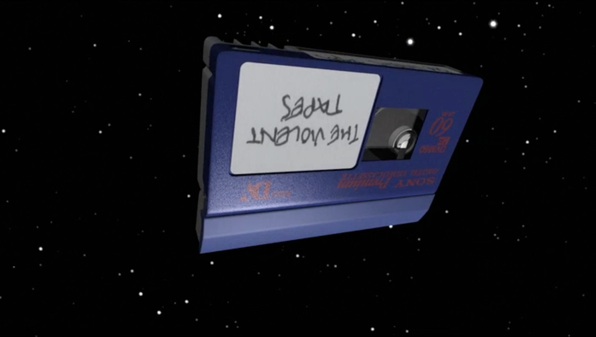
This tongue-in-cheek narration intensifies in Gander’s Best work EVER EVER EVER EVER EVER—a 16mm film projection of a sequence of a mini DV tape floating through space. Over the visual homage to the 1989 flying toaster screensaver, the narrator earnestly discusses the piece, saying at one point, “This particular work has been a challenge to make, a work that talks about the notion of cliché without simply remaining one. And I’m still unsure whether I’ve succeeded. A video tape floating through space is, of course, a cliché.” Both pieces provide a humorous—and eerily unsettling at times—juxtaposition between this trusted voice and visual of academia and science, against the humanized and self-doubting interjections of the narrator.

Aurélien Froment is a French artist who currently lives in Dublin, Ireland. Ryan Gander was born in Chester and currently lives and works in London, England. Both artists’ work has been exhibited extensively internationally. Dark After After Dark is their first collaborative show in Los Angeles.

Share

Louise Lawler


New York-based photographer Louise Lawler is currently presenting images in a new Rubell Family Collection exhibition, Beg, Borrow and Steal. The exhbition brings together an impressive all star collection of works by John Baldessari, George Condo, Jenny Holzer, Barbara Kruger,  Sterling Ruby, and Cindy Sherman. Lawler has become known for her body of work, which has been developing since the 1980’s, that examines the life of a work of art post studio creation. Lawler raises interesting questions of authorship and identity as she photographs works in galleries, museums, auction houses and private homes. The artist is interested in the discourse that a work can instigate when viewed in multiple contexts, and when the work itself is not the focal point of the imagery.

Lawler currently lives and works in NYC and has completed solo exhibitions with the Museum of Modern Art in New York, Museum of Fine Arts, Boston, Hirshhorn Museum, Washington D.C., Portikus, Frankfurt and at the Kunstmuseum Basel (2004). A major retrospective of her work was held last year in Ohio at the Wexner Center for the Arts.

Beg, Borrow and Steal will be on view through May 29 at The Rubell Family Collection Museum in Miami.

Share

From the DS Archives: Dan Colen

Each Sunday we reach deep into the DailyServing Archives to unearth an old feature that we think needs to see the light of day. This week we found a feature of artist Dan Colen’s piece Secrets and Cymbals, Smoke and Scissors (My Friend Dash’s Wall in the Future). If you have a favorite feature that you think should be published again, simply email us at info@dailyserving.com and include DS Archive in the subject line.

Originally published on April 19, 2007

Dan-Colen-4-19-07.jpg

“Secrets and Cymbals, Smoke and Scissors (My Friend Dash’s Wall in the Future)” is work by conceptual artist Dan Colen that is a life-size recreation of the interior wall of the late Dash Snow. In Colen’s version, each element attached to the wall — every sticker, newspaper, photo and hand-written note — has been illusionistically painted by the artist. Colen extends this process of painting into other works that equally underscore value in the mundane and familiar through his painstakingly realist application. Colen is a graduate of the Rhode Island School of Design (2001). Recently, the artist exhibited “No Me” with the Peres Projects in Berlin and the work above with the Deitch Projects in New York. Notable group exhibitions include “Fantastic Politics” at the National Museum of Art, Architecture and Design in Oslo, Norway, and USA Today at the Royal Academy of Arts in London.

Share

Fritz Chesnut

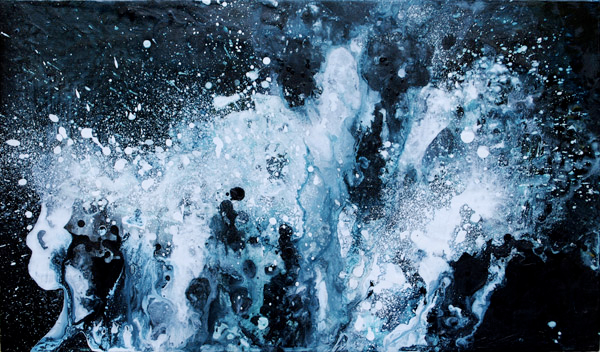
Liquid Explosion, 2010 Acrylic on canvas 14 x 24 inches

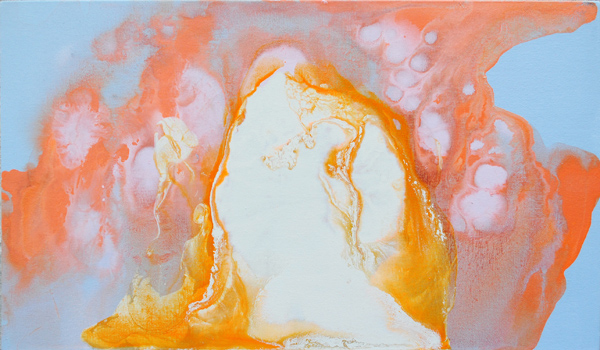
Opening concurrently this week at Country Club Projects in Los Angeles and Cincinnati is the exhibition Peak and Flow by L.A. based painter Fritz Chesnut. For this exhibition, Chesnut departs from the psychologically rigorous photo realistic figurative paintings that characterized much of his earlier work, for calmer abstract works. His new paintings are very loose in their material handling and the content is less overt, if at all present. The new paintings reference the organic fluidity of water, smoke or lava, while also acting as a psychedelic climax that is on the cusp of exploding or imploding.

Elastic Memory Hinge, 2010 Acrylic on canvas 14 x 24 inches

Peak and Flow marks the first solo exhibition for the artist since his 2002 exhibition at Bellwether Gallery in Brooklyn. The artist is a graduate of the University of California, Santa Cruz and received his MFA from Rutgers University. His work has been feature in exhibitions at White Columns, The Bronx Museum and ARENA Gallery among other venues.

Share

Justified

L.A. Expanded: Notes from the West Coast
A weekly column by Catherine Wagley

knives 2009, Steel, wood and plastic, 36 x 60 x 24 inches. Courtesy Honor Fraser Gallery

In the new FX series Justified, a quick-to-draw marshal who wears a skin of coolness over his pent up anger nearly always shoots to kill. That’s the show’s conceit: at the end of each episode, someone is either shot dead or left alive by a carefully calculated hairsbreadth. The shootings are, of course, always justified. This would be a cheap shtick if not for the obsessive precision and confidence with which U.S. Marshal Raymond Givens handles his firearms; Justified tells the story, not of the law versus the lawless, but of guns and those who use them best. The inevitable deaths, never messy, stack up like side effects for the lawmen who, like virtuosic athletes, play their game too well.

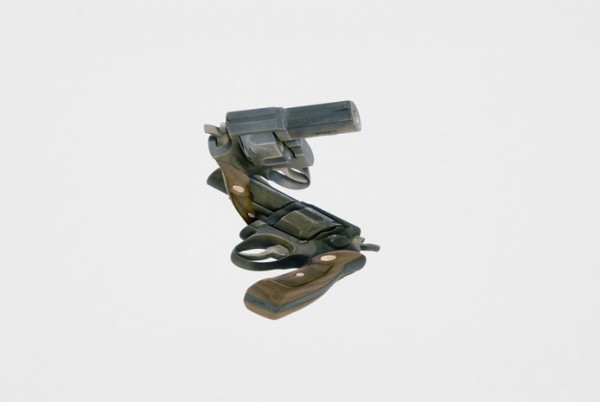
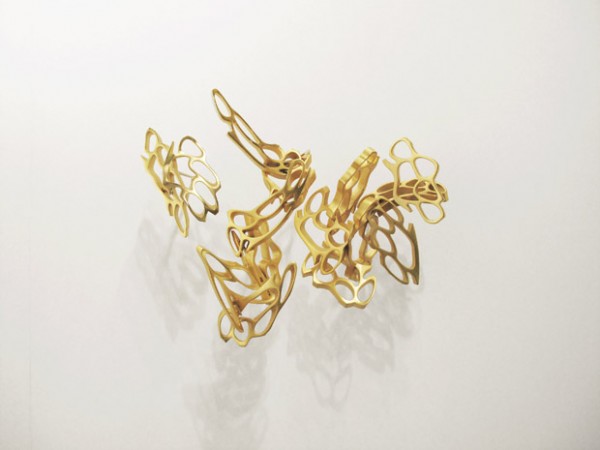
That Robert Lazzarini uses weapons as the subject of his mind-bending metal sculptures is no small thing. A New York artist whose first Los Angeles show opened on April 9th, Lazzarini has mounted kitchen knives, Smith and Wesson revolvers, and gold-plated brass knuckles to the walls of Honor Fraser Gallery. The sculpted weapons in the exhibition, all mounted at eye-level and fabricated with brass, steel and wood, look like photoshopped distortions of themselves. Which is more or less what they are. The distortions have been precisely, mathematically executed by Lazzarini, using Photoshop and 3-D digital modeling tools, so that the fabricated sculptures, while wonky, present as perfectly as ready-mades. The gallery walls, which slant in a way that’s at first imperceptible and later insidious, add to the effect of the already skewed guns, knives and knuckles.

gun (iv) 2009, Steel and walnut, 8 x 9 x 10 1/2 inches. Courtesy Honor Fraser Gallery

Lazzarini plays with perception as shrewdly as Robert Irwin before him did, yet, while Irwin’s project could easily be read as one’s man’s dogged attempt to understand the optical and outsmart the sublime, Lazzarini’s subject lends itself to more of a pop narrative. Clint Eastwood used a Smith & Wesson revolver in Dirty Harry (though Clint’s was a Model 29 and Lazzarini’s is a Model 10); brass knuckles recall Nelly’s fifth album; and kitchen knives, especially eerily suspended like Lazzarini’s are, could hail from a horror flick as easily as from a Magritte painting. Yet no low-brow references make Lazzarini’s work any less smart and impenetrable. The weapons feel preternatural, like they hold some insight that makes it impossible for them to misfire. Each sculpture shrink-wraps the kind of confidence Marshal Givens takes from his holster and presents it as a surreal packaged good.

But what makes Lazzarini’s work most interesting is that, the more you look, the more the three-dimensions recede into two-dimensions. The sculptures become images, photoshopped mirages.  Their smooth, practiced confidence makes them unbelievable as objects, just like, eventually, Marshal Given’s unblemished aim will make it impossible for us to accept his heat-of-the-moment, spot-on shootings as justified.

brass knuckles (i) 2010, Brass, 13 x 16 x 8 inches. Courtesy Honor Fraser Gallery

Share

Peter Iannarelli


The objects of sculptor Peter Iannarelli are seemingly commonplace in nature, yet the artist cleverly liberates the forms through the tinkering of their materiality. By utilizing both logic and abstraction, Iannarelli reduces the forms to a common denominator linking and balancing concept with form. The work, which is seemingly accessible to a wide audience, offers depth beyond its initial appearance. Using familiar materials, the artist draws the viewer into the work and then flips the meaning in a way that re-contextualizes both the physicality and the meaning of the object. The work is often summed up by a very clever title that neatly ties together any conceptual loose-ends.

Peter Iannarelli received his BFA from Pratt Institute in Brooklyn, NY. He has attended the DIA Center as a visiting artist and has a grant recipient of the Vermont Studio Center. The artist recently completed exhibitions at Van Brunt Gallery in Beacon, NY,  the Dorsky Museum in New Paltz, NY and the Albany Center Gallery in Albany, NY.

Share