Cory Arcangel

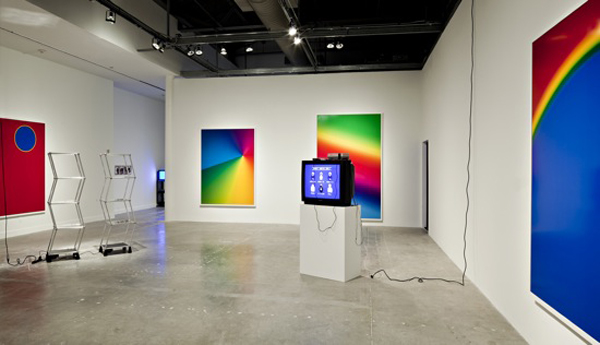
Cory Arcangel, The Sharper Image, installation view. Image by Steven Brooke.

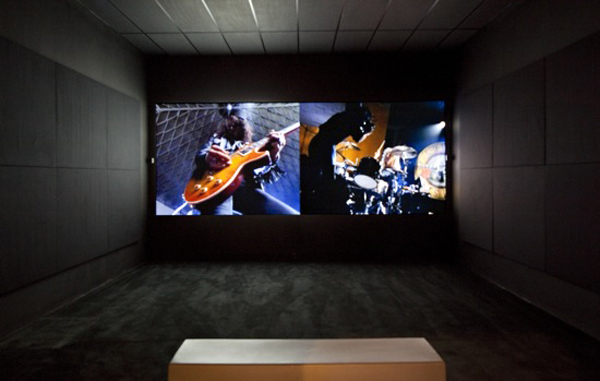
On view through May 9th at the Museum of Contemporary Art North Miami is a retrospective of  work made by Brooklyn-based artist, Cory Arcangel, from 2002 to present. The solo exhibition, entitled The Sharper Image, examines the prolific artist’s diverse practice, featuring a virtual grab bag of media—video, print, sound, performance, sculpture, drawing and web-based work. An artist, computer programmer and web designer, Arcangel was first featured on DailyServing in 2007. He is best known for his explorations of consumer technology and digital culture, including cheeky modifications to old-school Nintendo games, such as in the 2002 piece I Shot Andy Warhol—an interpretation of the 1980s NES game Hogan’s Alley. Other works on view in The Sharper Image include: several prints of Photoshop Product Demonstration Gradients; Space Invader (2004), the modification of the old Atari Game Space Invaders; and a temporary re-design of the MOCANOMI website by changing the font to Comic Sans, which is live throughout the tenure of the exhibition.

Cory Arcangel, The Sharper Image, installation view. Image by Steven Brooke.

Cory Arcangel lives and works in Brooklyn, NY. His work has been included in numerous international group exhibitions such as Younger than Jesus at the New Museum, New York (2009), The Possibility of an Island at the Museum of Contemporary Art, North Miami (2008); Color Chart at the Museum of Modern Art, New York (2008); Sympathy for the Devil: Art and Rock and Roll Since 1967 at the Museum of Contemporary Art, Chicago (2007); Speed 3 at the Instituto Valenciano de Arte Moderno, Valencia, Spain (2007); Time Frame at P.S. 1, New York (2006); Database Imaginary at The Banff Centre, Alberta, Canada (2004); and the Whitney Biennial at the Whitney Museum of American Art, New York (2004). A solo show of his work just closed at the University of Michigan Museum of Art. He is represented by Team Gallery in New York.

Share

Ron van der Ende: A Shallow Wade

Ron van der Ende, Limo 1, 2009

A Shallow Wade is the title of a new exhibition that shows Americana distilled through an outsider’s perspective, that of Rotterdam artist Ron van der Ende.  Through his process of assembling large wall-hung collages of wood, he has salvaged doors, furniture, and other building fragments and deconstructed them, leaving worn paint in tact on skinned timber. These parts are collected and cut to fit into exact spaces.  Finding evidence and scenes from Western societies and mass media, he examines cultural monuments which have informed identities globally.

Ron van der Ende, Taylor-Burton, 2009 (Installation View)

These six wooden hulls, made big and light, are feats of intricate detail that would satisfy a model maker’s desire for exactitude.  They show us icons raised from the dead – a diamond worn by Elizabeth Taylor, the Cadillac Limo I driven by R. Reagan adorned with crumpled striped flags, and the shell of a Dodge, the Number 12 not in working order. Finishing nails make seams as rivets or stitches. Van der Ende is aiming at surface and alluding to depth, making image-products akin to those found in print and video media, with a few added inches of reality.

The NASCAR car is white from a distance, and a mosaic of color and texture up close.  Beige and gray expand upon approach to reveal dabs of rainbow’d light, bold pixels on a glossy surface.  But it is ghostly, a relic of frivolous gas consumption as sport, an emblem stripped of its power.  In “Limo I” the car appears tank-like in shades of tombstone gray, steel on black matte plates, and silvery reflections in the chamber.

Ron van der Ende, NASCAR Charger, 2009 (installation detail)

Mounted photographs next to Limo I show guns, jets, flags, and landscapes dominated by human presence.  Other images between the sculptures include scenes of mud, flood and piled up junk, interiors of gutted cars, explosions, collapsed plywood homes, and plain shacks standing steady.  These images might be meaningful, strengthening pathways between common symbols and forms, or maybe they are red herrings, disparate sources of inspiration for the artist that propel us to draw up connections.  Images display famous characters, workers, and their things, and in wood we see flags, products of factories, and items of sport and luxury. And, in front of us is art for sale, participating in the wealth-making world it critiques.

Ron van der Ende, Shotgun Shack Row, 2010

A street of rowhouses in New Orleans is imagined and remade by the artist in miniature in Shotgun Shack Row. Prairie Church is another homage to simple, effective architecture.  Design practices that used to be common knowledge have gained mystical qualities here, becoming ancestors that tell of colonies who have survived and flourished.

Ron van der Ende, On Re-Entry (Burning Log), 2010

The artist has been honing his skills making these intricate models for years now and collecting many tiny parts for use. A Shallow Wade will remain on exhibit until May 2nd at Ambach & Rice Gallery in Seattle, WA.  It is Ron van der Ende’s second solo show in the US.  He graduated in sculpture from the Academie voor Beeldende Kunsten in Rotterdam, NL in 1988. He has had numerous shows in the Netherlands and exhibited extensively throughout Europe, and participated as a member of artist collective/gallery Expo Henk until 1997. Public and private collections that own his work include Bouwfonds Kunstcollectie and Historisch Museum Rotterdam.

Share

Kathy Grayson


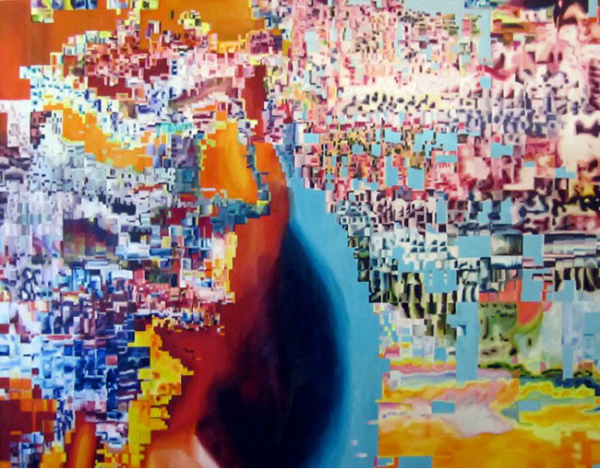
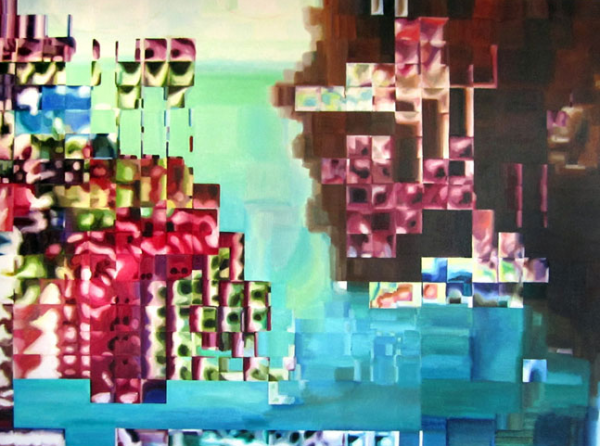
The translation of information from an original event to a digital screen takes many forms. While the process of transferring data from the camera to satellite to analogue broadcast to a digital screen device occurs countless times each day, we usually absorb this information with little to no awareness of the process. Fueled by this topic, painter Kathy Grayson is currently presenting a new body of work titled Bangalore on view at Kim Light Gallery in Los Angeles. The artist has taken televised sports footage of professional tennis matches for the subject of her new paintings. Utilizing YouTube footage of the matches, the artist examines the abstraction that occurs from the digital compression of data. Grayson runs footage through computer applications to distort and abstract the images, reconfiguring the digital remains to create what she calls a “stirring up of the video data to make interesting ruptures in figurative painting.”

Grayson is a graduate of Dartmouth College and currently lives and works in New York City. The artist serves as the director of Deitch Projects in NYC and works as an independent curator, essayist and book editor. Recent exhibitions include works at Park Life in San Francisco and D’Amelio Terras in NYC.

Share

From the DS Archives: Leslie Hewitt

Each Sunday we reach deep into the DailyServing Archives to unearth an old feature that we think needs to see the light of day. This week we found a feature of artist Leslie Hewitt’s On Beauty, Objects, and Dissonance. If you have a favorite feature that you think should be published again, simply email us at info@dailyserving.com and include DS Archive in the subject line.

Originally published on March 29, 2010

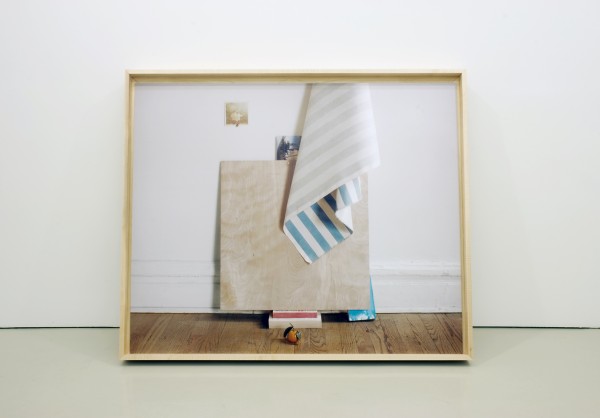
Courtesy of the artist and D'Amelio Terras, New York

The Kitchen in New York City is currently showing On Beauty, Objects, and Dissonance, a Leslie Hewitt solo exhibition curated by Rashida Bumbray. The exhibition features new and recent work by Hewitt in photography, sculpture and film installation. The Kitchen writes that in this exhibition Hewitt’s ‘…long-standing interest in non-linear perspective merges with W.E.B. Dubois’ theory of double consciousness, to create visually elegant and thoughtfully composed situational works’.

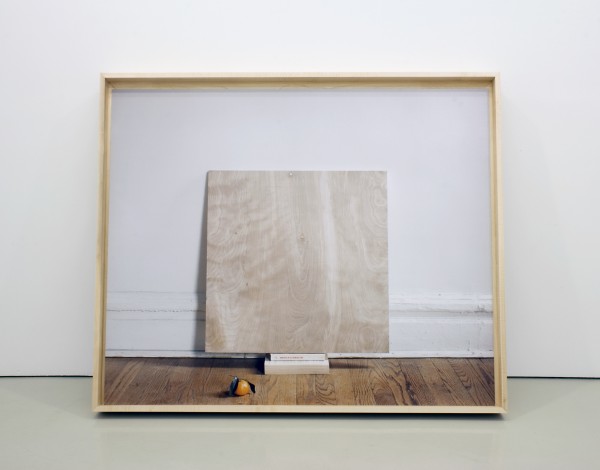
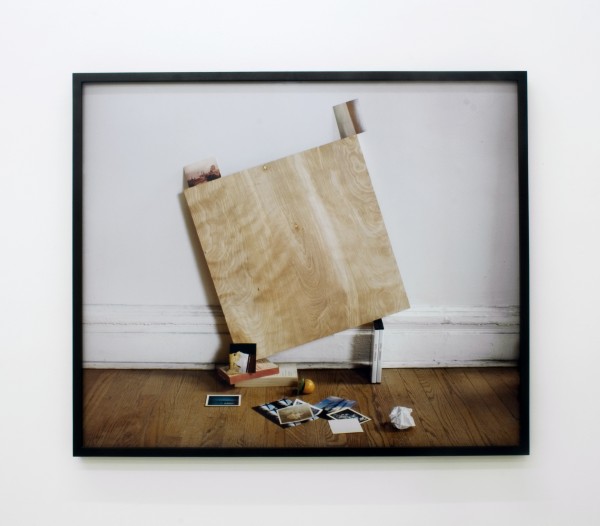
On Beauty, Objects, and Dissonance brings together a selection of images from three of Hewitt’s photographic projects. Riffs on Real Time (2008) features sculptural, layered collages with mundane objects created to be captured in photograph. These sculptural creations reflect the condition of existence through a shared temporality. In the Midday (2009) series she creates contemporary still-life arrangements that reference our consumerist society through repetition. Hewitt creates and documents multiple times – making each photographic image of the same still-life arrangement subtly altered in perception. Hewitt’s newest photographic project, A Series of Projections (2010), breaks down and simplifies the artist’s structural complexities. In a departure, black and white photographs capture photographic fragments projected onto the studio wall in addition to honing in on objects placed on wooden surfaces.

Courtesy of the artist and D'Amelio Terras, New York

Like much of Hewitt’s work, her new film installation, created in collaboration with experiential cinematographer Bradford Young, is inspired by a literary source – in this instance Claude Brown’s Harlem migration text Manchild in the Promised Land (1965). This film installation engages the landscape of a particular place (Harlem) and the manifest implications and effects of movement through this space. Hewitt and Young drew visual inspiration from Harlem’s dense urban grid, its architectural features and through the study of its street archives. The Kitchen describes this film installation as featuring ‘a series of silent vignettes’ where ‘time is marked through oscillations between the still and the moving image’. The passage of the gallery visitor through the installation mirrors and completes the work. This theme of human movement is as particularly definitive to our global age as it was to the formation of 20th century Harlem.

Leslie Hewitt graduated from the Cooper Union School of Art in 2000 and earned an MFA from Yale University in 2004. She also undertook Africana Studies and Cultural Studies at New York University from 2001-2003. Hewitt received the 2008 Art Matters research grant to the Netherlands and, more recently, the 2010 Foundation for Contemporary Arts Individual Artist Grant. She is currently in residence at the Radcliffe Institute for Advanced Study at Harvard University.

Courtesy of the artist and D'Amelio Terras, New York

Leslie Hewitt is represented by D’Amelio Terras in New York and is in the public collection at the Museum of Modern Art, New York. Hewitt has shown extensively across the US and was part of the 2008 Whitney Biennial and MoMA’s New Photography exhibition in 2009. Hewitt’s work has also been shown internationally – notably at the Thomas Dane Gallery in London and the Zacheta National Gallery of Art in Warsaw. Look for Leslie Hewitt’s work in the exhibition After 1968: Contemporary Artists and the Civil Rights Legacy at the Bronx Museum of the Arts in New York City (organized by the High Museum of Art in Atlanta). This exhibition is on view 28 March – 11 August 2010.

The Leslie Hewitt solo exhibition On Beauty, Objects, and Dissonance will remain at The Kitchen through 20 May 2010. A discussion between Leslie Hewitt and Bradford Young, moderated by Rashida Bumbray, will be held Sunday, 9 May at 4.00 pm.

Share

Zilvinas Kempinas

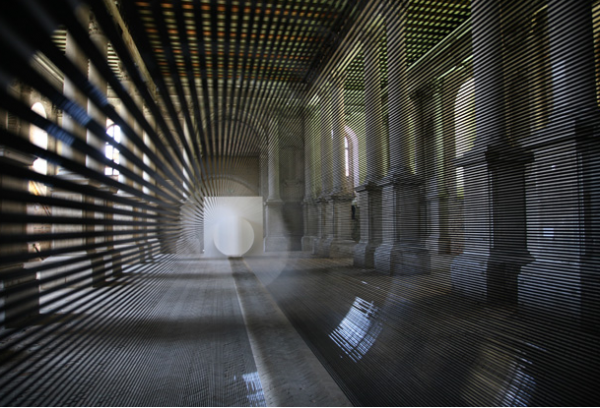
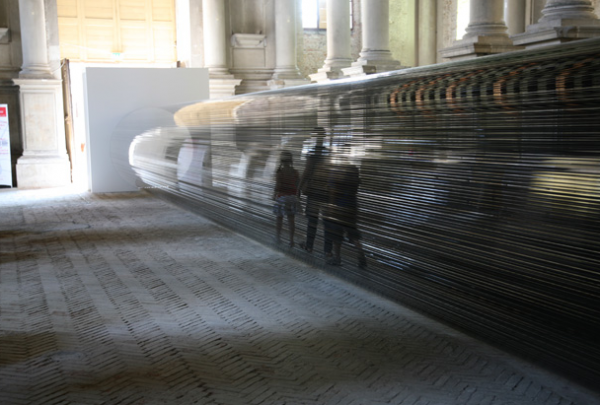
Lithuania-born artist Zilvinas Kempinas creates site-specific installations that re-contextualize materials such as video tape to transform physical space into utter illusion. The physical and optical impact on the viewer is caused by precise geometry that utilizes both structure and light. Illusions of velocity and vibration are echoed through the space to accentuate the architecture and provide a new way of experiencing a familiar and otherwise non-descriptive space.

The artist has been living and working in New York City since the completion of his MFA at Hunter College in 2002. Kempinas has experienced rapid growth since his entire 2006 exhibition at the Spencer Brownstone Gallery was purchased for the Margulies Collection in Miami. Developing an international reputation, Kempinas has recently completed exhibitions with Palais de Tokyo in Paris, the Contemporary Art Center in Vilnius, and the San Francisco Museum of Modern Art.

Share

No Exit

L.A. Expanded: Notes from the West Coast
A weekly column by Catherine Wagley
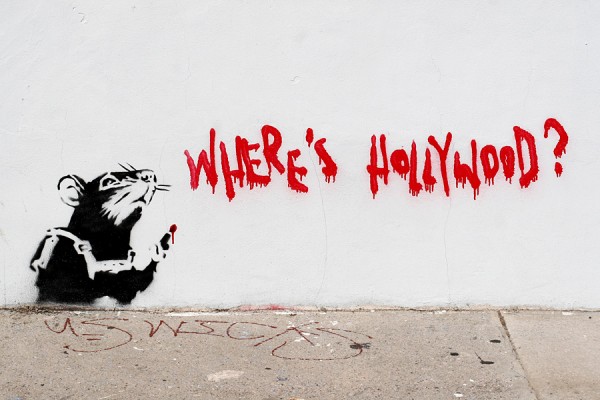
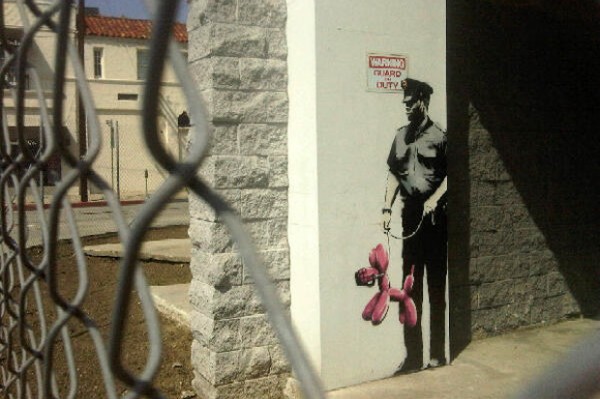
Banksy in Los Angeles

The Arclight Theater in Hollywood feels like an AMC trapped in an Opera House’s body. It has bathroom attendants, assigned seating, a domed atrium and sweeping staircases (it has escalators too, but they’re hidden behind a partition). The oversized ticket I shared with four friends even promised no previews, though we found that to be false when we walked in to Theater 10 and saw Leonardo DiCaprio spread across the screen, backlit by a warped cityscape in the trailer for Inception.

For all of its flourishes, the Arclight still smells of popcorn, displays a standard spattering of glossy marquees and devotes a wall to screen-printed celebrity mugshots. It’s barely pretentious and not the least bit exclusive; it’s just trying hard to be memorable in the movie-making heartland, and I don’t envy its position. The Arclight’s guileless ambition is what makes it an ideal venue for Exit Through the Gift Shop, a film more interesting for its lapses into ingenuity than its bravado.
Courtesy HypeBeast

Banksy in Los Angeles

“Los Angeles might be the perfect city for Banksy,” wrote The Art Newspaper the morning after Exit’s L.A. premiere. “It’s got the glam that he loves to tarnish, a hardcore base of graffiti art supporters and it readily embraces spectacle.” But calling Banksy—the perpetually hooded artist famous for timely, pithy tagging—a tarnisher of glam and L.A. an embracer of spectacle throws two clichés together in a slapdash marriage that, if it lasts, will never be that fertile. You can only go so far as a cultural meta-critic. And would it be so wrong if Los Angeles appeals to Banksy because he has friends here and L.A. has a proliferation of tag-worthy surfaces?

Exit Through the Gift Shop is, according to its promoters, “The world’s first Street Art disaster movie.” Narrated by Rhys Ifan, whose melodically factual voice recalls Anthony’s Hopkins’ in How The Grinch Stole Christmas, the film tells of Frenchman Thierry Guetta, a shop owner with untamed sideburns, a penchant for overpricing merchandise in his L.A.  boutique, and a video fetish. He records everything he sees and when he encounters his first tagger, a cousin of his named Space Invader, he becomes enamored by Street Art’s borderline lawlessness. With camera in tow, Guetta shadows Shepard Fairey, Swoon and others.  The artists like him; he fawns over their work, stays out all night, and purports to be a documentarian, though it’s pretty clear to Exit audiences he’s just an over-eager guy with a camera. After Guetta hears of a British artist who has painted the West Bank barrier and infiltrated the Natural History Museum, he resolves to get this Banksy on tape. Through a string of fortuitous events, Guetta does record Banksy and Banksy, charmed by Guetta’s earnestness and thinking a documentary will benefit his work, invites Guetta into his notoriously exclusive world.

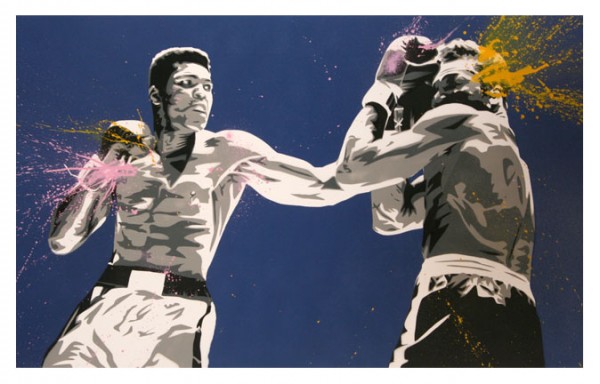
Banksy realizes he’s been had when he encourages Guetta to finish the  documentary and discovers Guetta, clueless as a filmmaker, has left endless hours of footage unwatched, unedited, and unorganized. Banksy, suggesting Guetta give filming a break and try artmaking, endeavors to make the film himself. The plot thickens when Guetta does make art, labeling himself Mr. Brainwash, renting a warehouse, and manufacturing a meaningless spectacle of faux-Warhols, over-sized aluminum spray cans and defaced prints from art history. This surprises and later offends the artists he’s shadowed. The film Banksy makes, the one we see, uses much of Guetta’s footage to essentially apologize for the disaster of Mr. Brainwash.
Mr. Brainwash, "Muhammed Ali"

Mr. Brainwash, "Muhammed Ali"

Critics have suggested that Exit may be fiction. But seeing the film as a sophisticated hoax both sells Banksy short and gives him too much credit. More Philip Petit than Marcel Duchamp, Banksy thrives, not on transcendent cultural critique, but on being in places he’s not supposed to be and saying what he’s not supposed to say. The desire to see him as someone who looks in on culture from the outside or to accuse him of selling out because he profits from his irreverent visual aphorisms, doesn’t have as much to do with Banksy as with our desire to believe that we can extricate ourselves from what we are.

Taken at face value, Exit gives a tender glimpse into human failure. Banksy built a reputation on being inaccessible. Then he let his guard down. Guetta accessed him, misunderstood him, misdefined him, and ultimately tried to be him in a hackneyed way. So Banksy took himself back, making a film that’s part attack, but mostly fleshed out, funny clarification. “I used to encourage everyone to make art,” Banksy says near the film’s ending. “I don’t do that so much anymore.”


Share

Susy Oliveira

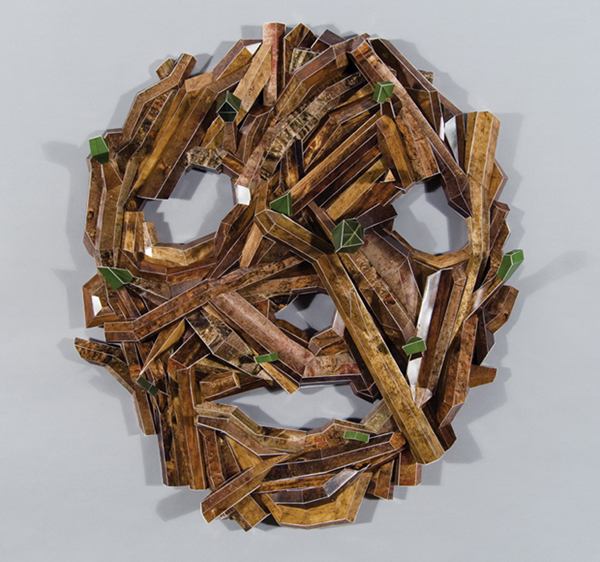
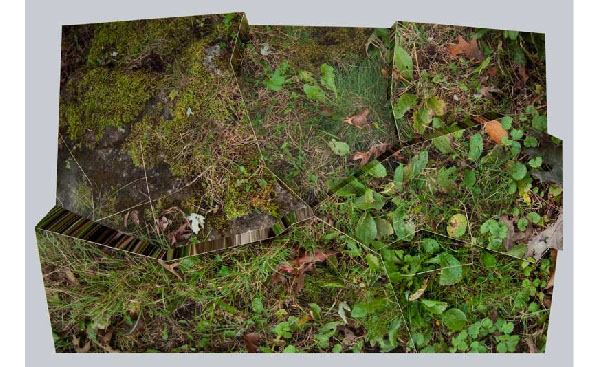
Toronto-based artist Susy Oliveira creates sculptures, paintings and installations that examine human’s preoccupation with controlling and re-producing elements of nature through artificial fabrication. Often using digital images that attempt to capture or reproduce elements of nature, the artist repurposes the images to give new life and form to artificial versions of natural and organic material. As humans continue to manipulate and impose unnatural systems onto otherwise natural elements of the world for personal pleasure and consumption, Oliveira’s work underscores our perpetuated distance from a world that is undisturbed by our existence.

Susy Oliveira is currently presenting an exhibition of new works titled Your Face, like a lone nocturnal garden in Worlds where Suns spin round! is currently on view at Platform centre for Photographic and Digital Arts in Winnipeg, Canada. The artist is a graduate of the University of Waterloo and Ontario College of Art and Design. Recent exhibitions include, The Girl and the Bear at Peak Gallery, Toronto, and fOR yOUR pLEASURE at the University of Waterloo. Click here to read a previous feature of Susy Oliveira’s work on DailyServing.com.

Share