Fan Mail: Andreas Templin

DailyServing.com selects two notable artists each month from the submissions we receive to be featured in our series, Fan Mail. For a chance to have your work appear below, with an article written by one of the DailyServing contributors, please submit a link to your website to info@dailyserving.com, subject: Fan Mail. You could be the next artist in the series! (We will try to contact chosen artists prior to publication, but please be sure to check the site everyday.)

Andreas Templin‘s multi-dimensional body of work includes sculpture, video, installation, photography, and urban interventions. His diverse practice is guided by a critical approach to the making of art; each work is the outcome of an insightful process that examines culture from a philosophical point of view. As the artist states, “The adult individual consumer is faced with the creative possibility of reinventing his identity each day, with the wide variety of enhancement products now available for use. The artist, too, must move with the times, and avoid being a fixed label, but use everything available to him.”

Templin’s technically simplistic, and somewhat disconcerting, video work, As if to nothing (9:54), consists of the constant display of earth’s qualitative statistical data, culled from governmental sources, accompanied by a recording of Anton Bruckner’s 7th Symphony. The emotional depth of the audio heightens the impact and immediacy of the dreary data display. Selected statistics include a tally of the world’s population, military expenditures, infectious diseases, and species extinct. The environmental data set “Ocean Oil Spills (tons)” holds particular poignancy in our current cultural moment.
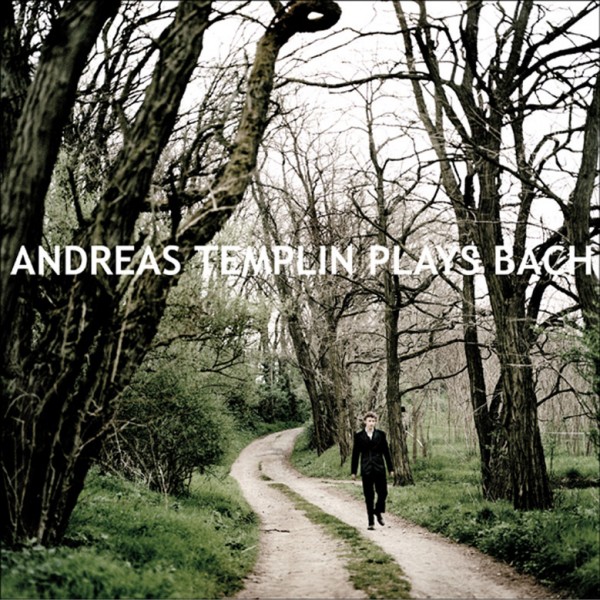
This type of cultural insight, and perhaps critique, appears in Templin’s vinyl record album, Andreas Templin plays Bach, a recording of the artist whistling Bach throughout the city streets. This more playful form of artistic commentary was born out of the artist’s distaste with the “clean and highly competitive virtuoso-recordings” that exist of the German composer, and was recorded in the red light district of Amsterdam. The album cover was created by classical music photographer Felix Broede.

Templin, who lives and works in Berlin, is currently participating in the group show Consume at Exit Art in New York. The exhibition, which is a project of SEA (Social Environmental Aesthetics), investigates world food production, consummation, distribution, and waste. Consume will remain on view until August 28th.

Share

The Hole

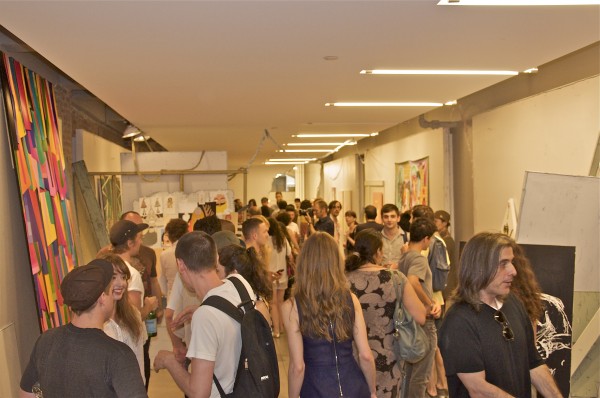
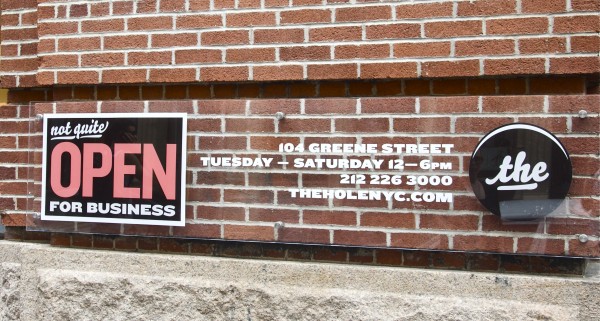
At six o’clock on Saturday evening in SoHo, Kathy Grayson and Meghan Coleman made public their intent to fill the hole that Jeffrey Deitch‘s trans-continental career move created in the world of New York art, which is no small undertaking. The two former directors of Deitch Projects opened a much anticipated new space at 104 Greene Street, aptly titled The Hole. The inaugural exhibition, Not Quite Open for Business, was directed by Taylor McKimens and showcases unfinished works by over twenty artists, including Nate Lowman and Rosson Crow.

When their originally planned exhibition fell through mere weeks before the scheduled opening, Grayson and Coleman decided to make the best of what others might deem an impossible situation. They solicited their artists to “Give us an incomplete piece…Give us a drawing that you just cant bring yourself to finish from your flat files. Put half your makeup on and give us most of a performance!” In a press release littered with intentional “typoos,” Grayson and Coleman clarify that this is not about the process of the artist, or the deliberate incompletion of work, but about “being caught with your pants down and your lipstick smudged and your armpits sweaty because you didn’t have time to take a shower before YOUR FIRST GALLERY SHOW.” A personal and self-deprecating tone replaced the more traditional formality of this document. The opening was a straightforward and unpretentious debut for Grayson and Coleman, making up in energy what it lacked in polish.

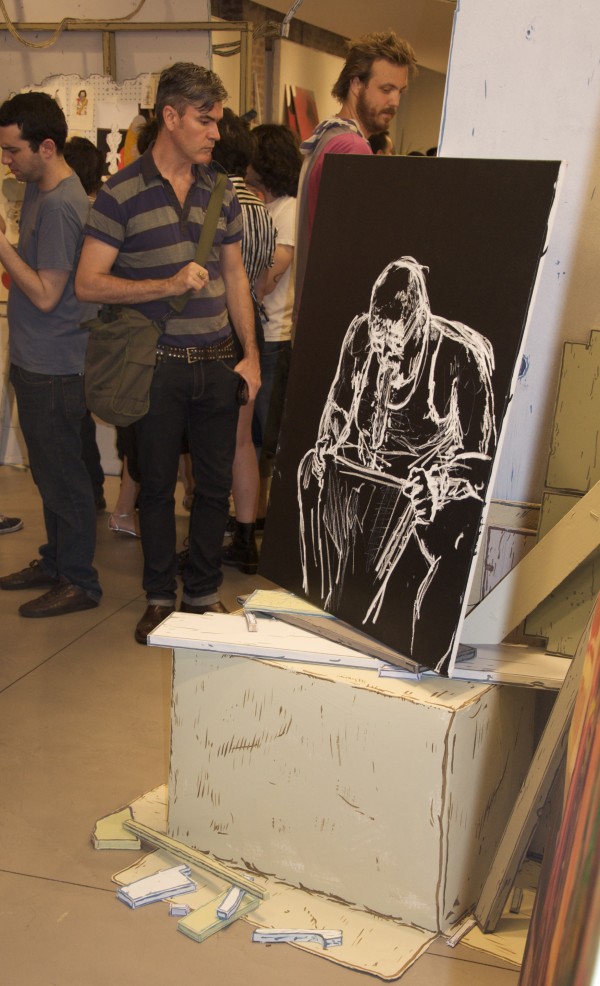
The unfinished theme pervades, and the space resembles a construction site overtaken by creatives. Painted scrap lumber, an industrial ladder, bare studs and unfinished sheetrock share the space with art. Works on paper are mounted with thumbtacks. A half painted logo contributes to the the display’s impromptu, work-in-progress quality, disarming the viewer and generating unlimited interest in future progress.

Not Quite Open for Business will remain on view until August 14th. As mentioned in a Wall Street Journal article written by Erica Orden, upcoming exhibitions include a solo show by Mat Brinkman and an installation by Kenny Scharf and the collective Dearraindrop. Other projects in the plans for The Hole include a book store in the back room of the gallery, Holey Books, and a dating service for artists, purportedly titled Hole Lotta Love. We’ll keep you posted.


Share

Christian Marclay: Festival at The Whitney

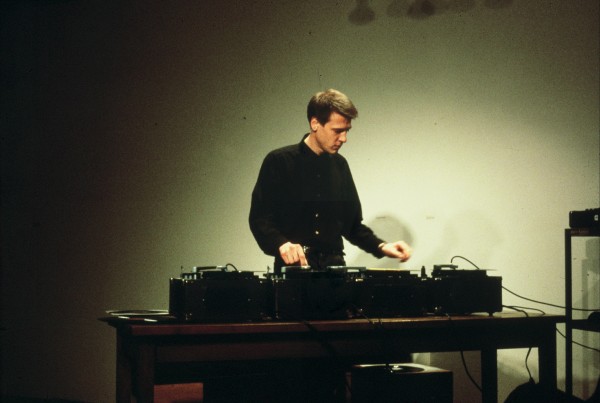
This week, the Christian Marclay: Festival will open at the Whitney Museum of American Art in New York City. The exhibition celebrates many of the artist’s graphic scores for performance and will take the form of multiple daily performances by individual musicians and vocalists. The Whitney has pulled together some of country’s finest Avant-garde musicians to play more than a dozen of Marclay’s scores dated from 1985 to 2010. Some of the works to be performed include, ChalkBoard (2010), Covers (2007-10) and Screen Play (2005). Many of the pieces take the form of a physical art object produced from videos, photographs, found images, and readymade objects which are intended to elicit a musical response from the performers.

Christian Marclay, Screen Play, 2005. Courtesy the artist. © Christian Marclay

Swiss-American artist Christian Marclay is internationally known for his innovative artworks that explore the intersection of image and sound. Over the past several decades, the artist has combined performance, collage, sculpture, installation, photography and video to create unique work that provides commentary on many aspects of contemporary culture, while continuing to push the boundaries of visual art and music. Marclay is often recognized as an early pioneer of turntablism, as he first began to use turntables and physically altered records as instruments for performances in the late 1970’s.

Christian Marclay, Screen Play, Excerpt of Eliott Sharp performance at Performa07, January 2007.

Festival begins this Thursday, July 1st with two pieces performed by Min Xiao-Fen and Elliot Sharp at 1pm and Ulrich Kieger at 2:30pm. The exhibition will continue through September 26, 2010.

Share

Robert Lendrum: I’ve Been Shot

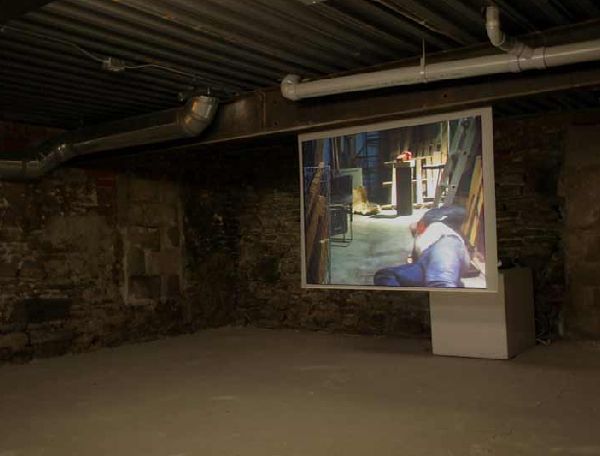
I've Been Shot, installation view, courtesy XPACE Cultural Centre

In the 1988 action film, Die Hard, John McClane (played by Bruce Willis) hustles around a Los Angeles skyscraper—sweat-soaked and shirtless—in an effort to save his wife and other hostages from a ruthless terrorist group. At various points throughout the film, McClane (an NYPD officer) survives a partial jump from an exploding building and smashes through a plate glass window. Basically, he is injured to the extent that he arguably would not be able to still perform such heroics as he does (saving everyone in the end) if this were real life. But this is not real life, it’s Hollywood. And so the hero always perseveres.

The themes of personal danger, machismo and pain have been explored by artists in the past, namely Southern California performance artist Chris Burden. Burden is perhaps best known for his 1971 piece, Shoot, in which he had a friend shoot him in the left arm from a distance of about fifteen feet. Shoot, and the many other performances by Burden throughout that era (during which he crawled over broken glass, spent weeks on a high-up gallery platform with almost no food and no human interaction, and was nailed through the hands to a Volkswagen) prompted serious discussion around the subjects of fear, war (Vietnam), consumerism and the role of art in society. While there is no shortage of people who considered Burden insane at the time, many continue to consider his work monumental. (Incidentally, if you’re interested in reading more about Burden’s work, I recommend this particularly well-rounded New Yorker essay by Peter Schjeldahl.) What if, however, an artist were to take a more humorous–and admittedly less painful—approach to the same overall theme? Enter Toronto-based artist, Robert Lendrum.

I've Been Shot, installation view, courtesy XPACE Cultural Centre

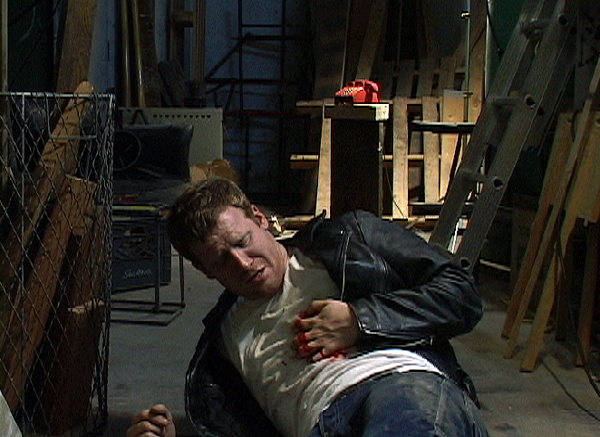
Lendrum’s I’ve Been Shot consists of a looping video in which a man grasps his bloody chest and crawls in pain toward a red phone to call help after having been shot. Just as he reaches his goal and goes to lift the phone, the video loops back to the beginning where he enters the frame, grasps his chest, exclaims that he’s been shot, and drags his body toward the phone. And it goes on and on. In his statement about the piece, the artist says, “This humorous re-articulation of the Sisyphean myth…satirizes machismo in both the art world and Hollywood films.” I’ve Been Shot does well to continue the dialog that Burden once started, and at the same time consider the extremism of Burden’s approach, but it can easily be argued that the younger artist’s work is just as reactionary and extreme (albeit in a different way) than that of his predecessor.

Robert Lendrum is currently included in the group exhibition, THIS IS UNCOMFORTABLE, at Gallery TPW in Toronto, Ontario. He earned his BFA in Visual Arts and English at University of Western Ontario; his MA in Media Studies at Concordia University, Montreal; and his MFA in Documentary Media at Ryerson University, Toronto. He has been included in solo and group exhibitions all over Canada and in the U.S., including at: Xpace Cultural Centre, Toronto, ON; University of Colorado New Visual Arts Complex, Boulder, CO; and Spark Contemporary Art Space, Syracuse, NY.

Share

From the DS Archives: Kurt Hentschlager

Each Sunday we reach deep into the DailyServing Archives to unearth an old feature that we think needs to see the light of day. This week we found a post featuring a review of Chicago-based new media artist Kurt Hentschlager, writen by DailyServing’s Benjamin Bellas. If you have a favorite feature that you think should be published again, simply email us at info@dailyserving.com with you selection and include From the DS Archive in the subject line.

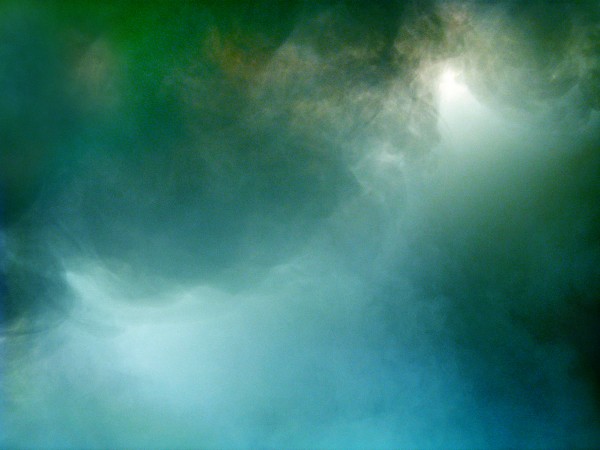
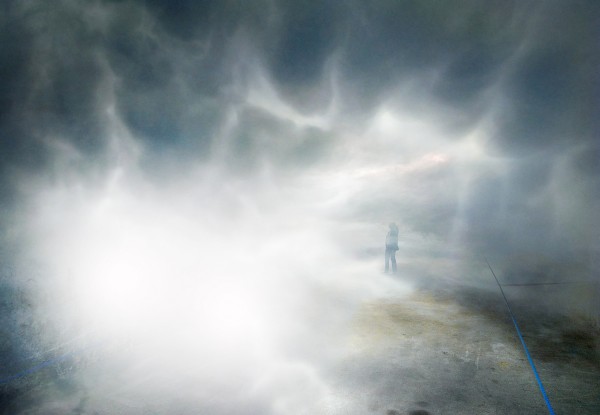
The Chicago-based Austrian artist Kurt Hentschlager’s installation ZEE, which just closed at Wood Street Galleries in Pittsburgh, is impossible to accurately document or describe. In this exhibition, Hentschlager creates an immersive environment of sight and sound reflecting on the nature of human perception and the accelerated impact of new technologies on both individual and collective consciousness. The installation is comprised of a room of an indeterminable size filled with fog such that each viewer is able to see their own hands at best. Somewhere within the space is a visual strobe-like component with corresponding audio. The effect is a completely immersive experience that lasts 17 minutes, and might best be described as pseudo-psychedelic.

Trained as a fine artist, Hentschlager began to exhibit his work in 1983, building surreal machine-objects and then video, computer animation and sound works. Between 1992 and 2003 he worked collaboratively as a part of the duo Granular- Synthesis. Employing large-scale projected images and drone like sound-scapes, his performances confronted the viewer on both a physical and emotional level, overwhelming the audience with sensory stimulation.

Hentschlager is a recipient of numerous prizes and large scale commissions. He has represented Austria at the 2001 Venice Biennial and has shown his work internationally for two decades. Selected presentations include the Millennium Museum, Beijing; Stedelijk Museum, Amsterdam; Anchorage (Creative Time), New York; MAC – Musee d’Art Contemporain, Montreal; MAK – Museum of Applied Arts, Vienna; National Museum of Contemporary Art, Seoul; Ars Electronica Festival, Linz; ICC Inter-Communication-Center, Tokyo; Fondation Beyeler, Basel; and Palacio de Bella Artes, Mexico City.

His recent performance, FEED, premiered at the 2005 Venice Theatre Biennial and is currently touring. The procedural installation KARMA/cell was commissioned in 2006 by Le Fresnoy, Studio National des Arts Contemporains, France.

Share

Danielle Nelson Mourning: Homecoming

Annelle's Cornbread (Marks, Mississippi), 2006. Courtesy the artist and Taylor De Cordoba, Los Angeles.

I’m a sucker for a storyline involving a protagonist’s search for identity across generations and distant lands. More often than not this fascination is satisfied by reading a novel or watching a film, maybe listening to a three-verse country song. It’s not often that such a sprawling narrative emerges from within a work of art, but such is the case with the series of photographs by San Francisco-based artist Danielle Nelson Mourning in her debut solo exhibition at Taylor De Cordoba Gallery in Culver City.

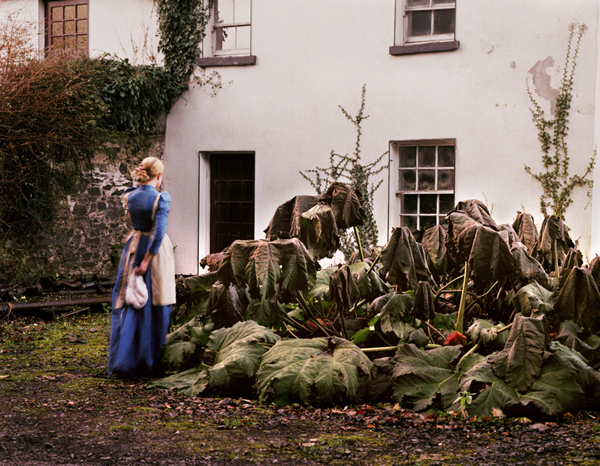
Homecoming presents large-scale ink jet prints of the artist’s pilgrimage across the country and the Atlantic to understand herself and her ancestry. This is no documentary, though; Mourning has visited old family homes in Marks, Mississippi and Niagara Falls, New York to make self-portraits in which the self is more fictional than real. She assumes the dress and style of domestic women from decades past, recalling in part Cindy Sherman’s Complete Untitled Film Stills, though in a decidedly less aggressive way. Mourning goes to Ireland as well to recreate haunting scenes of life during the potato famine of 1845. The work is endearing in its earnest investigation of family history and self, and in its multidimensional presentation of women of certain eras and of domestic life. It seems to be an intensely personal practice, as if the project would mean as much to the artist regardless of whether it had an audience. Sometimes work comes across as so prepared for an audience that there is a paucity of the artist’s own identity, but there’s none of that here.

Rhubarb (Cavan County, Ireland), 2006. Courtesy the artist and Taylor De Cordoba, Los Angeles.

The most affecting work in the show is the 8mm film, Memories from a Pleasant Visit, which mimics vintage 8mm home movies authentically with its camera shake, jumpy scene cuts and film noise. In it, the characters from Mourning’s Mississippi and Niagara Falls photo narratives are brought to life, though there is still a sense of disconnect between the intent of the characters as they move about, and any narrative that the viewer should draw from the quick scenes. Perhaps the film is the least narrative piece in the show because its presentation of ideas is so hectic, like scraps from the reel of life lying in disjointed piles on the cutting room floor of one’s mind. I actually wonder if I’ve ever been more taken with a work of video art, however. Maybe I relate to each of these divergent female characters, respond to grandma’s chatter as she flips through old photo albums, and possibly—most of all—enjoy the private thrill of being frightened by the subtle Hitchcockian tones of the film. The dull tapping of ivory keys, the lone voice of a choir girl singing, the black-and-white footage capturing the manic twirling of a woman in a gown—it’s chilling. But more so, it’s entrancing.

Paten Circle II (Marks, Mississippi), 2006. Courtesy the artist and Taylor De Cordoba, Los Angeles.

Danielle Nelson Mourning lives in San Francisco, CA. She earned her MFA at Royal College of Art, London. Her work has been included in several group exhibitions, including at Headlands Center for the Arts, Sausalito; Hoopers Gallery, London; and the Karlovy Vary International Film Festival, Prague. Homecoming closes today, June 26. The film Memories from a Pleasant Visit can also be viewed at this link.

Share

Meaningless Work

L.A. Expanded: Notes from the West Coast
A weekly column by Catherine Wagley

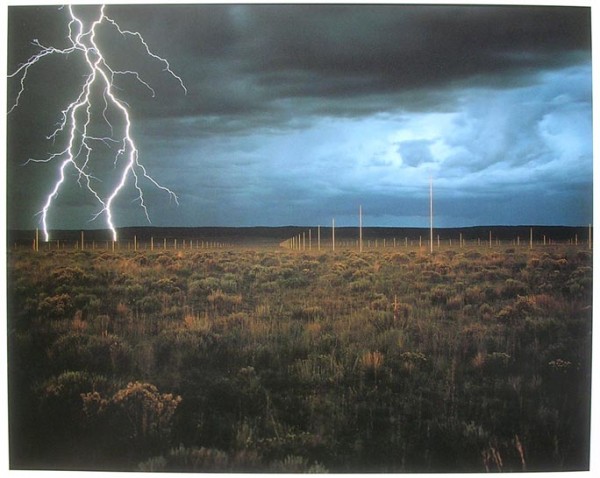
Walter De Maria, "Lightning Field"

In 1964 and 1965, Walter De Maria was the drummer for a band called the Primitives. Lou Reed, Tony Conrad and John Cale played in the band too, and the group would eventually morph into the Velvet Underground, after shedding and gaining key members and wholeheartedly embracing an addictive breed of nihilism. An artist known for his imposingly sleek, carefully calculated minimalism, De Maria did not sound sleek or calculated when he played with the Primitives, especially not on the campy track Sneaky Pete, which begins, “I got played traveling ‘round the world/I got played for a pretty girl.” De Maria did, however, sound insistent and fun.

A few years before De Maria tried his hand as a pre-punk drummer, he wrote about meaninglessness. A precursor to his 1961 project, Boxes of Meaningless Work, his essay explained that

Meaningless work is potentially the most abstract, concrete, individual, foolish, indeterminate, exactly determined, varied, important art-action-experience one can undertake today. This concept is not a joke.

Much of De Maria’s work would, unsurprisingly, go on to be abstract, concrete, individual, and foolish (though foolish only if you believe that art should be efficacious and un-indulgent). And with the exception of Sneaky Pete, most of it would also be exact:  Lightning Field, Museum Piece and The Broken Kilometer are all telling examples.

Walter De Maria, "The Broken Kilometer" at the Dia Foundation

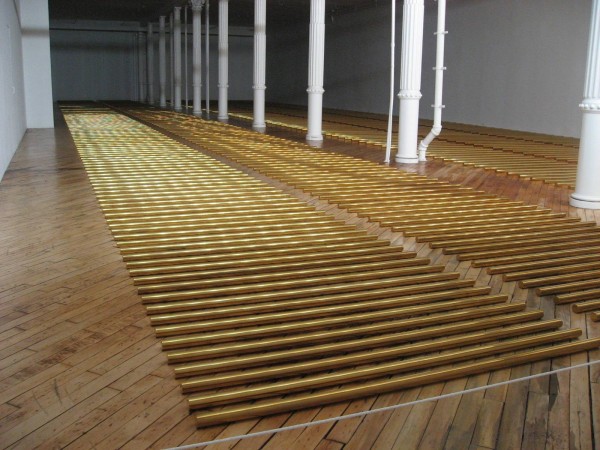
Last Thursday, June 17th, the Los Angeles County Museum “tested” its soon to open Resnick Pavilion with a gargantuan installation by De Maria. Director Michael Govan explained that the sculpture would measure the building’s  “capacity to deal with large-scale work in the context of its architecture.” Called 2000 Sculpture, it consisted of 2000 low-to-the ground white rods. It was clean, quiet, minimal, massive and intimidating. It was also needlessly exact and viewable to the public only for a single day. It made De Maria seem quite indulgent–he was being dramatically expansive for no truly good reason.

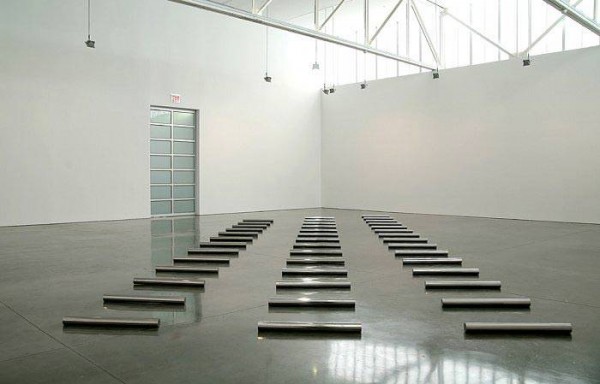
Walter De Maria, "13, 14, 15 Meter Rows," 1985

Walter De Maria, "13, 14, 15 Meter Rows," 1985

Back in 1960, De Maria concluded, “Whether the meaningless work, as an art form, is meaningless, in the ordinary sense of that term, is of course up to the individual.” For Govan, meaningless work has a purpose; 2000 Sculpture tested LACMA’s newest venue. But maybe that means Govan feels a need for too much practical meaning in his life; what if he’d outright said, “the De Maria installation will not accomplish a conventional purpose”? If he had, I doubt many of us would have been able to hear him say it without trying to understand what he really meant. And would any of us have been able to view the installation without assigning it a purpose of some sort, conventional or not? For those who want to feel as though minimalism really does strip art down to its fundamentals, 2000 Sculpture would probably seem like meaning for meaning’s sake, in the same way some dogged lovers of modernism insist on believing in art for art’s sake. For those who believe minimal installations like De Maria’s transcend the strictures of conventional spaces and make a room like the Resnick feel more open than it otherwise would, then the sculpture’s meaning lies in its effect.

“Meaningless work,” wrote De Maria, “is the new way to tell who is square.” And I suspect we’re all a little bit square.

Share