Unsettled Objects

Lothar Baumgarten, 'Unsettled Objects, 1968-69. Pitt Rivers Museum, Oxford' 1968-69, Slide projector, 80 slides. Copyright the artist, courtesy Glasgow Life (Museums)

Unsettled Objects at the Gallery of Modern Art (GoMA), Glasgow, reflects on how artists have examined the social and political. The exhibition takes its name from Lothar Baumgarten’s (b. 1944) installation Unsettled Objects, 1968-9. Pitt Rivers Museum, Oxford which probes the status of the object as it journeys into the museum, and uses the language of the museum to call attention to the ideologies of the institution the objects are placed within. Influenced by anthropologist Claude Lévi-Strauss, Unsettled Objects was the outcome of Baumgarten’s image documentation and intervention through language, of the ethnographic collection and display at the Pitt Rivers Museum in Oxford. Each slide visually depicting display cases and object arrangements features a word, ranging from “rationalized”, “narrated”, “valued” to “typified” that captures the museum’s attempt towards accessibility and rational classification. Unsettled Objects formed one of his studies of how several European ethnographic museums display objects and frame perceptions, and the ways objects have been uprooted from their original contexts and remain unsettled against western discourses.

Graham Fagen, 'Bell' 2006, Silk screen print. Copyright the artist, courtesy Glasgow Life (Museums)

Graham Fagen and Emily Jacir’s works also revolve around journeys, their distinct approaches disclosing the complex historical and social issues intertwined with these journeys. Graham Fagen (b. 1966) grew up in Irvine, the hometown of eighteenth century Scottish poet Robert Burns, yet found himself drawn more to reggae than the poetry of Burns. Fagen’s Bell (2006), is one of three screenprints, each depicting the ships, Nancy, Bell and Roselle that Burns had booked successive passages on, to travel to Jamaica to work as a bookkeeper on a slave plantation. Each passage was eventually not realised, as emerging reception to his poems led him to remain in Scotland. The image of the ship, with facts of its passage, open up associations between maritime journeys, trade and slavery of the eighteenth century. The prints form one part of Fagen’s body of work which converges the life history and poetry of Robert Burns with reggae music from the West Indies, treading on the relationships between Scotland and Jamaica through the journeys (and non-journeys) of people and their legacies.

Emily Jacir, 'From Texas With Love' (2002), video, monitor, text. Copyright the artist, courtesy Glasgow Life (Museums)

From responses to the question “If you had the freedom to get in a car and drive for one hour without being stopped (imagine that there is no Israeli military occupation, no Israeli soldiers, no Israeli checkpoints and roadblocks, no ‘bypass’ road) what song would you listen to?”, Emily Jacir (b. 1970) compiled an hour-long soundtrack of 51 songs selected by Palestinians living in Palestine. From Texas with Love (2002) was filmed through the rear windscreen of Jacir’s car, as she undertook an uninterrupted journey across the Texan highway, listening to the soundtrack comprising international pop songs to the Palestinian national anthem. Jacir often performs actions on behalf of those whose rights are curtailed, in this case, mobility without harassment. Visitors are able to select the track to be played, vicariously undertaking a journey which drives across the message that the basic freedom of mobility and choice while easily enjoyed in one country, is denied in another.

Unsettled Objects speaks to the potentials of politics within art, but also ponders its limits housed within an institution. The exhibition runs from December 2009  to March 2011, and other presented artists include Ian Hamilton Finlay, Jenny Holzer and Jo Spence.

Share

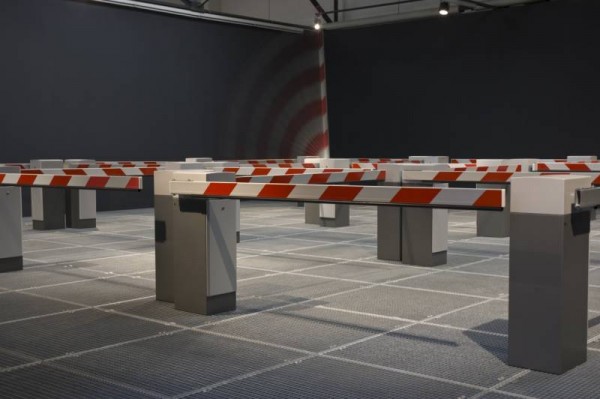
Gustav Hellberg’s Obstruction

Obstruction, Exhibition View, 2010. Courtesy of Hamish Morrison Galerie.

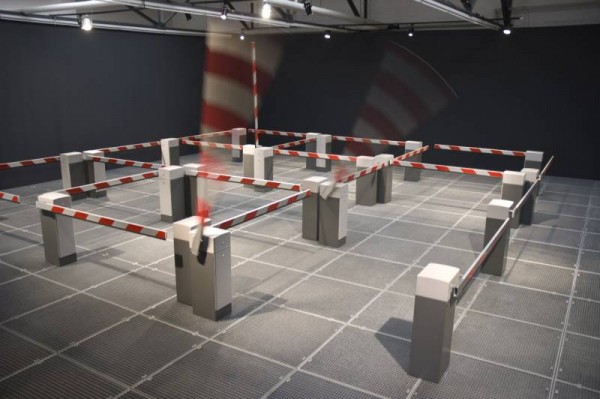
Gustav Hellberg’s Obstruction at Hamish Morrison Gallery began in a stark grey room, empty except for a model-train size road barrier bar lit up on a pedestal in the center. The sporadic hum of a quiet motor could be heard from the second room. There, a 3×3 grid pattern of twenty-four real, working barrier bars consumed most of the floor space of the second room, the installation centered with a walkway around its perimeter. The bars raised and lowered at random times, allowing and denying access to individual squares or a series of squares at any one time.

Reminiscent of the various security clearance measures taken at airports and government offices where people are systematically herded through a series of rooms or confined spaces, I questioned the desire to enter the grid and navigate through the barriers. I could find no practical reason to enter the installation, but there was something playfully enticing about the proposition offered by Hellberg.

Because of their function in urban space, the rules of appropriate interaction with the road barriers are implicitly known, and even within the gallery they are treated with the same authority. Move when a bar is lifted, and do not walk under a down bar. Game play is transformed into the realization of how open we are to give over power to another individual or thing, despite knowing here that even the biggest success to be had leads to no actual goal other than taking a long and potentially surprising movement through the gallery. Power is wilfully sacrificed to be afforded the opportunity of engaging the piece.

Obstruction, Exhibition View, 2010. Courtesy of Hamish Morrison Galerie.

After initial entry and entrapment, the fear of waiting leads to acting in haste and moving at the first opportunity, rather than sticking to a pre-defined route. There may be some comfort in letting a system make our decisions for us, even though the installation feels a bit like its moving cattle to slaughter, but participants make a conscious decision to enter the piece and follow the rules.  Here, however, a previous movement can be instantly regretted upon seeing a better option present itself when it is too late. That feeling of failure challenges the notion that the machine is in control. The participant is still in control of their movements, but has allowed their decisions to be reactionary to the randomly triggered motors operating the contraption.

While typically, in life, there is no way of knowing how one decision versus another can have significant affects, Hellberg’s Obstruction provides us with the direct relationship between our decisions and the results of them. Like an angel presenting George Bailey with the repercussions of his would-be suicide in It’s a Wonderful Life, one can watch to see how other decisions would have led to potentially more desirable outcomes, but while Bailey was offered a chance to change his decision, ours is played out in real time, without the benefit of hindsight.

The privilege of accessing restricted space, in this case, means giving up full control of our mobility, and leads to the fetishization of other space and guilt over the choices we cannot take back.

Share

From the DS Archives: Laugh It Off at Walter Maciel Gallery

On this Sunday from the DS Archives, reacquaint yourself with the exhibition, Laugh It Off, at Walter Maciel Gallery. This article was originally written by Allison Gibson on July 31, 2009.

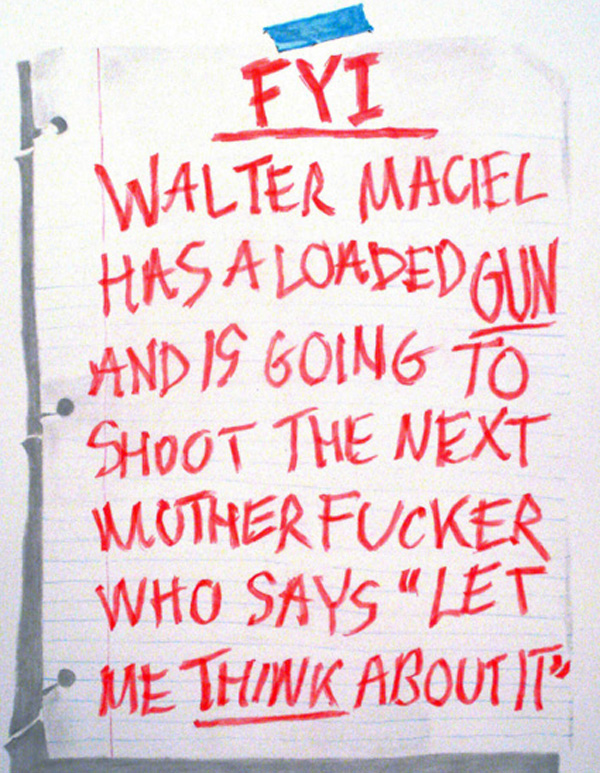
Walter Maciel has a loaded gun and is going to shoot the next motherfucker who says “Let me think about it.” Or so says one of the darkly comical pieces in the summer group show at Walter Maciel Gallery in Los Angeles. The exhibition, entitled Laugh It Off–curated by Jane Scott, Girl Wonder, Inc.–attempts to bring a much needed respite of humor to the stiff and ever high brow art scene, which continues to confound audiences with work that further detaches the public from its understanding, shrinking the possibility of promoting the value of art to a wider set of collectors and appreciators. The show features the work of nine artists: Oscar Cueto, Archie Scott Gobber, James Gobel, Laurie Hogin, William Powhida, Robb Putnam, Kammy Roulner, Lezley Saar and Fletcher Smith. Each work on view in Laugh It Off pokes fun at the art world and at culture at large, and presents a motley take on what makes us smile–whether that smile arises from witty wordplay, from cleverly constructed objects, or from acerbic criticism of a culture that takes itself much too seriously for the summer heat to handle. While much of the work in the show lives up to its calling to be funny, a few pieces attract more thoughtful responses to their deeper themes, and some others seem almost a pinch desperate, a bit like the kid in junior high who gives himself the title of class clown.

LaughItOff_Powhida Walter-1.jpg

Read More »

Share

Fan Mail: The “What is?” Project

DailyServing.com selects two notable artists each month from the submissions we receive to be featured in our series, Fan Mail. For a chance to have your work appear below, with an article written by one of the DailyServing contributors, please submit a link to your website to info@dailyserving.com, subject: Fan Mail. You could be the next artist in the series! (We will try to contact chosen artists prior to publication, but please be sure to check the site everyday!)

The "What is?" Project, Time, Video Still. 2010.

Ernest Hemingway said that “most people never listen” and I think that he was probably right. If you think about how much people talk, it is more disturbing than it initially seems.  I have a family friend who listens to everyone the same way most of us only listen to a person who is dying, a character trait that is initially discomfiting, often creating a situation in which the speaker will shift uncomfortably eyes darting, only to continue babbling on with inane and ultimately inconsequential details and tangents. Sooner or later, the speaker becomes comfortable in the very surreal reality that this person isn’t going to interrupt or rush to make comparisons to her own life.

It’s not combat, it’s conversation.

When the boundaries of this sort of attentiveness get pushed even farther—things get interesting, which is part of the appeal of the “What is?” project.  The project is a series of videos released every Tuesday by Avery McCarthy Studios Production in which a question of universal interest is given to the participants and they answer it.  Sound boring? It’s not.  At the surface, each individual’s view is interesting, but the context of the questions becomes even more fascinating. No pressure and no time limit make the majority of the participants uncomfortable. Most squirm, look down, look up, touch their faces and display a fantastic variety of self soothing techniques.  Thinking of Adam Smith’s Theory of Moral Sentiments, I wonder how response would change without the inhibitions of empathy and fellow feeling. Each question addresses something that we ‘deal’ with every day—Time for example.  What is time? Try putting that explanation into a sentence. Now try it with the knowledge that your (surely) articulate definition will be posted online for public consumption.  Merriam Webster did it: “a nonspatial continuum that is measured in terms of events which succeed one another from past through present to future” but they have a lot of practice.

There is something intrinsically voyeuristic about watching the “What is?” videos.  A typical documentary that interviews people in much the same way is edited down so that their is no hesitation, as experts pontificate in resolute intonations and with a curious cadence that is very specific to “expert” interviewees.  Before the typical editing process, interviews contains full narratives including a beginning, including copious amounts of pausing and hand gesturing, move on to a climax, with the individual turning his or her head and makes eye contact with the camera, and break to an end, at which point the expert usually sits back, hands clasped, his or her thoughts fully formed and complete. In the “What is?” project, the participants fidget, sit in silence (sometimes for a long time) and generally stumble around questions that are superficially ‘simple’ but in reality are very difficult to address. What results is a mesmerizing visualization of thought – a direct image of how individuals formulate and communicate concepts of the greatest size. The most notable element of the “What is?” project is the individual’s struggle to display oneself to a camera—an intricate balance between articulated thought and visual presentation.

All of that said, the art is in the process, the final videos and the voyeur that the videos create—like a long distance frankenstein—in people like me, who watch the interviews inexplicably enthralled.

Share

Death Panel Discussion

L.A. Expanded: Notes from the West Coast
A weekly column by Catherine Wagley

My Barbarian, "The Night Epi$ode Two: Yoga Matt / Veronika Phoenix," video still, 2009. Courtesy the artists.

“There are no easy happy endings anymore,” said writer David Levithan when interviewed about The Lover’s Dictionary, a novel told entirely through “definitions” of words like “aberrant” and “quixotic.” But there are no easy sad endings anymore, either–even though the romance the book dissects is doomed from the start, Levithan indulges in moments of hopefulness, cleverness, sometimes even barely-tainted glee. The eras in which Jacques-Louise David’s epic executions and Tolstoy’s train trampled heroines came off as poignant are over, as is the far-more recent era of cut pieces and under-floorboard masturbation; blatant tragedy and brazen exposure just don’t seem that compelling right now. Which is why, Wednesday night, when members of the performance trio My Barbarian all ended up dead, sprawled across a conference table on the stage of the Hammer Museum’s Billy Wilder Theater, it looked like they might have tamped what, up to that point, had been a weird, spilling-over of sincere elitism and campy farce.

Luckily, the melodramatic death scene was only a teaser–a more luxurious, less legible ending was still on the way.

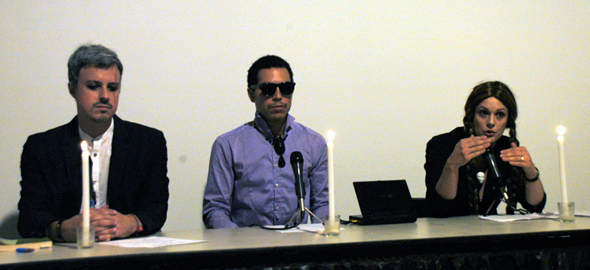
May Barbarian, "Death Panel Discussion." Courtesy Hammer Museum.

My Barbarian, primarily made up of L.A. artists Alex Segade, Malik Gaines and Jade Gordon (they often collaborate with others), has been together since 2000, and the group works more in the realm of institutional confusion than institutional critique. Their first solo museum show, The Night Epi$ode (2010), is currently on view in the Hammer Museum‘s video lounge and it includes a series of absurd but timely videos (there’s quite a bit about health care and economics woven into commentaries on curatorial practice, witchcraft and eccentric artistry). My Barbarian’s Wednesday night performance, titled Death Panel Discussion, was certainly the show’s centerpiece.

The “Death Panel” part of the title doesn’t explicitly refer to healthcare bill fears, but the three artists each played curators whose liberal privilege fits the exact profile of those supposed socialist-sympathizers who wouldn’t have batted an eye at a universal plan. And, as each had an express interest in the spirit world,  death, who deserves to die, and whether anything of worth art can come from beyond the grave were all topics of discussion. Death was treated as an abstract idea, one the curators–all of whom work in the realm of abstraction to begin with–find particularly, morbidly fascinating.

The self-importance, air of elitism and exaggerated accents of the performers became stifling (they were supposed to) as the night progressed. So when the curators all dropped dead after drinking from a poisoned water bottle to quench the thirst their monologues had left them with, it felt like good riddance. But it was also way too smooth–death doesn’t work that way, stomping out what should be gone anyway, so why should performance art enjoy that kind of easy end?

My Barbarian, "Death Panel Discussion," at Participant Inc., 2009. Photo: Rosalie Knox. Via MyBarbarian.com.

When the dead reawakened, changed into Obama-care pajamas and performed a pro-socialism dance number with an African folk music troupe, the performance transitioned from bitingly exhausting to pitch-perfect. My Barbarian infected their audience with the sort of full-on theatrical high that makes you feel thrills even if the subject matter (socialism? death? culture wars? art worlds?) is largely depressing.

Whether or not there are, or should be, any easy happy endings, My Barbarian sang and danced their way out of dead-end despair for theirs, and it felt well-earned.

Share

Boulevard: An interview with Katy Grannan

Roaming the streets of a metropolitan area, it is easy to become overwhelmed by the scale of urban architecture and the number of individuals that occupy the space. So often, the individual gets lost in the equation; attention is turned to the sum over the parts. For the past three years, San Francisco-based photographer Katy Grannan has walked the streets of Los Angeles and San Francisco observing what many choose to overlook — subjects for whom life has been hard and despair has been plenty. Working within the grand tradition of portraiture, Grannan has selected a wide range of subjects for her recent body of work, Boulevard, which is currently on view at Fraenkel Gallery in San Francisco. Grannan turns the city into her studio, shooting each subject on a variety of white surfaces found on location. Relying only on the strong California light and a stark white backdrop, the physicality of her chosen subjects open a myriad of narrative possibilities that simultaneously evoke hardship and optimism. I recently spoke with the artist about the series, Boulevard, her upcoming film project, The Believers, and the shared history between the viewer and her subjects.

Katy Grannan. Anonymous, LA, 2009. Courtesy of Fraenkel Gallery

Seth Curcio: The portraits in your new series Boulevard are striking in their simplicity. Yet, given the reductive context, each photograph speaks volumes about the subject. The physical qualities of the individual make evident their distance to the what most call the American dream. With the narrative possibilities being so strong, I wonder what are the guiding principles used to select your subjects?

Katy Grannan: It’s difficult to explain what makes someone especially interesting to me – it’s a combination of personality, spirit, and their actual, physical being.  These photographs, as you mentioned, are so reductive – photographic description and detail is virtually all there is – & hopefully physical description becomes illuminating on another, psychological level. It’s important that the photograph describes a particular subject, but it also has to speak to something much larger, so that the viewer has the sense of a shared history; they’re portraits of all of us.

SC: Its interesting that you mention photographic description and detail being all that is available to the viewer. Given the reduction of image context, light becomes an even more prominent component in this work than in earlier series and remains consistent, as each figure is illuminated on a stark white ground. This purity of light is something that is evocative of the west and California in particular. Do you view the light as a metaphor? Something that is simultaneously seductive and revealing?

KG: Yes, certainly.  It was the first thing I observed when I moved to California.  The light is so seductive and comforting, and at the same time it kills everything – nothing stays green very long – and the light can be relentless and indiscriminate.  It illuminates everything, everyone.

Boulevard installation image, Courtesy of Fraenkel Gallery

SC: Each of the portraits speaks to how the ideals of a particular city can physically wear on the subject. It seems that this is most evident in your portraits from LA, as the city has come to represent celebrity and wealth, while its reality is often much darker.  It seems like the vain pursuit of beauty has worn physically on many of the subjects, leaving little more than the residue of longing for an unobtainable dream. Yet, there is a persistent optimism that runs through the series.

KG: I’m glad you mentioned optimism.  I definitely did not want the series to be a parade of despair, nor am I interested in smiley happy people (family photo albums are already filled with those pictures – this has always irritated me). Each one of these photographs is like a short story and part of that narrative, of course, is the part where they’re working with me to make a photograph on the spot, right after we’ve met.  The dynamic is different every time, but it’s almost always a lot of fun.  People really get into it, and it requires a generosity and openness to be part of this process, to dance on the sidewalk in front of traffic, to wave at strangers honking.  And I love the spirit of someone like the eighty year old woman who still wears bright lipstick and eyeliner – she deserves to feel gorgeous, and she is.  Or the eighty year old man that handed me his business card that read “International Playboy.”  These are the people I want to know better.  But of course, all of our histories are complex – there is disappointment, shame, loneliness, and there’s also joy.  I want all of it to exist, messily and awkwardly, in the photographs.  Because that’s life.

SC: Have there been any personal stories shared with you by your subjects that you find particularly captivating?

KG: Yes, almost everyone shares a lot with me.  Each one is like a story from The Dubliners or Chekhov.  A few women spoke to me about having a nervous breakdown after they had kids and their husband didn’t help out, then rejected them after their breakdown.  Now they’re alone; they were never able to fully recover.  I see them as especially sensitive women – they’re not crazy or strange, they’re women who are vulnerable and sensitive and who live every day knowing their kids are out there somewhere, and these kids might never know that their moms did try, but it was just too much.

I’ve made several good friends – Nicole, Melissa, and Linda are three women that I spend a lot of time with, and whom I’ve also filmed for the past year.

Katy Grannan. Anonymous, SF, 2010. Courtesy of Fraenkel Gallery

SC: I understand that you have used that footage to create a video project titled The Believers, which premieres tomorrow night at 1453 Valencia St. in San Francisco. Tell me a little about the process of creating the video. How did this time-based medium effect the way that you approach the work, and how do you feel that it changes the viewer’s relationship to the subject?

KG: I’ve thought a lot about this – it was really important that the film not “explain” the photographs, or reveal the mystery or ambiguity of the photographs. The film has a relationship to the photographs but it is entirely it’s own thing.  It’s a little difficult to explain the premise of the film, but it deals with the nonlinear, disruptive nature of experience and memory.  It is all footage that I shot of several women, with existing, ambient sound and dialogue, but it is not a documentary film by any means.  I don’t like that term, anyway – “documentary” – but the film intentionally weaves different subjects together, creates relationships and confusion among all of them.  You don’t necessarily know anything biographical about the subjects – except that they’re all performing and masquerading – but it’s meant to be disjointed and to mimic the way that one person or moment reminds me of another, and experiences are recalled in entirely new ways – they’re almost reinvented, re-imagined memories.  The film also shows the way that subjects and I interact with each other – they’ll boss me around, tell me where to stand, etc – so it more directly deals with this aspect of collaboration and control.  The women in the film have big personalities and strong opinions, and I respect that.

SC: Looking back at your older bodies of work, such as The Westerns and Mystic Lake, it is apparent that your work is in dialogue with the history of portraiture, both classical and commercial.  It seems easy to place you in the lineage of Diane Arbus, given your choice of subjects, or Richard Avedon, given the reduction of context in the portraits. However, I think much of your work goes beyond this type of comparison, leaving me feeling as if it is too easy to just lump you with those photographers. Which photographers of the past do you feel best inform your practice and which contemporary artists do you look to for inspiration?

Boulevard installation image, Courtesy of Fraenkel Gallery

KG: I take no offense in comparisons.  I often think artists and people who write about art place way too much importance on the appearance of novelty and obtuse sound bites, but if they really did their homework they’d see relationships and historical precedents all over the place.  Arbus and Lisette Model, Robert Frank and Walker Evans, etc. are obvious examples.  No one works in a vacuum; there is precedent and dialogue in every medium and expression and those relationships can be really interesting.  (“Tradition and the Individual Talent” by T.S. Elliot should be required reading).  The uniqueness or particularity of serious work is often in more thoughtful, quieter differences – all of which have to do with our own biography, experiences, and the world that we’re faced with at any given time.

I could give you a very long list of artists whose work I admire, and an even longer list of writers and film makers that have influenced my work.  But I really like what Robert Gober said: “Whenever I give a talk about my work I am invariably asked who my influences are.  Not what my influences are, but who.. As if the gutter, misunderstandings, memories, sex, dreams, and books matter less than forebears do.  After all, in terms of influences, it is as much the guy who mugged me on Tenth Street, or my beloved dog who passed away much too early, as it was Giotto or Diane Arbus.”

Katy Grannan. Anonymous, SF, 2009. Courtesy of Fraenkel Gallery

SC: Boulevard is accompanied by a beautiful catalog that includes additional work not on view at Fraenkel Gallery. In the back of the book there is an amazing quote taken from the Kinks song Celluloid Heros written by Ray Davies. The lyrics contain the stanza…

“Everybody’s a dreamer and everybody’s a star
And everyone’s in show biz, it doesn’t matter who you are
And those who are successful
Be always on your guard
Success walks hand in hand with failure
Along Hollywood Boulevard”

This line really captures the feeling that your subjects could be anyone of us, at anytime. What we constitute as our reality is often much more fragile than we perceive. You made a statement that ” the viewer has the sense of a shared history; they’re portraits of all of us.” That statement, coupled with the Celluloid Heros lyrics, is really poignant. It seems that for many, the West is still synonymous with freedom and boundless opportunity. This is obviously an illusion, but has working on this project caused you to reflect on your personal relationship to California or the West in general?

KG: Sure it has.  But what’s impressed me more is that many of us still try;  we make the leap of faith; and sometimes we willfully create an alternate, perhaps even a delusional reality.  That isn”t limited to California – it’s only limited by our imagination and our circumstances.  My grandmother was the queen of alternate realities, and I think it’s what kept her alive and joyful for a very long time. She wasn’t crazy – she was imaginative and stubborn and, to paraphrase Tony Kuchner, sometimes living in the world can be unbearably ordinary.


Share

Portable Landscapes – Recibo

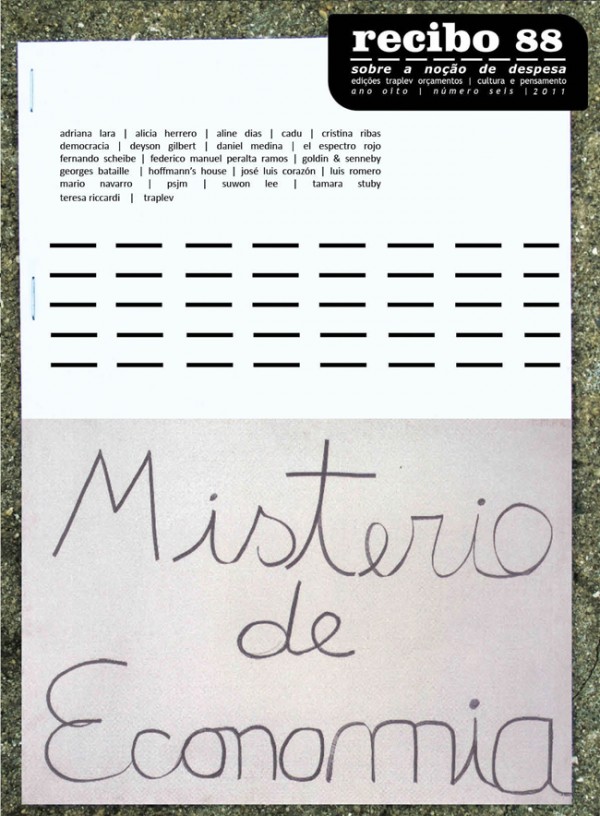
cover image: Federico Manuel Peralta Ramos

Having spent the last 5 months in Brazil as a outsider peering in, I’ve tried to pull back the curtain to discover what is essentially Brazilian about artistic modes of production. It eludes me. The constant state of flux it impossible to pause and properly articulate. Much like the boom of the Brazilian economy, the art fervor here can be hard to grasp. From this touristic snapshot view, it appears that the infamous notion of antropofagia, or cannibalism – Brazil’s successful incorporation and reinvention of external influences (a notion popularized by the Tropicália movement in the late 1960s) – has been corroded from the inside out. Artistic practices in Brazil seem to be more concerned with a dissection and alteration of systems that involve the relationships between Brazil and other countries (specifically Latin American) and a reciprocation of influence. What I can see from this viewpoint is a particularly strong process of working through.

Newton Goto (from Recibo07+9)

The shape-shifting, nomadic quality of Brazilian artistic research is exemplified in projects like Recibo, a free artist-run publication focusing on the circulation of visual art actions and theoretical/political discourse. The idea-heavy publication is decidedly un-slick and has an interventionist function in the art world, with an emphasis on articles that give the reader a glimpse into critical research that provides the skeleton for artistic production (which doesn’t often share space with the end-result art).

Originally conceived by artist Traplev (Roberto Moreira Junior), Recibo takes on a curatorial function and is always a collaboration between the artist and a co-editor, often looking beyond Brazil’s borders. Editions have explored the relationships between Brazil and Buenos Aires, Berlin, and Colombia in Portuguese, Spanish, and a smattering of English.

Jarbas Lopes, Cicloviaérea (from Recibo010)

The 3rd edition, Recibo010, edited with Nara Milioli, Paisagem portátil (Portable Landscapes), looked at the geography of urbanism and mobility. The focus on portability conceptually doubles-over the circulation of theoretical exploration and artistic practices that experimental publications like Recibo provide within the artistic landscape.

Recibo057, Malambo, is the 5th edition created as the result of a residency in Cali, Colombia and co-edited with Yolanda Chois. Through critical reflection, points of contact and overlap between the two countries are highlighted. As a consequence of the bilingual text, readers of both languages are implored to read it’s latin counterpart, opening up possibilities of new interpretations by way of imperfect translation.

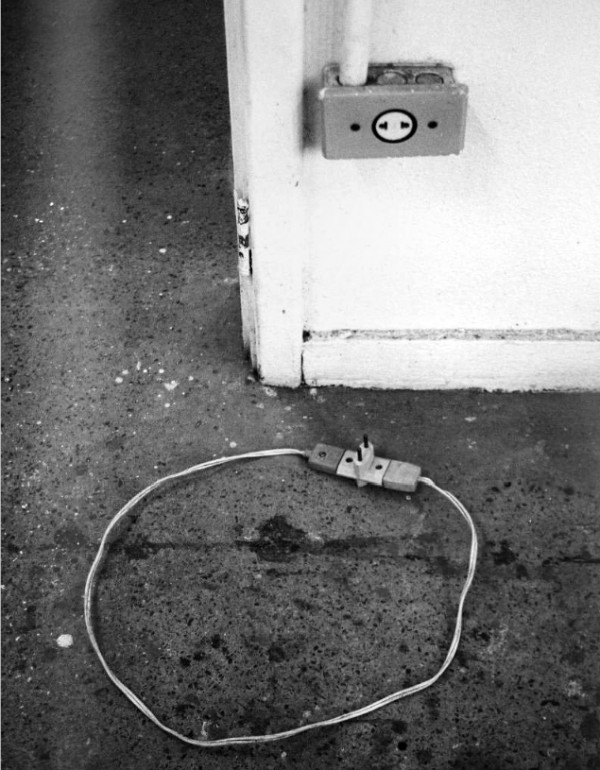
Suwon Lee, el muerto no tiene dolientes, 2009 (from Recibo088)

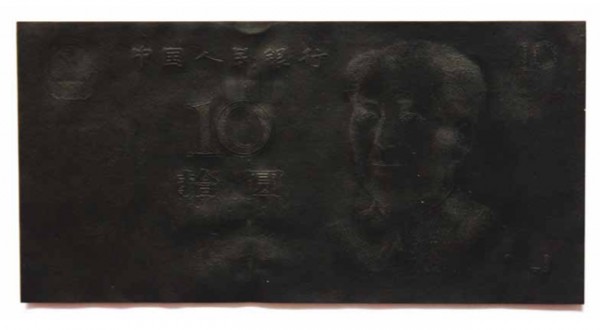
The upcoming Recibo88, Sobre a noção de despesa (On the notion of expenditure), is co-edited with Teresa Riccardi. 10,000 copies will be released in February with the support of Brazil’s Ministry of Culture. A challenging undertaking to probe and poke the economic matrix, this edition takes it’s name and concept from a segment of French writer Georges Bataille’s The Accursed Share. Bataille presents an economic theory that looks at excessive and constantly outputting solar energy; the sun never receives energy in return and the end result of this surplus is in fact loss. Value, time, material, the art market, are all in a constant state of discursive questioning. Articles like Cuauhtémoc Medina and Mariana Botey’s In Defense of the Fetish (which examines the narrative of fetish worship from primitivist fetishes to sexual fetish to Western commodity fetishism) are juxtaposed with artistic projects like Cadu’s Doze meses. Over the course of a year, Cadu diligently and dramatically adjusted his energy consumption in his home, the end result of this consuming project is a simple, small arching design on his utility bill visually graphing his efforts.

Deyson Gilbert, da série Black Indexation, 2010 (from Recibo088)

If antropofagia came to prominence with Tropicália, perhaps the process now can be described as metabolizing or working through, an exercise of addressing the social, political, economic, and artistic foodstuffs that we consume everyday. Recibo takes the task of working through seriously, contributing to the dispersion of critical ideas while, importantly, acknowledging their inherent mutability.

Share