Tenth Anniversary

10 Questions for Julie Henson

Happy birthday, Daily Serving! This month marks our tenth year of bringing you some of the smartest art writing, and since this is such a momentous anniversary, we’re going to be celebrating for the next few months. Today we bring you an excerpt from our interview with Daily Serving’s first Managing Editor, Julie Henson, who has been involved with the site since its inception.
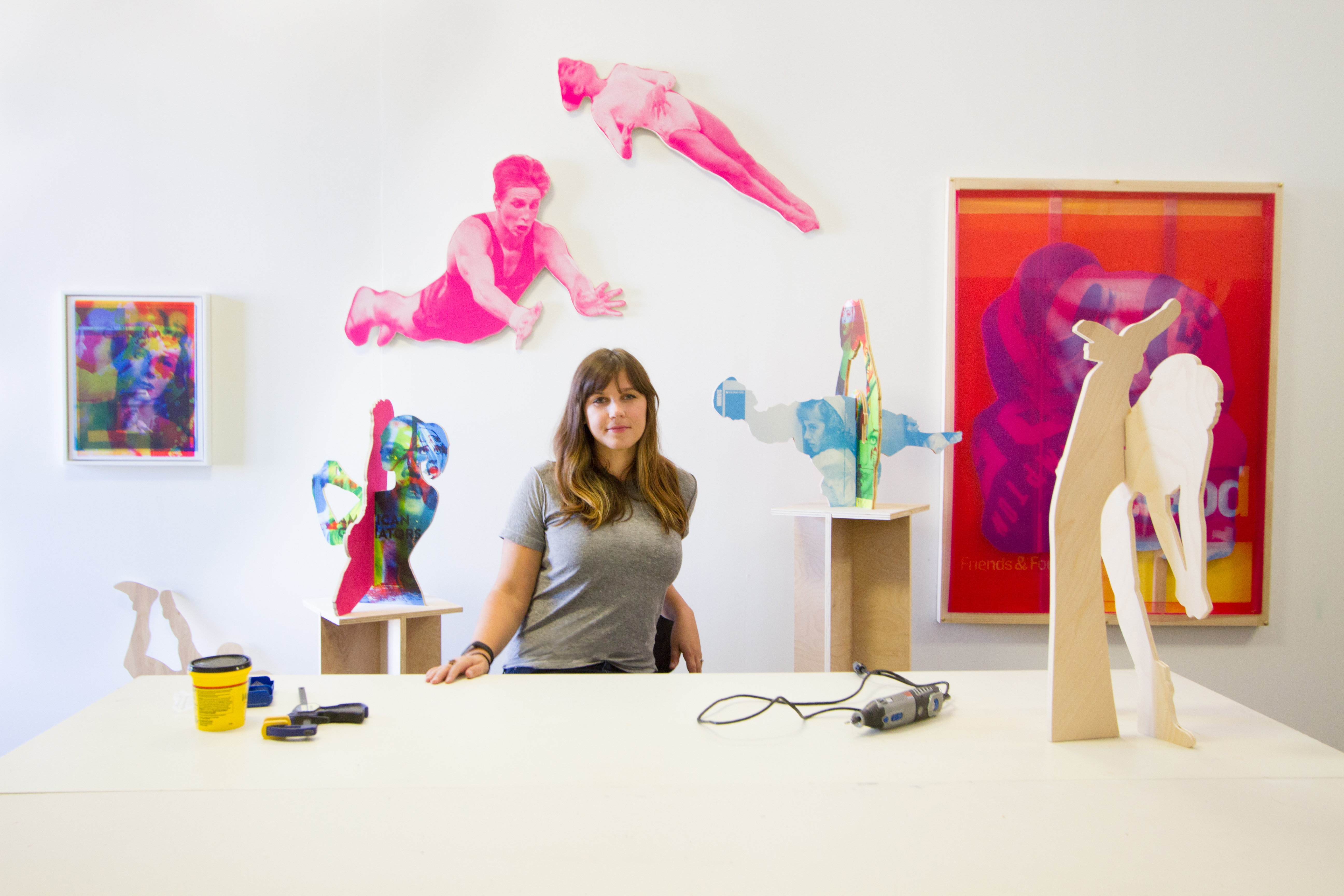
Julie Henson in her studio in Los Angeles.

Julie Henson in her studio in Los Angeles.

The importance of having an artist-run publication:

I guess I never really saw it as an artist-run publication, even though it surely has been since the very beginning. Honestly, I think both Seth and I wanted to push ourselves outside of our studio practices, and this was one of the ways we did it. I do however think that when artists take on challenges outside of producing artwork, it leads to exciting and unexpected results. I also think that artists are often good at allowing themselves to do things that other people say don’t make sense. I can’t tell you how many times people said, “Oh, the content is too long, no one is going to read it, maybe only write a sentence and let the rest be photos,” or, “You aren’t going to get advertisers unless you invest in one specific local market or focus on the bigger institutions.” But Seth and I both relied on our community to push Daily Serving into the world and make it sustain itself with a unique vision. And I think more realistic, less stubbornly ideological people wouldn’t have stuck it out for so many years. These are traits that aren’t solely found in artists, but definitely run deep in many of the artists I know. Stubbornness, conviction, and creativity to make things work despite the odds are only a few of the reasons why I think it’s important for artists to run publications, nonprofits, and otherwise.

In 2017, online arts publications should be focusing on:

Representing those who are underrepresented. Maybe it’s just because I’m answering this question after watching the U.S. follow in the footsteps of so many other countries pulling back their progressive policies to be more nationalistic, more xenophobic, and overall less compassionate. But I do think that diversity of content in an online arts publication is still one of the major issues in the contemporary art world. Like many other markets, the art world provides its affection to those at the top and occasionally an up-and-comer with “momentum.” In my mind, this is an incredibly limited view of art and its possibilities. Leveling the playing field by covering the New York blockbusters alongside the tiny little art space in a place where the art world doesn’t often turn its attention is a perfect way to show the range of truly significant artists and artwork in the world. So I think arts publications in 2017 should give thoughtful consideration to those people, places, and things that are expanding the ways in which art and culture are defined, everywhere.

Read the full interview here.

Share

From the Archives

From the Archives — Memoria (Memory): Bibiana Suárez at Hyde Park Art Center

Looking back to another election year, in 2012 author Randall Miller noted, “The language surrounding immigration, espoused by the [GOP] candidates as well as other jingoist hardliners, has become so vitriolic and so reduced that hyperbole strategically crowds out any sober dialogue that addresses the complexity of the issue.” In the face of those who advocate overtly prejudiced perspectives, today from our archives we bring you a refreshing reminder of artistic intervention against such monolithic rhetoric. This article was originally published on January 21, 2012.

L-R: Bibiana Suárez. Aves raras (mexicanos) no. 1/Strange Birds (Mexicans) no. 1, 2005-2011; archival inkjet print on aluminum panel (map courtesy of the University of Chicago’s Special Collections); 24 x 24 in. Bibiana Suárez. Aves raras (mexicanos) no. 2/Strange Birds (Mexicans) no. 2, 2005-2011; archival inkjet print (map courtesy of the University of Chicago’s Special Collections); 24 x 24 in.

The year 2012 has arrived and it can mean only one thing: the apocalypse. Will the End Times be ushered in by the Mesoamerican Long Count Calendar reaching its end date? We can’t be sure until late December! What has become painfully certain, however, is that we are in an election year. And, while the economy looms large in the minds of most Americans, immigration is not far behind.

Will America eventually choose a candidate who would grant “amnesty” (read: anything resembling legal status or citizenship) to the millions of undocumented people living and working in this country, ushering in the likely demise of the U.S.? Or will we the people elect a man patriotic enough to send all the illegal Cuban, Chinese, Honduran, and Southeast Asian immigrants back to where they came from; namely, Mexico? The fate of the country and the soul of freedom hang in the balance! At least that would seem to be the choice as presented by the Republican candidates during the never-ending cycle of GOP primary debates. The language surrounding immigration, espoused by the candidates as well as other jingoist hardliners, has become so vitriolic and so reduced that hyperbole strategically crowds out any sober dialogue that addresses the complexity of the issue or pathos for the individuals most affected by immigration enforcement.

Read More »

Share

Fan Mail

Fan Mail: Ewa Doroszenko

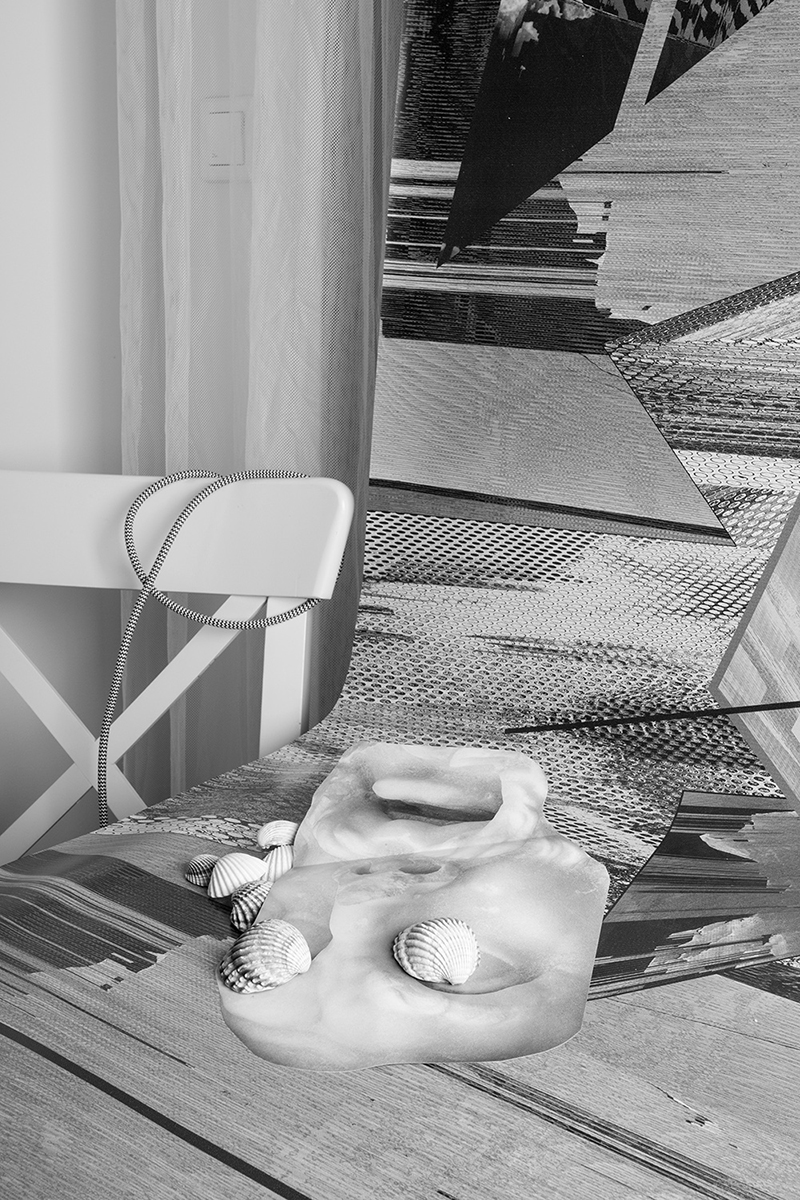
It can be difficult to tell which parts of Ewa Doroszenko’s works are digital and which are physical, though perhaps this lack of distinction is what makes her series The Promise of Sublime Words most potent. By combining digital and analog processes so seamlessly, Doroszenko’s practice blurs their boundaries to the point of meaninglessness. The result is a body of work that demands a reevaluation of its aesthetic significance: What would it mean to equate digital renderings with IRL arrangements, to smooth out their differences and claim that a Photoshop manipulation is no different from a physical fold or tear?

Ewa Doroszenko. Image from the series The Promise of Sublime Words, 2016; digital print; size variable. Courtesy of the Artist.

Ewa Doroszenko. Image from the series The Promise of Sublime Words, 2016; digital print; size variable. Courtesy of the Artist.

By proposing such questions, The Promise of Sublime Words asks a viewer to consider whether the production process of an image matters. Doroszenko created the series through a variety of methods, including collage and both digital and physical manipulation. She has employed many methods of image making: taking photographs of textbook illustrations, printing the photographs, physically manipulating the prints, placing them in a tableau, taking photographs of the scene, and then digitally manipulating those photos. This multilayered approach frustrates a viewer’s ability to discern which part of the image was created by the artist’s physical hand and which via digital proxy. The final images exist digitally and can be printed at varying sizes. The fluidity with which Doroszenko works across these modes insists that a viewer reckon with the existential: What is real and what is simulation, and what does it mean if you can’t tell?

Read More »

Share

From the Archives

From the Archives – Black Chronicles II at Spelman College Museum of Fine Art

“New struggles for civil and race rights continue to challenge and mine the unequal fields of representation within American political life.” So writes author Jordan Amirkhani, who explored this exhibition earlier in 2016, and connected these studio portraits from the late 1800s to current images from the Black Lives Matter movement. Today from our archives we consider Black visibility in culture and history. This article was originally published on May 2, 2016.

Peter Jackson aka ‘The Black Prince’. London Stereoscopic Company, 2 December 1889. 42.5 x 31.5”. Framed & Unglazed. Courtesy of © Hulton Archive/Getty Images.

London Stereoscopic Company. Peter Jackson Aka the ‘Black Prince'; December 2, 1889; 42.5 x 31.5 in. Courtesy of Hulton Archive/Getty Images.

Born on the Danish island colony of Saint Croix with two generations of slaves behind him, the champion heavyweight boxer Peter Jackson cuts a lean and noble figure in his 1889 photographic portrait, his top hat perched level upon his head, his elegant Victorian garments pressed, his stylish accoutrements placed as evidence of his social persona as a gentleman–dandy. The portrait was taken just a year after his defeat of George “Old Chocolate” Godfrey, which gained him the “World Colored Heavyweight Championship” title, and the commanding confidence of his gaze and body language tells us that this is not a man easily bested. However, Jackson’s popularity in Great Britain (his nickname in the British press was “The Prince”) and powerful self-presentation in the photograph do not wipe away the historical context of the image, namely an era of tremendous institutional racism and oppression of Black subjects in 19th-century Britain, and the nation’s merciless colonial expansions on the continent of Africa and in the Middle East. As empowering as it is ambiguous, Jackson’s portrait belies the complicated admixture of cultural codes and fantasies imposed upon the Black subject in visual representation, and points to the unsettled struggle between the subject’s own agency, their mediation through the eye of the camera, and the conditions of Black cultural politics.

Jackson’s image is just one of the many striking photographic portraits included in Black Chronicles II at Spelman College Museum of Fine Art in Atlanta, Georgia, that activate an important dialogue about the history and record of Black faces and bodies within Western culture. Organized in its original formation by the British photographic institute Autograph ABP in 2014, and curated by two of its most prominent staff members, Renée Massai and Mark Sealy, Black Chronicles II embodies Autograph’s commitment to mining public and private archives of images for the absent Black subject—a mission that “renders visible” the gaps, omissions, and absences within historical annals. In its move to Atlanta, the exhibition opens up a new strand of conversation around the history of the Black subject in the United States and asks viewers to make connections between the British and American formations of empire, racism, and colonialism.

Read More »

Share

Paris

The Guerrilla Girls and La Barbe at mfc-michèle didier

After thirty years of the Guerrilla Girls presenting statistics that repeatedly show the underrepresentation and misrepresentation of women in public collections, museums, and galleries around the world, one would think that these institutions would have been driven to promote changes en masse, if only out of shame. Yet, as the New York–based feminist group keeps evidencing, the archaic status quo in the art world has proven reluctant to change.

La Barbe. Au patriarcat, les hommes reconnaissants [To the patriarchy, the grateful men]; digital print; 8.3 x 11.7 in. Courtesy of La Barbe. Photo: Charles Duprat.

La Barbe. Au Patriarcat, les Hommes Reconnaissants [To the Patriarchy, the Grateful Men]; digital print; 8.3 x 11.7 in. Courtesy of La Barbe. Photo: Charles Duprat.


In the current exhibition at Parisian gallery mfc-michèle didier, the activism of the Guerrilla Girls is paired with that of La Barbe, a French feminist group formed in 2008 in response to the sexism and unbalanced media coverage received by the then-presidential hopeful Ségolène Royal. Their name is a play on words, referencing both an expression of dismissal out of annoyance (oh, la barbe!) and an aptly chosen prop, the aristocratic beard. The group mockingly wears fake beards when disrupting all kinds of male-dominated events, where they ironically congratulate their fellow men at length for doing such a great job at keeping women invisible.

Through a modest exhibition of well-known works, viewers can follow the actions of the Guerrilla Girls, from their appropriation of Ingres’ Odalisque and Slave to create their iconic poster, Do Women Have to Be Naked to Get Into the Met. Museum? (1989), to a more recent billboard, Disturbing the Peace (2016). Through a series of quotes in Disturbing the Peace, one witnesses the apparently swift continuation of sexism from the times of the Hindu Code of Manu (dated between the 3rd century BCE and the 2nd century CE), which states, “A woman must never be free of subjugation,” to the present-day vociferous speech of Donald Trump.

Read More »

Share

From the Archives

From the Archives – Help Desk: Insults & Insecurities

Today from our archives we bring you a Help Desk column about jealousy and competition—and some good ways of dealing with friends who become frenemies. Got an arts-related issue? Submit your question anonymously here. This article was originally published on November 12, 2012.

I am having a rather embarrassing problem with some of my local colleagues in the visual arts. That problem is a general enmity and competitiveness when it comes to grants and exhibitions. I have always taken a “win some, lose some” approach to my own art career and have always applied this sentiment to the failures and successes of my peers. Lately, however, I have noticed that as I move up the food chain, as it were, many of the people I have known for a long time are now taking a much nastier tack with me, making underhanded digs at my decision making or being sure to insert a subtle insult along with their congratulations. I also notice that new artists that I meet at this same level act the same toward me, being generally snotty and backstabbing. Is this just a necessary evil of being an up-and-coming artist? Is there an end to it? Do blue chip artists have to deal with the petty insecurities of their peers or does everyone just get along past a certain point?

Dimitri Kozyrev. Last One 16, 2012; acrylic on canvas; 84 x 72 in.

I wonder why you’re embarrassed by this problem when the poor behavior is coming from your colleagues and not from you. It seems that if anyone should be embarrassed, it’s them—after all, who hasn’t felt a little green-eyed when faced with the news of a competitor’s good fortune, even if that competitor is a friend—but they should have the good sense to offer their best wishes and leave it at that. Sulking is best done at home where no one can see your frowny little face.

It’s true that the competition model breeds insecurity. When 300 artists apply for one $10,000 grant, that leaves 299 disappointed, and everyone expresses disappointment in their own way. A few can shrug it off, as you seem to do, and others grow embittered and let it poison their relationships. Limited resources can sometimes turn friends into frenemies and complete strangers into adversaries. Yes, some people live their lives like this, but that doesn’t mean you have to follow suit, and no matter what else you decide to do, please don’t adopt their paradigm.

Read More »

Share

Tenth Anniversary

10 Questions for Seth Curcio

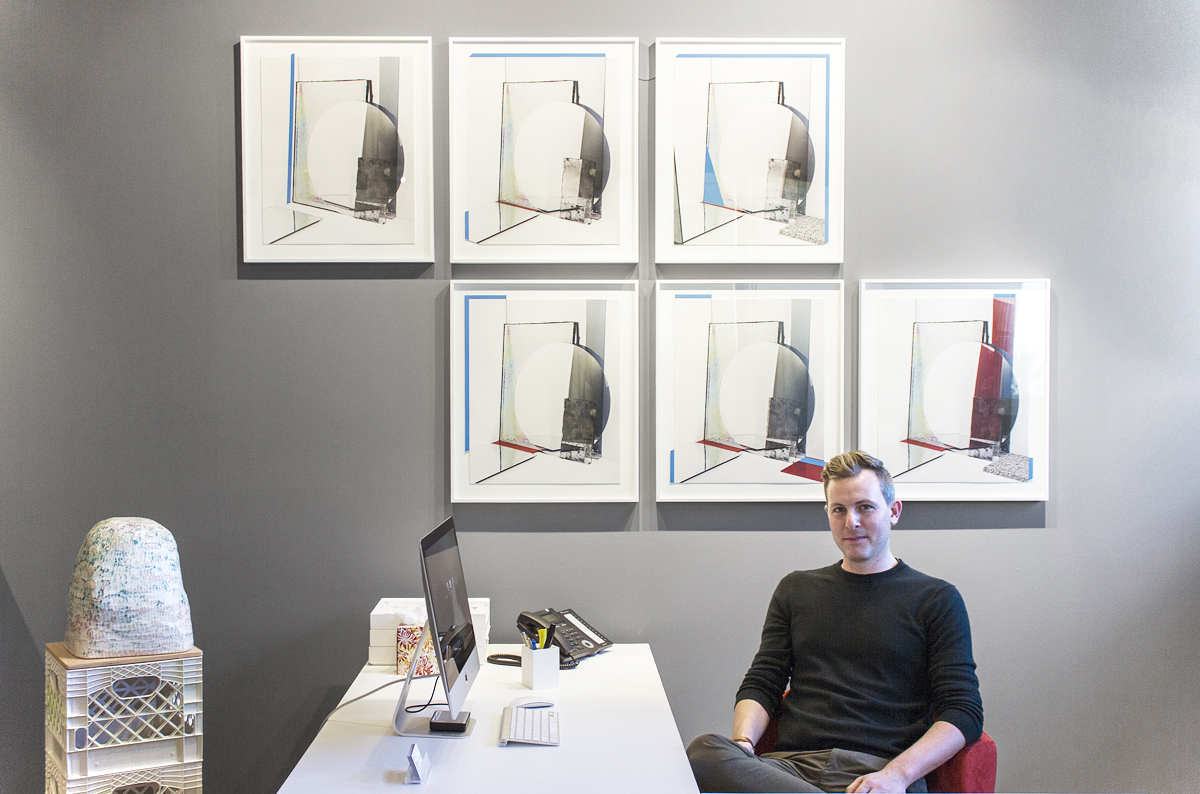
Happy birthday, Daily Serving! This month marks our tenth year of bringing you some of the smartest art writing, and since this is such a momentous anniversary, we’re going to be celebrating for the next few months. To kick off the festivities, today we bring you an excerpt from our interview with Daily Serving’s founder, Seth Curcio. Back in 2006, Seth started this site from Charleston, South Carolina. It rapidly grew into an international platform, and the rest, as they say, is our proud history.

Daily Serving's founder, Seth Curcio.

Daily Serving’s founder, Seth Curcio.

What you were thinking when you started Daily Serving:

Daily Serving was designed to be an archive of ideas. My brother Ian, who is a photographer, and I were brainstorming ways to research and catalog this information and share it with others. When we started the publication, I had a few specific things in mind: First, I wanted an easily accessible repository for my interests. Second, I was living in Charleston, South Carolina, and I wanted to build a global community from a place that doesn’t always provide that type of opportunity and access. Third, I wanted to keep my research and writing as active as possible. So, Ian and I named the site Daily Serving, and he and I worked with a designer to build it, and I started writing the content immediately. It was really fun to collaborate with him in the early years.

Around this time, I was also the Executive Director of Redux Contemporary Art Center, and I used the site as a curatorial resource for our program. Often I would write about an artist that I really respected, and then follow up with an interview. If we clicked, I would invite the artist to come to Charleston and do a project, exhibition, or residency at Redux. This worked well, not only to archive the work that I found relevant, but to create wonderful connections and lasting friendships in the process.

How the skills that you cultivated at DS serve you now:

I’ve held several positions in the art world since I founded DS. In 2005–08, while I was still running Daily Serving, I was the Executive Director of Redux Contemporary Art Center in Charleston, and from 2009–15 I was the Associate Director of Pier 24 Photography in San Francisco. I’m now the Senior Director of Shulamit Nazarian, a gallery in Los Angeles. In all of these positions, I’ve used many of the skills that I learned from my time with DS, such as how to problem-solve big issues, how to build a network of collaborators and supporters globally, how to work collaboratively to achieve goals that are bigger than any one person. Most importantly, it taught me how to be ambitious, take risks, and continue to push myself with the things that matter most to me. And most of all, for all of those days fighting to make sure there is content on the site, it taught me to just get up and make sure the work got done. These core skills, if you can call them that, will be with me forever.

Read the full interview here.

Share