Fan Mail

Fan Mail: Jennifer Loeber

For this edition of Fan Mail, Brooklyn based photographer Jennifer Loeber has been selected from a group of worthy submissions. If you would like to be considered, please submit to info@dailyserving.com a link to your website with ‘Fan Mail’ in the subject line. One artist is featured each month—the next one could be you!

Jennifer Loeber. From the series "Cruel Story of Youth." Courtesy of the artist.

For me, Jennifer Loeber’s new body of work – Cruel Story of Youth – nods conceptually to both Jim Goldberg’s iconic Raised by Wolves and Joel Sternfeld’s Sweet Earth – Experimental Utopias in America. Loeber’s pictures document the environs and teenagers of Rowe Camp, an institution tucked away in the mountains of Massachusetts that has hosted summer camps for teens aged 15 to 18 for over eighty years. The stereotypical power play between campers and counselors – a seemingly favored premise for cheesy movies – stands in stark contrast to Rowe Camp, where the program is self-governed by its teenage participants. While both Goldberg and Sternfeld chronicle communities as, more or less, outsiders, Loeber was herself a camper at Rowe years ago, a perspective that sheds an interesting light on both the impetus for this project and the resulting pictures.

Documenting subcultures and fringe societies is nothing new for Loeber, who began exploring these communities during her undergraduate studies. In 2007, her fascination with this subject matter manifest in both a film documentary – Fish Kill Flea – and series of pictures, in which she examines the eccentric culture of a flea-market community based in the Dutchess Mall, a ramshackle shopping center in upstate New York. Her intimate encounter with this unconventional community prompted Loeber to reflect on her time at Rowe Camp. She explains, “[t]he intensity of that communal experience was unmatched by any other in my life, even milestones like dorm living and my first apartment with friends. Being allowed such unparalleled freedoms at an impressionable age, and feeling such a palpable sense of belonging, made an indelible impact.”

Jennifer Loeber. From the series "Cruel Story of Youth." Courtesy of the artist.

Loeber’s status as both alumnus and outsider – and the interplay of these divergent positions – is revealed in these photographs. Many of the pictures document the typical scenes of summer camp; friends lounging, various projects in progress and memorable sites. These images conjure up our own moments of summer adventure and that first glimpse of independence. Those pictures where Loeber’s own longing and identification with her subjects abut her acknowledgement as other resonate most strongly with me. The head-on portrait of a young woman captures the impenetrable, almost defiant gaze characteristic of teenage girls; we are now the recipients of an expression we were once all too familiar with giving ourselves. Her almost furtive picture of a ritualistic gathering, shot through the brush, further demonstrates her status as visitor, reliving experiences and moments that were once her own from afar.

You can stay apprised of Loeber’s projects through her website.

Share

LA Expanded

It’s Embarassing

L.A. Expanded: Notes from the West Coast
A weekly column by Catherine Wagley

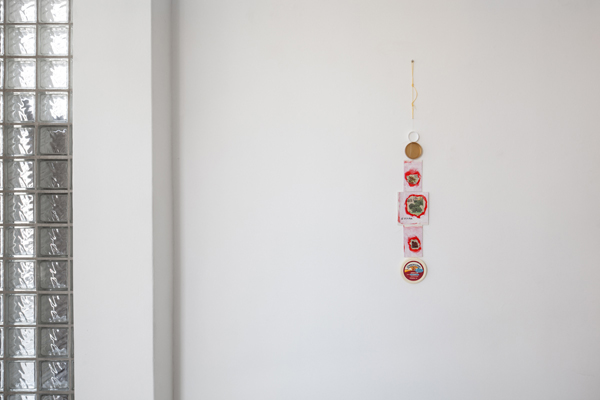
B. Wurtz & Co. at Richard Telles Fine Art, Installation View

Two years ago, I met this guy, an artist from New York who was in L.A. to collaborate with an Indie rocker. I met him the day I was rendezvousing with someone I’d met through Twitter — we both wrote about art-like things, had similar taste, knew some of the same people and kept responding to one another’s tweets. So we thought we should meet in person. The Twitter friend had blogged about this New York artist (the one collaborating with the rocker) once and so the New York artist texted the Twitter friend to say, “Hi, I’m in L.A. Want to meet up?” The Twitter friend thought the New York artist was someone else, someone he knew better, and invited him to breakfast. After he figured out with whom he was breakfasting, and after they’d finished their meal, the Twitter friend, whom I had yet to meet in person, brought the New York artist with him to rendezvous with me. By the end of an afternoon spent gallery hopping in Culver City, the New York artist and I were convinced we’d met before. “Maybe at an opening or a party,” he said. “It’s a really small world we traffic in,” I said, meaning the art world is small. “I know,” he said. “It’s embarrassing.”

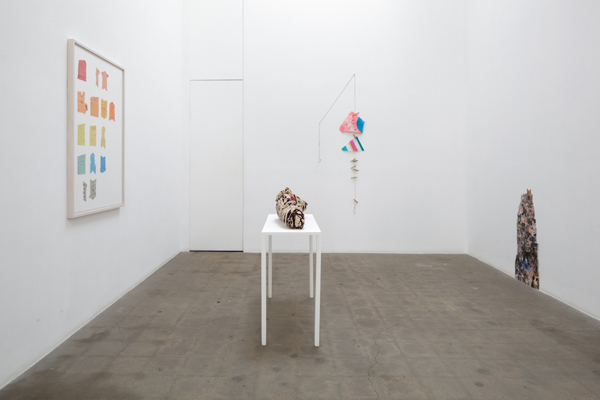
B. Wurtz & Co. at Richard Telles Fine Art, Installation View

I thought he was right: it is embarrassing to go to a meeting, reading, or opening and recognize half the people there. It impoverishes the world’s bigness and, sometimes, makes my own likes and interests seem about as wide and deep as a cocoon. But sometimes it also feels cozy.

Read More »

Share

London

Katie Paterson: 100 Billion Suns

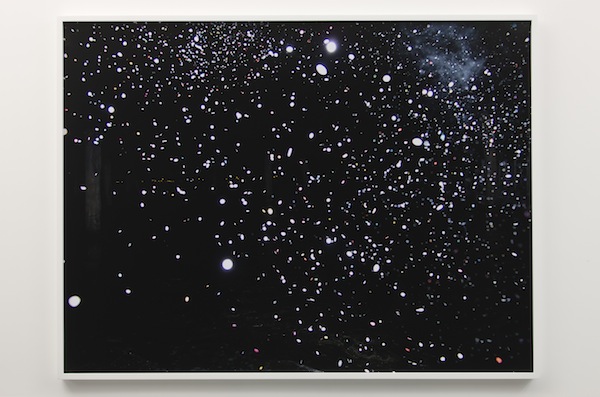
Katie Paterson, 100 Billion Suns (Riva degli Schiavoni), 2011. Photo © Katie Paterson, 2011.

Surrounded by 100 billion suns, it is nearly impossibility to not let feelings of insignificance take over – simply a minute speck standing within a vast universe. The macrocosmic nature of Scottish artist Katie Paterson’s work cultivates these diminutive impressions – whether we are listening to the sounds of silence reflected off the moon, or looking far back into the universe to a place where the earth doesn’t exist, Paterson’s work constantly reminds us that we, as human beings on this particular planet, are an inconsequential part of a much larger whole.

The relatively small body of work that Paterson has made to date focuses on momentous themes of astronomy, geology, space and time. Blending artistic conceptualism with cold, hard scientific facts, Paterson makes the incomprehensible universe a bit more exoteric, whilst being engagingly poetic and austerely minimal.

Katie Paterson, 100 Billion Suns, 2011, confetti cannon, 3261 pieces of paper. Photo © Katie Paterson, 2011.

Paterson’s latest exhibition at Haunch of Venison in London serves as a mini-retrospective of the artist’s projects to date, and the element of performance permeates all of her works – whether it be on an astronomical or human scale. In 100 Billion Suns, a project first developed and executed at the Venice Biennale, a confetti canon is discharged daily within the gallery space. The canon contains 3261 pieces of paper, each one carefully colour-matched to a corresponding gamma ray burst, the brightest of all galactic explosions, burning at the luminosity of 100 billion suns. Here, the artist turns this rarely occurring, and even more rarely seen, event into a daily ritual, peppered with celebratory and nostalgic allusions.

Katie Paterson, The Dying Star Letters, 2010, letters written on different stationary. Photo: Peter Mallet. © Katie Paterson.

As we know, and as the artist continually reminds us, nothing is static and the universe is constantly in flux. With the ongoing project, The Dying Star Letters, Paterson draws upon the equally dying art of the post to build a sentimental archive that records and laments the death of each star in the universe. Informed by electronic telegram when a star has met its demise, Paterson sits down, wherever she may be in the world, and writes a letter, informing its recipient of the tragic loss and humanising the immaterial.

Read More »

Share

Elsewhere

Saul Leiter Retrospective at Hamburg’s Deichtorhallen

Saul Leiter, Red Umbrella, c. 1958, Chromogenic Print, 14 x 11 inches, © Saul Leiter Courtesy Howard Greenberg Gallery, New York.

‘It’s just too much, don’t you think?’ asks Saul Leiter as he walks around his own exhibition, on view until April 15th at Hamburg’s Deichtorhallen. The video documenting Leiter’s reaction accompanies over 400 photographs and paintings that fill the soaring spaces of this re-purposed industrial complex, now a centre for contemporary art and photography. With room after room after room of images that riff on favoured themes and compositions, it’s a serious question. But it’s also part of Leiter’s characteristic modesty. After a lifetime in relative obscurity, his recent fame—following a series of shows at Howard Greenberg Gallery in New York, from which almost all the works come, and the Steidl publication Saul Leiter: Early Color—must be overwhelming, or at least a little bewildering.

Saul Leiter, Snow, 1960 © Saul Leiter Courtesy: Saul Leiter, Howard Greenberg Gallery, New York

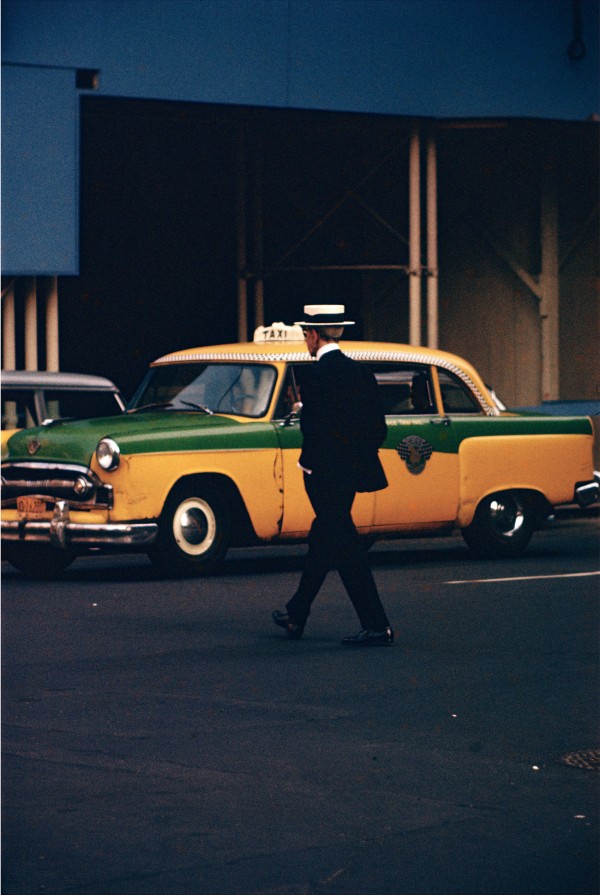
Saul Leiter, Straw Hat, ca. 1955. © Saul Leiter, Courtesy Howard Greenberg Gallery, New York.

Leiter was born in Pittsburgh in 1923, and came to New York on a midnight bus at the age of 23. The city offered a new start, removed from his Jewish orthodox upbringing, and, it would seem, a lifetime of visual inspiration. Largely self-taught, his first love was painting, and his affinity not only to the movements that defined the era, abstract expressionism and colour field painting, but also to Picasso, Mondrian and Vuillard is evident in both paintings and photographs. Though the paintings are interesting in relation to the photographs, the blocks of vivid colour and flattened, geometric compositions take on a different dynamism when cropped from New York streets.

Read More »

Share

San Francisco

Landscape Update

As part of our ongoing partnership with Art Practical, Daily Serving is sharing Bean Gilsdorf’s article on Alice Shaw’s Landscape Update, at Gallery 16 in San Francisco.

Alice Shaw. "Gum Print," 2012; archival pigment print, 20.5 x 28.5 inches. Courtesy of the Artist and Gallery 16, San Francisco.

The profusion of works and materials in Alice Shaw’s Landscape Update at Gallery 16 leaves viewers with the impression of a frenzy. The twenty-six works on view are made from an exhaustive array of media: paintings of oil and dye on linen; sculptures of cast bronze and concrete; photographs, including pigment, Van Dyke brown, and gelatin silver prints; and drawings or hybrid works of charcoal, ink, and gold leaf. Though the artist’s goal of exploring the landscape through various methods and materials is admirable, the effect is less comprehensive than it is schizophrenic. There are moments when Shaw’s depictions of a natural world sullied by human presence do shine, but overall the exhibition could have been improved by the notion that less is more.

Despite the show being weakened by the surfeit of approaches, there are many works that are intriguing and funny. Gum Print (2012) is a close-up, black-and-white photograph of a tree trunk that nearly blocks the view of the wild valley and pine-studded ridge beyond. The proximity of the trunk provides rich details of the rugged bark, showing bits of moss and an old bent nail stuck amongst its crevices; the image is so crisply captured that a viewer can almost feel the rough textures. However, the print is contaminated by a wad of actual chewing gum stuck nonchalantly to the center of the trunk: a rose-pink blot of detritus that undercuts the serenity of the scene. The wad is in a rounded, larval shape that could be an organic part of this natural scene if it weren’t for its man-made color. From an oblique angle, a viewer can see threads of sticky pink residue that stretch from the print to the inner surface of the framing glass—the same way that trodden gum stretches from the urban pavement to one’s shoe. For Shaw, no pristine vista will remain untouched by human carelessness.

Read more


Share

Help Desk

Help Desk: Location, Location, Location

Help Desk is an arts-advice column that demystifies practices for artists, writers, curators, collectors, patrons, and the general public. Submit your questions anonymously here. All submissions become the property of Daily Serving.
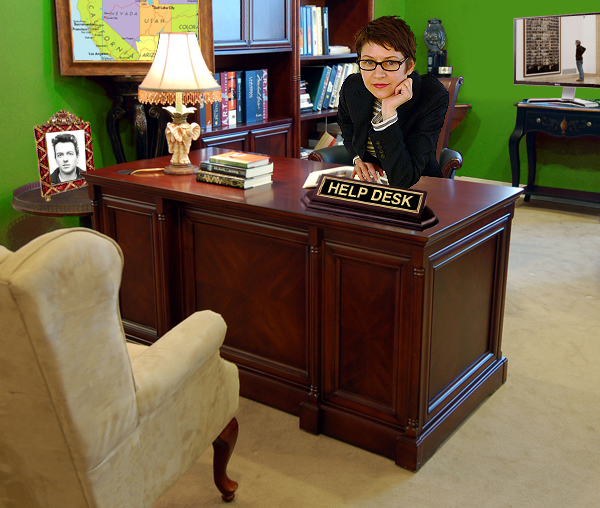
Your real estate agent, hard at work.

This week’s column is dedicated to two related questions that I received within hours of each other but from different parts of the country:

I’ve been painting diligently for 12 years, yet I live far from a significant art market. My thoughts are returning to California where even a bad economy is better than a great economy where I currently reside. Over the years I’ve developed ways to make a living so I can stay afloat anywhere I go. I’ve sold small paintings consistently where I live but economics have dictated a lower price to close the sale. I feel greater exposure is one of the aspects necessary to move me and my work to a different level. Do you think the exposure offered by a much larger city warrants a move and expands the possibilities more than just traveling to the place to show my work? Are bigger cities necessarily better markets and networks? I am not fearful of work, but I’d prefer to work smarter, not harder.

Your question raises quite a few issues about community, the marketplace, and how your surroundings can change your production. For years I lived in a small city that had wonderful opportunities for energetic new artists. Pop-up galleries and alternative spaces abounded so there were plenty of opportunities to show. However, there was no significant culture of arts philanthropy within the county borders, which meant that there were only a few top-tier commercial galleries and no real institutional structure to assist the best of these artists with their careers. Many who saw great success at the lower levels of the hierarchy felt abandoned when they realized that the jot of acknowledgement they’d already received was likely all they would ever see if they stayed in the city. Some translated that into a practice of stasis and were content, in the end, with local acclaim. Many artists left.

But many also stayed in this city, and translated the support they did have into a strong community of artists and thinkers who continually work together to expand the boundaries of their situation. They apply for exhibitions and national-level grants that will bring them attention and funding for their work. They’ve created programs that bring artists from other cities to visit. They also travel to other areas, meet artists and curators, and form lasting relationships that enliven their practices. This group of art workers is bringing the mountain to Mohammed. It’s a lot of hard work, but sometimes the dedication and support they receive from their peers is a reward in and of itself, and over time there have been plenty of other payoffs.
Should you stay or should you go? (image: images.handy.de)

You ask if big cities necessarily have better markets and networks. That depends on what you make. After all, what sells well in one part of the country might be ignored in another. Watercolor portraits that fly out the door of a beach town gallery aren’t going to do well in a conceptually-driven contemporary art market. Your query doesn’t mention your community, but you do say that you’re making consistent sales. That counts for something. While you might not be able to market your work at higher prices locally, the fact that you have an audience for your work shouldn’t be discounted.

Think carefully about your options. Are staying or going really the only choices? If you want to move your work to a different level, can it be done from where you are now? Are there like-minded people you could partner with to make a change in your city? You can’t be the only artist in town who thinks about the opportunities that aren’t available to you. Is it worth banding together and giving it a go? You might create something really wonderful.

I do agree that new experiences in general can be very good for your mental health, and therefore for your work. It’s possible to create that new experience by taking on a leadership role in your hometown. But if you feel that a larger community is really the answer, why not start doing some research before you pull up your stakes? Check out the galleries in the place where you plan to move. Do any sell work that looks like yours? If you find some good matches, it can’t hurt to write the gallerist. Explain that you plan to move to that city and wonder if they might have time to chat with you over a cup of coffee during your next visit to gain some perspective on the area’s art scene. She might have some advice for you that would ease a transition (and the worst you’ll get from such a query is no answer at all).

Before you hitch up the wagon and move to the promise land of California, take stock of what you already have. (image: www.jacksonvilleoregon.org)

I’m not sure I agree with your statement that a larger art market with “a bad economy is better than a great economy where [you] currently reside.” A bad economy will bring other pressures to bear on your life. If it’s hard to find a job, or to get a job that makes a decent wage, that’s going to take time away from your practice. I know quite a few artists who moved to New York and then away again a few years later. Why? Because they spent so much time working at the various jobs that paid their apartment and studio rents that they had no time or energy left over to make any artwork. Above all, protect the time you have in your studio. A move to a city with a larger art scene is no good unless you can make work while you live there.

Which of these options is best for you? I encourage you to keep an open mind. Don’t limit your choices to the most obvious or easy options. It will be up to you to make the most of any change, in whatever form it comes.
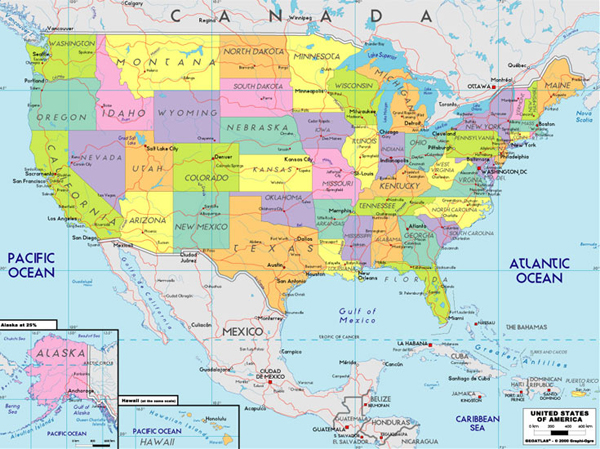
(image: www.map-of-usa.co.uk)

I do not live in an arts center/urban area, and my day job and personal art practice keep me so busy that I have very little time to go to any major city to circulate in, much less make overtures to a ‘happening’ gallery scene. I have been building up my exhibition record with shows in the relatively isolated college town in which I live, as well as in regional and national juried shows that I can ship work to. Since my work does not conform to local buyers’ tastes (which lean toward folksy and/or decorative), I am wondering how to go about finding venues for my work that could develop into something a little more stable and rewarding than one-off juried shows.

P.S. Before suggesting that I take advantage of the people and resources at my local university, know that I’m doing that already. The question is how to move beyond that level.

I’m disturbed by the tone of your query. “No, no, no,” it says. “I’ve already thought of that, and it won’t work.” If that’s true, and you have really exhausted every avenue in your local community, then there is only one course of action: you are going to have to change your circumstances drastically.

Read More »

Share

From the Archives

From the DS Archives: Mika Rottenberg

Every now and then I’m introduced to an artist that really resonates with me. The first time I saw an example of Mika Rottenberg’s work was in a class, when the teacher presented my fellow students and me with a series of artists we were supposed to draw inspiration from (per usual). Despite the fact that Rottenberg’s work is so different from my normal taste, the work is so corporal, fantastic, grotesque and whimsical I was immediately sucked into her narrative. Currently Rottenberg has teamed up with Alona Harpaz to make the installation, Infinite Earth, on view at Petach Tikva Museum of Art , on view until 26 May, 2012.

The following article was originally published by Seth Curcio on August 4, 2010: 

During an admittingly rushed Friday evening in 2008, I attended the Whitney Museum during a pay-what-you-wish night. It was during the Biennial and every floor of the museum was packed with an abundance of people and art. As I made it through each floor, digesting as much art as possible in 3 hours, one artist and artwork stayed on my mind: Mika Rottenberg’s video installation, Cheese. Since that evening, I have followed her beautifully complex projects, faithfully reading about her recent exhibitions at Nicole Klagsbrun Gallery and Mary Boone Gallery. So it was no surprise that when I first heard that her new video, Squeeze, was to debut at the San Francisco Museum of Modern Art, I made it a point to stop by immediately and see what the artist has been up to over the past two years.

Mika Rottenberg, Squeeze (still), 2010; Courtesy Mary Boone Gallery/Nicole Klagsbrun Gallery; photo: Henry Prince

In this new video, Rottenberg continues her investigation into social and labor-based inequalities through a fragmented narrative. The grotesquely seductive video equally binds and separates the concept of labor with gender, class, and race, seamlessly merging the real with the hyper-fictional. Interlocking environments slide in and out of place. Exaggerated sounds of cutting, slicing and crunching divide and define the separate worlds, and rich, fleshy color pull them all back together. Similar to her past work, Squeeze maintains an all woman cast of characters played by non-actors, where the physical characteristics of Rottenberg’s women parallel their occupation within the awkwardly constructed environment. Women working in a rubber plant in India, mining the trees for raw substance, interact with an all female work force at a lettuce farm in Arizona. These two real worlds collide with the fictional factory constructed in the artist’s studio, serving as the main link between all of the spaces in constant flux. Walls move, floors drop, and characters blindly connect to the factory to create a new hybrid consumer product turned art-object, which is composed of blush that is squeezed from the skin of a woman in the factory, rubber, and decomposing lettuce.

Through a beautifully non-linear story, Rottenberg’s use of the absurd confronts the seriousness of her content, mesmerizing the viewer by slowly releasing a delicate flow of information through color, sound and rhythm. Each element quietly underscores the disconnect between the consumer and the production process innate to mass commerce. What results is a world which mirrors her role as a woman creating an art object, and our daily lives of utilizing a variety of products, many of which are produced through the work of people who are socially, politically, and racially removed from the consumer. Yet, while the work is far from generous, the artist subtly reminds us that we can never really separate ourselves from the lives of others no matter how distant or disconnected we would like for them to be.

Share