Tenth Anniversary

Best of 2010 – L.A. Expanded: Sunday Boys

Were looking back over a decade of Daily Servings greatest hits, and todays selection comes from Shotgun Reviews editor Emily Holmes: “The column L.A. Expanded: Notes from the West Coast was started in 2010 by Catherine Wagley, who wrote about the multifaceted Los Angeles scene from an approachable, personal voice. One of her finest pieces in that first year explored masculinity and the politics of gendered gazing; I was hooked by her striking first sentence, ‘I spent Sunday looking at boys.’” This article was originally published on August 13, 2010.

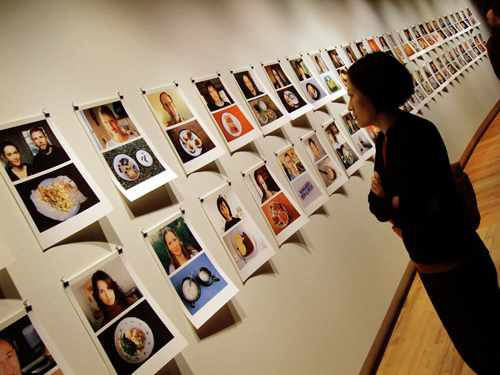
Andy Warhol. Dennis Hopper, Screen Tests Reel #4, 1964-65.

I spent Sunday looking at boys. It began at LACMA, where I saw Catherine Opie’s quarterbacks, linebackers and surfers  followed by Thomas Eakins’s rowers, wrestlers and athletic but stationary nudes. It continued at the Egyptian Theater, with ten of Andy Warhol’s four-minute screen tests: Buffy Phelps with delicate, defiant eyes and blondish curls; John Giorno of Sleep, darker and rougher than Buffy; Kip “Bima” Stagg, equally dark but not as rough; Dennis Hopper, twenty-eight but looking younger; Hopper again, still near twenty-eight, but suit-clad and looking older; Gregory Battock with Clark Gable jauntiness; Richard Schmidt and Paul Winterbottom; Kenneth King and Richard Markowitz, who, along with Giorno and Hopper, would appear in the compilation The Thirteen Most Beautiful Boys.

Because Warhol’s tests are meditative and slow, I lost myself in their static silence, and didn’t think about gender until the reel played out. “They were all men, weren’t they?” I said to the friend sitting next to me. He’d noticed before I had.

Read More »

Share

Tenth Anniversary

Best of 2009 – Moby Dick

We are looking back on a decade of Daily Serving’s greatest hits, and todays selection comes from Shotgun Reviews editor Jen Stager: “‘This great white interior was empty even when it was full, because most of what was in it didnt belong in it and would soon be purged from it. This was people, mainly, and what they brought with them from outside, wrote David Batchelor in Whitescapes, in which he recounts his experience of attending a party in a home of tyrannical whiteness—a space inside the belly of the whale, the whiteness of which Melville describes with illuminating precision. It was with surprise and pleasure that I discovered a 2009 group show organized around the theme of Moby Dick and reviewed by Arden Sherman, who writes of Damien Ortegas salt tower: ‘Thick, crystal-white salt was rammed into a narrow, rectangular tower made of plywood. The wood was removed, leaving the salt tower to crumble to the gallery floor, an unplanned but satisfyingly rich effect.’ Not pictured but equally prescient was Felix Gonzales-Torress posthumous, landless sea, Untitled (1991), available in an endless stack of prints on paper. I know we are looking back, but images of crumbling salt, endless sea, and unmitigated, tyrannical whiteness continue to haunt us.” This review was originally published on November 16, 2009.

MobyDick_upstairs-45

The great American novel Moby Dick takes on new life at the exhibition of the same name currently showing at California College of the Arts’s Wattis Institute. The exhibition loosely traces the narrative of the epic (and episodic) tale with each of the three galleries dedicated to the story’s protagonists, Ishmeal, Ahab, and of course, the White Whale, Moby Dick. Thirty-three artists ranging from the emerging to established are exhibited, and a large number consist of specially commissioned works that reflect the artist’s own interpretation of the Herman Melville classic. Among the highlights are Marcel Broodthaers, Felix Gonzalez-Torres, Buster Keaton, Richard Serra, Hiroshi Sugimoto, and even Orson Welles. A room-sized replica of the sperm whale has been executed by artist Andreas Slominski, and though a commissioned work (size, scale, and the dried, crumbling, clay material reveal this) Slominski’s interpretation of the harpoons which brought down the White Whale demonstrates his imaginative personal iteration of the novel’s denouement. Also of considerable interest is an eight-foot salt tower by Mexican artist Damian Ortega. Thick, crystal-white salt was rammed into a narrow, rectangular tower made of plywood. The wood was removed, leaving the salt tower to crumble to the gallery floor, an unplanned but satisfyingly rich effect.

Read More »

Share

Tenth Anniversary

Best of 2008 – Destroying Prettiness: Wangechi Mutu and Kara Walker

As part of our ten-year anniversary celebrations, were considering the best of a decade of arts publishing. Todays selection comes from senior editor Vivian Sming, who writes, “Author Catherine Wagley asks us to critically reflect upon the convergence of seduction and brutality in the works of Wangechi Mutu and Kara Walker. This review of Mutu and Walker’s concurrent exhibitions demonstrates the continued and ever-pressing need for more representations of Black women in contemporary art.” This article was originally published on March 31, 2008.

Mutu_244_EatDrinkSwanMan01_lores.jpg

Wangechi Mutu. Eat Drink Swan Man, 2008; watercolor and collage on paper; overall dimensions, 43 x 63 in. Courtesy of Susanne Vielmetter Los Angeles Projects.

Wangechi Mutu will never experience the heated backlash that Kara Walker experienced. No one will call Mutu the “patsy of the white art establishment,” accuse her of selling fellow black artists down the river, or launch a letter-writing campaign to keep her artwork from being shown. There are good reasons for this: unlike Walker, the Kenyan-born Mutu does not share the slavery lineage of African-American artists and she does not make work with a lucid historical context. Yet Mutu’s work is often as disturbing as Walker’s, reconfiguring sexualized representations of women and creating visceral collages that appear more pornographic than critical.

Mutu and Walker both probe the ways in which women’s bodies have been caricatured and both use craft-inspired materials to create compositionally seductive images. Both also provoke the same question: Is this work compelling because of what it says or because of the way it speaks?

Read More »

Share

Tenth Anniversary

Best of 2007: Interview with Carrie E. A. Scott

As part of our ten-year anniversary celebrations, we’re considering the best of a decade of arts writing. Today’s selection comes from editor-in-chief Bean Gilsdorf, who notes, “I love looking back through the DS archives to find that the artists, curators, and institutions mentioned a decade ago are alive and kicking. For example, Carrie E. A. Scott is curating and writing in London now, James Harris is still going strong in Seattle, and Matt McCormick was just awarded a 2017 project grant by the RACC in Portland. The commitment of these arts workers mirrors our own at Daily Serving and Art Practical.” This interview was originally published on August 14, 2007.

Carrie-Scott-8-14-07.jpg

Curator Carrie E. A. Scott. Photo: Jon Huck

Curator and arts writer Carrie E.A. Scott has become a prominent force within the Seattle arts community. Scott is currently the director of the James Harris Gallery, having brought recent shows to the space such as the Rashid Johnson exhibition Dark Matters and recent paintings by Seattle-based artist Scott Foldesi. Additionally, Scott is the curator of the Hedreen Gallery, a non-profit arts space housed in the Lee Center for the Arts at the Seattle University. Scott has produced numerous exhibitions there, including Screen Shots: Selected works on screen by Justin Beckman, James Coupe and Tivon Rice, and Intricate Matter: Sculpture by Artist Eric Eley. Seth Curcio recently caught up with the young curator to discuss her ideas.

Seth Curcio: Carrie, you were born and raised in the U.K. and came to the U.S. before high school. When did you develop an interest in contemporary art?

Carrie E. A. Scott: When I was applying to graduate school, I drafted two essays: the quintessentially heart-felt (and cliched) one that answers your question and the academic one that has little to do with why I like art, but has a lot to say about why I want to pursue it. I didn’t go with the heart-felt one for obvious (again cliched) reasons, but I think it might explain why I got into the art business: When I was a kid, in addition to being dragged to museums by both parents all the time, my father also used to drop my older brother and me off at the Wallace Collection in London while he met with a client who lived nearby. Exploring the collection on our own meant that we had to come up with our own narratives for what we were looking at. At least, that’s what I did, and I think I’ve simply kept doing that, looking at things and trying to garner the story or message behind them. I can tell you that seeing Gerhard Richter‘s retrospective at MOMA compelled me to apply to graduate school. I went to the show more times than I care to count and, on the umpteenth time, realized that if I was this interested in one artist’s show, maybe I should figure out how to look at art all the time.

Read More »

Share

Tenth Anniversary

Best of 2006: Diana Al-Hadid

Happy holidays! This year we’re doing something different with our annual “Best Of” series—to celebrate our tenth anniversary, we’re looking back across a decade of art writing. Our first selection comes from our founder Seth Curcio, who writes, “While going back through the very early days of Daily Serving, I stumbled across a post featuring Diana Al-Hadid. I’ve always been captivated by the artist’s sculptures. From this article in 2006, she went on to be featured on DS three other times. I love that DS has become an archive that allows an artist’s progression to be viewed over the years.” This article was originally published on December 18, 2006.

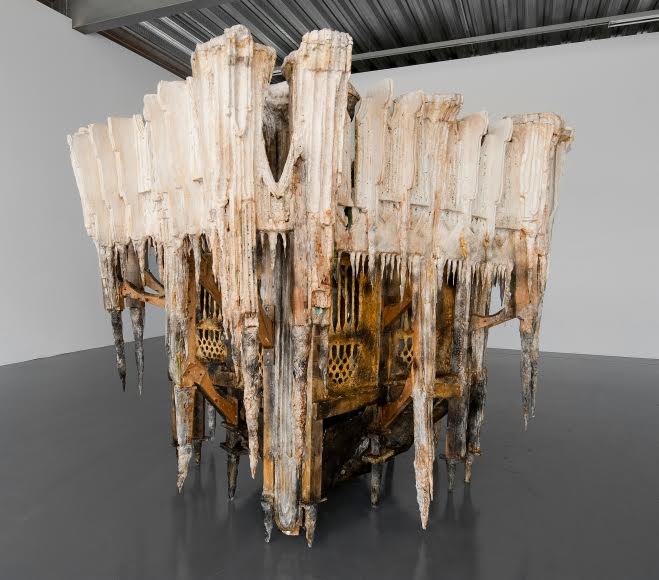
Diana Al-Hadid. Spun Of The Limits Of My Lonely Waltz, 2006; wood, polystyrene, plaster, fiberglass, pigment; 72 x 64 x 64 in.

Diana Al-Hadid. Spun of the Limits of My Lonely Waltz, 2006; wood, polystyrene, plaster, fiberglass, pigment; 72 x 64 x 64 in.

The sculptures and installations of artist Diana Al-Hadid are “propositions for an imaginary world,” ambiguous works that often reference themes of self, place, and history. Recently the artist has drawn upon imagery from her birth city of Syria by recreating the Aleppo citadel, a 10th century fortress and eventual Muslim holy site. Her new sculptures combine fiberglass and polystyrene to create ambitious structures that seem to be unearthed from afar. The artist was awarded a Sculpture Department Graduate Fellowship to attend Virginia Commonwealth University, where she received her MFA in sculpture. This month she is exhibiting with Priska Juschka Gallery in Williamsburg, NY; in spring of this year the artist participated in the Bronx Museum‘s Aim 26 (Artist in the Marketplace) program and exhibition, which was noted in an article in the Art in Review section of the New York Times (April 9, 2006).

Share

Between Citizenry and Privilege: Ai Weiwei and Bouchra Khalili

Today from our sister publication Art Practical we bring you Jordan Amirkhani’s article from 8.1: Art + Citizenship. Amirkhani discusses the recent work of artists Ai Weiwei and Bouchra Khalili as they respond to global crises. Amirkhani quotes Hannah Arendt, who speaks to citizenship and  those who lack the “rights to rights,” saying, “If a human being loses his political status, he should, according to the implications of the inborn and the inalienable rights of man, come under exactly the situation for which the declarations of such general rights provided. Actually the opposite is the case.” This article was originally published on November 10, 2016.

Ai Weiwei and Rowlit Chawla. Weiwei on Lesvos Beach, 2016. Photo: Rowlit Chawla for India Today.

Ai Weiwei and Rowlit Chawla. Weiwei on Lesvos Beach, 2016. Photo: Rowlit Chawla for India Today.

In an age when rapidly intensifying globalization, migration, and the afterlife of colonization challenge traditional European-American notions of belonging in the aftermath of 9/11, citizenship has transformed to produce dynamic entanglements of inclusion and exclusion that have ignited national, racial, ethnic, and ideological tensions across the world.1 Meanwhile, new racisms, ethnic conflicts, and fundamentalisms mix with the unfettered operations of capital to produce ever-greater inequalities within and between nation–states. Transformed are the roles of nationally bounded social formations as well as the ability of the state to secure justice and belonging for others.

In the midst of this constellation of intersectional global crises, where borders, migrants, and refugees continue to float in spaces of non-belonging across the world, how are artists and institutions of art responding to these issues? This essay examines recent installations by two artists, Ai Weiwei and Bouchra Khalili, whose radically different responses to this global crisis demonstrate how works of art may either act as modes of resistance to the regressive forms of nation–state propaganda and racism that have thickened in the 21st century, or tread an ambiguous line between empathy and insensitivity in the effort to create aesthetic accounts of citizenry.

Read the full article here.

Share

From the Archives

Printed Matters – Jonathan Griffin: On Fire

Our struggle to take in the losses of the Ghost Ship fire, to hold up those who lost their lives, and to meet the needs and rights of those who remain foregrounds connection and community. KQED’s series of visual and textual remembrances shines a light on each person who died. It is with this focus on the people who make up our art world that we think back to Leila Easa’s review last spring, on our sister publication Art Practical, of Jonathan Griffin’s On Fire, his exploration of artists’ studios and fire. In her review, Easa wrote, “It may also be worth recognizing that there is danger in seeing disaster as merely allegorical.” Easa highlighted the importance of people over practice; it is people whom we mourn and as people that we do so, together in community.

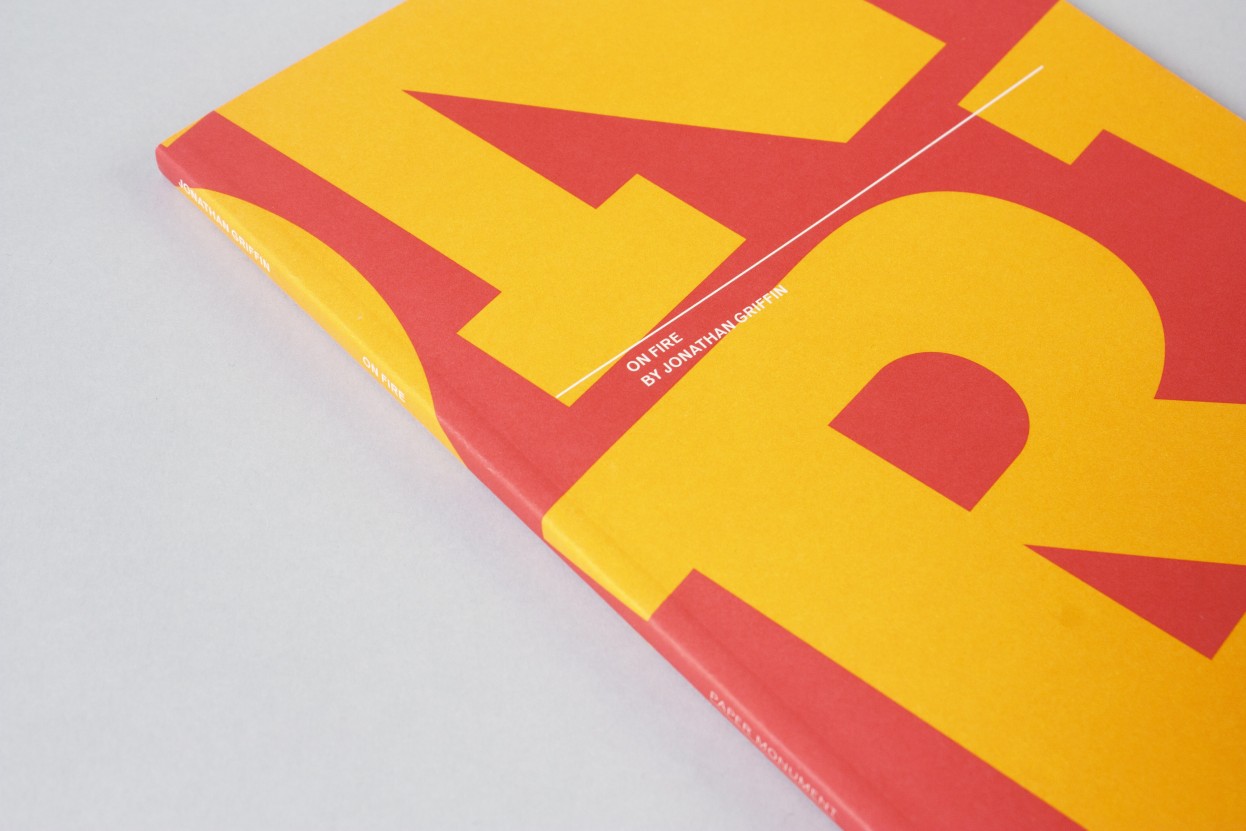
Jonathan Griffin. On Fire, 2016. Courtesy of Paper Monument.

Jonathan Griffin. On Fire, 2016. Courtesy of Paper Monument.

Jonathan Griffin wants to make us all voyeurs. Or, at the very least, rubberneckers. Though he narrates his text with taste and sensitivity, it’s difficult to fully avoid a degree of morbid fascination with the stories On Fire tells, a fascination perhaps inherent in the subject. The book recounts the evolution of the artistic practice of ten artists who’ve experienced arguably the most devastating event an artist can face: the destruction, by fire, of their studio and the art housed within.

Read the full review here.

Share