Help Desk is an arts-advice column that demystifies practices for artists, writers, curators, collectors, patrons, and the general public. Submit your questions anonymously here. All submissions become the property of Daily Serving. Help Desk is co-sponsored by KQED.org.
This week’s column is illustrated with collages by Irina and Silviu Szekely.
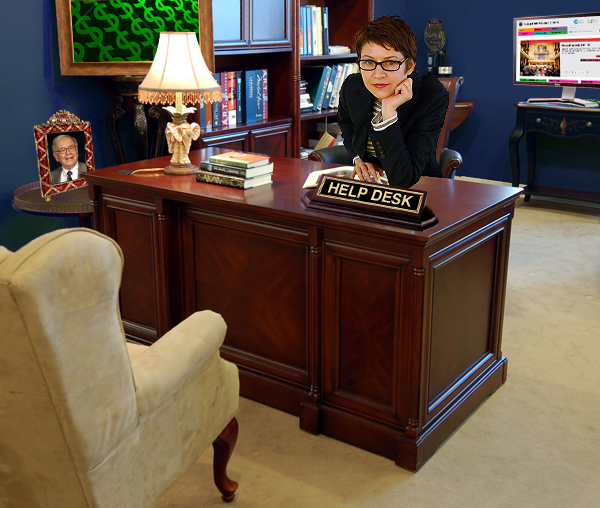
Your financial counselor, hard at work.
My question is: how does an artist decide how much a certain piece is worth, monetarily?
One of the most difficult things to do is put a dollar value on your work. In the absence of a gallerist’s guiding hand and prior knowledge, you have to ask yourself all kinds of ancillary questions: where am I at in my career, is this object well-made, is it unique, what have I sold in the past? etc. Pricing your work means it’s time to be brutally honest about where you stand in your career vis à vis what the market will bear. It can be a tough call. Who—at least of the unrepresented among us—hasn’t sold a piece and then wished they had asked for more? Or wondered if unsold work might have had a buyer if it was offered for less?
This is just one more situation in which artists need to do their research. Start with the local galleries and art fairs and look at the prices of work that is similar to yours to get a range of values. This will help you create a basic list of prices, but don’t stop there because numbers aren’t the only part of the equation. Take a look at the resumes of the artists, too, as accomplishments make a difference in setting a price. If the paintings of an established mid-career artist with work in private and public collections sell for $30,000, and you’re fresh out of a BFA program, then your work is not going to sell for the same amount even if the size, medium, and style are comparable.

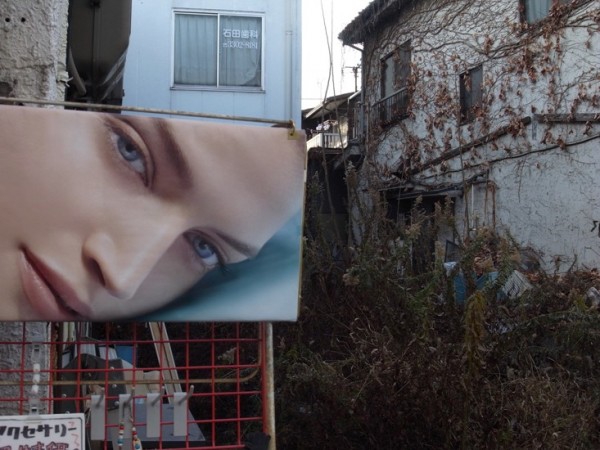
Irina and Silviu Szekely, ( framing, deframing and reframing of semi-accidental linkages ), 18 x 22. Image courtesy of the artists.
You’ll also need to consider what it takes to make your work and what kind of work you’re making. For example, take the economics of production into account. What do you spend on your materials? Likewise, if you’re selling framed work you need to account for the costs of matting and framing. The type of work you’re making also has a particular value. If the work is part of an edition, it’s valued less than an original. A print from an edition of three hundred is less expensive than one from an edition of five.
When you’ve accounted for as many variables as possible, give yourself a small range of prices that you think are acceptable and run them by an artist friend who understands the art market. If you have access to a sympathetic teacher or dealer, you could ask those folks, too. I find that bouncing a number off a neutral party can help me make a final decision. I also take into account the words of a former professor, who told me that his sales strategy was to price things on the lower end of the scale. “I’d rather have a slightly smaller check than store [my paintings] indefinitely,” he said, and this is yet another thing to consider when you’re trying to put a dollar value on your work.

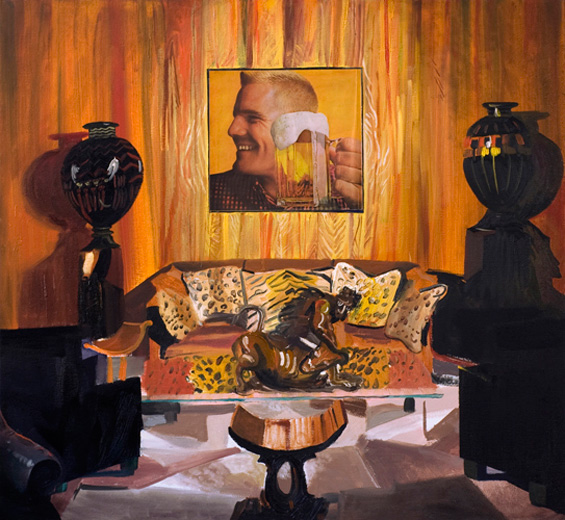
Irina and Silviu Szekely, ( the amputated experience of Sir Coincidence Sobject ), 27 x 23 cm. Image courtesy of the artists.
I am a performance artist. I have had many invitations lately to show my work, but I am worried I won’t have enough money to pay for all of the travel and materials. Is there a way to get an ‘art loan’? What would you do? I’m right on the cusp of something. It is so much about freeness, but also, it’s crazy to be running on hot air.
The first thing I want to say is that if you’re receiving invitations to perform, you should be getting at least some financial support from the institutions and venues themselves. Have you written any emails along the lines of, “Thank you for your interest in my work. Here are the costs associated with my performance, including airfare to your city. Please let me know how you are going to fund this performance.”? Though I suspect that this is not a magical solution to your problem, I would love for your work to be supported by the venues that ask you to perform for them. That’s not going to happen if you don’t ask directly, and at least it gives you a place to start.
Read More »