Los Angeles

Jack Goldstein’s Peaks and Valleys

Artist Jack Goldstein and his dog, 1986. Image copyright Peter Bellamy.

“Jack Goldstein is currently at work on a new film called “The Jump.” It is to be nineteen seconds long and will show a diver performing a somersault from a high board. But the high board and the water into which he plunges will be absent from the finished film…Goldstein is performing a set of operations that isolate, distill, alter, and augment the filmed recording of an actual event. He does this in order to impose a distance between the event and its viewers because, according to Goldstein, it is only through a distance that we can understand the world. Which is to say that we only experience reality through the pictures we make of it.”[1]

So begins Douglas Crimp’s famous 1977 “Pictures” essay, which introduced not just a show, but a movement of young artists determined to draw attention to and capitalize on the way images mediated the late 20th-century experience. Fittingly, “Jack Goldstein x 10,000,” at the Orange Country Museum of Art, also opens with the now-iconic film, which features the glowing red figure of a diver against an all black background. The diver bounces on the invisible board, twists, and disappears smoothly in the nothingness of the erased water. The motion feels effortless and also exhausting.

“Jack Goldstein x 10,000” consists of thirty-plus years of work. The early films that put Goldstein on the map as a member of the Pictures group are there (including “The Jump,” 1978, and “MGM,” 1975), as are several immersive sculptures, text works, and records—not to mention the enormous, black-and-white paintings of the ‘80s and the paintings that followed.

The main draw continues to be the films, perpetually repeating and acting as counterpoints to each other. “A Nail,” 1971, “A Glass of Milk,” 1971, and “A Spotlight,” 1972, play opposite “Jack,” 1973, (amongst others); we see the artist agonizingly and slowly pull a nail out of a piece of wood with his teeth, empty a glass of milk by pounding his fist on a table, and try to run away from a spotlight. In the same moment, we watch a cameraman slowly back away from Goldstein, step by step, until the artist is engulfed entirely by the landscape.

In the next room, Goldstein’s edits keep the famous MGM lion repeating its roar, and in the room beyond a foot in a ballet shoe collapses when the ankle ribbons are untied (“Ballet Shoe,” 1975); a china pattern of birds comes to life and circles a dinner plate, trapped (“Bone China,” 1976); a dog barks and barks and barks (“Shane,” 1975); a knife fills with reflected color, empties, and fills again (“The Knife,” 1975). As mundane and tedious as all these actions are, the tension is captivating.

Much has been made of the fact that Goldstein used outside labor for his work, hiring animators for his films and using illustrators to complete the series of paintings that followed—wall-sized, black-and-white images of aerial raids, or the spectacular effect of lightning over Western skies. The technique allowed Goldstein’s conversation with his Pictures colleagues to continue; aesthetizing images of damaging events such as the 1941 bombing of the Kremlin. As Los Angeles Times critic Christopher Knight puts it, “It’s as if Goldstein’s photo-based works chronicle the upheaval caused by mesmerizing mass media, the daily blitz of modern life.” All with the hand of the artist removed.

From "Jack Goldstein X 10,000, "Untitled," 1981, acrylic on canvas. (Brian Forrest, Orange County Museum of ARt / July 12, 2012)

The exhibit wraps up with several abstract paintings that resemble thermal maps with the mapped object long gone, a more recent film in which Goldstein cuts between various sea creatures at the moment they pause in motion, and “Aphorisms,” written fragments presented as highly-designed images as well as less polished chunks of text that vary in between upper- and lower-case, bold and regular face.

On the whole, the exhibit is complicated and almost amorphous. Unlike his peer, Cindy Sherman, whose retrospective is currently on view at SFMOMA, Goldstein did not maintain one specific and particular focus or style. One can certainly map an obsessive fixation on time and nature, something obvious enough to be commented on but downgraded as a priority in the various conversations on Goldstein’s work. The exhibition pamphlet points out that much of the focus on Goldstein continues to be on his relationship to images and the idea of the spectacle, themes leftover from his association with Crimp and subsequent writing on the Pictures group. Honestly, what I see in “Jack Goldstein x 10,000” is an artist questing for his voice again after tiring of being stuck in the same loop. Unfortunately, we lost Jack Goldstein in 2003, but curator Philipp Kaiser provides a nuanced overview of his peaks and valleys.


[1] Douglas Crimp, Exhibition Catalogue, “Pictures,” Artists Space, New York, 1977.

Share

Help Desk

Help Desk: Helpful Words for Negative Reviews

Help Desk is an arts-advice column that demystifies practices for artists, writers, curators, collectors, patrons, and the general public. Submit your questions anonymously here. All submissions become the property of Daily Serving. Help Desk is cosponsored by KQED.org.

I am a visual arts writer, and if I don’t have anything nice to say, I don’t say it at all. I state my personal opinions about artwork I like and choose my subjects based on personal preference. I don’t claim to be a critic. I prefer to describe what I see in a lighthearted way, but I fear that I come across as a fluff writer, and I have actually been called out as an “overly saccharine cheerleader.” Is it ok to be consistently complimentary as an arts writer?

Your query begs for the concision of a yes/no answer, but I’m afraid I can’t give you one. Part of the difficulty is that you don’t claim to be a critic—that is to say, an evaluator of art and culture—yet you state personal opinions based on preference. Isn’t that what a critic does? I wonder if part of the issue lies in vocabulary: critic, criticism, and critique all have a whiff of the negative, yet etymologically they’re all based on the Greek kritikos, which simply indicates the ability to make judgments based on quality. So, if you’re evaluating artwork in print, then chances are your readers already consider you a critic in the traditional sense whether you claim to be or not. Further, I think we have to separate the issue of being a critic from the manner (“lighthearted”) in which you state those opinions, and the fact that you fear fluff but seem to limit your writing to descriptions. Based on the short question you’ve written to HELP DESK, there seem to be some contradictions at work in your practice. If the accusation of being saccharine stings (as it must have, since it compelled you to write to me), then you have to think about what you hope to accomplish.

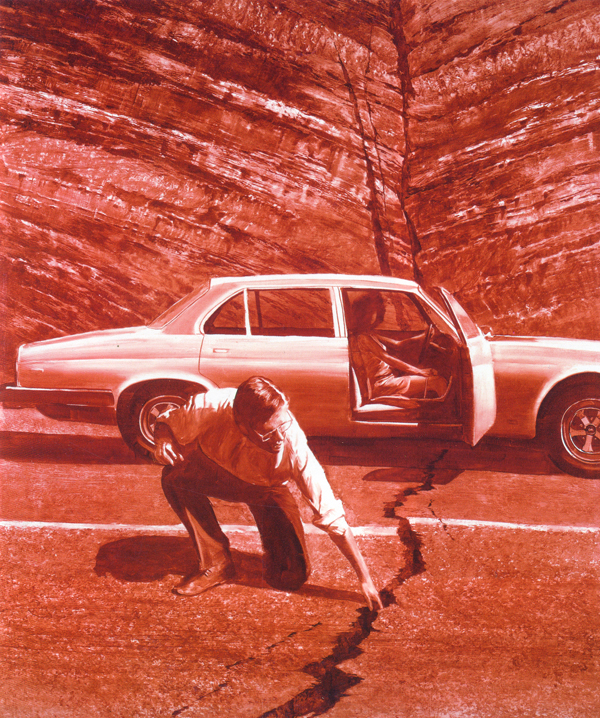
Mark Tansey, The Innocent Eye Test, 1981. Oil on canvas, 78 x 120 in

Let’s go all the way back to the fundamental question: why do you write about art? Probably you enjoy the process of looking and responding, and if that’s as deep as you want to go, that’s fine. You can continue on your complimentary way but you’ll have to grow a thicker skin. After all, there’s a lot of art writing out there and the person who doesn’t like your nice-things-to-say style can easily go read something else. That’s a valid position to take and I support it. But if you decide that you want to participate more fully in a cultural dialog, or if you want to help artists advance their work, or if you want to be taken seriously by the arts establishment in your area, you should consider writing about work that you don’t find attractive or valuable.

And let me qualify that by saying I would never recommend anyone write about work she already knows she hates. That is an exercise in futility, a zero-sum game that benefits no one. Instead, I’m talking about those instances in which you go to an exhibition that you expect to like, but end up disappointed by what you see. Or, you connect to parts of a group show, but not all; or some works in a solo show turn out to be stronger than others. Determining why this is so can be beneficial to both you and the artist. It’s not about slamming someone’s effort, it’s about taking the artist’s work and your own opinions seriously.

Mark Tansey, Doubting Thomas, c. 1985. Oil on canvas

While I can respect your position of wishing to only write about shows that fill you with joy, penning the occasional less-than-glowing review will underscore your position when you do write flattering prose, making the positive reviews all the more meaningful. One well-respected arts writer I reached out to said, “I have felt similarly, that contemporary art gets such a short shrift in contemporary culture, so being a cheerleader has its welcome role. But if the writer wants to be taken seriously…then there’s got to be some edge. The trick is when it is useful to write negatively. I recently saw a show that made me angry about its ineptitude and misguidedness. While I may or may not actually write about it, it would seem like a public service to point out the flaws and how they could/should serve as a model to work against. It seems a great opportunity to frame a dialogue about something that warrants more discussion.”

Read More »

Share

From the Archives

The Fruitmarket Gallery

Originally built as a fruit and vegetable market in 1938, The Fruitmarket Gallery has been operating as a visual arts space since 1974. Rescued by the Scottish Arts Council from threatened demolition, the building was initially shared between the Scottish Arts Council, the New 57 Gallery and the Printmakers Workshop. At the end of 1983 the Scottish Arts Council relinquished management of the building, and in Spring 1984, The Fruitmarket Gallery became an independent space with the continued support of the Scottish Arts Council. Today in our look back into the DS Archives we highlight the 2010 exhibition oh Johan Grimonprez at The Fruitmarket Gallery. Check out these other DS articles covering exhibitions at The Fruitmarket Gallery: The End of the Line: Attitudes in Drawing; Ingrid Calame; Willie DohertyClaire Barclay and Anna Barriball.

The following article was originally published on June 23, 2010 by :

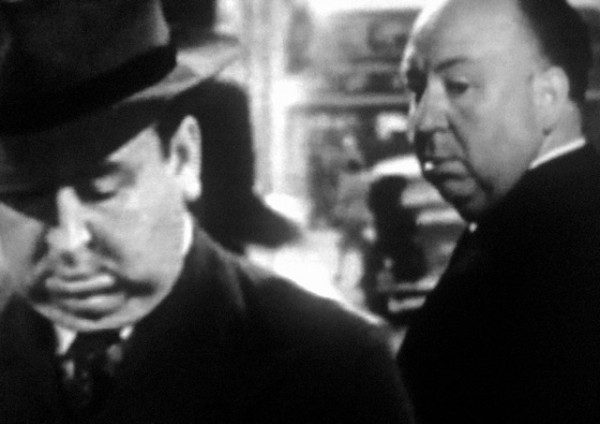
Still from DOUBLE TAKE by Johan Grimonprez, 2009, 80 minutes, Courtesy: Zapomatik

Read More »

Share

Fan Mail

Fan Mail: Silas Inoue

For this edition of Fan Mail, Silas Inoue of Copenhagen, Denmark has been selected from our worthy reader submissions. Two artists are featured each month—the next one could be you! If you would like to be considered, please submit your website link to info@dailyserving.com with ‘Fan Mail’ in the subject line.

Silas Inoue, Midnight funeral at the holy sea between River Styx and Sanzu No Kawa, watercolor on paper, 110x85cm

With some chicken legs weighted and tied to strings, my friend and I set out to catch some blue crabs in an intertidal creek near the city of Charleston. Not having caught a crab since I was kid, it was intuition and internet research that guided us, and overall much easier than anticipated. Catching a few males with big claws at first got us excited and knowing what to look for. We threw back all the little ones or inspected them on the dock and let them run backwards in attack mode, flopping back into the water. Looking out on the surface of a creek, you know that there is biomass down there, and you know what you can expect to find, but to know exactly all of what is below you is not possible. When floating in a boat, you can drag a line behind you and feel the range of subtle vibrations and hard jerks across the floor and imagine it like you are a sonar-mapping machine. Maybe that’s an oyster shell, but maybe that’s a bite. The tides bring in new animals and wash them out again. Where there once were crabs there might be none anymore. The unknown drives us forward. We get a dozen crabs for dinner.

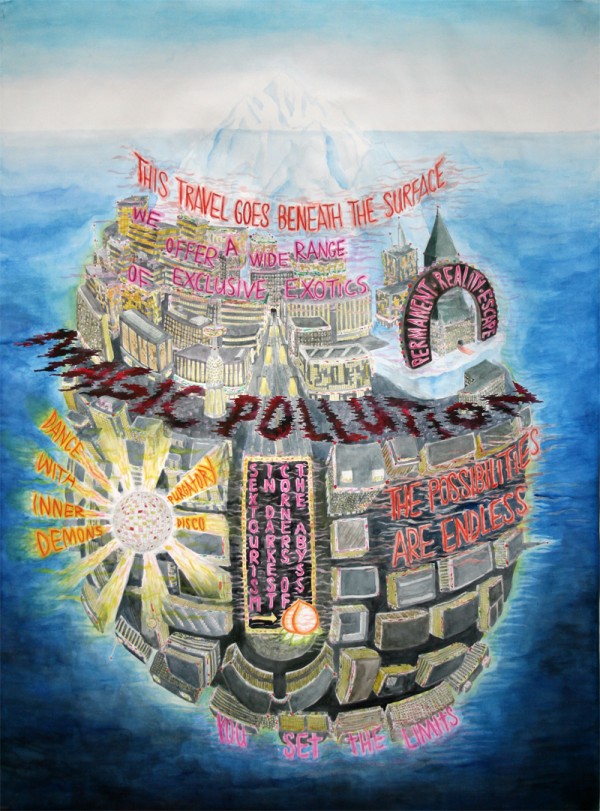
Silas Inoue, Inner Tourism, watercolor on paper, 75x100cm

The shape of an iceberg below the surface of the water is unknown but knowable. The conscious mind knows only a fraction of itself. Silas populates an iceberg with structures as though it is a floating island, a destination. The unreal view of the iceberg with its great mass below has been visually parodied even before explorer Ralph A. Clevenger put together his famous photomontage from images taken in the Arctic and Antarctic, so visually captivating it might seem to be real. The phrase “tip of the iceberg” suggests that there is much more to know—and it may be surprising what is discovered. Tourism, applied to the surface of the drowned ice, is a luxury that spreads across the globe like an invasive species.  Microbes are frozen in the ice. The economy must always grow and expand. Buildings and cities are temporary, artifacts on a longer timeline. Ancient fertile crescent cities came to prosper with the control of nature. They controlled their water as a means to creating wealth. Stabilizing nature makes us safe from it and lets us prosper. This man/nature division is a human survival technique.

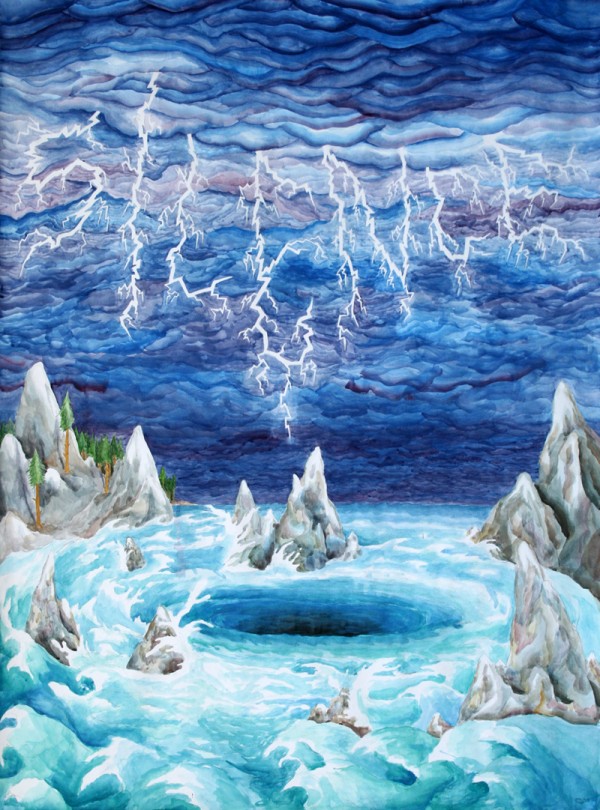
Silas Inoue, Silence, watercolor on paper, 75x100cm

A spiraling water vortex seen from the surface, its black-hole center suggests a brooding, turbulent ocean. The spiral reminds me of the shape of our galaxy, also the shit that we flush down the toilet, and the known and tentatively proven dark matter. Eddies and swirling winds are forces that can move icebergs.

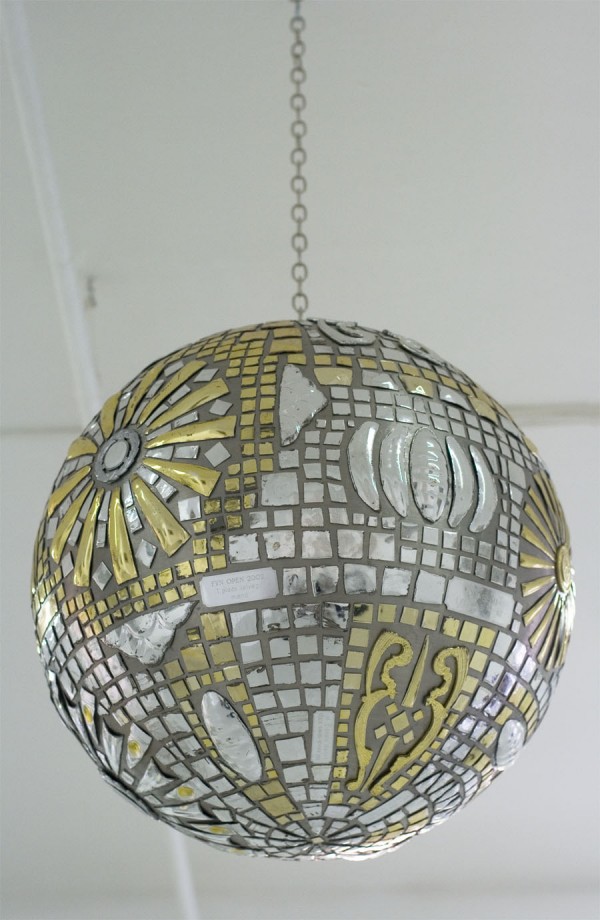
Silas Inoue, Let's Dance, 13 Karate trophies cut up and mounted on metal ball

Ideas and forms are rewoven on the artist’s trajectory in an intuitive way. A disco ball is a covered earth-like thing, like the iceberg. The ball is plated with metal parts looking like gridded city blocks. My perceptions of global climate change, apocalyptic fear and yearning, and existential considerations frame the images necessarily, my mental state, and maybe part of yours too. Some generalizations about the end of the world: the apocalypse will benefit the weakest in society. It would be a great equalizer. Artists like the apocalypse. Titans of industry want a static world. The apocalypse means a great shredding of current systems. Oppression and wealth, these were illusions that became social reality. True reality is the dynamism of nature left after a catastrophic event, the spur of evolution. The apocalypse is a bridge to the new world, a shift that allows the thinker to imagine a better world.

Waves of change are always on the horizon. A sandy island appears as solid land though it is likely to overwash and shift with the next big storm. Waves of change have essentially formed our world, but man is apt to see consistency and wants to stabilize our systems of thought. Logic is unyielding. Damage happens when our system fails, a levee break, new inlets form. Static vision is pervasive, though change is constant, quoted again and again. Those who don’t believe in the supernatural or heaven are free to use fresh theory when considering the end-times. We are in the process of covering the finite world. We have not yet finished up all our resources.

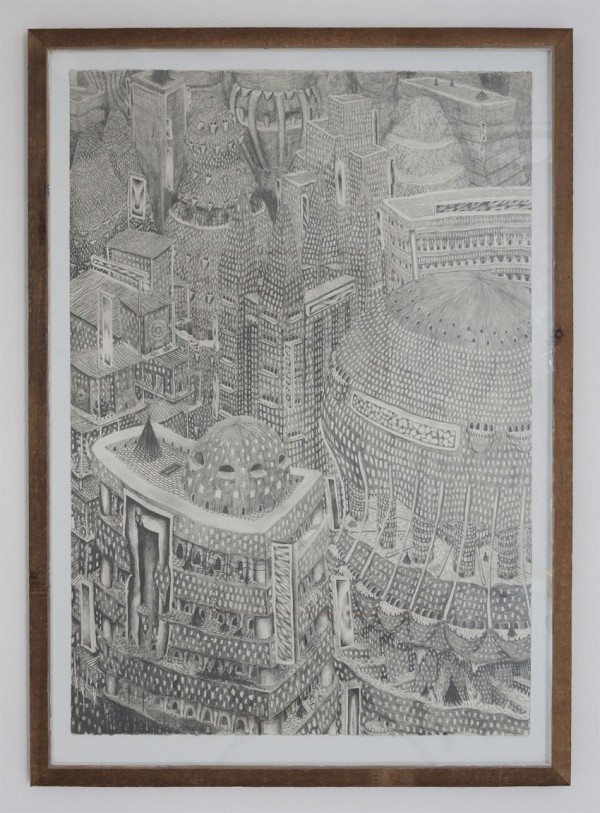
Silas Inoue, City of Phosphenes, pencil on paper

Silas’s recent solo exhibition, Marathon of the Spiritual Ape at MOHS Copenhagen, was bound by “the general need of humanity to conquer, compete and exceed oneself” as it examined forms such as trophies using a variety of media. Examining a wide range of cultural content, the art is neither prescriptive nor instructive. He challenges concepts of status and power, and their illusory nature, which guide valuation of a life lived. Silas’s body of work is allowed to be disparate and process-oriented, suggesting a repetitious and obsessive approach in its complexity and intricacy of detail, but also filled with humor, wit, and sarcasm. Often patterning space rather than rendering objects, the linear and graphic work shows a direct connection to his life as a muralist and printmaker. Silas is a graduate of the Royal Danish Academy of Fine Arts, School of Design, MA in Visual Communication.

Share

LA Expanded

Well-Mannered with a Salty Tongue

L.A. Expanded: Notes from the West Coast
A weekly column by Catherine Wagley

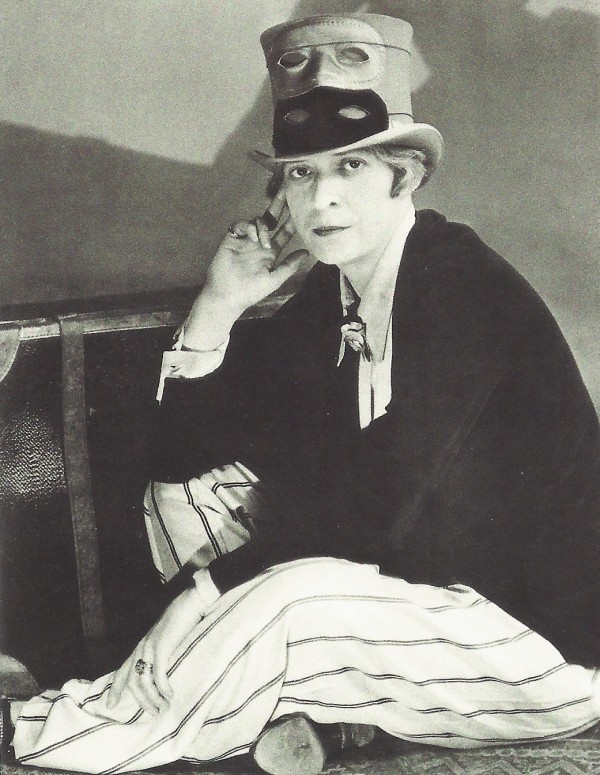
Janet Flanner photographed by Bernice Abbott in 1927.

Inimitable novelist Norman Mailer and essayist Gore Vidal feuded on The Dick Cavett show in 1971. Vidal had written these two sentences for the New York Review of Books, in a review of Eva Fige’s book Patriarchal Attitudes: “There has been from Henry Miller and Normal Mailer to Charles Manson a logical progression. The Miller-Mailer-Manson man (or M3 for short) has been conditioned to think of women as, at best, breeders of sons; at worst, object to be poked, humiliated, killed.”

The story goes, Mailer head-butted Vidal in the Green Room before either of them even made it out to the set. Once seated, Mailer, who was drunk, and who had indeed stabbed his wife a few years earlier, said with a strange amount of righteous indignation, “We all know that I stabbed my wife. . . you were playing on that.”

“Ohhh, I’m beginning to see what bothers you,” said Vidal, patronizingly.

“Are you ready to apologize?”

“I would apologize if it hurt your feeling, of course I would,” said Vidal.

“No, it hurts my sense of intellectual pollution,” said Mailer.

They got pettier then, and, in the footage I’ve seen, the camera zooms out, and you notice for the first time that sitting between Vidal and Mailer is not only Dick Cavett, the host, but a stoic, well-dressed, white-haired lady.

This, it turns out, is Janet Flanner, an ex-pat who lived much of her life in Paris but wrote for the New Yorker from the time of its inception until her death in 1978. She had also written a three part profile of Adolf Hitler in 1936, before anyone knew how bad Hitler would get. “He has a fine library of six thousand volumes,” she had said, “yet he never reads; books would do him no good—his mind is made up.”

That night on the Dick Cavett show, Ms. Flanner intervened. “You act as if you were in private,” she said.

“It’s the art of television, isn’t it?” said Vidal, but she ignore him.

“IT’s very odd,” she continued. “You act as if you were the only people here.”

“Aren’t we?” asked Mailer.

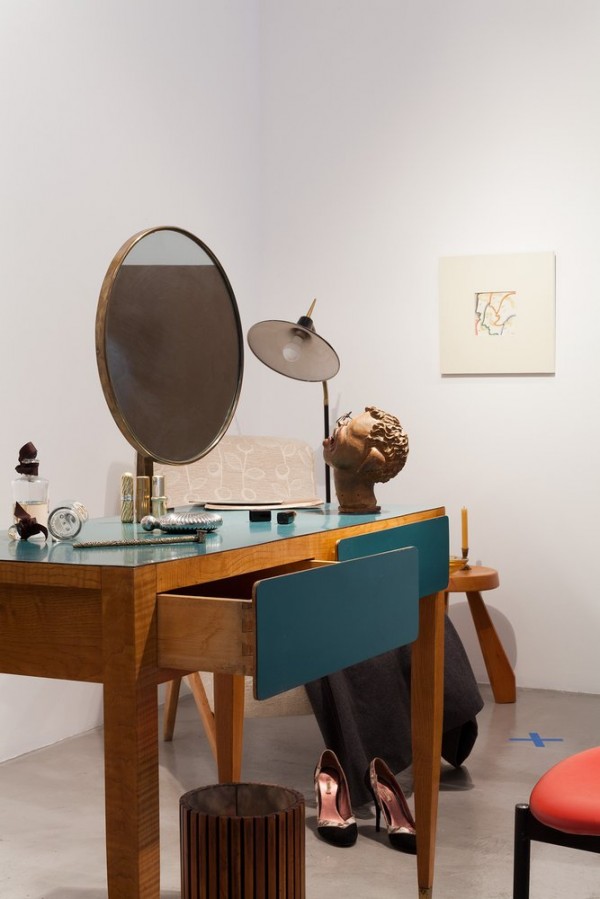
Installation view of Gio Ponti's table for Parco dei Principi hotel in Rome. Courtesy M+B.

“They’re here, he’s here,” Flanner said, emphatically gesturing toward the in-studio audience, then toward Cavett, “I’m here, and I’m becoming very, very bored.” She threw a kiss to Mailer.

Last year, when Cavett guested on the podcast Dinner Party Download, he noted that people have planned dinner parties around watch the Vidal-Mailer spat but that the best moment for him was when “the great dignified, wonderful, aged, witty Janet Flanner suddenly got irritated.” Said Cavett, “She was the epitome of the well-mannered lady.”

If you watch clips from the old TV show, you’ll notice how Flanner, once she’s had her say, tactfully reduces the sparring men to background noise. Read More »

Share

San Francisco

Lightning Appears for a Clear Sky
Rhythms and Mysteries at The Popular Workshop

Thobias Fäldt, Untitled 4, 2008. Courtesy of The Popular Workshop.

There are many ways in which we try to know things. Some people use scientific inquiry to discover specificities that help explain the world we experience. Others use intuition and introspection to explore abstract concepts that give insight into our minds. Klara Källström and Thobias Fäldt combine a stark and clinical examination of objects, people and events with the subtle use of sequencing to create an open ended narrative that does not give itself up right away; instead it slowly unravels as similarities and differences reveal themselves to illuminate the spectacular in the mundane. Källström and Fäldt’s current exhibition, Lightning Appears for a Clear Sky, at The Popular Workshop turns the world on its head; walls are simultaneously built up and broken down, resulting in a collection of unbelievable images that leave you hungry to know more.

Installation view. Courtesy of The Popular Workshop.

Thobias Fäldt, Untitled 27 (YEAR one), 2006-2008. Courtesy of The Popular Workshop.

The exhibition features works from several different series also published as books by Källström and Fäldt, and their mounting and installation reflects their fluency in the book form. In the main section of the gallery, some images are hung in pairs or groups, while others hang oversized and alone creating a dynamic rhythm similar to the experience of discovering photographs in a book. In further reference to the book form, the flash-flattened scenes highlight the graphic and sculptural aspects of each image. Once rendered in 2D, some images have an almost collage-like organization of space and the viewer can find relationships not only between separate images, but within a single image as well. The rear section of the gallery houses a video collaboration between Källström and the poet Viktor Johansson as well as a series of tiny images in small frames. A completely different viewing experience than the main gallery, these images have a quiet and intimate sense of mystery, like an old friend whispering secrets in your ear. Read More »

Share

Chicago

Paul Cowan, Brendan Fowler, Chadwick Rantanen, Dan Rees at Shane Campbell Gallery

Installation view. Courtesy of Shane Campbell Gallery

The collection of works by Paul Cowan, Brendan Fowler, Chadwick Rantanen, and Dan Rees at Shane Campbell Gallery add up to an exhibition that is greater than the sum of its individual parts. In his own way, each artist imbues an existing object and/or the space of the gallery with low-key but engaging creative intention. This makes for a surprisingly cohesive exhibition despite the fact that Cowan, Fowler, Rantanen, and Rees each have distinctly recognizable artistic styles.

This sense of cohesion stems in part from the artists’ use of prefabricated and manufactured objects. In a series of pieces titled Telescopic Pole (2012), Chadwick Rantanen has placed six aluminum and plastic poles throughout the gallery that span the distance between the floor and ceiling. In the middle of the space, Brendan Fowler built Summer 2012 Wall (2012), a seven and half foot tall T-shaped modular exhibition wall, part of which Paul Cowan has painted with a khaki shade of off-white latex paint scented with vetiver oil. On this wall hangs an orange-brown inkblot painting by Dan Rees titled Flesh Tint (2012). Rees’s paintings are arguably the most idiosyncratic works in the show, though his process – which involves applying paint to a canvas, then pressing the canvas against a surface within the space – eliminates a great deal of the artist’s personal touch. The companion piece to Rees’s Flesh Tint canvas can be found on the gallery door.

"Summer 2012 Wall," 2012, Brendan Fowler. Lumber, Drywall, Latex Paint. 90 x 48 x 4.25 in. / "Untitled," 2012, Paul Cowan. Vetiver Oil in Latex Paint On Wall. / "Flesh Tint," 2012, Dan Rees. Acrylic On Canvas, Imprint on Window. 15.75 x 11.81 in. Courtesy of Shane Campbell Gallery.

Each of these pieces also negotiates boundaries, both within the architectural limits of the gallery space and within more traditional definitions of artistic practice. Rantanen’s poles call attention to the verticality of the space and diffuse one’s attention to what’s going on above and below eye-level. The artist’s piece reminds us that, like so many old buildings in Chicago, Shane Campbell Gallery has a really beautifully molded ceiling, one that carries the unique history of the space. Fowler’s walls are at once architecture, a sculpture, an exhibition space, an object, and a subject, while Rees’s paintings are simultaneously performative site-specific installations and painterly objects that are tethered to the gallery space and the temporality of the show. By infusing traditional art objects with qualities inherent to practices like performance and architecture, the artists are blurring the distinctions between all of these modes of creation in order to create new and dynamic possibilities. Traditional definitions of what art can be become less and less meaningful as more artists around the world are creating work that straddles several different fences at once, pointing the way to a future in which art may become something else entirely.

"Untitled," 2012, Paul Cowan. Fishing Lures on Canvas. 75 x 56 in. / "Untitled," 2012, Paul Cowan. Cypress Oil in Latex Paint. / "Telescopic Pole (Drive Medical/Grey)," Chadwick Rantanen. Powdercoated Aluminum, Plastic, Walkerballs. 269 x 1.5 in. Courtesy of Shane Campbell Gallery.

And just as these artists are exploring new tendencies within contemporary art, the kinds of tendencies that will hopefully lead to new galaxies of creative possibility, they are also keeping with a certain trend in contemporary society that is increasingly post-human. I’m not arguing that the artists in the show are consciously espousing any specific agenda, but the work in the show does reflect a broader social fascination with the ways in which human consciousness has extended itself through technology and industrialization and outside of an embodied experience. This isn’t the type of art that meets viewers half way. I think highly of the show, so this is less a criticism and more of an observation. The use of sterile materials such as aluminum poles, fishing lures, latex paint, and drywall, and the impersonally manufactured quality of objects like monochromatic canvases and the free-standing wall lend an anonymous quality to the show. Looking around the gallery, I got a strong sense of arrangement and intentionality, but little sense of the reasoning behind that intentionality, like an archeologist confronting artifacts from an undiscovered society whose intelligence is clear, even if its purposes are not. What are we to make of the fishing lures in Cowan’s canvases or the walkerballs at the ends of Rantanen’s aluminum poles? It doesn’t seem as though they are meant to be fully understood, though their presence is provocative. They operate at a distance that does not lend itself to conventional understanding. As I mentioned above, I find that to be an interesting quality that makes me want to engage with the work further, even if the work itself may not feel the same way.

Paul Cowan, Brendan Fowler, Chadwick Rantanen, Dan Rees will be on view at Shane Campbell Gallery in Chicago through August 25, 2012.

Share