Kassel

dOCUMENTA (13) “Non-Concept”

Song Dong’s Doing Nothing Garden. SONG DONG: ‘I asked what Christov-Bakargiev’s concept was, and she said, ‘I have no concept,’ I said, ‘Great,’ if no concept is your concept I will do nothing.’

A “Doing Nothing Garden” where grass grows freely over a pile of waste, an encased letter from artist Kai Althoff declaring why he will not be participating in the exhibition, and Ryan Gander’s invisible artwork, a breeze coming through an empty room.  The favored term of the dOCUMENTA (13) is “non-concept.” Accompanied by jargon such as “non-existing existence” and an education program named “Maybe Education,” the term “non-concept” has been subject to both acclaim and criticism. At a Berlin press conference in 2010 the exhibition directors announced that “dOCUMENTA (13) does not follow a single, overall concept but engages in conducting, and choreographing manifold materials, methods, and knowledges.” When the artistic director Carolyn Christov-Bakargiev is asked to define her concept, she replies that she does not have one. While this may seem radical to some, it has become clear over the duration of the exhibition that a non-concept is still a concept.

While many of the contemporary art world’s concerns are inextricably linked, a production such as the dOCUMENTA (13) is no true laissez-faire curating; there is a definite choreography to what Christov-Bakargiev has called a “frenetic dance.” The frenetic nature of the exhibition is a part of the general organization and framework. Many of the exhibited works were commissioned and in so share the recurring themes such as the focus on destruction and renewal, the incorporation of Afghanistan, or the various works dealing with the tri-fold history of nearby Breitenau.

Fridericianum visitor feels the breeze of Ryan Gander’s I Need Some Meaning I Can Memorize ‘The Invisible Pull’

Beyond the shared sensibility of the work itself, one of the cornerstones to the “non-concept,” is the element of confusion. Here is a subject I can speak to with personal experience as an employee of the Press Center. While not initially clear, it did not take long to realize that the confusion was intentional. The first few weeks surrounding the opening were chaos and the rest has been a type of accustomed confusion, leaving me to suspect the labyrinth to be calculated. When asked by people of the press for more information on the work of Tino Sehgal, I stood a bit helpless. Can’t find him in the guidebook? No, because unfortunately the artist removed himself from it. Performance artist Sehgal wishes for nothing but the personal memory of his work to remain.

Sam Durant’s Scaffold

In the beginning weeks after continuous complaints of poor signage and even misinformation, I couldn’t help but wonder if this too was part of a ploy to maintain a degree of disorientation. I felt as if somewhere Christov-Bakargiev was scoffing at the idea of visitors attempting to control the way in which they would encounter the art. It must be said that attitude played an important role here- the more open the visitor, the more enjoyable the experience. Artist assistants told me of similar happenings working on-site with the art. As hundreds of thousands of visitors have been pouring into Kassel, lines have been amassing making some performance and interactive works difficult to accommodate. When visitors of Pedro ReyesSanatorium were not able to book appointments, the assistants took the liberty of passing on what they had heard from Christov-Bakargiev: she doesn’t want them to see everything. One can imagine the reception of this response from visitors attempting to see the documenta in a single weekend.

Read More »

Share

San Francisco

What can Goth do for politics?

David J. Haskins, Sabotaged Sheets, 1979. Collage on paper, 8-1/2 x 11 inches. Wall of Sound exhibition, Steven Wolf Fine Arts.

This summer San Francisco has not one but two gallery exhibitions that explore the legacy of punk and post-punk. Wall of Sound, at Steven Wolf Fine Arts, presents artworks by seminal figures of the late-1970s music scene (including Monte Cazazza, V. Vale, and Exene Cervenka), and I’m So Goth – I’m Dead! at Queen’s Nails Projects features mostly contemporary pieces that deal with the “Gothic sensibility” in one way or another.

The two shows are linked by the work of David J. Haskins, best known as the bass player for Bauhaus and Love and Rockets. His intricately crafted collages dominate the Steven Wolf exhibition; Queen’s Nails has only one piece of his, but it is given pride of place by the entrance. Haskins’s works are among the few pieces that make Wall of Sound more than a nostalgic trip or a celebration of the trashy, no-budget aesthetic that punk did so much to promote.

Even though Haskins is the man who wrote the lyrics to the ur-Goth song, “Bela Lugosi’s Dead,” his collages on view at both galleries (all made in 1979) feature little stereotypically Gothic imagery. He seemed more preoccupied with the workings of the consumer society, and his outlook was pessimistic. Recurrent in his pieces is the juxtaposition of advertisement or propaganda images of “picture-perfect” people (athletes, models, etc.) with photographs of consumer products and various machines with bare insides. Symbolically equating people with those inanimate objects, the artist seemed to imply that within the capitalist society people are lowered to the level of automatons (easily manipulated with the help of mass media) or commodities. Haskins’s collages channel the mood of dread and paranoia, since they do not presuppose a position outside of the capitalist consumer society. His pieces were very much in tune with the emerging postmodernist art, preoccupied as it was with its own complicity in the deplorable state of affairs.

Claire Fontaine, La société du spectacle brickbat, 2006. Brick and archival print on archival paper. 7”x 4 ½” x 2 ½”. I’m So Goth – I’m Dead exhibition, Queen’s Nails Projects.

The mood of dread and paranoia is foundational for the I’m So Goth… exhibition, which claims to tackle, among other things, “the collapse of the economy and the decline of the spirit.” The curators Bob Linder and Julio César Morales seem to imply that now, like in the late 1970s, Gothic pessimism is an appropriate reaction to what the world has turned into. I’m So Goth… is not your typical “dark arts” exhibition filled with images of vampires , roses, and skulls–instead the show features unobvious pieces that make it haunted by the specter of political action. Works such as Claire Fontaine’s brick wrapped in the cover of La Societé du Spectacle by Guy Debord (La société du spectacle brickbat, 2006) and Enrique Chagoya’s print that depicts Obama tormented by demons (The Head Ache, 2010) indicate that the curators are interested in the intersection of Goth and politics. Why is Goth important now, they seem to ask.

Read More »

Share

Elsewhere

Supporting Partick Thistle: Paintings, Rob McLeod

Rob McLeod, True Kiwi Content, 2004, oil on plywood. Image: Stephen A'Court Photography.

Even fanatic football fans would be hard-pressed to remember a Glaswegian football team called Partick Thistle, a perpetual underdog in First Division Scottish Football League that’s oft-joked about because of their non-winning ways. Getting behind a team that tries every week but gets nowhere requires no small measure of faith, an action probably synonymous with holding out hope in the long term for that which may never materialise. Supporting Partick Thistle is a show that utilises the metaphor of supporting a losing football team that is akin to the nature and process of painting, a medium which Glasgow-born artist Robert McLeod believes most people think should be dead and buried.

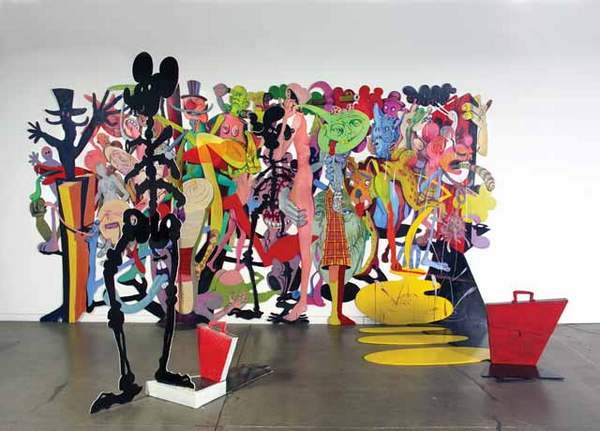
McLeod’s hardly naive about this realm – he recognises all too well the usefulness of painting in what he does – yet he remains a steadfast bearer of its gilded history and value, practicing it, then teaching it. He came to New Zealand 40 years ago wanting to continue where abstract artists such as Willem de Kooning and Alan Davie left off, looking to break away from the rigid formality of his art training in Glasgow. But after 30 years of studying minimalism and abstract expressionism, McLeod noticed a part of Micky Mouse’s ears in an abstract work and turned his practice to exploring the figurative. Most of the work in this show comes from the past decade, comprising mostly three-dimensional paintings on plywood, where layered forms and colour combine to create a motley crew of cartoonish figures that are loud, grotesque and irreverent.

Robert McLeod, The Three Graces Struggle with the Goochi Handbag, 2011, Installation view, Bath Street Gallery. Photo: Sait Akkirman

In True Kiwi Content (2004), mutinous, quasi-Disney and Looney Tunes figures – a giant-footed, mini-breasted Frankenstein and more bums, tongues and teeth – stand unmoving before the viewer, as a skeletal Mickey Mouse stands a few paces from this static crowd of caricatures. To McLeod, these cartoon-inspired characters are “familiar and initially endearing….but [are] more often aggressive and with a dark underside”; they are a painted reality in which no one gets hurt for too long. Other installations have multiple, interchangeable parts that could be moved off the wall and reconfigured into a different set of posing characters, consequentially modifying the interactions between audience, installation, and gallery space. The top and bottom halves of McLeod’s Exquisite Choices – The Three Graces (2011) for instance, are mobile, the silhouettes and baggage of the misshapened, pear-shaped ladies wholly dependent on the spectator’s arrangement of their body parts.

Read More »

Share

Help Desk

Help Desk: Art Fairs Everywhere

Help Desk is an arts-advice column that demystifies practices for artists, writers, curators, collectors, patrons, and the general public. Submit your questions anonymously here. All submissions become the property of Daily Serving. Help Desk is cosponsored by KQED.org.

I may be in an enviable position, but it is a sticky one nonetheless. I’m getting to the position where I may be represented by multiple galleries who want to show my work at art fairs. With the rise of the art fair as a way of selling and promoting artists, how might I go about deciding which gallery will show my work at a fair? In the instance where you are just showing in galleries it seems easy because you can schedule shows apart in the calendar year and set work aside for each gallery, but if the same galleries start showing up at fairs, it gets tricky. Is this something I have to negotiate or would I just tell them to talk it out?

Congratulations! To answer your query, I turned to some experts who have the inside scoop on art fairs. Gallerist Nathan Bowser in Portland, Oregon agrees that your predicament (if it can really be called such) is a good one to have. “This artist has a very exciting problem and should be commended for actively thinking about the best way to balance these many positive elements of his or her career. Communication is key to any business relationship, so avoid the ‘let the galleries duke it out’ approach (this is a great way to alienate your allies). This is YOUR career, so it is quite important that you remain an active voice in these important choices. How and where your art is displayed directly effects who sees it and what they take away from that experience. Though it may be one of the least interesting aspects of an artist’s work, staying involved in your career planning can be one of the biggest determining factors of your success.”

Edward Winkleman, my other go-to man on the art fair scene, had some detailed insight into how your issue might play out. As the Director of Winkleman Gallery in New York, he’s had a lot of experience with fairs, including ARCO, Art Chicago, Pulse, Year 06, Aqua, and NADA: “It’s not at all unusual for an artist to have work in the booths of multiple galleries at an art fair. Usually those galleries are in different cities, so there’s not much confusion about who represents them where, but you’ll occasionally also find work by the same artist in booths of galleries from the same city (generally as a plan worked out mutually by artist and respective galleries, but not always). For example, say Gallery A represents Artist X and Gallery B owns some of Artist X’s work outright. Even if Gallery A and Gallery B are in the same city (and even if Artist X and Gallery A might object), Gallery B can indeed present the work at the art fair of their choice because it’s their property. Of course they might damage their relationship with Artist X (assuming they still have one), but they are in the business of selling art, so….”

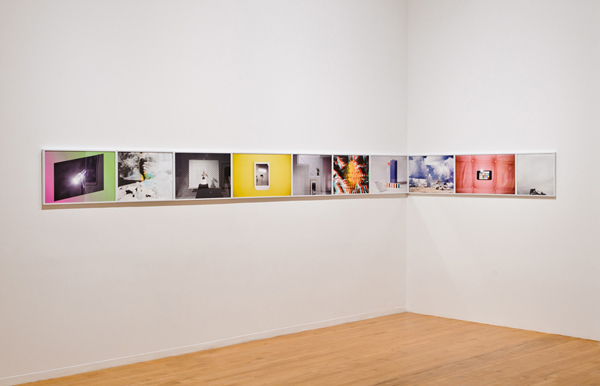
Jordan Tate, New Work #100, 2009. 3-channel slide projection (RGB)

I’d say it sounds like you need to initiate conversations with all of your galleries so that everyone is on the same page. In their responses, both Edward and Nathan brought up the related issue of having enough work on hand to satisfy your dealers and collectors, so make sure to discuss expectations regarding quantity with your galleries. For example, Nathan pointed out, “At some point there comes a time in an artist’s career where they must face the task of supplying enough work to maintain the interest and active collecting of a (hopefully) ever-growing and widening audience. Especially for an artist whose star is on the rise, there is definitely a case to be made for producing enough work to satisfy this demand. An artist I work with has this great anecdote from a visit to Andy Warhol’s studio. He, Andy and several others were standing around chatting and the question of, ‘how to become a well collected artist’ came up. Andy’s reply was simple: ‘You can’t be well collected if there aren’t enough works to collect.’”

Edward underlined the need to put everything on the table before problems arise: “Trickier for the artist is how to keep each gallery who might want to bring work to the same fair (or to fairs near the same time) happy when supply is short. Multiples are one solution, if that fits within the artist’s practice. Otherwise, it makes sense to simply have a conversation with each representing gallery well in advance, letting them know what you, the artist, feel is available for that fair. Yes, this can lead to disagreements, but the earlier such conversations take place, the easier it becomes to work out solutions that keep everyone reasonably happy.”

Jordan Tate, New Work #141, 2009. Pigment Prints, frames.

So you have to think very carefully about not only where your work is going, but also how much work you can reasonably produce to have on hand for each fair. Nathan continued with some savvy observations on how an art fair functions for the artist, the gallery, and the collector: “Success at art fairs is often tied quite closely to a well-planned and executed strategy. Despite the ‘free for all’ feel on the fair’s floor, a large portion of sales start before the fair opens and even more activity culminates well after everything has been packed away. Galleries who are successful at art fairs develop leads before the fair. Later, follow-up communications after the fair can lead to sales and museum shows. Rarely do these things happen from coincidence.”

Read More »

Share

From the Archives

Street Art: The New Generation

People love to make their mark on the world, but do it in different ways. Some leave legacies recorded in history books, other leave their legacies on the walls around us. From the beginning of art on cave walls to the street artists today, we want others to know we exist. The upcoming exhibition at Kunsthallen Brandts, Street Art: The New Generation, features the work of several different street artists from Europe and the U.K. Today from the DS Archives we bring you another look at street artists.

The following article was originally published on August 5, 2011 by :

L.A. Expanded: Notes from the West Coast
A weekly column by Catherine Wagley


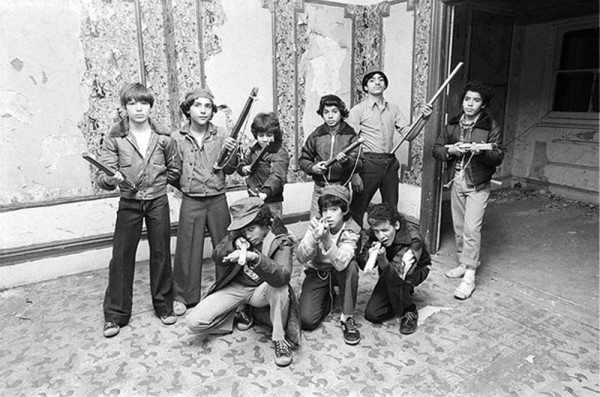
Martha Cooper, "Defiant Youth"

Read More »

Share

San Diego

Isaac Julien’s Ten Thousand Waves

Isaac Julien, Mazu, Silence (Ten Thousand Waves), 2010 Endura Ultra photograph, 180 x 240 cm Courtesy of the artist, Metro Pictures, New York and Victoria Miro Gallery, London

Isaac Julien’s Ten Thousand Waves made its west coast premier this year at the Museum of Contemporary Art San Diego in the largest space yet to exhibit his nine-screen film installation. The film installation, open through December 1 at the museum, braids three strands of time and landscape together: the rural mountains of ancient China, the early Golden Age of Chinese cinema, and current day. Julien, who worked on the project for approximately five years, bears forth a delicately crafted tapestry of film that accesses all planes of time simultaneously.

Inspired by transnational immigration and the 2004 Morecambe Bay tragedy in which Chinese cockle collectors were drowned by the sudden tide on the Lancashire/Cumbrian coast, the film opens with Mazu, the Chinese goddess patron of fisherman and sailors, descending upon 1930s Shanghai. This sets the anachronistic pattern for the film, which challenges the Chinese fastidiousness to historical, artistic, and mythological authenticity. The film weaves through Chinese fisherman traversing mountainsides haloed in white mist; a beautiful, troubled woman riding a trolley through 1930s Shanghai; actual footage from the rescue helicopter searching for the cockle pickers; a sea of soldiers in white marching; the deep ocean rolling like the monstrous skin of something alien. The original score by Jah Wobble performed by the Chinese Dub Orchestra and Maria de Alvear, and Wang Ping’s poem “Small Boats” float through the film like gossamer.

Isaac Julien TEN THOUSAND WAVES (2010) Installation view, The Hayward Gallery, London Nine screen installation, 35mm film, transferred to High Definition 9.2 surround sound, 49′ 41″ Courtesy of the artist, Metro Pictures, New York and Victoria Miro Gallery, London

In the second half of the film, Mazu is pulled before a green screen, suspended by a harness, her hair blown back by an industrial fan. A master calligrapher letters upon glass with crewmembers arriving soon after to clean and polish the pane. The streets of 1930s Shanghai are denuded as small sections of a wall are pushed across the tracks by modern day crewmembers. The peeling back of the scenes to reveal the production references Isaac Julien’s own deconstruction of our collective consciousness of Chinese mythology, landscape, history, and art.

Read More »

Share

LA Expanded

White on White

L.A. Expanded: Notes from the West Coast
A weekly column by Catherine Wagley

A screenshot of Jean Harlow in her bedroom in Dinner at Eight

David Batchelor, in his exquisite little pink book Chromophobia, describes a white he encountered on the walls of the home of an “Anglo-American art collector” he visited in the 1990s. He wrote, “There is a kind of white that repels everything that is inferior to it, and this is that kind of white. . . This white was aggressively white. It did its work on everything and nothing escaped.” Batchelor goes on to wonder, could we hold the architect who designed this home responsible? This architect wanted to “strip bare and to make pure,” to construct minimal, “very direct” buildings in which there was “’no possibility of lying’ because they are ‘just what they are’.” Says  Batchelor, “He was lying of course, telling big white lies. . .” That terrifying sort of white does not free anything or anyone up to be themselves, though it might put their features and flaws into sharp relief.

View of the Mary Corse installation at Ace Gallery.

I am thinking of white because of two exhibitions I saw last week. The first, Billy + Jean by Margaret Haines and Orlando Tirado, in the L.A. Koreatown space Commonwealth & Council, announces itself with a white-on-white work hung in a white-walled corridor which may have been a closet once (Commonwealth & Council is upstairs in an old office complex and, like in many old building, it’s sometimes hard to tell exactly what nooks and crannies in the space were originally meant for). This work lists, in white lettering, all the whites that appeared in Jean Harlow’s bedroom in Dinner at Eight (1933), the bedroom in which the starlet, dressed in a shiny white robe, called Wallace Beery a “dumb bunny.” That bedroom is not the least bit austere. But it is full of white. According to Haines and  Tirado, these were the whites in Harlow’s bedroom:
OYSTER WHITE
LACQUER WHITE ORNAMENTED IN DEAD CHALK WHITE
CREAM WHITE
TRANSLUSCENT ALABASTER-WHITE
MILK WHITE
METALLIC WHITE
WARM WHITE
IVORY-WHITE IN THE TAFFETA

Altogether, these whites seem indulgent — there are too many of them for the whiteness to feel at all minimal. The show Billy + Jean, its title from a 1968 Michael McClure play in which Jean Harlow and Billy the Kid become entangled, sprawls out from there, with a shrink-wrapped, rectangular amalgam of clothing and cardboard and books and wigs on the floor, and against the far wall a found object trellis. The trellis is also painted white, but not perfectly and not with a perfect white shade. This white is more like a primer, sort of gritty and warmer than cold.

Read More »

Share