San Francisco

The Right Stuff: Amir H. Fallah at Gallery Wendi Norris

The Laws Of Order, 2012, acrylic, collage, colored pencil on paper mounted to canvas, 5'x6'

In our predominantly consumerist society, it is increasingly difficult to disconnect ourselves from our belongings. Barbara Kruger summarized the contemporary Cartesian dualism when she created her 1987 piece, “I Shop Therefore I am.” The more we define ourselves through our endlessly multiplying clutter, the harder it is to relate to others who don’t share our specific collection of objects onto which we project meaning and the illusion of importance. To create the works in his current exhibition, The Collected, at Gallery Wendi Norris in San Francisco, Amir H. Fallah hijacked individuals’ possessions to create narrative portraits through their stuff.

The Earth Is But One Country (Eastern Bred, Southern Fed), 2013, acrylic, ink, collage, oil on paper mounted to canvas, 48 x 72 in

Immediately Fallah subverts the quality of a traditionally “good” portrait; in each painting the figure is almost entirely obscured by textiles that slip back and forth between the perception of depth and two-dimensionality. He denies the viewer what would be, for many portraits, the pivotal opportunity to render a likeness. Instead, Fallah concentrates on their favorite items as well as whatever bits of personal detritus he finds compelling. So while the portrait is created through objects, they may not be the objects that the subjects would have chosen to define themselves. Impressing his subjective interpretation of the sitter, Fallah reclaims his artistic liberty and separates himself from the likes of a hired caricaturist merely creating something to please the client but not necessarily depicting anything insightful or illuminating. Demanding even more freedom from such a role, when the portraits are commissions, the clients are not allowed to see the paintings until they are completely finished.

Read More »

Share

Chicago

(Made by) PICASSO AND (owned in) CHICAGO

Trying to critique a blockbuster museum show like “Picasso and Chicago” at the Art Institute of Chicago is kind of like trying to offer thoughtful criticism of Coca-Cola; at this point, there’s not much that can be said that would enhance or diminish the iconic status of either of these monolithic cultural forces. So why bother?

"Maquette for Richard J. Daley Center Sculpture," Pablo Picasso, 1964. Simulated and oxidized welded steel, 41.25 x 27.5 x 19 in. Courtesy of The Art Institute of Chicago.

Here are a few personal thoughts and observations about the show:

Membership previews for the show began February 16th. By February 17th, some of my art-loving friends had already asked me if I had seen “Picasso” yet. The appetite for shows that offer work by major art historical figures seems undiminished by decades of institutional critique leveled at massive cattle-call museum exhibitions like “Picasso and Chicago. Theory and practice that seek to point out the problematic relationship between power-player museums, canonized artists, and money certainly have their place within contemporary critical circles. However, the efficacy of such criticism is seriously diminished in the ticket line.

Trading on major art brands like Pablo Picasso is not without its pitfalls. Expectations for blockbuster shows are high. Friends who rushed to see the show in the days after it first opened offered mixed reviews. A student of mine complained that there is too much print. Other students agreed. Within the over 250 pieces in the show, there are several galleries dedicated entirely to Picasso’s graphic work. Which is a great opportunity for viewers to delve deeper into themes of sex, violence, misogyny, and self-loathing more commonly found in printed works like the Shunga-esque The Minotaur (June 24, 1933) and the gruesome The Great Bullfight with Female Bullfighter (September 8, 1934). However, museums can triple their attendance figures during shows and retrospectives of big name artists, particularly those known primarily as painters. “Picasso and Chicago” will undoubtedly be a big draw, one that will attract viewers who expect to see canonical art history on the wall when they see a name like “PICASSO” in bold lettering on museum banners. In practical terms, “Picasso and Chicago” is not textbook Picasso. There’s plenty of Modernist Picasso, such as The Red Armchair (1931). There’s Blue Period Picasso, exemplified by The Old Guitarist (1903). There’s a sprinkling of Cubist and Neo-Classicist Picasso. But the scores of prints – which offer many rich examples of the artist’s unique genius – dilute the density of paintings per square inch and that’s what some viewers are paying for. The double-edged sword of the blockbuster art show is that it generates outsized attendance predicated on outsized expectations.

Read More »

Share

Fan Mail

Fan Mail: Mirka Laura Severa

For this edition of Fan Mail, Mirka Laura Severa of Amsterdam has been selected from our worthy reader submissions. Two artists are featured each month—the next one could be you! If you would like to be considered, please submit your website link to info@dailyserving.com with ‘Fan Mail’ in the subject line.

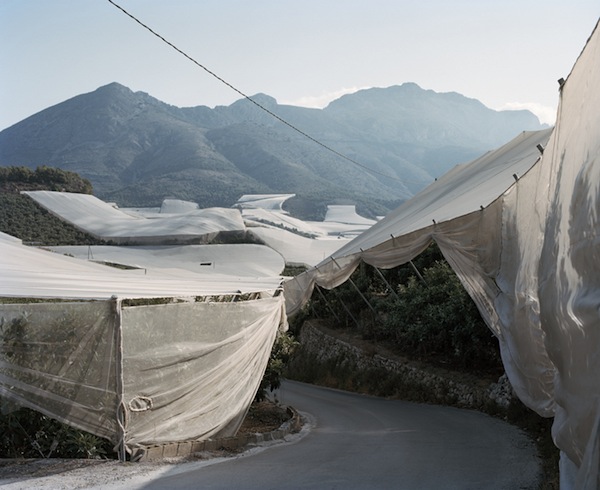
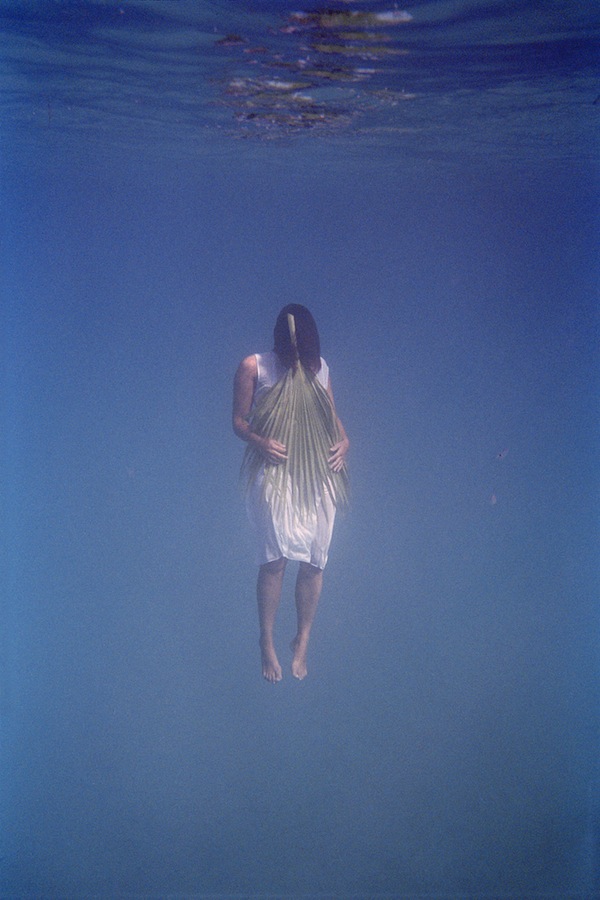
Mirka’s photographic series Swallow is deeply veiled. She returned to the Czech Republic, Spain, and Germany to photograph with the intent of confronting memories. As if trying to analyze another person’s dreams, I freely associate in order to make sense of the images. But by doing that, I mostly analyze my own mind. Thinking about Carl Jung, dreams are highly unique to the dreamer and the dreamer has vital knowledge to decoding the dream–that is, all the experiences of their life. And so, the artist has a special first hand knowledge of their art. I want some memories to apply to these images, but the images feel intentionally secretive. Perhaps I can look at them as if they are tarot cards trying to send me a message.

After sending Mirka my description of her images, she replied with only a little detail.

I’m attracted to the foliage of this mountainous location, looks like Spain. Are these flowers growing under the shade cloths?

Mirka: Spain? yes.

shade cloths? yes, its a net.

Saying the word ‘swallow’ as I look through the images immediately gives basic meaning when looking at hands swallowed by a tree, a person soaking in the river, the cat squeezing through a tight space. What is this first image, a black form submerged in of water? a hand–I see a tiny bit of flesh?

Read More »

Share

Help Desk

Help Desk: Lazy Art Critic

Help Desk is an arts-advice column that demystifies practices for artists, writers, curators, collectors, patrons, and the general public. Submit your questions anonymously here. All submissions become the property of Daily Serving.

An art critic who writes for local newspaper recently approached me. He wants to review a recent show I installed at a local gallery. He is essentially asking me to provide him with my thoughts on my work and, after reading several of his articles, it seems as if he will just quote me at length rather than provide an actual review of my work. On one hand this appears to be an opportunity to put forth some of my own ideas (however small), but on the other it seems it will be a watered down version of a review that serves more to fill a column than actually respond critically to a body of work. Should I indulge him in my eagerness to gain press attention or decline in hopes of a future proposal from a more attentive critic?

I applaud your sincerity and rectitude, but in this case they are somewhat misdirected. Understandably, you’d like your show to be reviewed by someone who will take the time to get to know the work and write up his or her own analysis and interpretation. Knowing that you’re not going to get it is a bit discouraging, but one could easily grow old and die while waiting for a “more attentive critic.” I don’t want you to second-guess your values but when opportunity knocks, open the damn door.

What you’ve got to keep in mind is that your own integrity is not at stake. The best you can do is work hard to make something you believe in. You’ve made the art and sent it out into the world with some background information to accompany it on its way. You’re not responsible for what other people do with that information. A local journalist who lacks imagination or initiative is not under your control.

Francesco Vezzoli, installation view of Olga Forever! The Olga Picasso Family Album at Almine Rech Gallery

Sometimes when you’re in a quandary it helps to do some thought experiments. Imagine a critic who always pans the work that she reviews. Would you give her the same information about your show, knowing that she might use it to underscore her various arguments about how and why your work sucks? I suspect you would, because you’d at least have the consolation that she was spending time with the work and paying attention. Now let’s try another scenario: Would it make a difference to you if the reason this critic quotes at length from the artist is because he doesn’t trust his own evaluation of artwork? What if, instead of being lazy (and perhaps somewhat disingenuous), he is simply insecure and fearful? And lastly, even though he has a record of quoting at length, can you be absolutely sure he will do the same in this instance? People do change, and we can hope that perhaps he will start with you.

Please don’t think I’m unsympathetic. There’s a well-known “critic” in my town who copies verbatim from press releases, which I discovered when I received a press release from a local gallery and then saw the same wording appear three days later in one of his “reviews.” Thinking that I must be mistaken, I compared the two side by side. As you might guess, they were practically identical and I spent the next few days nursing a sludgy emotional mix of dismay and contempt. It’s disappointing to find that some of the people we entrust with the power to publicly consider and evaluate artwork are, in one way or another, just not doing their jobs.

Francesco Vezzoli, Olga Forever (Olga Picasso en mariée, Boisgeloup), 2012. Oil on canvas and laserprint collage, 206 x 134 x 7 cm

If you’re in this for the long haul, you’ll get your share of press, and other problems will arise. Someone will spell your name wrong, or misquote you, or fail to apprehend what you feel is the most important aspect of your work. In all cases, you should politely correct what you can and then just move on.

It’s something of a gross generalization to say this, but on the whole I believe we artists work hard. We want our artwork to be greeted with the same energy it took to make it. We want the work to be evaluated fairly and intelligently, on its own terms, and preferably both in print and online by a well-known critic who has a healthy share of Twitter followers—joking! (sort of). But if you wait for that perfect day it might never come. It’s okay for you to give this journalist some background information, even if it is carefully crafted to showcase your work in the best possible light. You’re also free to encourage this journalist to write more about his own take on the show (“I’d love to hear your reaction to the work and I look forward to reading your opinions” or something similar). Eventually this review will become just another line on your CV, and hopefully you’ll have moved on to a more interesting conversation about your work. Good luck!


Share

Elsewhere

Things Happened on the Island: Lam Tung-pang’s Floating World

In early 2011, when I visited a number of young Hong Kong artists’ in their studios, they spoke of their frustration at the focus of curators on art from mainland China, and of their sense of being a ‘poor relation’. Add to that the tensions simmering just below the surface as cashed–up mainlanders poured into Hong Kong, and it seemed a recipe for resentment. In the two years since, much has changed.  I returned to Hong Kong in December and found a very different atmosphere. There are undeniable controversies, tensions, jealousies, and scandals (this is the artworld, after all) but also an emergent pride and optimism. The boom created by M+ and the West Kowloon Cultural District mega-development ; the redevelopment of the Central Police Station;  the exhibition of 18 artists in ‘Hong Kong Eye’ at Saatchi in London and Hong Kong Art Fair’s absorption into the Art Basel ‘brand’ have all had an impact. Contemporary art in Hong Kong is emphatically not ‘China Lite’. It is something altogether different, reflecting a very specific history and culture.

Lam Tung-pang in his studio, Hong Kong, December 2012, photograph Luise Guest reproduced with permission of the artist

Artist Lam Tung-pang typifies a specific Hong Kong identity, expressing the excitement but also the anxiety of this particular ‘floating world’. He synthesises his deep knowledge of Chinese art history and his love for traditional ink painting into a highly contemporary practice. Challenging traditional boundaries between painting and sculpture he produces paintings and installations which reflect his knowledge of the Chinese landscape tradition and  embody ideas about memory and history. His signature technique involves painting, drawing or stencilling  images observed and remembered from  Tang, Yuen and Qing Dynasty paintings onto large sheets of plywood.

On my first visit to his studio I saw paintings from his ‘Travel and Leisure’ series which represent the beauty of nature under siege from  encroaching  urbanisation. Lam looks with nostalgia to old Hong Kong. In a city hurtling towards an uncertain future after 2047, the date marking 50 years after the ‘handover’ to China, he worries about what has been lost. He loves his studio in Fo Tan because, he says, he can look out the window and the mountain is always there. There is a sense of permanence, despite the fact that you can see the haze of pollution like a veil over the border with mainland China.

Lam Tung-pang, 'Past Continuous Tense' (detail) charcoal and image transfer on plywood, 2011, image reproduced courtesy of the artist

In many works the misty mountains of literati painting turn into the towers of Hong Kong. At once lyrical and intentionally awkward, like the cheesy museum dioramas of his youth,  they suggest innocence betrayed. TIny model houses, people, animals and trees are attached to some works, creating a toy landscape, an escape into a whimsical fantasy world. “Painting is like playing” he says. Lam himself, however, is immensely serious about what he does. Intense behind owlish spectacles, the artist told me he immerses himself in Chinese artistic traditions but also loves Medieval and Early Renaissance painting. Those intricately detailed backgrounds behind the main action in works by artists such as Piero della Francesca have always been influential. Read More »

Share

New York

“NOW! THAT’S WHAT I CALL ART”: NYC 1993 at the New Museum

NYC 1993: Experimental Jet Set, Trash and No Star is the New Museum’s crash course in the recent history of contemporary art in New York. The exhibition positions 1993 as a signifier for mass cultural change: the thesis being that the events of this year irrevocably directed culture towards its manifestation in 2013. NYC 1993 seems just as concerned, however, with the ways that we continuously look backwards in the present for clues on how to act now. It is not that 1993 simply “jetted” us towards the future, but rather that our present is textured by a consistent obsession with culling artifacts from the past in order to render itself legitimate.

Pepon Osorio, "The Scene of the Crime (Whose Crime?)," Detail, 1993. Mixed medium installation.

Read More »

Share

San Francisco

Sadie Barnette – Composed and Performed

As a part of our ongoing partnership with Art Practical, today we bring you a feature from writer Liz Glass on Sadie Barnette‘s exhibition at Ever Gold Gallery in San Francisco.

"Untitled", Hologram, frame. Sizes range 5"x7" to 20"x30" (available individually).

Glitter and dirt; earthbound objects and slices of psychedelic space; the white cube and the club: these pairings are all present—and at odds—in Sadie Barnette’s exhibition, Composed and Performed. The exhibition is minimal in the simplest sense of the word, consisting of just four new works. The disjointedness between these discreet pieces also makes Composed and Performed initially difficult to read. Barnette is clearly an artist of the post-medium-specific age: the single photograph, the lone installation, the solitary sculpture, and the artist’s book (several copies of which are present) are as different from one another as the works of four separate artists.

The broad reach of the verbiage supplied by the gallery to explain Barnette’s work mirrors her aesthetic eclecticism. While it indicates that the work somehow corrals her various interests—among them “extralegal economies, luxury as drug, counterfeit capitalism, glitter as hypnotic, outer space as head space, the everyday as gold, family and lived identity experience, and the party”—the complexity of thought present in Barnette’s work goes beyond this laundry list of sparkling abstractions.1 What is most striking in the works in Ever Gold’s three rooms is an exploration of entropic degradation and the contours of distinction that define both our past from our present (or future) and ourselves from that which we are not.

“Untitled” Vintage audio receiver, enamel, dirt 2013.

Entropy is a natural process of degradation: the movement from order to eventual chaos, or “maximal disorder.”2 Of the four works in the exhibition, the two of most interest in terms of this idea are grouped together in a small central room. Along the wall, Barnette’s untitled installation is composed of numerous white frames leaning against a wall in a loosely arranged stack and, in an adjacent corner, a vintage audio receiver, painted a clean white and partially buried in a pile of dirt on the gallery floor. These two works function to mark different points within the same system. The blankness of Barnette’s audio receiver unmoors the object from the specificities that once defined it: its brand, its indicators, and even its worn quality that may have developed from years of use. Simply painted in a neutral tone, this piece of equipment is transformed from a functional object to a symbolic one. With the strength of its neutrality, this audio receiver can stand in if only momentarily for the entirety of the analogue age. The dirt that surrounds and covers the receiver is the product of entropy, the final stage in a material degradation of matter.

Read more on Art Practical –

Share