San Francisco

Jill Miller: Collectors

From our partner site Art Practical, today we bring you a photo essay from the recent theme issue On Collecting. This series of images is from Jill Miller‘s Collectors project, in which she “collected” notable Bay Area art patrons by taking surveillance photos of their activities, cars, houses, and public meetings. This article was originally published on February 6, 2014.

Jill Miller. Pam Kramlich and vehicle in side mirror, 2007; Photograph. Courtesy of the Artist.

Jill Miller. Pam Kramlich and Vehicle in Side Mirror, 2007; photograph. Courtesy of the Artist.

“Conversely, the act of collecting is itself an investigation of the ‘other,’ of the culture and ideas of artists, and involves a degree of voyeurism, curiosity, fascination, and consumption that crosses lines of class, culture, and status.”—Heather Snider, Focus Magazine, 2009.

After training for two months with a licensed private investigator, garnering multiple skills of the profession, San Francisco-based artist Jill Miller began her Collectors project. Using the surveillance and stakeout techniques she learned, Miller turned an eye toward the art world and spent six months undercover trailing some of the most low-key members of San Francisco’s art community, its collectors. She captured images of everything from their cars and houses to mingling at openings, shopping, and eating sushi. The bulk of her documentation, including video, photography, and text, culminated in an exhibition at [2nd floor projects] from November 2007–January 2008. Art Practical is delighted to be able to reproduce a selection of Miller’s photographs.

Read the full article here.

Share

Fan Mail

Fan Mail: Rachel Brumer

Transitioning from one distinct medium to another is often a challenge—one that many artists attempt. However, not all accomplish it with the seeming ease of Rachel Brumer. Working in varying combinations of textile, installation, sculpture, photography, and collage, Brumer diligently investigates a number of subjects. Foremost in her work is an almost pathological focus on remembering and honoring people, places, and moments through what she calls “kinesthetic nonverbal communication.” The use of fabric and textiles—conventional and unconventional—runs through most of her work. Brumer describes her material interest: “My tributes are not grandiose—not made of bronze or marble. I like using simple materials; and through time and energy and care, I try to make something beautiful that pays tribute to everyday people.”

Rachel Brumer. Large Regional Still Life I, 2011; van dyke on hand dyed cotton with acrylic and wax; 24” x 40” inches. Image courtesy of Mark Frey.

Rachel Brumer. Large Regional Still Life I, 2011; Van Dyke on hand-dyed cotton with acrylic and wax; 24 x 40 in. Image courtesy of Mark Frey.

Large Regional Still Life I (2011), fittingly noted as a “tribute” by Brumer, evokes all the tropes of the traditional still life, visual and symbolic. (But in this case, the image is printed onto fabric using an antiquated process called Van Dyke printing, originally developed in 1842.) The works in this series focus on concretizing the remembered—or misremembered—lives and personalities of individuals. Titling these portraits “still life complicates the series meaningfully and in terms of art history, as they become part of a traditional narrative arc that is more concerned with the codification of objects than private lives.

Read More »

Share

Elsewhere

David Lynch: Small Stories at the Maison Européenne de la Photographie

David Lynch’s avant-garde aesthetic is true to his practice—be it film, painting, photography, design, or music. His recent exhibition Small Stories at the Maison Européenne de la Photographie, Paris, comprises photographs that indulge an instinctual exploration into our subconscious, free from worldly conditioning and typical of Lynch’s preoccupation with the human psyche. Lynch presents unassuming scenes that are strangely abstracted, compelling the viewer to delve into the frame and compose a subjective purpose. The entry text explains the show’s intent: “Still images can contain stories. Small stories take place during a very short period of time. However, the mind and emotions can become engaged by looking at a still image, and small stories can grow into huge stories. It depends, of course, on the viewer.”

David Lynch. Head #15, 2013; Silver gelatin print on archival paper, 80 x 90 cm, Courtesy Galerie Item, Paris

David Lynch. Head #15, 2013; silver gelatin print on archival paper; 80 x 90 cm. Courtesy of Galerie Item, Paris.

The artist is present in each photograph—in fetishistic objects, Claymation-like forms, phantomastical compositionsrecurring motifs of seeds with the potentiality of life, enlarged and often deconstructed heads overfilled with scattered thoughts. Of the forty or so photographs produced especially for the show, there are a series of heads (titled Head 1, 2, 3…), shop-window displays (titled Window with Plant/Flower/Head, etc.), and room interiors (titled Interiors 1, 2, 3…). Beside these, other Lynchian dreamscapes appear, inspired by personal memories: a photograph of seven lit candles on a dusky beach, William Burroughs standing with a sheep, and a boy with a rocking horse and toy plane.

Read More »

Share

New York

Andrew Moore: Dirt Meridian at Yancey Richardson Gallery

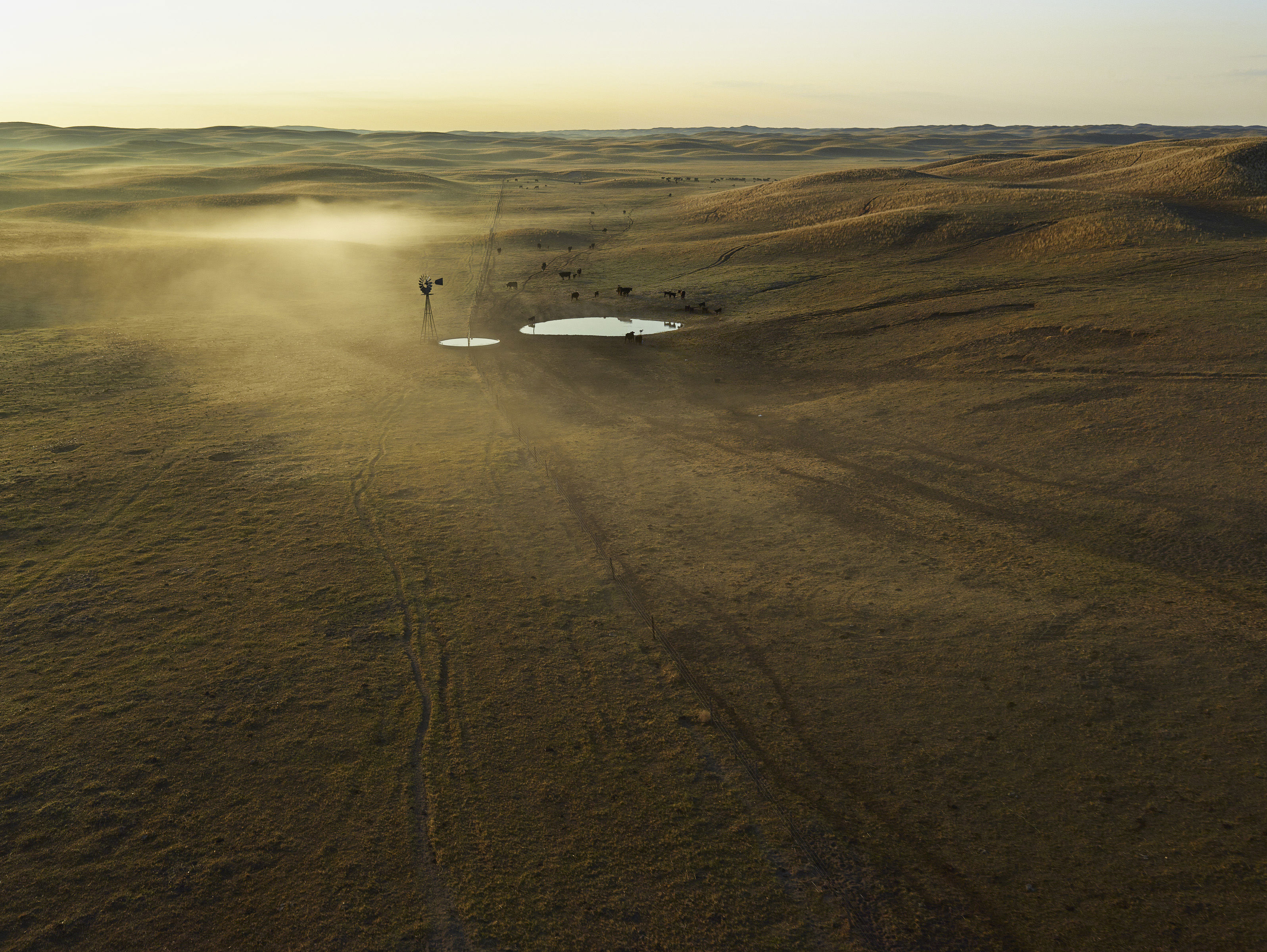
The 100th meridian west is a longitudinal line that snakes through North and South Dakota, Nebraska, Kansas, and Oklahoma, and forms the eastern border of the Texas panhandle. Historically, it divides the weathered, parched land in the western Great Plains from its lush, eastern neighbor. Through digital aerial photographs and large-format negatives taken on land, artist Andrew Moore captures this sparsely populated area, not scarred with train tracks and city clusters, but empty and yawning. His collection of photographs, Dirt Meridian, is currently on view at Yancey Richardson Gallery.

Andrew Moore. First Light, Cherry County, Nebraska, 2013. Courtesy of Andrew Moore & Yancey Richardson

Andrew Moore. First Light, Cherry County, Nebraska, 2013; archival pigment print; 46 x 61 in. Courtesy of Andrew Moore & Yancey Richardson.

Many of  them were taken from above, in an airplane with a camera placed on the strut. The results are sweeping views of windswept houses, splintered earth, and prairie grass growing like a horse’s hide.  The symmetrical composition of these photographs belies their flux. Moore explains that the area “teeters between being lost in time, so to speak, yet at the same moment itʼs highly affected by large-scale global forces, such as climate change, energy exploration, resource management, and food production.”

Read More »

Share

Elsewhere

Sylvia Fein: Surreal Nature at Krowswork

Today from our partners at Art Practical we bring you Mary Anne Kluth‘s review of Sylvia Fein: Surreal Nature at Krowswork Gallery in Oakland, California. Kluth notes, “A true pleasure of the exhibition, and a mark of its success as a retrospective, is the opportunity to trace developing threads, such as a particular symbol, subject matter, or technique, through various works over long periods of time…the paintings in Surreal Nature offer a comprehensive portrait of Fein and her life as an artist.” This article was originally published on February 10, 2014.

Sylvia Fein. Crucial Eye, 2011; egg tempera on board, 20 x 24 inches. Courtesy the artist and Krowswork Gallery, Oakland.

Sylvia Fein. Crucial Eye, 2011; egg tempera on board, 20 x 24 in. Courtesy the Artist and Krowswork Gallery, Oakland.

Sylvia Fein: Surreal Nature, a retrospective of paintings at Krowswork in Oakland, spans a boggling seventy years, showcasing the artist’s lifelong relationship with her chosen medium, egg tempera. Presented more like a museum exhibition than a commercial show, Surreal Nature includes a professionally produced video, A Delicious Battle, directed and edited by Robert Beier, that introduces nonagenarian Fein, her artwork, and her home, garden, and studio, creating an accessible context for the numerous works on display. The exhibition takes advantage of the divided spaces at Krowswork to group Fein’s works thematically and by rough time periods, letting viewers draw connections between the biographical information in the documentary and Fein’s episodic painting oeuvre.

Read the full article here.

Share

Hashtags

#Hashtags: The Importer/Exporter

#commerce #spirituality #appropriation #commodification #orientalism

The third and final installment of the Asian Art Museum’s Proximities series of contemporary art exhibitions addresses Asia’s central role in networks of trade, manufacturing, and information. On the whole, this series’ focus on looking at Asia through an American lens has revealed significantly more about America and the Bay Area than about Asia. As with the first and second Proximities shows, the assumptions and motivations behind the third exhibition are expressed as much by who is left out as by who is included in its scope. Unlike the first two shows, each of which centered on Asia as an imagined construct informed by romantic and nostalgic fantasies, the third installation takes a more clinical approach to the subject of internationally commodified culture.

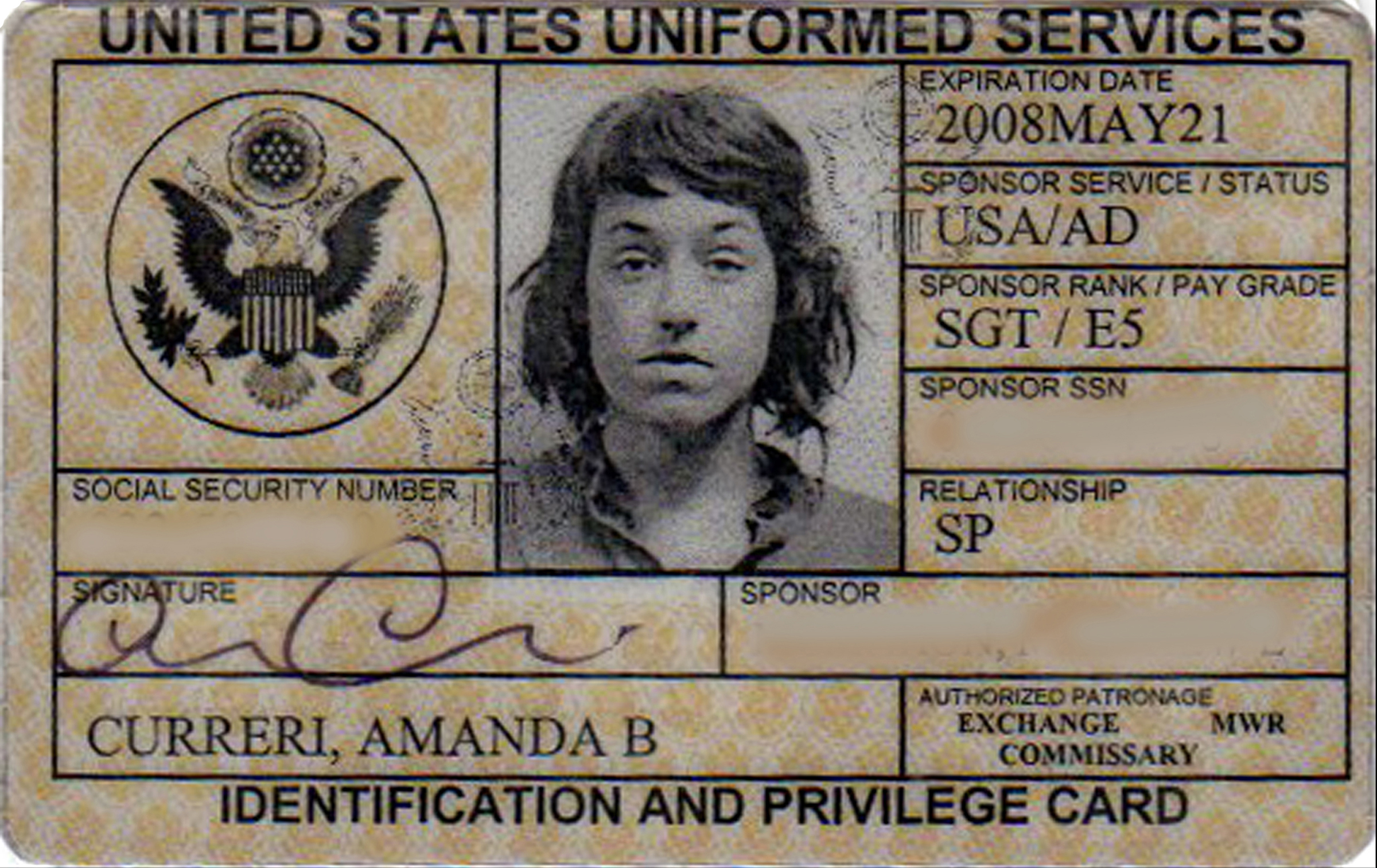
Amanda Curreri. Identity and Privilege Card, Expired, 2011. Laminated, two-sided digital print on shelf. 13 x 20 inches. © Amanda Curreri. Coursey of the artist.

Amanda Curreri. Identity and Privilege Card, Expired, 2011; laminated, two-sided digital print on shelf; 13 x 20 in. © Amanda Curreri. Courtesy of the Artist.

According to the introductory wall panel by curator Glen Helfand, Import/Export responds to “the concept that almost everyone on the planet touches something that is conceived, mined, manufactured, routed, or outsourced in Asia.” However, this is by no means a circumstance specific to Asia or to our present day. For the world’s wealthiest, Asian imports have long been objects of desire, from silk to spice, ivory, and opium. The desire to acquire more Asian imports more cheaply drove Marco Polo and Christopher Columbus to mount extraordinary expeditions from medieval Europe. More recently, a similar desire has resulted in the looting of Asia’s cultural heritage by European and American collectors, such that many of the most significant accomplishments of the continent’s artisans have been expatriated to western institutions in the mold of the Asian Art Museum. Meanwhile, urban denizens worldwide are increasingly outfitted with ubiquitous digital technology, carried in our pocket or kept in our home devices, which were designed, mined, fabricated, and routed through multiple continents. Coltan from Congo, circuits from China, packaging from Mexico—this is the modern condition of globalization. What, then, renders the Asian American trade connection distinct from others? Read More »

Share

From the Archives

From the Archives – The Big Picture: An Interview with Edward Burtynsky

This past Wednesday, a thirty-day period for comments to the U.S. Department of State on the proposed Keystone XL pipeline began. Keystone XL would run from the Canadian border to a pipeline in Steele City, Nebraska, and is opposed by many environmental groups, from the Indigenous Environmental Network and the League of Conservation Voters to Physicians for Social Responsibility. In a 2012 interview for Daily Serving, artist Edward Burtynsky noted, “I do believe that an image has to be visually compelling to address the kind of landscape that will challenge us and make us ask the important questions… We must take on society and examine the condition of the human experience…[and] aesthetics is a portal though which people will enter to explore these notions.” This interview was conducted by Seth Curcio and originally published on June 23, 2012.

Edward Burtynsky. Alberta Oil Sands #6 Fort McMurray, Alberta, Canada, 2007. Courtesy of the Artist.

It’s often impossible to fully understand the big picture of industrialized development from the limited perspective of the consumer. Each day, most of us in the western world go about our business, driving to and from work, using plastics made from petroleum, enjoying foods shipped in from thousands of miles away, without a thought of the very resource that makes this all possible—oil. The impact of oil has consistently reappeared in the work of Canadian photographer Edward Burtynsky for well over a decade. Burtynsky’s photographs often soar into the air, freeing us from our limited perspective, offering us the ability to better understand the scale and impact that this material has on contemporary life. It is only through this expansive perspective that we begin to understand the magnitude and consequence of our complicit actions. Recently, Daily Serving founder Seth Curcio was able to speak to Burtynsky by phone about his current exhibition, titled Oil, at the Nevada Museum of Art in Reno. During this conversation, we learn how Burtynsky’s research has altered his own relationship to oil, how he uses scale and perspective to shape our understanding of the industrialized world, and what lies ahead of us with the future of oil.

Seth Curcio: In the introduction to your book Oil, you said, ” In 1997 I had what I refer to as my oil epiphany. It occurred to me that all the vast, man-altered landscapes I had pursued for over twenty years had been made possible by oil…” Since that time, you have spent a decade and a half documenting the impact of oil consumption globally. How has this ongoing project shaped the way that you interact with the world, especially in regard to oil consumption?

Edward Burtynsky: At that point, I had spent sixteen or seventeen years trying to find the largest events possible around mining and quarrying. I was interested in places that we had collectively engaged, and that illustrate scale. I realized that the scale that I’d been photographing could only have been achieved through the combustive engine and a readily available fuel, such as oil.

These ideas led me to consider the things that are around me, from the fuel in my car, to the road that I am driving on, to the plastic container that was in my hand. They are all produced with oil. As I started to look around, I asked myself, What’s not oil?—and that became the more interesting question. It was at that point that I began to close the chapter on mining and open the chapter on the oil landscape. That started my research representing the extraction and refinement of oil, the urban worlds and events produced as a result of oil, and the end of the linethe final entropy and physical result of oil consumption.

Read More »

Share