Help Desk

Help Desk: Friends in High(er) Places

Help Desk is where I answer your queries about making, exhibiting, finding, marketing, buying, selling–or any other activity related to contemporary art. Submit your questions anonymously here: http://bit.ly/132VchD. All submissions become the property of Daily Serving.

I work at a museum, but not as a curator or any similar position that might have influence over content. I am sometimes approached by artists (friends, associates, acquaintances, strangers at parties) who want to know how to get their art into a museum. Specifically my museum. What’s the curator’s phone number? Can they drop off a packet? Will I put it on someone’s desk? The way to a museum show is convoluted and not the same for every artist. I’m an artist too, and while I sympathize, I am sure my “help” wouldn’t help them and would jeopardize my professional relationships at work. But I would like to have something to tell people.

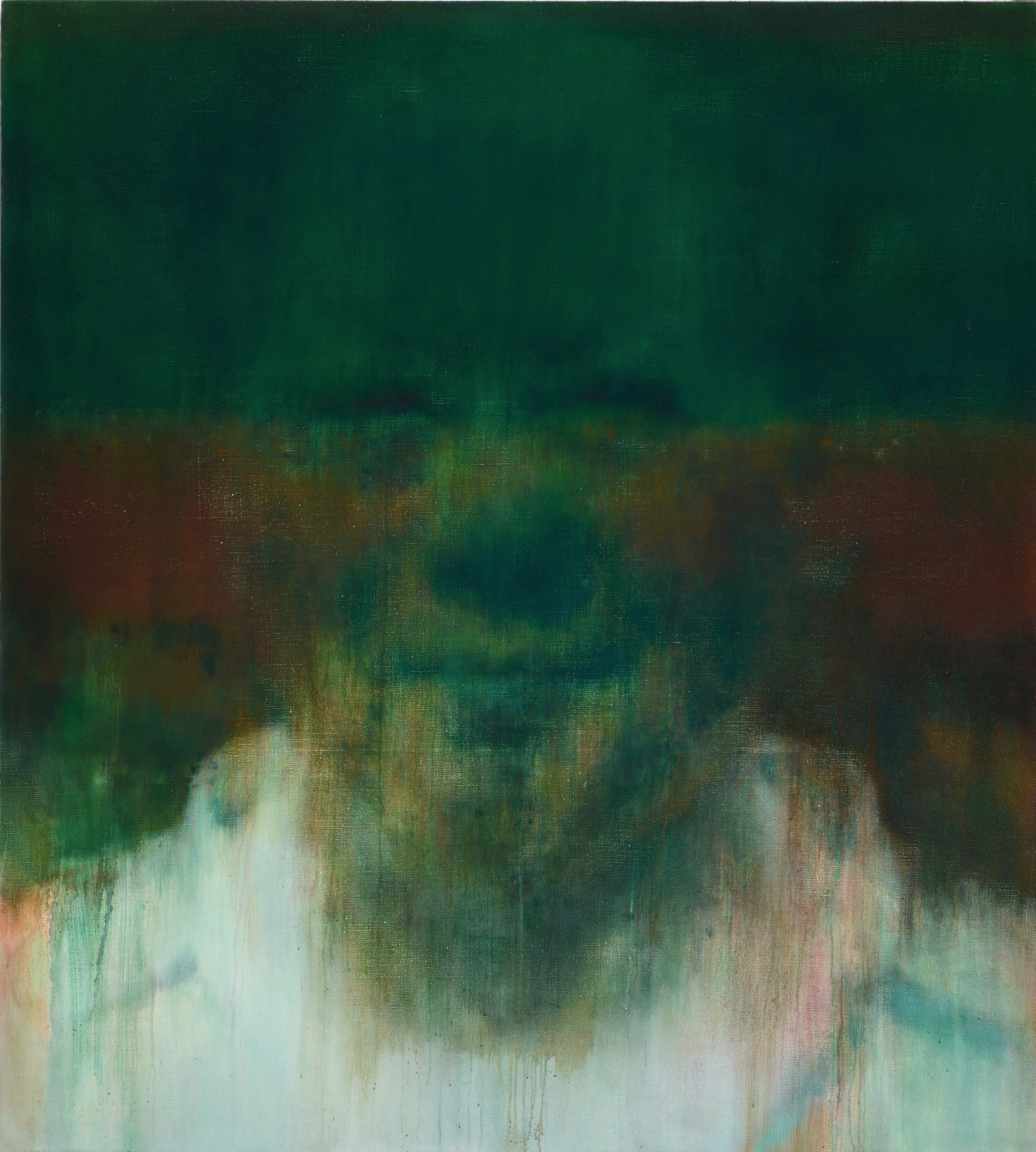
Heidi Bucher. Hautraum (Ahnenhaus), 1980-82; Courtesy Freymond-Guth Fine Arts, Zürich

Heidi Bucher. Hautraum (Ahnenhaus), 1980-82. Courtesy of Freymond-Guth Fine Arts, Zürich.

You have my sympathies. It must be annoying and kind of frightening to have friends, colleagues, and strangers alike envisioning your job as their fast track to being shown or collected by the museum. I mean, there you are, minding your own business like a cartoon pig out for a sunny walk, while behind every tree lurks a wolf who imagines you as a delicious Sunday ham served up on a fine china platter. Okay, no more similies. You get the idea.

Responding to strangers is easy, because all you have to do with any unknown person who asks you for an inappropriate and presumptuous career favor—one that might induce your colleagues to loathe you—is to just stare at her in silence. The longer the silence, the better, so practice this on your significant other or on the cat. If the stranger doesn’t then fall all over herself to backpedal (“Just kidding! Ha ha! I hate museums!”), then maintain your dead-face and say, “I regret that I’m not able to help you.” You can go to confession later for fibbing about the “regret” part.

Read More »

Share

Shotgun Reviews

Senga Nengudi: The Material Body at the Museum of Contemporary Art, Denver

Shotgun Reviews are an open forum where we invite the international art community to contribute timely, short-format responses to an exhibition or event. If you are interested in submitting a Shotgun Review, please click this link for more information. In this Shotgun Review, Deanne Gertner reviews Senga Nengudi: The Material Body at the Museum of Contemporary Art in Denver.

Senga Nengudi. R.S.V.P., 1976/2003; nylon mesh and bicycle tire; 20 x 26 x 12 in. Courtesy the artist and Thomas Erben Gallery, New York.

Senga Nengudi. R.S.V.P., 1976/2003; nylon mesh and bicycle tire; 20 x 26 x 12 in. Courtesy the artist and Thomas Erben Gallery, New York.


In her solo exhibition The Material Body at Museum of Contemporary Art in Denver, Senga Nengudi uses worn pantyhose and other everyday materials to create sculptures that explore the elasticity of the body and mind. Stretching the capacity of the materials to their limit, Nengudi shows the tenuous and often amorphous nature of human life. This evocative show, organized by MCA Denver associate curator Nora Burnett Abrams, serves as the first museum survey of these sculptures, created from the 1970s to the present.

The exhibition features fourteen works that explore the malleable and ephemeral nature of the body and spirit. The nylon mesh sculptures stretch, twist, knot, pull, sag, perch, cling, and rest along the gallery walls and sometimes the ceiling, floor, and windows. They push the physical limits of the material, which is at once durable and delicate. The knotted bunches simultaneously call to mind kinky hair and intestines; the sand-filled feet echo breasts, scrota, and ballet shoes; the thin threads conjure up images of tentacles, wire, and tendons. The juxtaposition of found rusted metal or splintered weathered wood against the silky pantyhose creates a profound tension between hard and soft, strong and weak. Nengudi’s manipulation of the materials exposes dual and often contradictory qualities, which can perhaps be interpreted as a metaphor for larger social tensions. For example, R.S.V.P. (1976) crisscrosses a pair of pantyhose with sand-filled feet around two rusty nails. The nylon mesh seems stretched to its tearing point and yet it hangs safely on the wall, a veritable gravitational feat.

Read More »

Share

Fan Mail

Fan Mail: Brooke Reinhold Richard

While some artists might shy away from encouraging an open-ended, potentially endless string of associations, Brooke Reinhold Richard seems to embrace it as she leads viewers through her paintings with a loose architecture of visual clues. Her work includes motifs not unlike the tropes and symbols used in the Surrealist tradition of painting, which created numerous meaningful, often personal, associations.

Brooke Reinhold Richard. Gold, 2013; mixed media and oil on canvas; 36 x 28 inches. Image courtesy of the artist.

Brooke Reinhold Richard. Gold, 2013; mixed media and oil on canvas; 36 x 28 in. Image courtesy of the Artist.

Richard paints serially, creating one group of works at a time, in order to pursue a particular collection of visual associations or thematic ideas. The titles of these series are disparate—Fragility, Figure in the Environment, Exploration Spatiale—and with them, Richard unabashedly denotes that her work is dealing with incredibly broad subject matter. Although initially this might seem too loose or scattered, Richard’s works address the open-ended process of visual exploration and intuition to such a degree that their abstract qualities become almost concrete, providing a glimpse into the world as she sees it or imagines it to be from a dreamlike state.

Read More »

Share

Toronto

Mike Nelson: Amnesiac Hide at The Power Plant

Recently, it seems that when Toronto’s mayor isn’t making headlines, the city’s overheated condo market is. Getting to Amnesiac Hide, Mike Nelson’s exhibition at The Power Plant, is an exercise in navigating the realities of this fervor. Queen’s Quay, the city’s so-called “revived waterfront,” is undergoing a makeover in the midst of rising condo towers, which makes for a messy route to the gallery. But after seeing the piles of found rocks, clumps of logs, and stacks of detritus in Nelson’s exhibition, the upheaval outside the gallery becomes something more: a larger context in which to reflect on this show.

Mike Nelson. Eighty Circles through Canada (The Last Possessions of an Orcadian Mountain Man), 2013; mixed media; courtesy of The Power Plant

Mike Nelson. Eighty Circles Through Canada (The Last Possessions of an Orcadian Mountain Man), 2013; mixed media. Courtesy of The Power Plant.

Amnesiac Hide presents four sprawling installations: Quiver of Arrows (2010), Gang of Seven (2013), Eighty Circles Through Canada (The Last Possessions of an Orcadian Mountain Man) (2013), and Double Negative (the Genie) (2014). The pieces are creepily empty–full: full of stuff, empty of owners. Typically, the human characters suggested by Nelson’s constructed spaces remain undefined, allowing each viewer to create her own narrative of the people who have seemingly left these camps behind. However, the works Eighty Circles and Double Negative do invoke specific people, becoming highly personal audits of things and experiences. As a whole, the exhibition flirts with issues related to Canada’s past as a British colony and the continued negotiation of its identity in a post-colonial milieu. 

Read More »

Share

San Francisco

Valuing Labor in the Arts: Appropriate Technologies

Today from our partners at Art Practical, we bring you an essay on artistic projects that use strategies of self-empowerment and local control. Author Abigail Satinsky notes, “There is no definite solution for a more just and democratic art world—not everyone wants that, anyway—yet critically examining these projects offers possibilities for the way that many kinds of art worlds can create models of survival and perhaps even form an argument for why art matters.” This article was originally published on April 3, 2014.

The Thing Quarterly, John Baldessari edition. Courtesy of The Thing Quarterly. Photo: Michael O'Neal.

The Thing Quarterly, John Baldessari edition. Courtesy of The Thing Quarterly. Photo: Michael O’Neal.

Artists and other creative people who organize their lives around the arts have long dealt with the problem of the lack of money by utilizing the same resourcefulness they apply to making art. They have formed cooperative living and studio arrangements; started their own businesses; become grant-writing virtuosi; begged, stolen, borrowed, and even invented currencies. This situation is nothing new, and yet the conditions of today’s art world have prompted a new existential crisis for artists.

For an aspiring artist, thinking about one’s artistic practice as an entrepreneurial venture to be branded and marketed is becoming the default professional mode. The art market—in which large amounts of capital circulate in the constellation of mega-galleries, swanky art fairs, and high-powered collectors and investors—has grown to an unprecedented degree yet is inaccessible to most artists. There is little public support for governmental (i.e., tax-based) funding for the arts on a mass scale. Individual giving largely happens through websites like Kickstarter or Indiegogo that operate on a transactional basis, in which the projects with the most attractive rewards receive the most funding. While it’s natural for artists to try to figure out how to make a living from their art—which includes turning toward entrepreneurial strategies—it is frustrating that these new professional paradigms are becoming accepted as unquestioned truths, with any alternative deemed unrealistic. The many different kinds of art careers, art worlds, and art lives aren’t being considered, especially as models with which to debate, challenge, and improve the current state of affairs.

Read the full article here.

Share

Elsewhere

China Syndrome: Six Exhibitions in Beijing

Beijing is exhausting, exhilarating, infuriating, appalling, and wonderful, all at the same time. The energy of the city, undefeated by its weight of imperial and revolutionary history, or by the dead hand of contemporary politics and power struggles, is encapsulated in the lively diversity of its art scene. In the late 1990s and the early years of this century, Chinese artists were rock stars, earning big money fast. Chinese and international galleries opened large and palatial premises. Every property developer wanted a museum, and artists posed for fashion shoots in Chinese Vogue. Today things are not quite so upbeat, but there is still a palpable sense of optimism about China itself, and about the role of art and artists in this fast-mutating society.

Xie Qi. So Green (Mao on 50 Yuan) 2012, oil on canvas, 200 x 180 cm, courtesy the artist and Pekin Fine Arts

Xie Qi. So Green (Mao on 50 Yuan), 2012; oil on canvas; 200 x 180 cm. Courtesy of the Artist and Pékin Fine Arts.

Recent exhibitions in Beijing reveal how Chinese contemporary art combines a mastery of technique (learned in the rigid academic tradition of the powerhouse art academies such as the Central Academy of Fine Arts) with a willingness to innovate. Artists who came of age in the ’80s and ’90s discovered western Modernism and post-Modernism all at once, resulting in an art devoid of the overwhelming layer of theory that infects much contemporary art in the West.

Read More »

Share

Hashtags

#Hashtags: Education on Contingency

#adjuncts  #unions #MFA #precarity #affective #labor

This past May Day week, there has been much chatter about the decision by adjunct faculty at the San Francisco Art Institute to file for a union election. This comes on the heels of a similar decision to file for union election by Mills College adjuncts and the formation of a union to represent adjuncts at the Maryland Institute College of Art. The ubiquity of adjuncts in college teaching is not new, but the conversation around unions for part-time faculty has emerged more recently. Meanwhile, tensions regarding low pay and lack of job security and benefits for instructors, and rising tuition costs for students, are finally converging to invigorate a public conversation about the substandard working conditions of the majority of American college faculty.

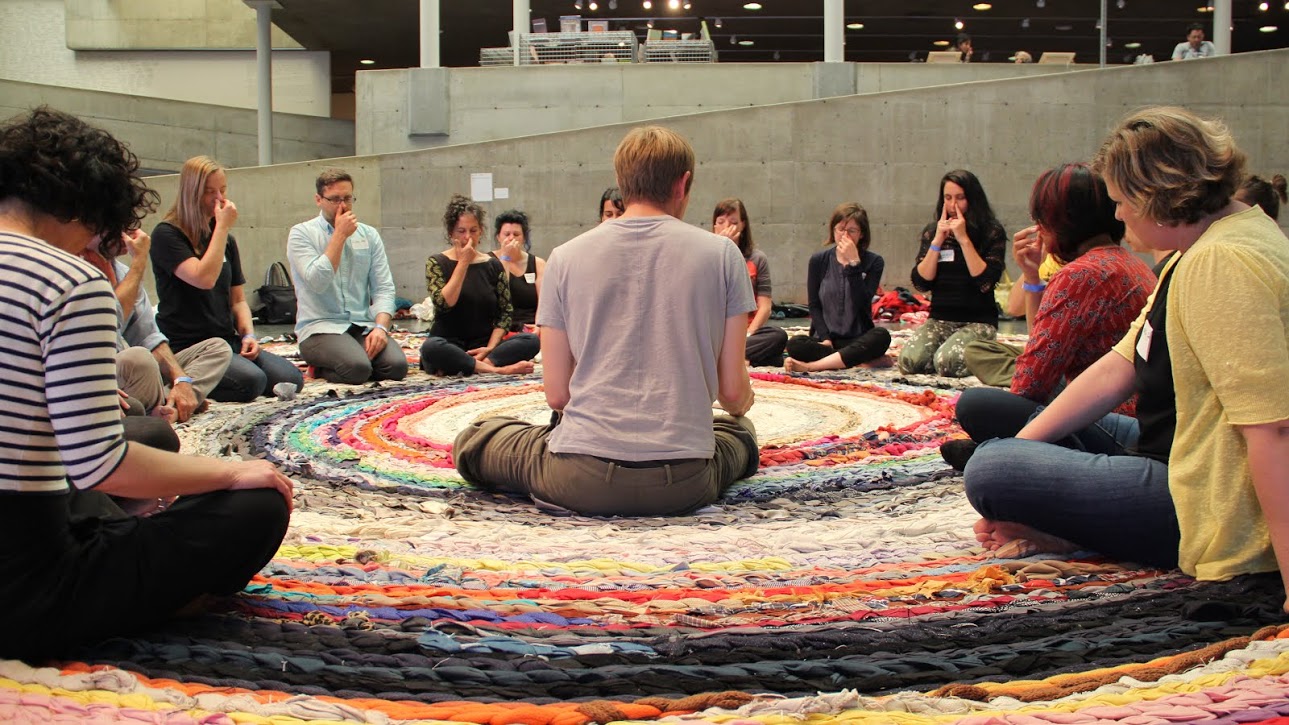
Christian Nagler. Yoga for Adjuncts, 2014. Workshop at  Valuing Labor in the Arts: A Practicum. Photo by Joanna Fuller. Courtesy of Arts Research Center, UC Berkeley.

Christian Nagler. Yoga for Adjuncts, 2014. Workshop at Valuing Labor in the Arts: A Practicum. Photo by Joanna Fuller. Courtesy of Arts Research Center, UC Berkeley.

In the arts, this overreliance on a precarious labor force is doubly appalling, given that much contemporary art rhetoric draws heavily on a Marxist construction of labor that resists and opposes alienation of workers in the interests of capital. For such intellectual constructs to be transmitted to new generations of artists and students by a fundamentally alienated workforce of adjuncts is a genuine scandal. The renewed emphasis on collectivity in art that coincides with the emergence of social and pedagogical post-conceptual practices seems not to be reflected in the values of academic institutions such as SFAI. This is evident in President Charles Desmarais’ appeal to adjunct faculty to reject SEIU’s efforts to unionize them, which was criticized by longtime Visiting Faculty (aka adjunct) Dale Carrico in a cogent blog post that called out the school for touting its Diego Rivera mural while discouraging contingent employees from organizing. Rivera’s famously working-class politics may seem a historical footnote to administrators, but for faculty and students, they are again relevant. Consider, after all, that the newly minted MFAs graduating from these non-unionized, adjunct-heavy art schools will face the same enormous pressure to comply with an unfair system that the adjuncts who teach them contend with currently. Read More »

Share