Hashtags
From the Archives – #Hashtags: Mimics and Minstrels
Since July 2013, Daily Serving’s #Hashtags column has been written by Anuradha Vikram, Director of the Residency Programs at the 18th Street Arts Center in Los Angeles. For the past year, Vikram has eloquently and intelligently voiced arguments about—among other topics—institutionalized racism, representations of marginalized identities, and economic inequality, all the while offering nuanced critiques of the artworks that take up these subjects. (For example, see her incisive review of LaToya Ruby Frazier’s photographs at the Brooklyn Museum, in which Vikram underscores the artist’s capacity to meld “oppression and self-investigation.”)
In September, we’ll introduce new #Hashtags contributors who will bring their priorities and perspectives to the column. But this week, we’d like to highlight Vikram’s tenure by republishing one of her many standout entries. In the article below, she astutely pairs reflections on Sturtevant’s practice of appropriation with the highly contested inclusion of Joe Scalan’s “Donelle Woolford” project in the 2014 Whitney Biennial. As she does so often, Vikram goes to the heart of the matter by observing that the work’s potential to critique “the interchangeability of minority faces in an exclusionary environment” is negated by the Whitney’s maintenance of just such an environment. We are deeply grateful to Vikram for her resolute voice, and for solidly laying a foundation by which Daily Serving might continue these urgent conversations.—Patricia Maloney, Publisher
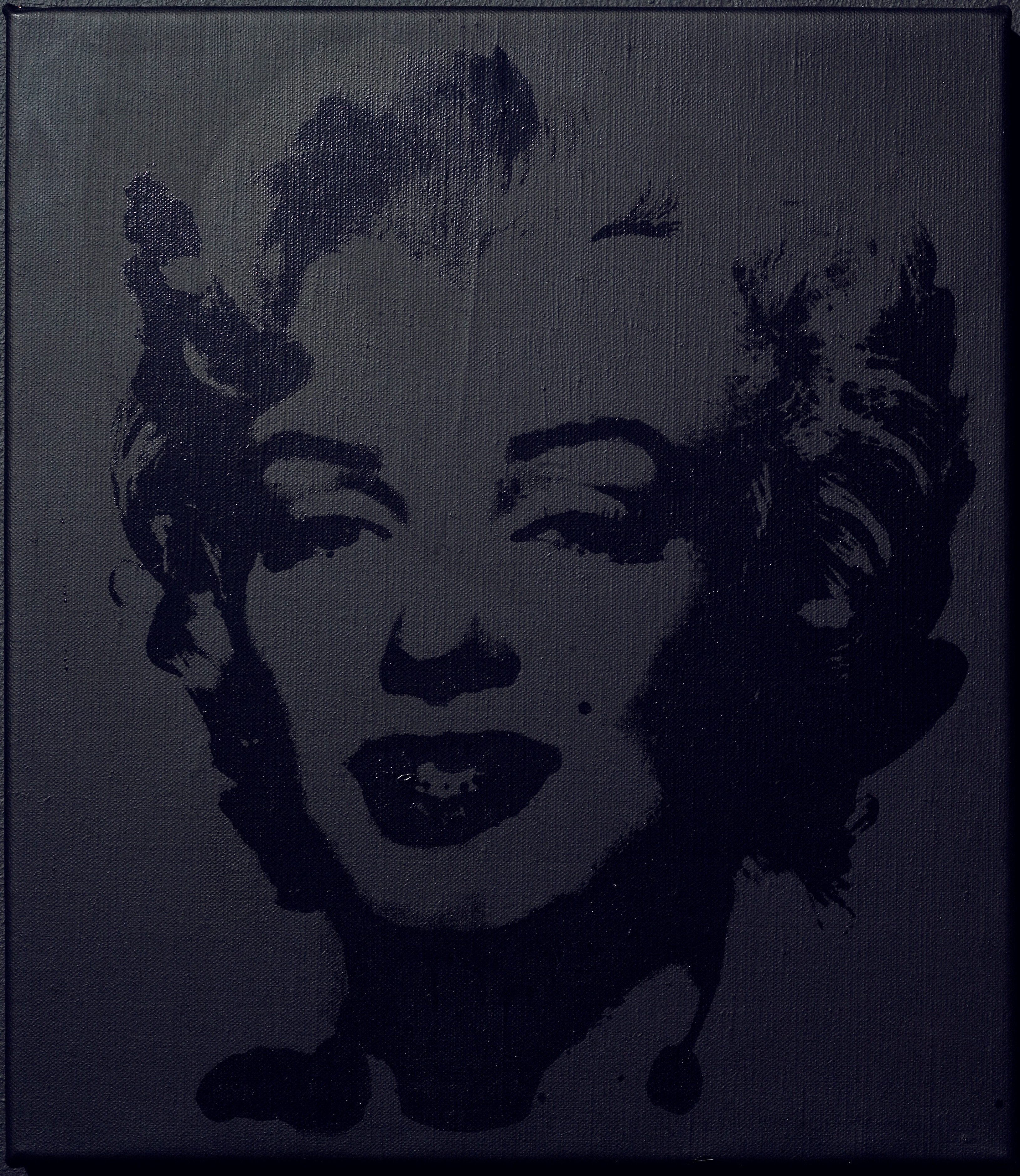
Sturtevant. Warhol Black Marilyn, 2004; synthetic polymer silkscreen and acrylic on canvas; 15 ¾ x 13 ¾ in. (40 x 35 cm). Ringier Collection. Courtesy Anthony Reynolds Gallery, London. © Sturtevant.
#access #discrimination #appropriation #institutions #representation #re-performance
Two important events transpired in the art world last week that have brought the complications of diversity and hierarchy into sharp focus. The first is the passing of artist Elaine Sturtevant, an artist who sublimated a critique of gendered inequity among artist peers into works that appropriated and re-created works deemed significant to the canon of contemporary art. The other is the withdrawal of the artist group Yams Collective from the Whitney Biennial following their unsuccessful resolution of objections to a racially problematic project by Joe Scanlan. These two stories illustrate the challenges that appropriation-based institutional critique continues to represent for art-world institutions that are resistant to change.
Rather than address gender inequity directly in her work, Sturtevant critiqued the negotiation between economics and art history that drives the valuation of art objects. Feminism was not her stated objective; in fact she disavowed gender’s relevance to her practice. Still, it is hardly a coincidence that the artists whose works she re-created were mostly white, heterosexual men, as these were the majority of works being shown and cited among her peers. She reenacted performances and re-created objects by Marcel Duchamp, Joseph Beuys, Andy Warhol, Jasper Johns, Felix Gonzalez-Torres, and Frank Stella, among others. By her acts of remaking, she thought through the processes and experiences of the artists who made these works before her, demystifying “genius” into a collection of styles and techniques; a catalog of contemporary practices that mirrored the distance and intellect of her own. Her work as an archivist and a re-producer prefigures important trends in contemporary art of the 1980s and 1990s by two decades.