Summer Reading

Summer Reading: The Unlearning

As the editors at Art Practical and Daily Serving get ready to take their end-of-summer vacations, we find ourselves swapping reading lists—the articles we’ll dive into once have some uninterrupted time to catch up on what our colleagues have been writing. We’ve gotten so excited about what’s on our lists that we want to share them with our readers. Between now and Labor Day, Daily Serving will feature the efforts of our fellow chroniclers of art and culture as part of our Summer Reading series. Today, from our friends at Guernica, we are pleased to present “The Unlearning,” in which Tatiane Schilaro considers the work of performance artist Paulo Bruscky. It was originally published on July 15, 2014. Many thanks to the editors at Guernica for their help in making this series possible. Enjoy!
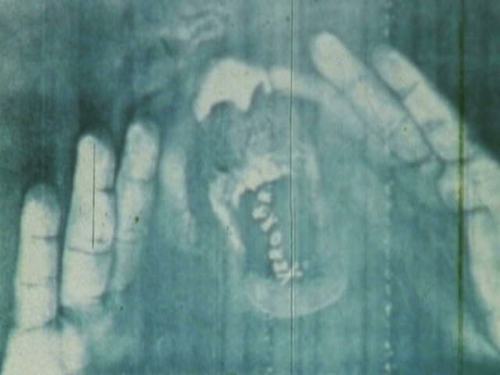
Paulo Bruscky. Xeroperformance, 1980; Super 8 film on video. All images courtesy Galeria Nara Roesler

Paulo Bruscky. Xeroperformance, 1980; Super 8 film on video. All images courtesy of Galeria Nara Roesler.

“Subverting always makes sense if it doesn’t feel like a rule, but if it allows also recreation, which is the same as re-creating.”—Paulo Bruscky

I first encountered Paulo Bruscky’s works in 2013 far from São Paulo, my home, at the show Paulo Bruscky: Art Is Our Last Hope at the Bronx Museum. Bruscky was born in Recife, in the northeast of Brazil, in 1949. He began making art during a hard moment for Brazilian politics: a military dictatorship that lasted from 1964 to 1985. What was important in Bruscky’s early practice was that he was also looking for, and ended up finding, answers to repression by making art meant to experiment, using creativity and imagination to subvert an adverse condition—essentially, starting from scratch. He called this the process of unlearning. Seeing his early pieces was a way of digesting the June 2013 protests that I hadn’t experienced. Bruscky also helped me understand how the events of the 1960s still resonate now.

It’s been fifty years since Brazil was taken over in a military coup; the result was over twenty years of dictatorship. During the 1970s, militants, students, and intellectuals were persecuted, tortured, sent into exile, or killed. Brazil was flooded by ideological hostility from the right and the left. Up in Recife, Bruscky was going against the flow of control: He often worked alone, doing performances in the public space, testing and regularly surpassing the limits imposed by the regime. His first works were part of the “mail art movement,” whereby artworks were sent via the postal service, to spread the word about the oppression.

Read the full article here.

Share

Shotgun Reviews

Wynne Neilly: Female to “Male” at Ryerson Image Centre

Shotgun Reviews are an open forum where we invite the international art community to contribute timely, short-format responses to an exhibition or event. If you are interested in submitting a Shotgun Review, please click this link for more information. In this Shotgun Review, Shauna Jean Doherty reviews Wynne Neilly: Female to “Male” at Ryerson Image Centre in Toronto.

Wynne Neilly. January 24th 2014-24th Shot, 2014; Fuji Instax Film; 4 ¼ x 3 ¼ in. Courtesy of the Artist and Ryerson Image Centre. Photo: Wynne Neilly.

Wynne Neilly. January 24th 2014-24th Shot, 2014; Fuji Instax Film; 4 ¼ x 3 ¼ in. Courtesy of the Artist and Ryerson Image Centre. Photo: Wynne Neilly.

Through a collection of archival documents, personal photos, and voice recordings in the exhibition Female to “Male” at the Ryerson Image Centre, Toronto-based artist Wynne Neilly presents a self-portrait of his personal journey transitioning from two relative subject positions, “female” and “male.” Quotations around the word “male” in the title ruminate on the mutability of the term, its constructed nature, and the spectrum on which all gender lies. Queer theorist Judith Butler would contend that “male” is an approximation of a gender identity that, as established, can never be fully realized.[1] While gender is indeed provisional, the physical, emotional, and economic impacts of transitioning are not.

Weekly Instant Photographs, 1–45 (2013–2014) depict Neilly injecting himself with 50–100mg of testosterone, and document his physical transformation over a period of months. Displayed in a horizontal line, the photographs feature an expressionless Neilly standing in front of the same gray-white backdrop in his apartment. During the exhibition’s opening, swarms of viewers hovered over these snapshots, voyeuristically attempting to observe traces of the hormone’s effects. Though concerns of spectacle and personal preservation may be misplaced in an exhibition replete with such intimate ephemera, it is indeed difficult not to be moved by the installation’s revealingly diaristic inflections.

Read More »

Share

How to Make a Non-Didactic Video

Today from our friends at Glasstire, we bring you Joshua Fischer’s assessment of two videos currently on view in Houston, Texas. Instead of comparing works in the same exhibition, Fischer reviews videos by the artists Hito Steyerl and Camille Henrot in two different shows and defines the likenesses between them. He notes, “Steyerl and Henrot may have different outlooks and approaches […] but luckily they share the same boldness to explore big, grandiose topics…” This article was originally published on August 8, 2014.

Camille Henrot. Grosse Fatigue, 2013; Video: color, sound, 13 min. © ADAGP Camille Henrot. Courtesy the artist, Silex Films and kamel mennour, Paris.

Camille Henrot. Grosse Fatigue, 2013; video: color, sound; 13 min. © ADAGP Camille Henrot. Courtesy of the Artist, Silex Films, and kamel mennour, Paris.

Two videos currently on view in Houston share unexpected affinities, tackling heavy, potentially dry subjects and distilling them into engaging works full of humor, poignancy, and energy. Hito Steyerl’s How Not to Be Seen: A Fucking Didactic Educational .Mov File (2013) and Camille Henrot’s Grosse Fatigue (2013) are part of very different group exhibitions at the Station Museum of Contemporary Art and the CAMH respectively. But it is not a surprise that the videos feel like kindred spirits, as they were both included in The Encyclopedic Palace exhibition at the 55thVenice Biennale, with Henrot’s Grosse Fatigue taking home the Silver Lion prize.

Rather than resorting to lo-fi tactics to show the guts of an image or its mechanisms, both are crisp, hi-definition videos with top-of-the-line production values. Yet in their own way Steyerl and Henrot layer and expose the internal machinery of how we produce and access visual knowledge: the green screen, computer monitor, and browser window.

Read the full article here.

Share

Fan Mail

Fan Mail: Matt Shallenberger

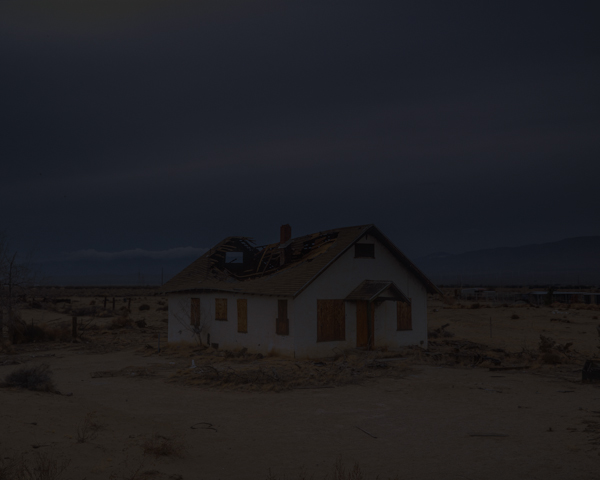
Matt Shallenberger approaches his photographic subjects—most often landscapes—as a cartographer approaches a new territory. As he discovers information by following the sight lines of mountains, rivers, boundaries, horizons, and the ever-changing position of the sun or the moon, he always takes into account the history and prior records of his subjects. While he works consistently with darkened, blissfully moody vistas, Shallenberger’s research into his subjects begins from different sources each time: books, visits, illustrations, images, stories, and maps. Fittingly, he works by compiling a series of images for each project that explore one place or subject from many perspectives, offering compositional variations that capture the nuance and intricacy of these spaces.

Matt Shallenberger. 2715 from the series Counter Brand, 2013; archival pigment print; 32 x 40 inches. Courtesy of the artist.

Matt Shallenberger. 2715 from the series Counter Brand, 2013; archival pigment print; 32 x 40 in. Courtesy of the Artist.

In his Counter Brand series (2013), Shallenberger explores landscape and human presence in a Southern California area called Antelope Valley. The title of the series references the practice by ranchers of rebranding (marking on top of or next to the original brand) livestock, most often cattle, when the animals are stolen, sold, or lost. One work in the series, 2715 (2013), shows the decaying ruins of a single-story house. Four white plaster walls and the plywood covering the doors and windows remain as the roof collapses around a single narrow chimney. In the rear of the house, though, a small, high window is open, framing a singular cutout of the graying horizon beyond. Throughout his work, details like this one persist, adding a complicating layer of focal points to otherwise richly tonal yet potentially one-dimensional landscapes.

Read More »

Share

Toronto

Getting Rid of Ourselves at OCAD University

Getting Rid of Ourselves, a group show curated by London-based Helena Reckitt at OCAD University, features work by various individual artists and four artist collectives, most of them British. Many of the included works draw on Michel Foucault’s concepts of the subject to address the theme of how subjectivity is regulated and produced.

Heath Bunting. Identity Bureau, Transferrable Synthetic British Natural Person, 2011; mixed media. Images courtesy of Onsite [at] OCAD University and OCADU Visual Resources – Melissa Jean Clark

Heath Bunting. Identity Bureau, Transferrable Synthetic British Natural Person, 2011; mixed media. Images courtesy of Onsite [at] OCAD University and OCADU Visual Resources – Melissa Jean Clark.

Reckitt, who before moving to London was senior curator at Toronto’s Power Plant, selected only one local artist, Adrian Blackwell, for Getting Rid of Ourselves. No explanation is provided for this strange continental imbalance, which cannot but call extra attention to the lone Canadian’s work, Circles Describing Spheres. Described in the exhibition’s installation guide as an interpretation of an “anarchist meeting circle,” the work consists of a series of wooden circles with adjustable legs that interlock and rise to create different formations. The utility of the sculpture is in its flexibility; it can be configured as a seating area or flattened and packed away.

Read More »

Share

Los Angeles

Matt Sheridan Smith: Widow – Fig. 3 Ep. 1 at Hannah Hoffman Gallery

Matt Sheridan Smith’s current exhibition at Hannah Hoffman Gallery is a portrait show, but not in the conventional sense. Instead of painted likenesses of his subject (there is one representational image; more on that later), Sheridan Smith uses pattern, abstraction, and the readymade to create what he dubs “a sort of speculative portraiture.”[1] Evocative and confounding rather than illuminating, the works in the show obscure even as they reveal bits of their subject.

Matt Sheridan Smith. Widow – Fig. 3 Ep. 1, installation view. Courtesy of the artist and Hannah Hoffman Gallery, Los Angeles. Photo: Joshua White

Matt Sheridan Smith. Widow – Fig. 3 Ep. 1; installation view. Courtesy of the Artist and Hannah Hoffman Gallery, Los Angeles. Photo: Joshua White.

And what a subject he has chosen. The title of the exhibition, Widow Fig. 1 Ep. 3, refers to the widow Clicquot, who is perhaps better know by her French name: Veuve Clicquot. Born into a wealthy family in 1777, Barbe-Nicole Clicquot Ponsardin was only 27 when she inherited her husband’s wine business upon his death (either from typhoid or suicide, depending on who you ask). At the time, the British had developed a style of champagne that was cloudy with yeast residue and large, inelegant bubbles. The widow perfected a process of drawing out the sediment into the neck of the bottle so it could be removed, giving us the clear, sparkling, fine-bubbled beverage we celebrate with today. Clicquot died at the age of 88, her legacy established as “a woman who was a smashing success long before anyone conceptualized the glass ceiling.”[2]

Read More »

Share

San Francisco

Artist Project: Jack + Leigh Ruby’s Car Wash Incident

Today from our friends at Art Practical, we bring you an essay by Simon Lee and Eve Sussman about “the intersection of and differences between entertainment and art.” This article was originally published on July 9, 2014.

Jack + Leigh Ruby. Matt's Convenience Store Robbery, evidentiary photo 21; 1975. Courtesy of the Artists. Photo: Leigh Ruby.

Jack + Leigh Ruby. Matt’s Convenience Store Robbery, Evidentiary Photo 21; 1975. Courtesy of the Artists. Photo: Leigh Ruby.

I’ve been a fan of Eve Sussman’s work from the first moment I watched her film Rape of the Sabine Women (2007) during a screening at the San Francisco Museum of Modern Art. I loved its cinematic texture—the way in which plot was secondary to the visual elements—and how Jonathan Bepler’s original score kept insisting on being present as a diegetic element. Since then, I’ve had the pleasure of viewing several of her collaborations with the Rufus Corporation and with Simon Lee. The thing that I love about her work, and the work of her collaborators, is how they use the vernacular of classic Hollywood and foreign film to propose poetic responses to the central and deceptively simple question, “What makes a movie?”

I think almost immediately of her 2011 video installation whiteonwhite:algorithmicnoir, which offers a full reveal of the structure of entertainment. Shot primarily in Central Asia, the video feels like the fevered dream collaboration of Jean-Luc Godard and Franz Kafka. An algorithm generates the sequence of shots on a moment-by-moment basis, with the upcoming selections queued on a monitor at the side of the room. Each viewing presents an entirely new film. While the editing structure is an essential element of whiteonwhite, the settings, production design, camera work, and acting are all clearly in dialogue with the conventions of American film noir, which makes the piece feel only more like an endless labyrinth to get lost in.

Read the full article here.

Share