From the Archives
From the Archives – #Hashtags: Mimics and Minstrels
In light of the current controversy over Dana Schutz’s painting of Emmett Till, today we’re re-reading Anu Vikram’s essay about the last Whitney Biennial, in which Joe Scanlan’s use of the fictional Black persona “Donelle Woolford” initiated a heated debate about representation, race, inclusion, and oppression. Vikram notes, “Scanlan’s decision to cast Black women as agents for his personal edification and creative expression […] supercedes concern for those women’s lack of cultural space for self-determination, self-edification, or self-expression.” This article was originally published on May 19, 2014.
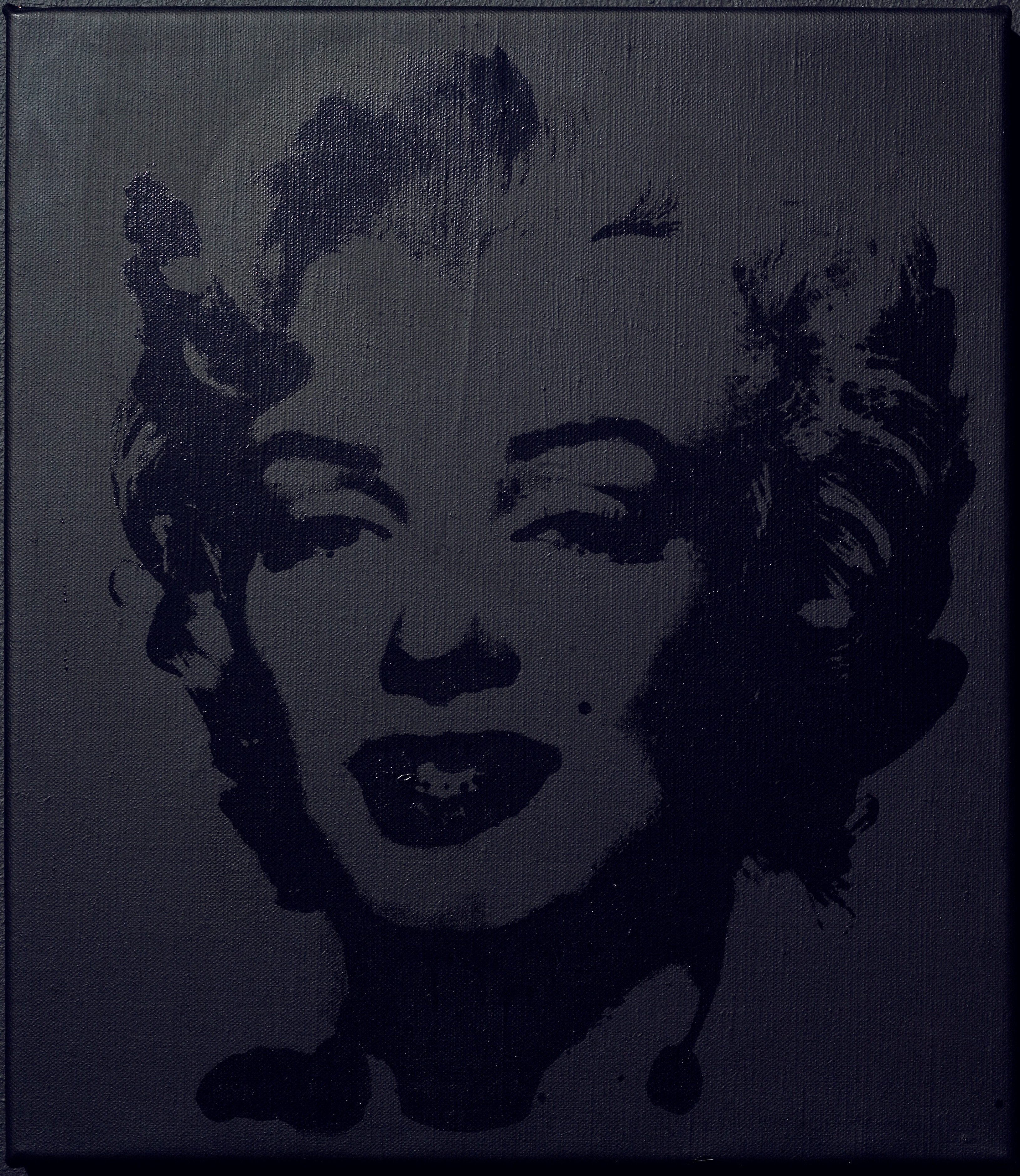
Sturtevant. Warhol Black Marilyn, 2004; synthetic polymer silkscreen and acrylic on canvas; 15 ¾ x 13 ¾ in. (40 x 35 cm). Ringier Collection. Courtesy Anthony Reynolds Gallery, London. © Sturtevant.
#access #discrimination #appropriation #institutions #representation #re-performance
Two important events transpired in the art world last week that have brought the complications of diversity and hierarchy into sharp focus. The first is the passing of artist Elaine Sturtevant, an artist who sublimated a critique of gendered inequity among artist peers into works that appropriated and re-created works deemed significant to the canon of contemporary art. The other is the withdrawal of the artist group Yams Collective from the Whitney Biennial following their unsuccessful resolution of objections to a racially problematic project by Joe Scanlan. These two stories illustrate the challenges that appropriation-based institutional critique continues to represent for art-world institutions that are resistant to change.
Rather than address gender inequity directly in her work, Sturtevant critiqued the negotiation between economics and art history that drives the valuation of art objects. Feminism was not her stated objective; in fact she disavowed gender’s relevance to her practice. Still, it is hardly a coincidence that the artists whose works she re-created were mostly white, heterosexual men, as these were the majority of works being shown and cited among her peers. She reenacted performances and re-created objects by Marcel Duchamp, Joseph Beuys, Andy Warhol, Jasper Johns, Felix Gonzalez-Torres, and Frank Stella, among others. By her acts of remaking, she thought through the processes and experiences of the artists who made these works before her, demystifying “genius” into a collection of styles and techniques; a catalog of contemporary practices that mirrored the distance and intellect of her own. Her work as an archivist and a re-producer prefigures important trends in contemporary art of the 1980s and 1990s by two decades.