From the Archives
From the Archives – #Hashtags: Divide//Conquer: Artists Confront the Gentrification of Urban Space
Today from the archives we bring you a look back at Anuradha Vikram’s assessment of gentrification, power, and artistic protest. She notes, “The great tragedy of gentrification—which its proponents appear not to recognize—is that groups that are displaced can never be reunited in another, more affordable location.” This article was originally published on October 21, 2013.
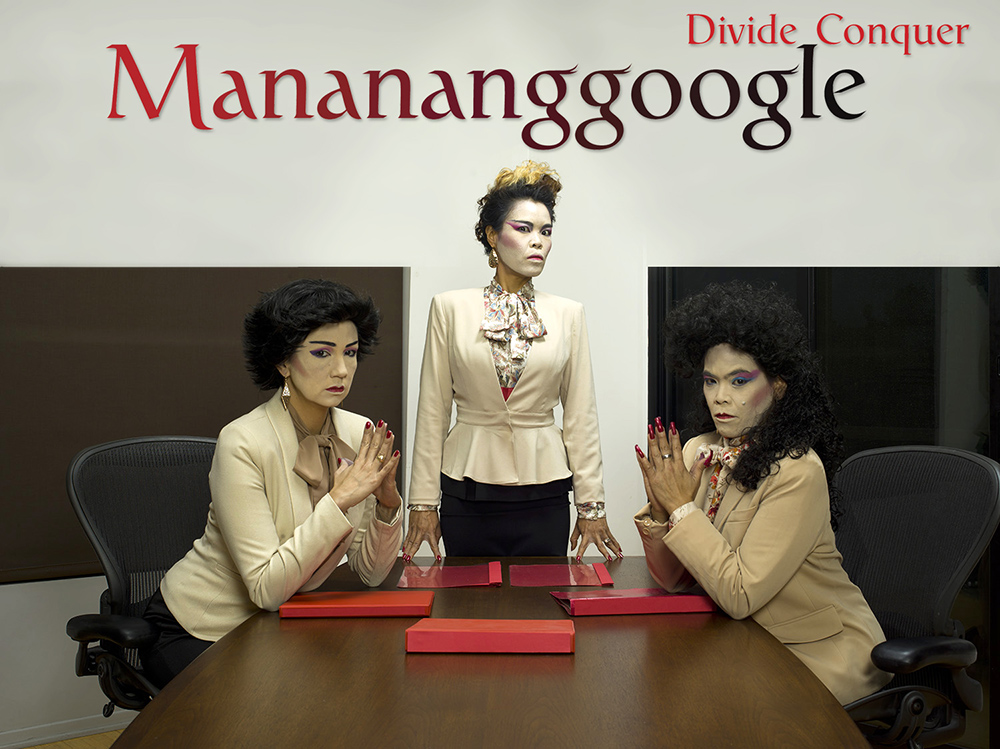
Mail Order Brides/M.O.B. (Jenifer Wofford, Reanne Estrada, Eliza Barrios). Manananggoogle, 2013. Multimedia installation including website and photographs. Commissioned by the San Jose Museum of Art with support from The James Irvine Foundation and MetLife Foundation.
#gentrification #displacement #race #class #technology #industry #neo-colonialism
To understand why artists are compelled to participate in these struggles, first consider how gentrification occurs. An area subject to prolonged neglect is often the only affordable location for recent immigrants, the working poor, and other marginalized groups to reside. Their presence fosters further civic neglect, as these are groups with minimal political clout who remain invisible to many politicians and business leaders. Many artists of note have emerged from within these ostracized communities, informed by their vernacular traditions, and inspired to create positive images and messages to counter the symptoms of neglect. In recent history, these have included founders of graffiti art, mural art, performance art, and interventionist art movements that have transformed mainstream art discourse. Other artists move into these areas because they too have limited means, and find not only cheap rents but a sense of safety in community to guard against the hardships of urban poverty. Eventually, the energizing force of artistic creation helps to revive these atrophied regions despite the lack of civic or capital investment, at which point developers take notice and begin to snatch up the remaining inexpensive or abandoned properties. Those newly renovated properties are marketed to the professional class with the vibrant local culture as a major selling point. As upscale residents move in, the creators whose works helped create interest in these areas often find themselves priced out along with their less affluent neighbors.
Any conversation among artists these days is bound to turn to the question of gentrification—the process of urban renewal by private developers that ultimately displaces poor residents in favor of the upwardly mobile. Modernism in art has always accompanied displacement of poor citizens from city centers, from the time of the Impressionists when Georges-Eugène Haussmann refashioned Paris, to the remaking of Manhattan as a banker’s playground under committed arts philanthropist Michael Bloomberg. As the present-day wealth gap spreads and assets are increasingly concentrated in the hands of the wealthiest Americans, artists and activists find themselves on the front lines of a battle to preserve the characteristics of ethnic and bohemian neighborhoods nationwide from the homogenizing forces of corporate culture.


![left to right: Bijou Funnies #1 (Fall 1968), illustration Jay Lynch; page from Bijou Funnies #1 (Fall 1968) [all images courtesy Jay Kinney]](/wp-content/uploads/2014/10/bijou-600x443.jpg)