Help Desk
Help Desk: The Ethics of Application Fees, part 2
Help Desk is an arts-advice column that demystifies practices for artists, writers, curators, collectors, patrons, and the general public. Submit your questions anonymously here. All submissions become the property of Daily Serving.
What are your thoughts on application fees for residencies, fellowships, and exhibitions? Typically the odds of being selected are very long, and the vast majority of artists who apply for opportunities aren’t swimming in cash they earn (for making and selling work). I understand that institutions, organizations, and other entities offering opportunities are on tight budgets, and the massive inflows of applications are insane to deal with, but shouldn’t they have to incorporate the expense into their costs of doing business? I know using services like Slide Room costs money, but sticking a fee on an artist with a less than 10 percent chance doesn’t seem quite right.
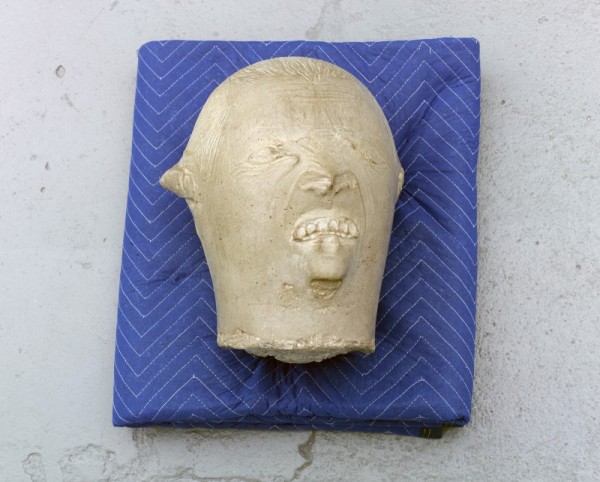
Jean-Luc Moulene. Tronche/Avatar (Paris, April 2014), 2014; polished concrete, blue blanket;
15 x 10 5/8 x 11 in.
Like many artists, my thoughts on application fees are mixed. I’ll happily pay about $25—my personal threshold—for what is essentially an art lottery ticket, but much more than that and I get queasy. Like you, I’m aware that no matter how good my targeting skills are, it’s still a crapshoot. As artist Christine Wong Yap’s blog shows us, the odds are often quite low: a 10 percent chance of securing a 2015 residency at Djerassi; a 3.7 percent acceptance rate for a visual-arts residency at the Headlands Center for the Arts; and a one-in-fifty-six probability—that’s 0.3 percent, so maybe better to call it an improbability—of becoming one of three Emerging Artist Fellows at the Queens Museum in New York City. But the odds are long on almost everything in life, and as a pal of mine used to remind me, “You can’t win the lottery if you don’t buy a ticket.”
I’m familiar with artists’ gripes about entry fees, but I wanted to hear the institutional side of the story. Jason Franz, executive director of the ten-year-old Manifest Gallery in Cincinnati, was eager to engage in a lively email conversation on the subject. He started off by putting the idea of financial risk into context: “The odds of making a masterful work of art that will sell for thousands of dollars with the materials purchased to do so are probably even slimmer than success in submitting to competitive juried exhibitions. Does this mean the art-supply store should give away the materials or in some other way negotiate your risk? For one to say, ‘Shouldn’t [institutions] have to incorporate the expense into their costs of doing business’ shows a severe naiveté. Shouldn’t artists have to incorporate the expense into their costs of doing business? I know I do as a working artist.”