From the Archives
From the Archives – #Hashtags: The Squeezing of the Middle Class Gallery
Today from our archives, we bring you an essay that’s ripe for reconsideration. Though San Francisco—like many other cities—has seen the closing of several mid-level galleries in the last few years, recent events have been more hopeful. There are at least two new art spaces in the city, and this weekend more than 3,500 artists and patrons successfully turned their cooperative efforts toward funding The Lab during a live 24-hour telethon. Of course, questions remain: Is the tide changing, or are we simply moving toward new models? Will collectivity save us? At this point there are no clear answers, but we hope this buoyant moment will propel us toward exploring other modes and strategies that can ensure strong support for the arts at a regional level. This article by Anuradha Vikram was originally published on March 10, 2014.
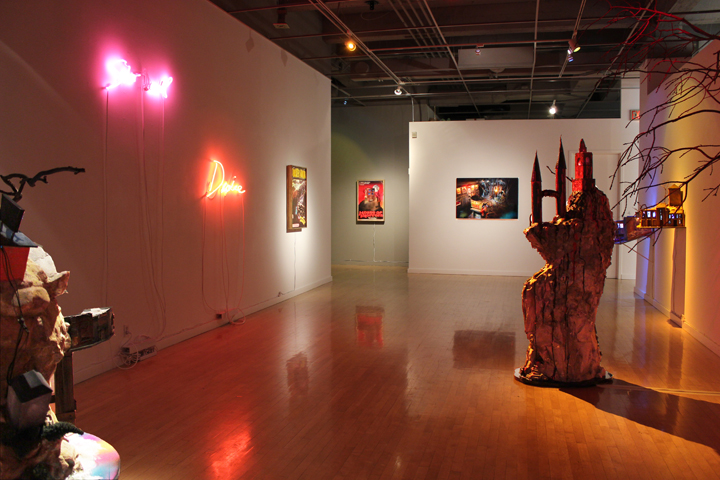
Tracey Snelling. Mystery Hour, December 19, 2013-February 1, 2014; installation view, Rena Bransten Gallery, San Francisco, CA Courtesy of the Artist and Rena Bransten Gallery. Photo: John Janca.
#commerce #place-making #policy #class #gentrification
With their leases recently terminated, the mid-sized galleries at 77 Geary Street in San Francisco are the latest casualties of the massive wealth divide that plagues contemporary American society. Gallerists George Krevsky, Rena Bransten, and Mark Jawgiel were notified that their month-to-month leases would be discontinued to make space for technology company MuleSoft to expand into the building’s second floor. Patricia Sweetow Gallery, located on the mezzanine floor, has not yet received a lease termination but is in the process of looking for a new gallery space. Within the past year, other gallery tenants Togonon and Marx & Zavattero have departed 77 Geary in advance of the anticipated loss of space. Some of the galleries being displaced have been at 77 Geary for decades.
These circumstances, while particularly dramatic, are very much within the scope of experience for many mid-sized American galleries in multiple cities. Chelsea recently saw the departure of Postmasters for lower Manhattan, while Billy Shire Fine Arts is among the mid-sized spaces that have closed after years in L.A.’s Culver City. Meanwhile, the New Yorker recently reported that mega-galleries David Zwirner and Gagosian are doing record business. If the very top of the contemporary art market is thriving, one might ask why it matters that smaller galleries are closing and gallery districts relocating across the country. There are two main reasons why this news should warrant concern. First, mid-sized galleries represent the bulk of artists with gallery representation, for whom record auction prices are out of reach. For these artists, mid-sized galleries make the difference between maintaining a sustainable art career and abandoning creative work for more lucrative pursuits. Without them, artists must take second and third jobs, detracting from the time and energy they need to make their art. Alternative spaces, many of which are also closing, provide regional artists with visibility and community but can offer only minimal financial support. Casting aside the enormous community-building value offered by support for the arts, even the most dry-eyed capitalist ought to appreciate that mid-sized commercial galleries are the link between a community’s individual artists and artisans and a broader market for their goods.