Singapore
Justin Mortimer: Sevastopol at Future Perfect
Annexed by Russia in 1782 during the reign of Catherine the Great, Sevastopol became an important naval base to the Russian Black Sea Fleet only to fall decades later to allied British, French, and Turkish troops during the Crimean War (1853–56) after a long, protracted siege that lasted eleven months. During the existence of the Soviet Union, the famous fortress city was transferred to the Ukrainian Soviet Republic and remained under the control of independent Ukraine after the Soviet collapse in 1991.
Today, it is a federal city within the Crimean Federal District that has recently been the lynchpin of a struggle between Ukraine’s new leaders and those loyal to the Russian Federation. Its current political status as a de facto territory of Russia remains internationally unrecognized after a closed referendum. Often mired in territorial dispute since its founding, Sevastopol has a legacy of enduring conflict and violence.

Justin Mortimer. Nes Ziona, 2014; oil on canvas; 86 3/5 x 63 in. Photo courtesy Future Perfect Asia, Singapore, and the Artist.
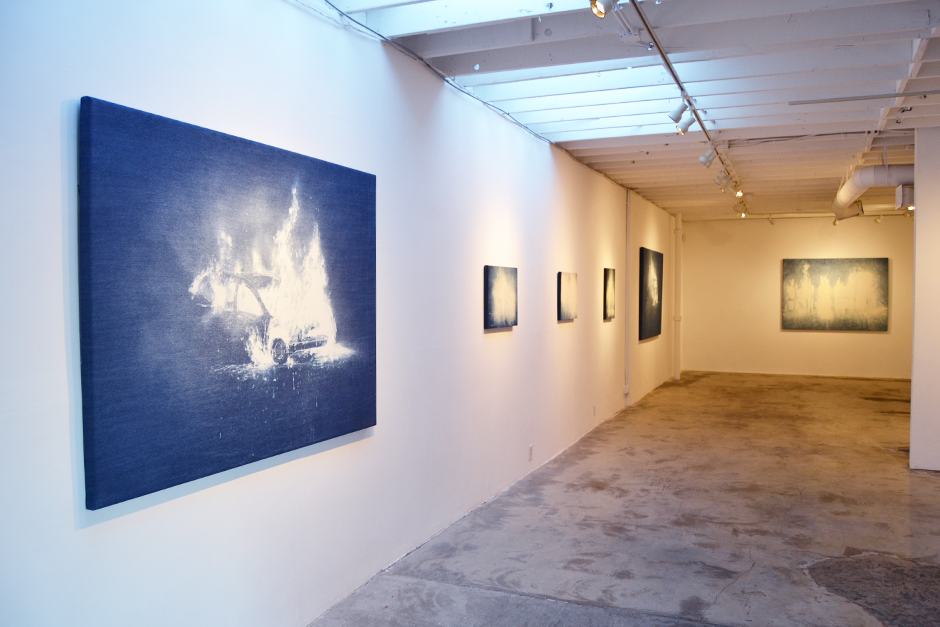
It seems fitting that Sevastopol, by British artist Justin Mortimer at Future Perfect gallery, is a series of paintings examining the visual discourse of resistance where key ideas—such as dissent, protest, and the power of the individual against the state—are represented by forms that teeter between the abstract and the concrete. Mortimer’s canvases exhibit a contradictory aesthetic sensibility; they are elegant and painterly but also theatrical and distorted, driven by an unmistakable undercurrent of hostility and anger.