From the Archives

From the Archives – Help Desk: Your Dynamic & Productive Residency

It’s nearly residency season, so today we’re sharing this helpful gem from our archives. Help Desk is an arts-advice column that demystifies practices for artists, writers, curators, collectors, patrons, and the general public. Submit your questions anonymously here. All submissions become the property of Daily Serving.

I spent last year applying to residency programs in the U.S. and finally got one. How do I maximize my time there? Obviously I’ll be working hard, but is there anything else I should know or do before I go?

Anne Neukamp. Curl, 2013; oil, tempera, and acrylic on canvas, 240 x 190 cm

Anne Neukamp. Curl, 2013; oil, tempera, and acrylic on canvas; 240 x 190 cm.

Congratulations! A residency can be a great place to get a lot of work done, experiment in a new setting, meet like-minded people, or even have a creative breakthrough. However, it’s not easy to take time off work and travel to a place where everything is new (and sometimes overwhelming) and still get a lot of artwork made. To answer your question, I turned to artist Christine Wong Yap, who has worked in residence at Montalvo Arts Center and the Tides Institute and Museum of Art, among others. Here’s what she had to say:

“Be prepared. I’m a planner. I like to find out as much as I can in advance about the residency before I go. I like to know what kinds of tools and equipment they have, and what I’ll need to ship. If the residency is in a remote area, or your residency is only a short duration, ship your tools and materials in advance (if the staff don’t mind receiving your packages for you). This can be expensive and stressful, so having particular projects in mind before arriving helps. Remember, the more remote the residency, the longer it’ll take to receive your packages. You might also consider non-art creature comforts. For example, for me, physical activity makes me less grouchy and more energetic, so a yoga mat and sneakers are must-haves.”

“Be flexible. Residencies are great for experimentation. Explore. Recharge. Be open. Anticipate that other residents may have different agendas, working hours, habits, etc. You will probably be pushed out of your comfort zone, for better and for worse. Contribute positively to the residency community with a good attitude, gratitude, and forbearance. Remember that lots of other applicants wish they had the opportunity you do.”

Read More »

Share

Shotgun Reviews

Oscar Muñoz: Sedimentaciones at the University of South Florida Contemporary Art Museum

Shotgun Reviews are an open forum where we invite the international art community to contribute timely, short-format responses to an exhibition or event. If you are interested in submitting a Shotgun Review, please click this link for more information. In this Shotgun Review, Danny Olda reviews Oscar Muñoz: Sedimentaciones at the University of South Florida Contemporary Art Museum in Tampa. 

Oscar Muñoz. Sedimentaciones, 2015; installation view. Courtesy of the Artist, the University of South Florida Contemporary Art Museum, Tampa, and the Ella Fontanals-Cisneros Collection, Miami.

Oscar Muñoz. Sedimentaciones, 2015; installation view. Courtesy of the Artist, the University of South Florida Contemporary Art Museum, Tampa, and the Ella Fontanals-Cisneros Collection, Miami.

The gallery is dark save for the surface of three tables illuminated by projectors from above and faint rays of light let in from the nearby lobby. Slips of neatly arranged photographic paper flanked by two sinks are projected onto each table. Some of the papers bear portraits printed with what appears to be charcoal, while others are blank. The artist’s hand enters the projection’s frame, selects a portrait, and dips it in water. The portrait “slips” off the paper and into the sink. The residue of the portrait circles around the drain and finally the face disappears. Soon the process is reversed in the opposite sink as it fills with water and the dark residue of an image. The same hand dips a blank leaf of paper into the water to catch a portrait and returns the new image to the table. The endless gurgles from the six sinks filling and draining murmur throughout the museum. The process resembles table magic. While it is unclear what is happening and how, one thing is for certain: this is an enigmatic alchemical photographic process.

Read More »

Share

Boston

By Women, For Women: An Interview with Filmmaker Lili White

Today from our friends at Big Red & Shiny in Boston, we bring you author William J. Simmons‘ article showcasing the work and thoughts of filmmaker Lili White.  Of her work with the Another Experiment by Women Film Festival, White’s says, “[W]hen I see something that really turns me on, it feeds me; I want to show it to somebody else, and make sure others see it. […] We are making an archive of women’s work—of women’s thoughts, their expression.” This article was originally published on January 22, 2015. 

Lili White. Still from FOOL’S GOLD: CALIFORNIA ROADTRIP IN AN ELECTION YEAR. Color; sound; TRT: 78 minutes (2014). Courtesy the artist.

Lili White. Still from FOOL’S GOLD: CALIFORNIA ROADTRIP IN AN ELECTION YEAR, 2014; Color; sound; TRT: 78 min. Courtesy of the Artist.

I founded the Another Experiment by Women (AXW) Film Festival in 2010 after showing my work on a Manhattan Neighborhood Network community TV show—EYE:AM—curated by Victoria Kereszi, who was curating women’s films at the time. She would also present a live show in a theatre once a year at 2 Boots/Pioneer Theater, and later with New Filmmakers at Anthology Film Archives. Victoria was very committed to this and I realized seeing work by women had a different buzz. Growing up as a female with a body that is capable of giving birth to another, you’re going to have a different outlook on life. You have different issues and concerns.

I came out of painting, as did other experimental filmmakers, and I spent some time in the 1990s at Millennium Film Workshop, a nonprofit arts center and cinema where I met other filmmakers. Unfortunately, MFW has fallen on hard times due to rising rents and the depletion of grant funds. MFW gives people a place to come together at open screenings that serve as a show-and-tell of short work. Meeting other people who were interested in personal, experimental films resulted in us formulating experimental theory. These theories then migrated to universities’ curriculums. There is a community of filmmakers out there and MFW reminds us of this; there is no other place like it in the world.

Read the full article here.

Share

San Francisco

Endurance Tests: If I, Brontez Purnell

Today, from our partners at Art Practical, we bring you an essay on the work of artist Brontez Purnell. Author Anna Martine Whitehead raises excellent questions about race, audience, and the nature of performance: “Will his art be taken on its own terms or viewed as a solution by program organizers and curators to the problem of how to present black creatives without investing in black life?” This article was originally published on February 3, 2015.

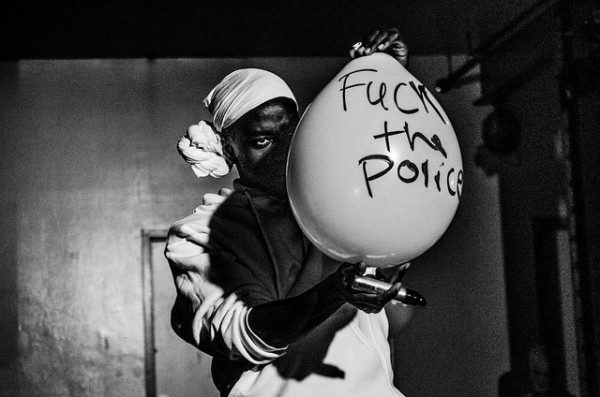
Brontez Purnell. Still from performance at KUNST-STOFF. Oct 10th, 2015. Photo by Robbie Sweeny.

Brontez Purnell. Still from performance at KUNST-STOFF. Oct 10, 2015. Photo: Robbie Sweeny.

I almost began this column about Brontez Purnell with a poem. It went something like this:

Brontez Purnell is a black choreographer. Brontez Purnell is a punk rocker. Brontez Purnell is a faggot. Brontez Purnell is an author. Brontez Purnell is an addict. Brontez Purnell is a club dancer. Brontez Purnell is gay-mous. Brontez Purnell is a poet. Brontez Purnell is broken. Brontez Purnell is a lover. Brontez Purnell is a mystic. Brontez Purnell is still here, bitches.

It obviously needs some work, but you get the idea. I’m eager to gush about Purnell in verse precisely because it’s so hard to pin him down or pen him in. With several movie roles, a book, a handful of zines, at least three bands, and multiple dance projects under his belt, Purnell is in many ways the Twenty-First-Century Black Renaissance Fag. And, central to every Renaissance personality, Purnell always lets the project define his practice—which is also to say that he never lets the project define him. Regardless of the medium he’s working in, Purnell is never anything other than himself.

Read the full article here.

Share

From the Archives

From the Archives – Coco Fusco: Observations of Predation in Humans at the Studio Museum in Harlem

Today, from the archives, we bring you Lia Wilson‘s review of Coco Fusco’s Observations of Predation in Humans, originally performed at the Studio Museum of Harlem in December 2013 for Radical Presence, a survey of performance work by black visual artists. This month, Fusco will be resuming her role as the legendary female chimpanzee psychologist Dr. Zira at Participant Inc., as part of the Performing Franklin Furnace exhibition, which showcases the historical import that Franklin Furnace and its founder Martha Wilson played in fostering avant-garde and activist art practices in New York City. This article was originally published on January 7, 2014.

Coco Fusco.

Coco Fusco. Observations of Predation in Humans: A Lecture by Dr. Zira, Animal Psychologist (study), 2013. Photo: Noah Krell.

Critical distance can be an ambitious aspiration for an artist, particularly if her practice strives to directly engage complex economic, environmental, or social justice issues. How can traditionally partisan discourses be avoided? Can a political viewpoint be communicated without merely contributing to a staunchly divisive cultural dialogue that is easy to tune out? There is no single strategy or formula for this challenge. Coco Fusco’s recent performance at the Studio Museum in Harlem deftly employed science fiction to gain some critical space. Her successful approach afforded her a new viewpoint and a platform—from a whole species away.

For Observations of Predation in Humans (2013), her contribution to the exhibition Radical Presence: Black Performance in Contemporary Art, Fusco revived and fully embodied the character of Dr. Zira, the female chimpanzee animal psychologist from the 1968–71 Planet of the Apes films. With a Skyped-in introduction from Donna Haraway, an esteemed commentator on hominoid interrelations, it was explained that despite the narrative of the third film, Escape from Planet of the Apes, which portrayed the character’s assassination by the U.S. government, Dr. Zira had actually survived and had been in hiding in an isolated cabin in the Midwest for more than twenty years. Over the course of this seclusion, she had been observing human behavior via the Internet and television. It wasn’t until the 2012 Cambridge Declaration, in which brain scientists concluded that non-human animals do have consciousness, that Dr. Zira felt safe enough to resurface as a public intellectual and present her findings on human predation.

Read More »

Share

Toronto

The Disappeared at Gallery 44 Centre for Contemporary Photography

In The Disappeared, artists Tatiana Grigorenko and Zoë Heyn-Jones rewrite history through still and moving images. In the current exhibition at Gallery 44 Centre for Contemporary Photography, Grigorenko and Heyn-Jones negotiate their relationships with their ancestors and origins through altered photographs and Super 8 film. With disarming honesty, they interrogate the ways in which their private memories and personal realities overlap and diverge. This fissure between the real and the imagined is further nuanced through their interventions, as they question the veracity of the photographic image and the camera’s ability to translate an authentic representation of reality.

Tatiana Grigorenko. Swimming, 2014; archival ink-jet print on Hahemühle cotton rag paper and collage; 16.5 x 11.8 in. Courtesy of the Artist and Gallery 44 Centre for Contemporary Photography.

Tatiana Grigorenko. Swimming, 2014; archival ink-jet print on Hahnemühle cotton rag paper and collage; 16 1/2 x 11 4/5 in. Courtesy the Artist and Gallery 44 Centre for Contemporary Photography.

The artists’ processes are foregrounded in this exhibition, as both Grigorenko and Heyn-Jones perform acts of historical revisionism by dealing with materiality and form. Grigorenko modifies images unearthed from her family archive by the use of paint or collage. With clinical accuracy, she excises herself from these relics, carefully covering up the evidence of her existence by replacing herself with blank space. These works are grouped on the gallery wall much in the same way as a family photo collection, and intimacy is evoked by this familiar arrangement. Between the collaged images hang Grigorenko’s school portraits (School Portrait #1#9 [2014]), her youthful face blackened out with paint. The organization of the work allows the viewer to gaze at a girl who is simultaneously coming of age while being denied her full identity.

Read More »

Share

San Francisco

The Return to Reason at Gallery Wendi Norris

Today from our partners at Art Practical, we bring you a review of the current group show at Gallery Wendi Norris in San Francisco. Author Danica Willard Sachs writes: “In a moment when the commonplace assumption is that photographs are digitally manipulated, the exhibition shines in its success at reminding viewers that wonder can still be found in the analog realm of the darkroom, or even in the camera itself.” This article was originally published on February 5, 2015.

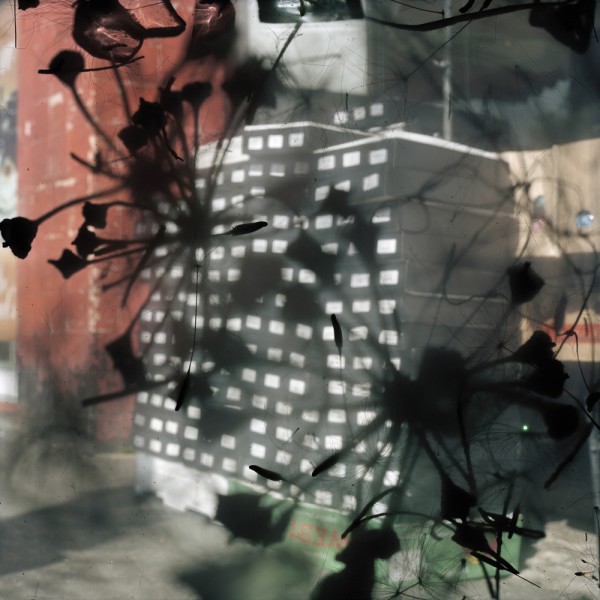
Stephen Gill. Talking to Ants, 2009–12; pigment archival paper print, image 40 x 40 in., paper 44 x 44 in., edition of 5 plus 2 AP. Courtesy of the Artist and Gallery Wendi Norris, San Francisco.

Stephen Gill. Talking to Ants, 2009–12; pigment archival paper print, image 40 x 40 in., paper 44 x 44 in., edition of 5 plus 2 AP. Courtesy of the Artist and Gallery Wendi Norris, San Francisco.

The Return to Reason, on view at Gallery Wendi Norris, takes its title from Man Ray’s 1923 film, Le Retour à la Raison. In the three-minute film, Man Ray translates his signature photograms into moving images, making familiar objects like nails and pins anew by placing them directly onto sheets of film. These alternate with shots of a geometric mobile and its shadow, the spinning lights on a carousel, and a slowly revolving woman’s torso. Like Man Ray’s frenetic experiment, the five artists selected by curator Allie Haeusslein for The Return to Reason also manipulate photographic processes to create wondrous explorations of form.

The front gallery of the exhibition features the work of two of these artists, Chloe Sells and Lorenzo Vitturi. Sells creates one-of-a-kind topographic pastel-hued photographs of the Rocky Mountains by layering color and texture on negatives in the darkroom. Four of these are installed together in a pinwheel shape, a kaleidoscope of variations on the stony mountain faces. Across from these is a more visually striking work, Katoyissiksi (2014), which depicts a forested landscape and its reflection immediately below. Unframed and tacked onto the wall, Sells’s image fades into an ombre wash of cyan, magenta, and blue, the literal pigment elements of the chromogenic print.

Read the full article here.

Share