Hashtags
#Hashtags: Political Abstraction – The Revolution is Us
In a 2012 essay for e-flux, After OWS: Social Practice Art, Abstraction, and the Limits of the Social, Gregory Sholette asks whether there can be a role for abstraction within the flourishing new discipline of socially engaged post-conceptual art practice. This remains a valid question given that most activist art is still understood to be representational, based on precedents from the Civil Rights era such as the Black Arts Movement and Mission Gráfica, which themselves draw on Social Realism as well as various folk-art traditions. Still, possibilities do exist for abstract and dematerialized forms as political art. Rather than cite the obvious, I will instead make a case for abstraction as ubiquitous within contemporary art, maintaining its capacity for political engagement and transformation, even as its manifestations (as Sholette admits) have been all too readily reabsorbed into the halls of power.
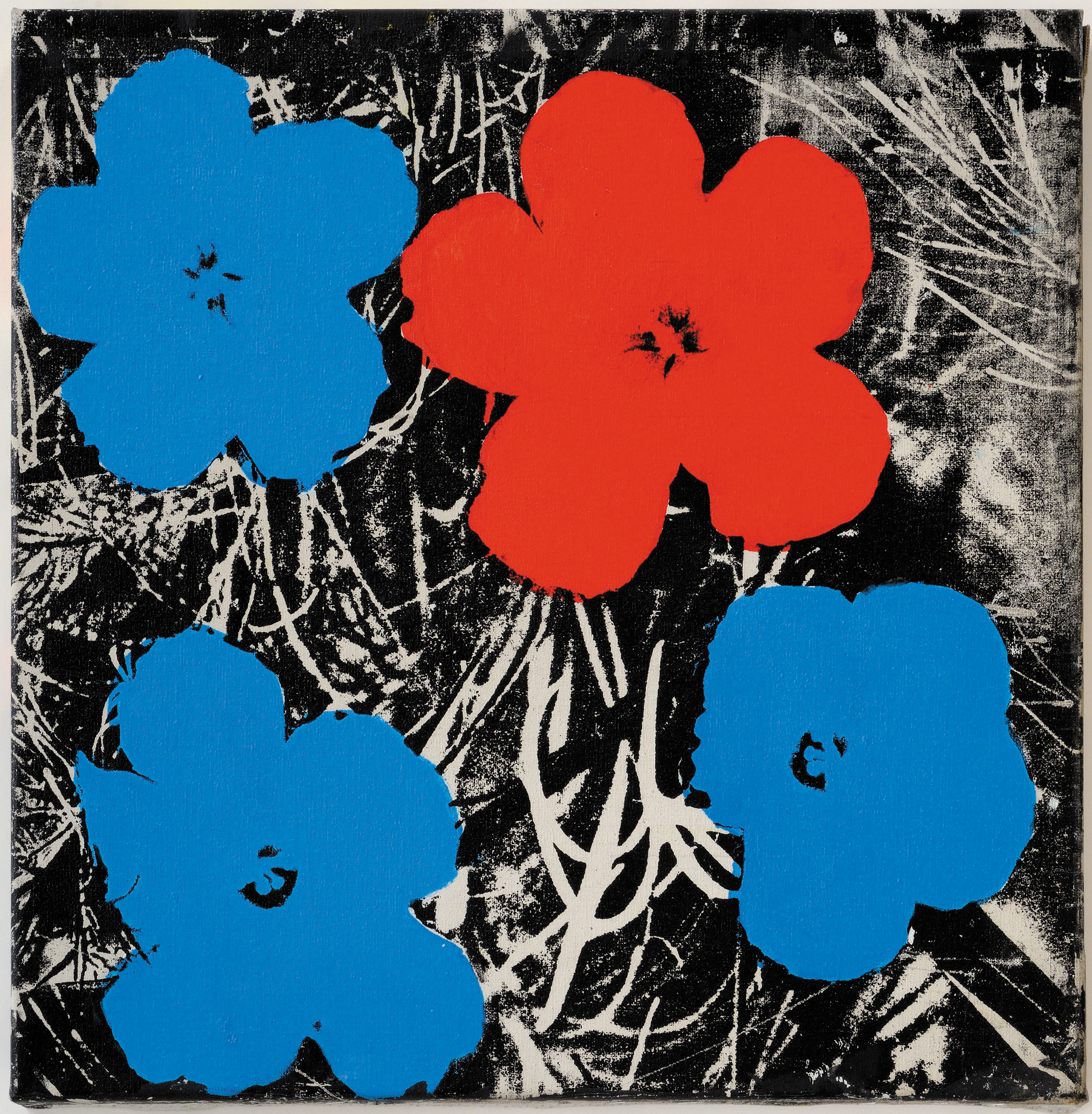
Sturtevant. Warhol Flowers, 1964–65; synthetic polymer screenprint on canvas; 22 1/16 × 22 1/16 in. (56 × 56 cm). Estate Sturtevant, Paris. Courtesy of Galerie Thaddaeus Ropac, Paris–Salzburg. © Estate Sturtevant, Paris.
In considering the politics of abstraction, it bears noting that imagery has been decoupled from representation in contemporary art since the 1960s. Pop Art’s rampant appropriation, reiterated in the ’80s by the Pictures Generation, confirmed the status of images as simulations of depiction, as far removed from the things they show as a painting is from a Campbell’s Soup can. Therefore we should not simply think of abstraction as the absence of recognizable imagery à la Ad Reinhardt or Jackson Pollock, but instead consider how representation can itself be made abstract. The work of Elaine Sturtevant is exemplary in this regard.