Savannah

Linear Abstraction at the SCAD Museum of Art

Abstraction is dead! Long live abstraction! In Linear Abstraction, the SCAD Museum of Art negotiates the status of nonrepresentational work as it exists in the 21st century and includes work in various media, including painting, sculpture, photography, and digital formats. While the exhibition seeks to trace commonalities between contemporary practices by engaging somewhat diverse uses or ideas of lines, the resulting effect points succinctly to the broader condition of 21st-century abstraction.

Phillip Stearns. Linear Abstraction, 2015; installation view. Gutstein Gallery, Savannah College of Art and Design, Savannah, Georgia. Courtesy of the Savannah College of Art and Design. Photo: Marc Newton.

Phillip Stearns. Linear Abstraction, 2015; installation view, Gutstein Gallery, Savannah College of Art and Design, Savannah, Georgia. Courtesy of the Savannah College of Art and Design. Photo: Marc Newton.

As its title so aptly demonstrates, the show uses the concept of the line—or more specifically, the hard-edged line—as a starting point in exploring how contemporary artists approach abstraction. Obviously, lines are omnipresent in art—in fact, it would be hard to preclude artists from being in the show if the engagement of lines were the only criteria. Visitors to this exhibition may also remember the Museum of Modern Art’s On Line, presented in late 2010 in New York. This exhibition attempted to explore the use of the line throughout modern art; in the end, predictably, artworks filled every wall of every gallery, showing the ubiquity of this most fundamental of formal devices.

Avoiding a survey-like mentality, Linear Abstraction uses the line as a lens in which to view specific works, and in turn the curators have created a show that comments not so much on the deliberate use of line, but instead on trends within contemporary abstraction. By using the word linear in the title, viewers are forced to reconcile each work with the idea of the line. Thus the curators have created an environment in which the works are meant to be read in a specific way.

Read More »

Share

Shotgun Reviews

Jake Longstreth: Free Range at Gregory Lind Gallery

Shotgun Reviews are an open forum where we invite the international art community to contribute timely, short-format responses to an exhibition or event. If you are interested in submitting a Shotgun Review, please click this link for more information. In this Shotgun Review, Miguel Arzabe reviews Jake Longstreth: Free Range at Gregory Lind Gallery in San Francisco.

Jake Longstreth. Free Range, 2014; Oil on canvas in artist frame, 60 x 40 in.

Jake Longstreth. Free Range, 2014; oil on canvas in artist frame; 60 x 40 in.

For urban dwellers with the means and motivation to leave the city in search of open space, there is a crucial moment when the last big-box store fades in the rear-view mirror and the mountains loom ahead. LA-based artist Jake Longstreth’s humble paintings featured in Free Range at Gregory Lind Gallery present the viewer with a likewise ambivalent moment when the promise of freedom becomes tinged with a nagging, indefinite apprehension.

Longstreth’s landscape paintings depict distant mountain ranges under vast skies, but they deal not so much with nature as with the concept of the sublime. A low-grade, unspoken dread is present in all nine of his paintings, which range in scale from intimate to body-sized. It is crucial to understand that the artist elected to paint from memory, which gives his imagination free rein—yet the works are restrained in composition, facture, and palette. It is precisely the use of an understated palette, especially in the skies where greenish grays and hazy pinks blend to dead blues in seamless gradations, that gives viewers the creeping sense that we are not experiencing the respite from the city that was promised. Rather, we experience nature’s inability to reveal anything to us other than what we project onto it.

Read More »

Share

From the Archives

From the Archive – Fan Mail: Joe Webb

Almost a year ago today we published an article featuring the work of Joe Webb. Fan Mail columnist Will Brown selected Webb’s work from hundreds of reader submissions, noting that “humor comes to the fore in all of [the artist’s] images.” Currently, Webb’s work is on view in the Prints & Originals Gallery at the Saatchi Gallery in London through April 7, 2015. This article was originally published on March 28, 2014.

Joe Webb. Stirring Up A Storm, 2014; collage; 12 ¾” x 8” inches. Image courtesy of the artist.

Joe Webb. Stirring Up a Storm, 2014; collage; 12 ¾ x 8 in. Image courtesy of the Artist.

In Joe Webb’s Stirring Up A Storm (2014), the nearly full moon peers resolutely down like a removed voyeur, while a continent-sized Sunbeam Mixmaster Junior (an electric mixer from the 1950s) stirs Earth’s atmosphere with its twin silver beaters to create massive, hurricane-like weather patterns. From the description alone, issues of global warming and energy crises come to mind; however, the well-crafted humor, imaginative aesthetic, and a subtly wry irreverence in Webb’s collages ensure that his message is successfully communicated.

Webb makes his collages by combining and removing imagery from vintage magazines and printed ephemera. While he describes his working methods as “analogue” and “luddite reaction(s) to working as a graphic artist on computers for many years,” the works strike particularly contemporary notes, both formally and conceptually.

Read More »

Share

San Francisco

Alec Soth: Songbook at Fraenkel Gallery

Today we bring you a review of Alec Soth: Songbook at Fraenkel Gallery in San Francisco. Writing for Art Practical, author Danica Willard Sachs notes that “The project marks a departure from [Soth’s] usual reliance on narrative annotations to explain his images; it’s a more free-flowing, less didactic viewing experience.” This article was originally published on March 26, 2015.

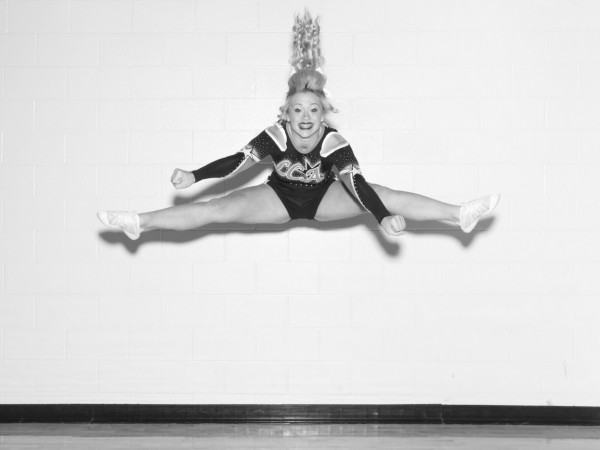
Alec Soth. Bree, Liberty Cheer All-Stars, Corsicana, Texas, 2012; pigment print; 39 x 52 in. Courtesy of Fraenkel Gallery, San Francisco. © Alec Soth.

Alec Soth. Bree, Liberty Cheer All-Stars, Corsicana, Texas, 2012; pigment print; 39 x 52 in. Courtesy of Fraenkel Gallery, San Francisco. © Alec Soth.

In twenty-one black-and-white pigment prints from the larger photobook Songbook, Alec Soth presents at Fraenkel Gallery a vision of contemporary American community life tinged with melancholy and wry humor. Between 2012 and 2014, Soth played the role of a minor newspaper photographer, traveling the United States to document community meetings, dances, pageants, and festivals for his self-published newspaper The LBM Dispatch(distributed through the website of his independent publishing house, the Little Brown Mushroom) and also while on occasional assignment for the New York Times. Like Robert Frank’s effort The Americans, first published in 1958, Soth’s depiction of American life revels in the space between sincerity and satire. The artist offers little more than a location in each image title, and yet the cumulative result is a feeling of Americanness in photographs that were taken anywhere and everywhere from Kissimmee, Florida, to Redwood City, California.

Read the full article here.

Share

Singapore

Gilbert & George: Utopian Pictures at Arndt Gallery

In the 21st-century lexicon of urban development, the term utopia has all but vanished from the descriptors of a contemporary city. It’s more comfortably consigned to the archaic vocabulary of 18th-century academia. Yet it remains a silent ideological underpinning of economic policies, an elusive goal that governments strive toward but leave unacknowledged—seen, for instance, in laws forbidding “transgressive” behavior, constant political entanglements, or even in perpetual urban developments intended to enhance civic life.

Gilbert & George. They Shot Them!, 2014; 254cm × 453 cm. Photo: Courtesy of Arndt gallery and the artists.

Gilbert & George. They Shot Them!, 2014; photomontage; 254 × 453 cm. Courtesy of Arndt gallery and the Artists.

The twenty-six photomontages of Utopian Pictures at Arndt Gallery in Singapore, by the British artistic team Gilbert Prousch & George Passmore, gleefully parody that lofty ideal. Each photomontage presents utopia’s flip side and depicts a fiercely hostile, turbulent environment of dire warnings, threats, and nonsensical graffiti in a provocative mishmash of garish colors, as though cataloguing the battle scars of a city splintered into factions. Defiant voices (“Anti-fascist zone,” “No racists in working class areas,” “Toffs out”) clamor to be heard and clash with the heavy hand of authority amid sinister undercurrents of racial, class, and sexual exclusions.

Read More »

Share

San Francisco

Nate Boyce: Polyscroll at YBCA

Today from our partners at Art Practical, we bring you a review of Nate Boyce’s solo show at Yerba Buena Center for the Arts in San Francisco. Author Monica Westin notes: “The overall effect is akin to walking around a sculpture in a completely unanchored plane in space that occasionally drifts into and out of alignment with other planes and other worlds.” This article was originally published on March 24, 2015.

Nate Boyce. Polyscroll II, 2015 (still); HD video. Courtesy of the Artist and Altman Siegel Gallery, San Francisco.

Nate Boyce. Polyscroll II, 2015 (video still); HD video. Courtesy of the Artist and Altman Siegel Gallery, San Francisco.

At a recent screening accompanying Nate Boyce’s Polyscroll exhibition at YBCA, the artist presented a group of abstract films and video/media art that have been influential to his work, particularly as examples of how film can approach being painterly.

While the films Boyce showed—Robert Breer’s menacing but playful frame-by-frame animations, Paul Sharits’ violent, physically distressing flashes in Ray Gun Virus—address many of the themes central to Polyscroll, it’s Boyce’s own supercut of a Willem de Kooning documentary with clips and sounds from Ridley Scott’s Alien (1979) that is the most critical for uncovering some of the exhibition’s deeper impulses. Boyce’s mash-up combines shots of the hyper-canonical abstract expressionist creating larger-than-life painterly gestures against what Boyce calls the “visceral, biomorphic” aggressive presence of the alien’s uncanny movements and breathing. The resulting effect is grotesque but formally fascinating: How is the creation of a creature like the alien as a sculptural, kinetic, and cinematic object akin to a brushstroke? The question is a timely one, especially now that we are in the age of digital rendering and modeling; Boyce cited the zbrush tool as an analogue to oil painting. How have the some of the most basic art-historical relationships like painting and sculpture changed, and what are the new potentialities for crossbreeding?

Read the full article here.

Share

London

Barbara Kruger: Early Works at Skarstedt Gallery

It’s a funny thing to be able to go back and reconsider an artist’s early works after thirty years, partly because the time capsule of memory remembers the work in the context in which it was made. Viewing the work again in the present reflects the context of that prior time as it’s understood now. The aggressively fast-paced 1980s are faster in memory than they actually were. The once-fleeting Warholian milestone of fifteen minutes can now be measured in terms of nearly 8 millions tweets. So it would seem that no body of work could epitomize the brashness of the 1980s better, or be better suited to the speed of the digital present, than the work of Barbara Kruger. Now at Skarstedt’s London gallery, Barbara Kruger: Early Works is an opportunity to see if memory serves history.

Barbara Kruger. Untitled (Business as usual), 1987; gelatin silver print in artist’s frame; artist’s proof  from an edition of one, plus one artist’s proof. 49 x 60 3/8 in. Courtesy of the Artist and Skarstedt.

Barbara Kruger. Untitled (Business as Usual), 1987; gelatin silver print in artist’s frame; 49 x 60 3/18 in.; artist’s proof from an edition of one, plus one artist’s proof. Courtesy of the Artist and Skarstedt.

More of a very brief sample than a true survey, the exhibition is not particularly cohesive—but then it’s not supposed to be. It’s an opportunity to see the early works of Barbara Kruger that can still be purchased. Getting past the secondary-market effect, these pieces collectively offer insight into Kruger’s conceptual framework. Polar stances are formed by the norm and the artist’s critique. This is the traditional quick read of Kruger’s work as a feminist deconstruction utilizing truth-to-power statements paired with imagery that underscores the text. What becomes apparent when surrounded by the seven-piece show is how much the viewer is implicated in each of her assertions. Kruger incriminates the viewer through the brilliant use of the pronoun you; you–the viewer–manifest this problem. This is a shocking (re)revelation. For those that see themselves as being on the “correct side” of the critique, Kruger’s work was about the other—a kind of ideological enemy against whom one might take a polemical stance. It’s not. It’s about the viewer’s predicament within the space that is created between the critique and the projected other’s position.

Read More »

Share