Hashtags
#Hashtags: The Political Biennale
#nationalism #institutions #power #access #globalization #protest #labor #capital
The 56th Venice Biennale, “All the World’s Futures,” has been hailed as the “political” Biennale both by its curator Okwui Enwezor and by the international art press. That designation has come in for significant criticism from some who feel that contemporary art either can not or should not address political concerns, given the commodity status of art objects within a capitalist framework. The Biennale is supported by a consortium of state, corporate, and individual interests, none of which can be assumed to represent progressive values or the rights of the disenfranchised. Rather, it functions as a bazaar in which established and emerging national interests jockey for influence, applying “soft” cultural power as well as “hard” economic power. How, then, to reconcile the Biennale’s nature with the “deeply reflective, deeply political”[1] objectives that Enwezor has laid out?
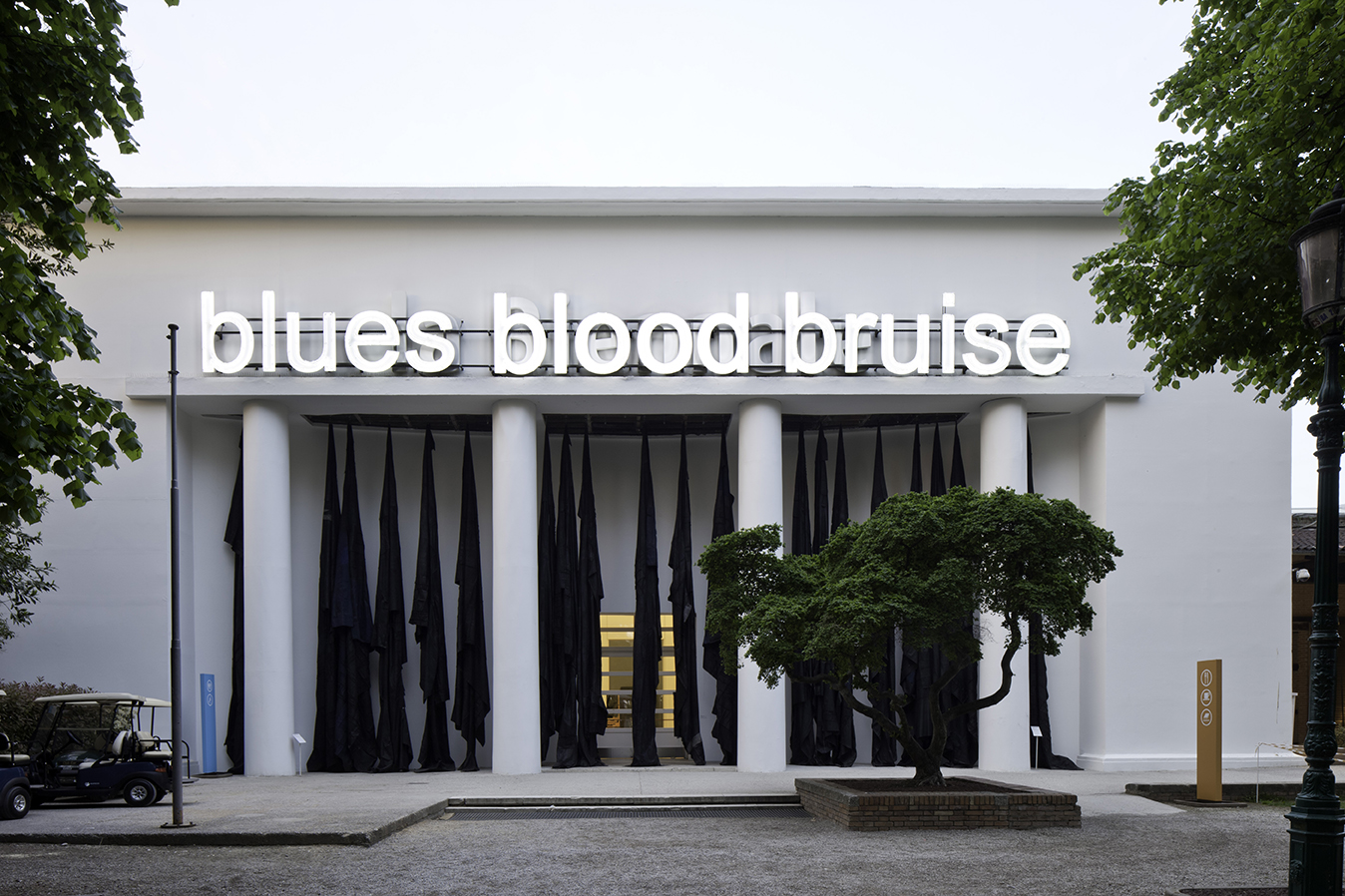
56th International Art Exhibition – la Biennale di Venezia, All the World’s Futures, Padiglione Centrale, Giardini, Venezia, 2015. Courtesy of la Biennale di Venezia. Photo: Alessandra Chemollo.
Enwezor declares that his exhibition, the centerpiece of an international festival presenting pavilions from eighty-seven nations,[2] addresses “the ruptures that surround and abound around every corner of the global landscape today.” He draws legitimacy for the geopolitical framework of his project from history, describing how “One hundred years after the first shots of the First World War were fired in 1914, and seventy-five years after the beginning of the Second World War in 1939, the global landscape again lies shattered and in disarray, scarred by violent turmoil, panicked by specters of economic crisis and viral pandemonium, secessionist politics, and a humanitarian catastrophe on the high seas, deserts, and borderlands, as immigrants, refugees, and desperate peoples seek refuge in seemingly calmer and prosperous lands.”[3]