





Reviews

Three Katrinas

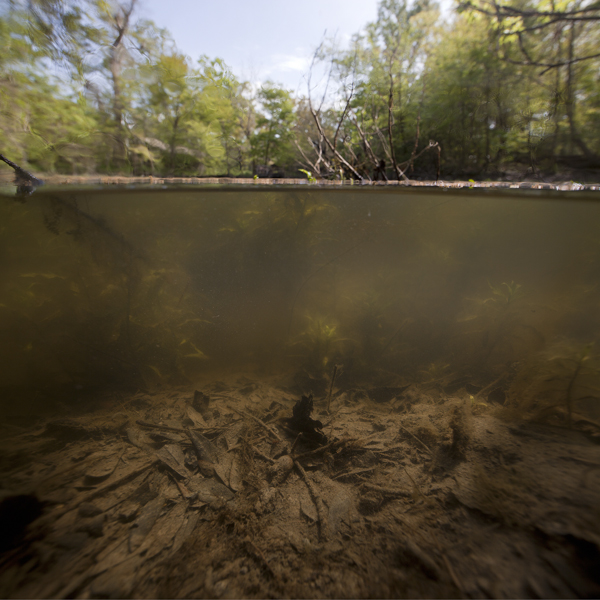
Isabelle Hayeur. Etang 04, 2013; Archival pigment print; 36 x 36 in. Image courtesy of the Artist.

“Memorials are the way people make promises to the future about the past.” Alice Greenwald, director of the National 9/11 Memorial Museum, reminds us that a memorial is as much how we describe who we are now as it is about a prior event. The 10th anniversary of Hurricane Katrina provides an opportunity to look back at a particular moment of disaster, injustice, upheaval, and[…..]

The Heart Is a Lonely Hunter at Fraenkel Gallery

Bryson Rand, Mario & Danny (Los Angeles), 2015; Pigment print, edition of 5, 42 x 30 in. Courtesy of the artist and Fraenkel Gallery.

Today from our partners at Art Practical, we bring you Petra Bibeau’s review of The Heart Is a Lonely Hunter at Fraenkel Gallery in San Francisco. The author notes, “[the exhibition]succeeds due to the selected artists’ compulsive desire to create their own narration from a point of obsession with being rather than from a literal rendition of living.” This article was originally published on August 12, 2015. In[…..]

The Great Debate About Art at Upfor

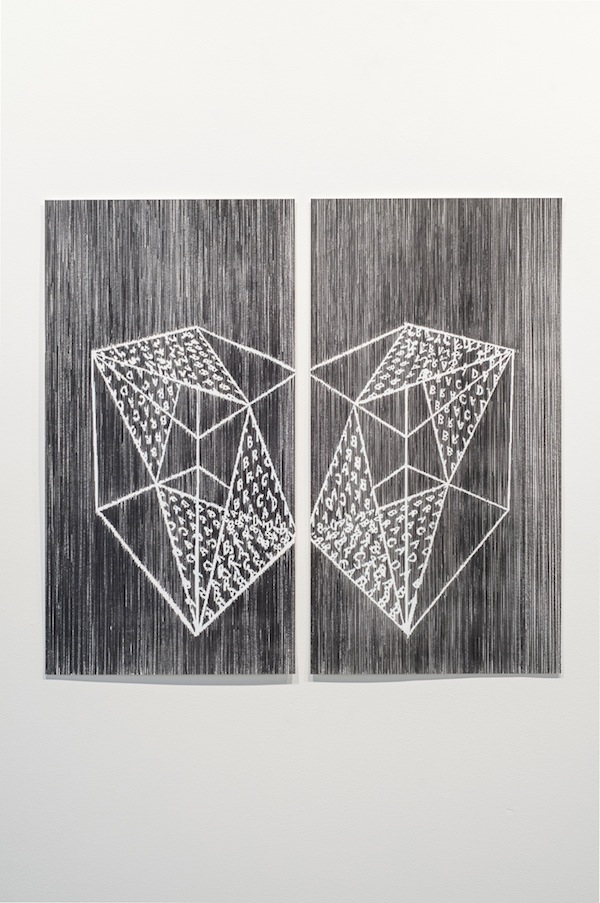
Ben Buswell. ABRACADABRA (Perish Like the Word), 2015; graphite and non-photo blue; 38 x 20 inches. Courtesy of the artist and Upfor. Photo: Mario Gallucci.

“Art” is a contentious word. Endless positing over any succinct, defining properties has spawned countless op-eds, theses, and textbooks. The topic is comparable to that of discussing religion in mixed company—differences of opinion have more than once drawn blood. The Great Debate About Art, currently on view at Upfor in Portland, Oregon, is a small group exhibition contextually centered on Roy Harris’ 2010 book of[…..]

Barbara Kasten: Stages at ICA Philadelphia

(from left to right) Barbara Kasten. Studio Construct 125, 2011; archival pigment print; 53 3/4 x 43 3/4 in.; Studio Construct 32, 1986; Silver dye bleach print; 37 x 29 1/2 in. Courtesy of the Institute of Contemporary Art at the University of Pennsylvania.

At the entrance to Barbara Kasten: Stages at the Philadelphia Institute of Contemporary Art, there is a corner-placed grouping of five photographs. Four early Polaroids made in 1982 and 1983 are on the right; with their geometric shapes and pastel colors, they would fit easily into the reigning design aesthetic of the 1980s. On the left is the 2007 silver-dye bleach print Studio Construct 17,[…..]

Disguise: Masks & Global African Art at Seattle Art Museum

Brendan Fernandes. As One, 2015; HD video loop; 22:54 minutes. Courtesy of the artist.

Museums are constantly devising new platforms to present their permanent collections. Interventions and mining-the-museum have become commonplace curatorial strategies, and institutions frequently turn to contemporary artists to animate, recontextualize, and bring visibility to canonized cultural objects. Disguise: Masks and Global African Art is Seattle Art Museum’s latest attempt to draw connections across temporal, geographic, and cultural lines. Leveraging the museum’s collection of African masks, the[…..]

Come As You Are: Art of the 1990s at the Telfair Museums

Come As You Are: Art of the 1990s, 2015; installation view, Jepson Center for the Arts, Telfair Museums, Savannah, Georgia. Courtesy of Telfair Museums. Photo: David J. Kaminsky.

Finally, here is an exhibition for which an accompanying Spotify playlist seems perfectly natural. Songs like “Smells Like Teen Spirit” by Nirvana and “Vogue” by Madonna are closely connected to the not-so-recent decade that the Telfair Museums represents through works of art in Come As You Are: Art of the 1990s. Curated by Alexandra Schwartz with Kimberly Sino (both of the Montclair Art Museum, where[…..]

Walter Robinson: Home Grown at the Palo Alto Art Center

Walter Robinson. Spin, 2008; wood, epoxy, steel, and metal flake; 52 x 26 x 22 in. Collection of Donald Kushner. Courtesy of the Palo Alto Art Center.

From our partners at Art Practical, today we bring you a review of Walter Robinson: Home Grown at the Palo Alto Art Center. Author Maria Porges notes: “The cumulative effect here is one of nostalgia—sometimes for things that never really existed—mixed with a strange kind of déjà vu. Not only have we been here before, but we will be here again, over and over, as we[…..]




