Photography
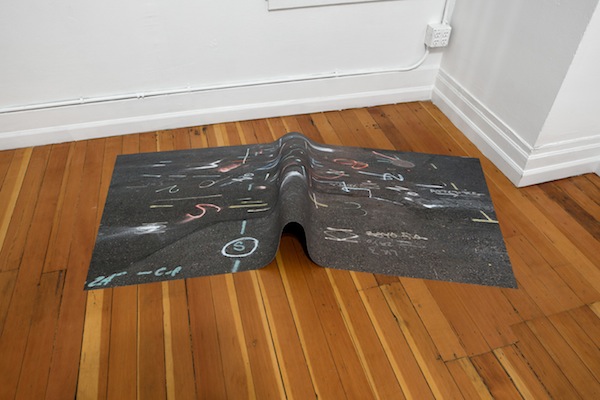
Leif Anderson: TATTARRATTAT at Melanie Flood Projects
The word “Tattarrattat” was first birthed in James Joyce’s 1922 novel, Ulysses. It’s the longest palindromic word in English literature and an unmistakable onomatopoeia that takes inalienable form only in a moment we can collectively imagine: a furious rapping at the door. Such phrases within Joyce’s Ulysses and Finnegans Wake make him a legend amongst Modernist writers who are trepidatious about inventing words where none[…..]
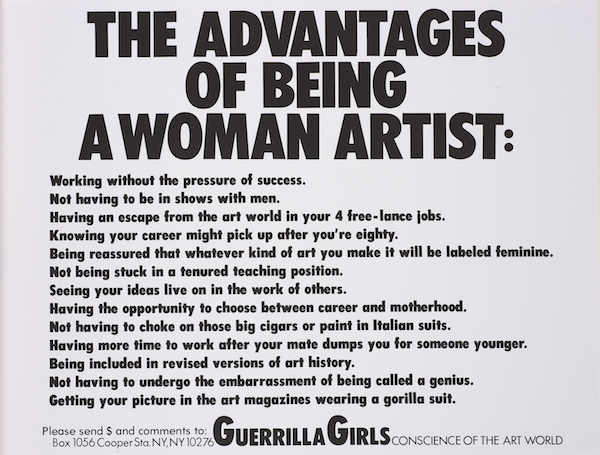
Women’s Work at Smith College Museum of Art
The exhibition Women’s Work is constructed within a historical frame. All of the included artists are introduced as individuals prominent in second-wave feminism, defined as a past era from the 1960s through the 1980s, a period with a beginning and an end. It cannot be denied that a great deal has changed in both feminist thought and social mores since then. Third-wave feminism called out[…..]
Sheila Pree Bright: 1960Now at the Museum of Contemporary Art of Georgia
1960Now, on view at the Museum of Contemporary Art of Georgia, is an expansion of photographer Sheila Pree Bright’s continued interest in naming and documenting the unknown leaders of African American social movements: the influential agitators, groundbreakers, and activists whose names might not have been Rosa, Martin, or Malcolm. In her latest photographic project, Bright points to a new generation of faces experiencing frustrations and[…..]
Özlem Altin at Kiria Koula
From our partners at Art Practical, today we bring you a review of Özlem Altin’s current solo show at Kiria Koula in San Francisco. Author Zachary Royer Scholz declares: “Özlem Altin’s exhibition at Kiria Koula is a wonderful rarity. It does not present viewers with clear answers because it is not the finished result of an exploration. It is an exploration in progress, in which viewers participate—a generous[…..]
Elad Lassry at David Kordansky Gallery
Elad Lassry’s latest exhibition at David Kordansky commingles two groups of seemingly disparate works: highly wrought wooden sculptures, carved from single slabs of dark walnut, and dated commercial photographs, which have been intervened upon with materials such as acrylic paint, colored wires, and beads. The show attempts to bridge the gap between the two bodies of works by engaging the issue of pictorial representation as[…..]