A. Will Brown is the curatorial assistant of contemporary art at the Museum of Art, Rhode Island School of Design, in Providence, RI. He is a curator, writer, and a regular contributor to Daily Serving, Studio International and Art Practical. He has also written for San Francisco Arts Quarterly, California College of the Arts' Glance Magazine, Alternative Apparel and the RISD Museum’s Manual Journal. Brown has held positions at the Kadist Art Foundation, the Wattis Institute for Contemporary Arts, Triple Base Gallery, Crown Point Press, and the Aspen Art Museum. His curatorial work includes exhibitions, events, and performances for the RISD Museum, Wattis Institute for Contemporary Arts, Kadist Art Foundation, Alter Space Gallery, Triple Base Gallery, and The Luggage Store Gallery.

Webster’s definition of ideology is: “A system of ideas and ideals, especially one that forms the basis of economic or political theory and policy.” Artist Nicola Dale’s sculptures, performances, and installations are interpretations of this definition of ideology—one of many subjects that Dale explores in her work. Dale often works on one subject or idea for an extended period, in distinctive bodies that incorporate various[…..]
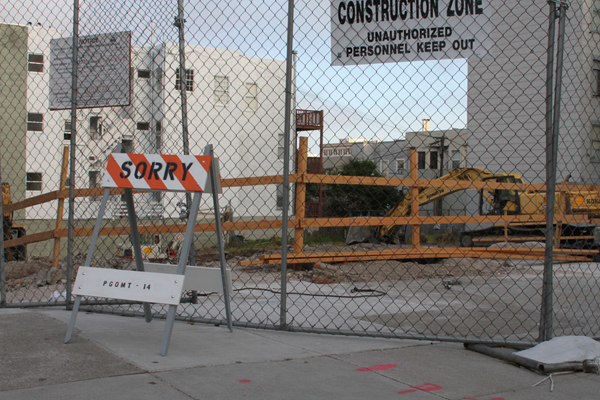
At the risk of having his artwork go unrecognized, Paul Taylor creates subtle interventions in land- and cityscapes. His works simultaneously embody and critique the influence of the quotidian. To achieve such interventions, Taylor works with an array of media: film, video, concrete, ink, graphite, plants, and found industrial and construction material. Much of Taylor’s work appears as though he simply found a perfect organization[…..]
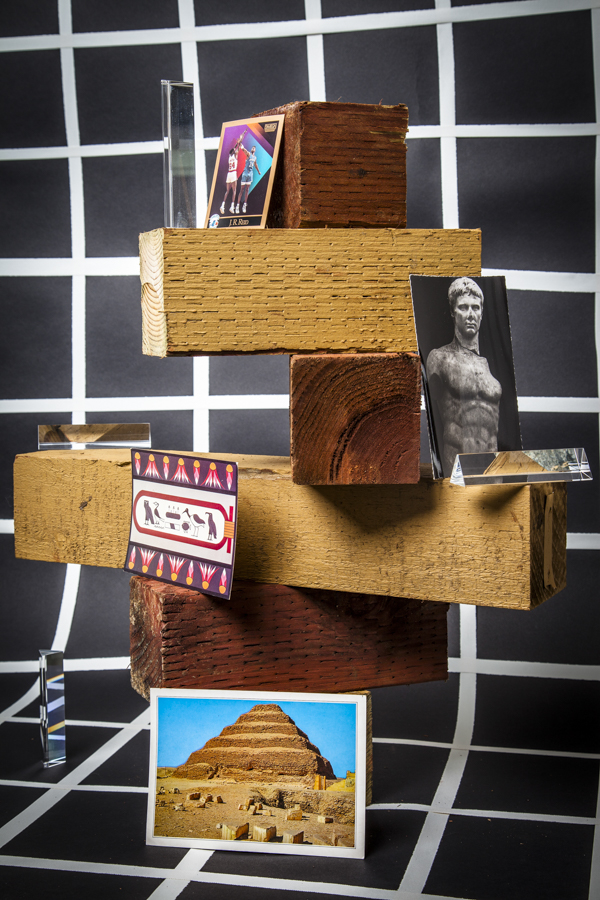
Photographs have many potential uses. They can serve as objective documents of history, standing in for memory, ideas, and sensory representations, but they also have the capacity to manifest images of fictional narratives that are markedly creative. Nando Alvarez-Perez’s photographs, often produced in a series, mirror the many capacities of the photograph, capturing an array of past and future meanings, motifs, styles, and contexts. At[…..]

Cristina Burns’ work offers a poised and humorous vision of a world measured more by twisted fantasy than by the so-called sanity we are all so accustomed to assuming. Working primarily in photography, the artist creates works reminiscent of seventeenth-century European cabinets of curiosity, museums of medical and anthropological oddities, and children’s books, cartoons, and playthings—her photographs ooze a cloyingly saccharine Rococo sensibility that is[…..]

Photographer Jason Engelund is distinctly aware of the conceptual and metaphorical capacities of landscape. Engelund works with a single series of photographs at a time to capture one motif, location, technique, or compositional strategy from various positions. However, these discrete bodies of work resonate with one another as part of a long-term vision—an ongoing project, or more aptly a study of photographic mechanisms and the[…..]

Willie Stewart incorporates a broad range of complex, mundane, strange, and dark subject matter and cultural references into his work. His interests and references include extraterrestrials, biker gangs and punk rock groups, German artist Kurt Schwitters’s Merzbau (1931–33), Mike Kelley’s book The Uncanny, and cult films such as Lloyd Kaufman’s Toxic Avenger (1984). Stewart’s sculptures, installations, videos, photographs, and photocollages are all individual works, but each[…..]

A close-up shot of Dwayne “The Rock” Johnson’s face, Prince Charles atop his horse playing polo, and Dom DeLuise in drag pouring wine: What do these three things have in common? Nothing really, except that images of them, as well as many other well-known people, places, products, and tropes, appear in the uniquely humorous and witty compositions of artist Celeste Fichter. In her three serial[…..]












