A. Will Brown is the curatorial assistant of contemporary art at the Museum of Art, Rhode Island School of Design, in Providence, RI. He is a curator, writer, and a regular contributor to Daily Serving, Studio International and Art Practical. He has also written for San Francisco Arts Quarterly, California College of the Arts' Glance Magazine, Alternative Apparel and the RISD Museum’s Manual Journal. Brown has held positions at the Kadist Art Foundation, the Wattis Institute for Contemporary Arts, Triple Base Gallery, Crown Point Press, and the Aspen Art Museum. His curatorial work includes exhibitions, events, and performances for the RISD Museum, Wattis Institute for Contemporary Arts, Kadist Art Foundation, Alter Space Gallery, Triple Base Gallery, and The Luggage Store Gallery.
Thank you, Will! Today we celebrate A. Will Brown’s 50th and final Fan Mail column, and wish him farewell as he embarks upon new adventures in his job as the curatorial assistant of contemporary art at the RISD Museum of Art in Providence, Rhode Island! We’ll return in the fall with a new Fan Mail columnist, stay tuned for the announcement. Look closely, what do you see?[…..]

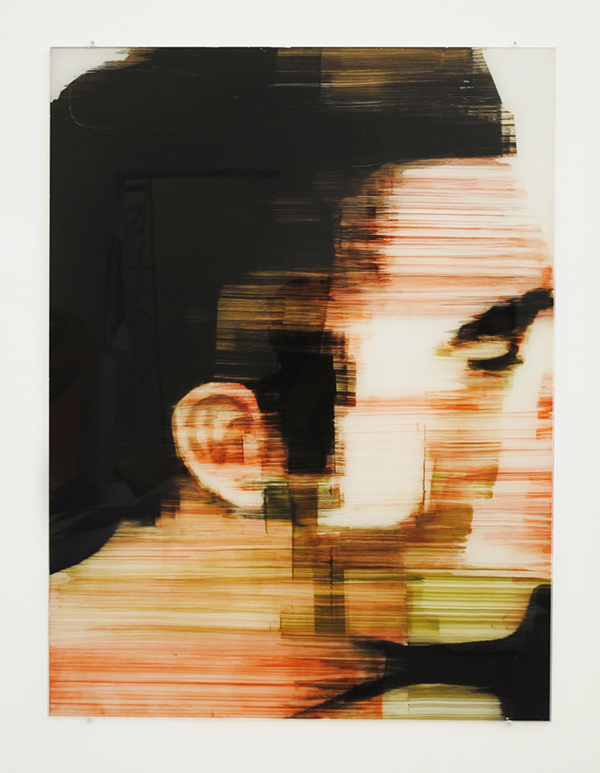
John Tierney’s paintings have a distinct relationship to cinema. Hollywood, California, and the greater Los Angeles area are awash in a rich and intense light that seems to linger over everything with an endless glow, a light as potent as the dreams and realities of fame and stardom promised by the movie companies that populate the city. For a representational painter such as Tierney, the[…..]
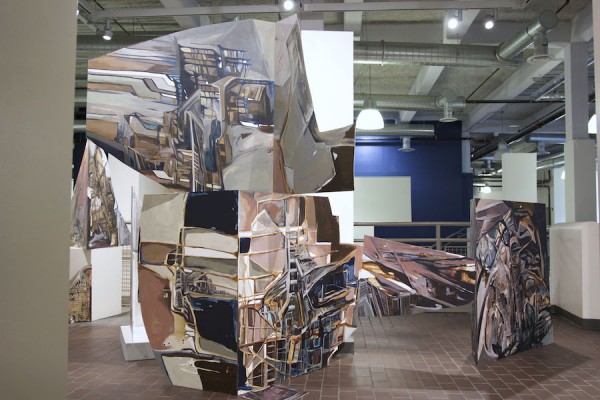
Follow the white line back into the middle ground; it outlines a blue-gray pathway that comes to the front of the picture plane. The pathway entreats viewers to step into the architecture of Zahra Nazari’s surreal composition Landscape #14 (2013). Along the way, columns and a house abut the path, and as the line winds backward and diminishes, the horizontal pathway merges with a wall. Beyond[…..]

There is a profound stillness in Carla Jay Harris’ photographs—her framing and shooting style emits a pervasive calm that quiets the anxiety of her subject matter. Harris’ ability to create silence amid moments of emotional upheaval is eerie, tense, and evocative. Two bodies of work portray people and places in the midst of economic and cultural change; Dirt, Dust, Sand, Concrete (2012–2015) shows Smithfield, Virginia,[…..]

Lorella Paleni is always creating something that exists just over the horizon of awareness. Her works comprise a series of visual heuristics to nowhere, showing the viewer a picture plan filled with rich colors that simultaneously push into and out of each painting. But instead of resolving compositional elements into a defined image, the elements of her style culminate in a delicately constructed form of[…..]

Rachel Foster’s work inhabits an enigmatic territory in which image and object merge. Her screen prints are composed with subtle colors, unexpectedly cropped images, and positive and negative space. Her prints float at the edge of representation, showing just enough detail to be recognizable while retaining a sense of mystery. Smoke Signals (2015) achieves a ghostly afterimage effect by leaving space for the viewer to[…..]

For artist Jered Sprecher, painting is a medium for conveying the tensions between the abstract and the concrete. His works are balanced between the painterly and the conceptual; in the catalog for his 2014 exhibition Stacking Stones at Gallery 16 in San Francisco, Sprecher wrote: “When I work I want to create paintings that surprise, paintings that can hold competing ideas but not contain them.”[…..]












